Author: Emanuela Barasch Rubinstein

  • The Fabelmans

    The Fabelmans

    Unlike most of Steven Spielberg’s films, The Fabelmans has a pronounced autobiographical tone (the script was written by Steven Spielberg and Tony Kushner). The film closely mirrors Spielberg’s own childhood from the ages of 5 to 18. Key scenes in the movie are grounded in the life of his family, portraying his relationships with his parents, their marriage and subsequent divorce, the family’s relocation to Arizona and California, and his experiences with anti-Semitism. The heart of the film is the mental process which ultimately makes Spielberg a filmmaker. However, it also explores the complexities of Jewish self-image during the 1950s and 1960s.

    The film opens with a scene that later seems quite telling. Sammy, the main character, is a five-year-old boy going to the cinema with his parents for the first time. He is anxious about sitting in the theater and watching the movie. When his father asks him why he is scared, Sammy responds, “The characters are gigantic…you said they are gigantic.” His father attempts to reassure him, explaining that the characters only appear gigantic because they are on the cinema screen.

    The unsuspecting viewer does not realize how illuminating this scene is in foreshadowing a side of Sammy’s life that will develop in a fascinating way: Sammy is aware of the physical gap between himself as a young child and the “gigantic” characters he fears. Although his father assures him that they are only an illusion created by the projector, at the age of five, Sammy already senses that they represent a reality external to the cinema, with clear physical advantage over him. When the family returns home after the movie, it becomes evident that their house, the only home of a Jewish family on the street, is not adorned with Christmas lights. Sammy’s mother asks him what he wants for Hanukkah, and he quickly answers, “Christmas lights.” For the young boy, being Jewish means not only being different from his environment but also lacking something others have—in this case, the developed aesthetics that add beauty to his Christian neighbors’ homes.

    Sammy’s mother lets him use his father’s 8mm camera, which opens up a new perspective for him. He recreates a violent scene he witnessed in a movie to overcome his fear. He documents his family’s move to Arizona, accompanied by a close friend. Through the lens, Sammy uncovers his mother’s affair with the friend, which she has carried out unbeknownst to his father. The camera is also a way to find his place among his peers as they join in his filmmaking projects, which he showcases at school.

    When the family relocates to California, Sammy is confronted with overt anti-Semitism. First, we observe that he is surrounded by very tall and strong boys who are physically different from him. He tells his sisters, “It’s like we got parachuted into the land of the giant sequoia people.” At school, he faces bullying from two boys because he is Jewish. Chad is openly anti-Semitic and physically assaults Sammy in front of everyone. Logan, a handsome and muscular boy and a leader, embodies a more subdued form of anti-Semitism. Although he tells Sammy that no one likes Jews except other Jews, he still intervenes to stop Chad from beating Sammy. Spielberg’s indictment of the anti-Semitic environment is clear and unequivocal: Sammy lies beaten in the schoolyard, and no one steps in to help. However, a fascinating aspect of the film is Sammy’s psychological and spiritual struggle with anti-Semitism. Near the end of high school, he is given an opportunity to get back at his anti-Semitic classmates by filming a social event, “ditch day,” which is then shown at the school’s prom. The film, however, contains some surprising elements. Chad, as expected, is portrayed unfavorably and is laughed at by his peers. Feeling humiliated, he attempts to hit Sammy again. Logan, on the other hand, is depicted as physically impressive—handsome and muscular. Sammy strays from a strictly accurate physical portrayal, and it is evident that he views Logan with admiration, even if only as a director, despite Logan having embarrassed and humiliated him.

    Sammy’s feeling of physical inferiority to Logan can be interpreted in various ways. Firstly, the phenomenon of a victim admiring their abuser comes to mind. This is a well-known psychological defense mechanism, where victims internalize the negative image imposed on them, and view their abuser as admirable. It’s easier to handle the humiliations this way. This mechanism can easily be applied to Logan since, in certain situations, he also defended Sammy.

    On another register, Sammy’s portrayal of Logan may echo the Nazi ideal of the Aryan as a superior human. The weak Jewish character looks with admiration at the non-Jewish young man, who resembles an image from a Nazi pamphlet: fair-skinned with straight facial features and a muscular body. The film highlights Logan’s athletic prowess—we see him winning a running competition, in contrast to Sammy, who struggles with sports. Although the Nazi ideal of a superior human has been widely rejected, arguably this image has nonetheless permeated Jewish consciousness and perhaps become part of it. Even though Sammy was born and raised after World War II, these masculine ideals have become an unavoidable point of reference. It is possible that Jews, against their conscious will, have collectively internalized the belief that they are physically inferior to other groups.

    Another interpretation of this scene derives from Sammy’s evolution into a filmmaker. The artist within him perceives beauty and seeks to capture it on film. This age-old artistic inclination to depict human perfection runs as a consistent theme throughout Western art. Sammy’s admiration for Logan’s beauty is, in a way, conceptual rather than personal. The artist in him is drawn to physical beauty and wishes to display it in all its splendor. Interestingly, Logan feels hurt by his portrayal because he feels it is unrealistic. He thinks he is not as handsome as Sammy made him out to be, interpreting this as a subtle attempt at revenge by the Jewish boy, who he thinks aims to embarrass him now that Logan has been depicted almost as an idol, any real-life encounter with him will inevitably be disappointing.

    Sammy’s interaction with the Christian world which explicitly identifies Jews also has an entirely different dimension: he has a romantic relationship with Monica, a devout Christian girl. While Spielberg has stated that most events in the film are based on real-life experiences, he has not commented on the romance with Monica. The viewer observes two teenagers drawn to each other—Sammy is anxious, and Monica is giggling. However, their relationship reflects a fundamental insight about anti-Semitism.

    Monica’s room is adorned with pictures of Jesus, whom she describes as “sexy,” alongside images of Paul McCartney, John Lennon, and Pat Boone. She is surprised that Sammy doesn’t believe in Christ and suggests that they pray together to Jesus. Once it is clear that Monica sees Jesus as an attractive and appealing man, her attraction to Sammy makes perfect sense. She admits that she likes him because she thinks he looks like how Jesus looked; like “a handsome Jewish boy, just like you [Sammy].” She then turns to an image of Jesus and says, “Jesus, I’m here with my good friend Sam, who’s Jewish. He’s a nice boy, Lord. He’s good, brave, and funny, and I like him.”

    The film depicts various Christian attitudes towards Sammy: alongside a physical threat, there is also an attraction to the Jewish boy. His peers perceive him as a Jew living in the first century. This facet of the film provides a fundamental insight into the roots of anti-Semitism: the shared origin of Judaism and Christianity is the source of the distorted attitude towards Jews. For Sammy’s classmates, there is almost no historical distance between the events believed to have taken place in the first century and their current reality; the Jewish boy is expected to apologize for crucifying Jesus and is also desirable because he resembles Jesus. Sammy is acutely aware of this historical misconception—he points out that he is not two thousand years old and that no one knows what Jesus looked like. Yet, he realizes that to them, he is a representative of the Jewish people. This perception can be threatening, frightening, and sometimes rewarding.

    The final scene, captivating and enigmatic, relates to the beginning of the film. Sammy meets the renowned director John Ford in Hollywood. Ford asks him to describe two pictures hanging in his office. As Sammy starts to describe them, Ford abruptly interrupts, telling him he is wrong and explaining that in one picture, the horizon is at the bottom, and in the other, it is at the top. Before sending Sammy off, he offers him this piece of advice: “Now remember this! When the horizon’s at the bottom, it’s interesting. When the horizon’s at the top, it’s interesting. When the horizon’s in the middle, it’s boring as shit! Now good luck to you.” Sammy exits the office, and the camera follows him. He briefly turns around before we see him from behind, walking into the distance (perhaps a subtle nod to the final scene of Charlie Chaplin’s The Circus?). Then, the camera angle shifts, placing the horizon at the bottom of the frame instead of the center. In this final scene, Spielberg himself becomes an invisible actor in the film, adjusting the camera angle. The scene is an illustration of the importance of perspective.

    If the film begins with a Jewish boy feeling threatened by the characters on the movie screen because they seem to represent a real-world threat, then the final scene reflects Spielberg’s development as a person and an artist: he realizes the importance of perspective in understanding the world. Anything can be seen—and presented—from different angles, including the experience of a Jewish boy in the United States during the 1950s and 1960s. Sammy’s childish anxiety, which is somewhat amorphic, and his sense of deprivation gradually transform into an understanding that reality, including anti-Semitism, is complex and multi-faceted and can be viewed and portrayed in various ways. Dealing with anti-Semitism involves changing one’s perspective; it means replacing the basic and intuitive feeling of being weak and disadvantaged with a clear and sharp view of the diverse attitudes toward Jews.
  • Demonstrations

    Demonstrations

    We demonstrated in the square.

    Sweating, excited, we gathered together and cried out loud. A tremendous scream was emerging from the street. A blend of whispers, cries of pain, shrieks of anger, and moans of despair echoed over the city. The words ‘freedom’ and ‘equality’ were accompanied by drums and reverberated from massive speakers, generating joyful hope, and anxiety piercing the heart like a blunt needle. We stood beside each other, felt each other’s breath, and heard our repetitive shouts shot into a cloudless sky. We sang together and waved our flags, smiling.

    We weren’t always part of the demonstrations.

    At first, we only heard the noise coming from the square. Echoes of strange, shrill cries, feminine and then masculine voices, rhythmic music, and sometimes the sound of groaning metal. Elderly people and families with children gathered in the square, and we only passed by on the street, looked curiously, and went on. We heard the voices and drove away. Day after day, week after week, immersed in our phones, the loud cries became the background to a sequence of photos and videos. A finger hovering over a screen, replacing one image with another as the anger shared by many crept into a space existing between people.

    Not only anger.

    Danger. A hint of lost freedom, something about a diversion that cannot be overdone. A choice leading to destruction. The tumult coming from the square indicated that disaster was imminent. The threat was unequivocal. Soon, life would change completely. Freedom would be taken from us, equality would disappear as if it never existed.  A massive crisis was upon us.

    But we kept going to work, coming back home, going to a bar permeated with music and the scent of alcohol, ignoring the commotion on the square. On warm summer nights, we were absorbed in our flickering screens, consumed by a realm made of fluctuating images and piercing voices.

    It so happened that we were recently promoted.

    The company expanded, the boss smiled and offered a better position, with an option for another promotion soon. The salary increased, and the future looked promising. Various plans were born late at night: a vacation on an island surrounded by glistening sand and clear seas; skiing on snow-covered slopes that shone like glass at twilight; driving a car gliding along a curved road, and more and more. The days were full of action-boosting stamina rather than being exhausting. A strengthening effort. The nights stretched between yearning for future delights and indulging in the pleasures of the present, leaving the sound emanating from the square behind the closed windows.

    But a miniscule whimper cracked the silence that surrounded us.

    A very light motion, barely noticeable, broke the invisible barrier. In an obscure way, a faint movement in the baby’s bed in the next room was linked to the distant cries from the square. Somehow, through the light creak of the bed frame—nearly inaudible—the unsettling spirit of the demonstrators seeped in. The baby moved in his sleep, allowing waves of hope and despair to filter into the house.

    A chubby foot stretched, a tiny hand shifted, and the babyish mouth opened in slumber. As we watched the helpless child, the yelling of the demonstrators emanated from an inner space, warning of a danger still not fully defined. What would become of him? We thought, trying in vain to fend off the fear that turned into a viscous liquid, spreading gradually in the veins and the temples. A full life expanded in our imagination, laid out before us, vulnerable to a threat that seemed alarming, though it was impossible to describe it in detail. In some unknown way, our liberty would be lost, and our life would progress along a path that could not be avoided. Since that inner shell cracked, the spirit of the square hatched and enveloped us. It was impossible to push it to a distant corner.

    For long months, we stood in the square linking arms.

    Together we yelled ‘freedom’ and ‘equality’ with all our might.

    Together we marched in the streets, waving flags proudly.

    Together we confronted cavaliers riding horses with shiny black hair.

    Together we lingered in the square late at night, embracing each other in brotherhood.

    But some of us disappeared.

    As we marched together, some of our comrades didn’t show up. We searched the angry crowd, fearing the unknown. Dark cellars came to our minds, the sound of heavy iron doors slamming shut, sealed bags and thick ropes. We could almost hear the cries of pain. At times, the fear for the fate of our comrades turned into pain in an unknown organ.

    But it turned out that cunning words had pushed them away from the square. An obscure eye was observing us, luring some with a temptation wrapped in rustling cellophane, selecting its target meticulously. An enticing dessert given only to those leaving the square. A past offer for a distinguished public position suddenly resurfaced, but anyone wanting to seize it had to commit to never set foot in the square. A much-desired prize given only to those promising they won’t join us;  clearly, our pain should find better outlets. Various rewards were offered to those willing to leave the square. And there were threats. Embarrassing past events, long forgotten, suddenly surfaced, annoying and oppressive. A former legal complication, an assessor reevaluating an old debt and now demanding money, years-old fines that suddenly appeared. They all generated desperate silence and bitten nails.

    But we kept demonstrating in the square.

    Our numbers dwindled. Fewer people came to the square. The cries of grief were slightly less loud, and the messaging from the loudspeakers less strident. The anger was restrained; we whispered to each other. Though yelling still echoed from the square, we didn’t block cavalries with a staunch demeanor. No one inquired about those who disappeared. It was impossible to bring people back to the square; those who left us would never return. Comrades who gave in to fear and despair would never scream with us again. The invisible thread uniting us was gradually gnawed at, unraveled and split, becoming thinner and more fragile. We cried out loud, but our wailing did not echo above the city. The loud voices that filled the square dissipated quickly, leaving nothing but a steaming mist.

    I demonstrated in the square.

    Every day on my way home, I pause to sit on a side bench, my back hunched and my head held in my hands. People move through the square silently, walking in haste and never lingering. Crows with open beaks hop around, staring at me with dead eyes. I find the thought of the chubby baby waiting for me at home terrifying. When he wraps his soft arms around me and clings to me as tightly as he can, I smile at him, but I can’t stop the tears. I carry him to the window, and we look outside together. Gloomy people walk in the street alone.  As my child puts his head on my shoulder and gazes at the street with childish wonder, I tell myself that it’s fortunate he is still unable to see the future.

  • Clear Water

    Clear Water

    When Sari walks along the beach she has a strange sensation of lightness. The murmur of heavy waves turning thin and invisible as they slide on the sand, the scent of primordial water, perhaps the weightless air, she is not sure why, but sometimes she feels she could fly. She takes off the headphones for a moment, silencing the rhythmic music so she can hear the constant humming of the water, and then she listens to the songs again. Her full body moves in complete harmony, indifferent to the people on the beach, vital, full of life. A handsome young woman, her honey-toned hair is blowing in the sea breeze, she saunters rapidly on the trail along the water, sometimes she thinks that if she turned aside and walked to the sea she could walk on water.

    Sari knows heaviness for years. When she was twelve years old she went to a new school. An excellent student, she was admitted to a prestigious junior high school. Her parents were thrilled, they kissed her the first time she left for school, carrying a new backpack and wearing trendy sneakers, newly purchased. The first day was exciting, but an unfamiliar panic mingled with the joy: almost all the girls in her class were thin, almost transparent, wearing tight jeans and shirts covering their budding breasts. Next to them Sari’s round body seemed heavy, graceless, lacking the pleasant poise of her classmates, who seemed to almost dance while moving.

    “But you’re so pretty,” her mother says as she whispers in her ear about the girls in her class. Sari has an aristocratic face, big green eye, a narrow aquiline nose, straight fair hair falling down her back, an unusual look in the ordinary street she grew up in. Plain looking two-story buildings, slightly neglected back yards, old people sitting in a small park staring into space, neighbors walking slowly, carrying heavy bags from the grocery store. Sari’s body is becoming of the women walking down the street, but her face suits the wide bright roads of the northern part of the city. Though she wears oversized shirts to conceal her slightly protruding stomach, men look at her with lust.

    Sari is a bit sad in the new school. The girls move between the desks swiftly, she walks cautiously. They leap up the stairs, she takes one step at a time. They go shopping, she goes home to study. When they take dancing classes together, she whispers to her mom, “I hate them.” Mom fondles her hair, kisses her and says, “you’ll see, everything will turn out fine. It’s a difficult age.” But in the meantime, Sari feels heavy. Not fat, but lacking agility. A beautiful girl with a clumsy, awkward body: chubby arms, full breasts, a plump stomach, soft legs. Sometimes she thinks she is almost an invalid. If she could, she would have escaped her body. Even when she nearly fasts for a couple of days and faints in school, the body that became feminine at an early age maintains it roundness and doesn’t let go, refusing to adopt a childish form again.

    A hierarchy is created in Sari’s mind, from lightweight to heavy.  The girl sitting in front of her is not as slender as the thinnest girl is class. The most popular boy, with straight black hair and small blue eyes, is very muscular, but still lighter than her. The boy in love with her is very tall and skinny; Sari is not sure if she is heavier than he is. The biology teacher resembles her mom; they both have wide hips, a fault that cannot be concealed. A variety of human forms, different and distinctive, line up from thin to obese, and only rarely does she hesitate who stands before whom. But she always asks herself where exactly is her place, who is heavier than her, and who lighter.

    When Sari was seventeen she met Daniel, a forty-year-old man. Boys her age drove her to despair. Smiling and staring openly at her body, asking her for a date and immediately trying to touch her breasts, insinuating that other girls are thinner, but maybe she wouldn’t mind giving them some pleasure?! It’s pointless, she contemplates, they only make me sad, deepen my sensation of heaviness. Mom watches her worriedly; she put on a smile. “I’m the best is math,” she says, and mom hugs her closely. But ever since she had met Daniel she finds it hard to surrender to her motherly embrace; she feels like a thief. Sparks of joy fill his eyes as they meet, his body stretches, he coughs slightly and offers to drive her wherever she wants.

    He wants to sit in the coffee shops by sea, go to the movies, take a trip out of town. But ever since Sari discovered his desire she only wants to spend time at his home. When his body is on top of hers and his face is twisted by pleasure which looks more like pain, she feels a pleasant lightness.  Her body is so fair and he is so dark, smooth silk next to rough skin and a sturdy body, her blond hair and eyelashes shine against the grey pillowcase. I am not a virgin, she says to herself as she gets out of the wide bed, looking at herself in the mirror, as uninhibited joy takes over. “Why are you laughing?” Daniel asks. She says nothing, only takes out a new lipstick from her purse and covers her lips with a pale peach tone.

    “I want to marry you,” Daniel says one evening, the blush apparent even in his dark face. Sari looks at him, slightly sad. Soon we won’t meet anymore, she thinks, wondering if her heaviness will take over her again. After a couple of days, she doesn’t answer his calls, texts, emails, and he stops looking for her. Sari studies from morning to night, an exceptionally gifted student. “Why don’t you go out anymore?” her mother inquires quietly, and Sari puts her head on her shoulder and says nothing.

    When a boy in class tries to make fun of her excellent grades in math she looks at him, wondering how the mixture of lust and pain looks on his face, covered with acne and a sparse beard. And when she thinks she sees this weakness assuming the form of vanity, she approaches him, looks at him in a provocative manner, tosses her shiny hair from side to side, shedding the sensation of heaviness and adopting a new cover, seductive and mysterious; she stands erect, her breasts prominent in her white shirt, a slight, almost invisible smile on her lips, and she says in a deep soft voice: “Want to study with me?”

    The boy is trembling, he takes one step back and another one and walks away.

    The legs of the man leaving Sari’s home were trembling as he walked down the stairs and out into the street. Sex with this woman left him mute. He could hardly mumble the address to the taxi driver waiting for him. God, he thought, what a woman, what a woman. Sari was still in bed, under a heavy blanket, closing her eyes, envisaging again how her body became light and flexible, lacking the oppressive heaviness. The cell phone rings. Mom. The strong scent of flesh that still fills the room stops her from taking the call. She is waiting for it to stop ringing, and then she pushes the blanket aside and gets up and takes a shower. Another man, another victory, she smiles to herself as the water runs down her glistening skin and splashes all over, and a pleasant fall wind rattles the small window in the bathroom.

    Sari is the second woman to join a team of senior engineers. When she walks into the room everyone is watching her with curiosity. Her face is serious and she places a couple of diagrams on the desk. She presents herself, elaborating on her contribution to the team. Next to her sits a man about her age, who seems indifferent. When Sari sees the back of his hand on the desk she finds she is shivering. She isn’t sure why, something about the long thin fingers, a few hairs on each one, the white skin evokes an unfamiliar fear.  To drive it away Sari brushes her hair with one hand and turns her green eyes to look at him, as an almost imperceptible smile touches her lips. A surprised yet disinterested look appears behind the glasses. She leans back; he looks the other way.  A though about a collapse surfaces and disappears, something about a path leading to an abyss, and nothing more. When the meeting in over Sari rushes from the room; Saul walks slowly with a colleague.

    When Sari appears in his office he is taken by surprise, dropping a couple of papers from the desk. But he collects himself, invites her to sit down and inquires about the new project. When she sits next to him at lunch he is deep in conversation with his colleagues. At the tall entranceway to the building, huge glass panels reflecting each other, Sari sees him leaving work with a slender woman, her black hair is pinned up in a bow. Sari stands motionless, watching them pass by, smiling at each other and observing no one.

    When she walks in the parking lot her plump body is reflected in car windows. A transparent tear rolls down her smooth cheek and drops on the white shirt. On the way home she swears not to give up. Car horns are heard around her, but she is immersed in her plan, wiping her tears, ignoring the deepening sense of heaviness. As she gets home she calls mom, elaborating on the new project. When she is done mom asks: “Are you okay?”

    The humiliation, the humiliation, Sari sinks into it, recalling every word, turning every detail around in her mind, anything but admit she is teetering on the edge of an abyss. The doorbell, Saul taken by surprise, the plunging neckline and the smile, the dark room and old furniture, the sound of a TV from the other room, shining fair hair moving from side to side, a black transparent bra, suddenly he isn’t feeling well, excuse me, I am really sorry, you are truly a very attractive woman but not for me, the terrible wrath, the plate she tossed on the floor, never mind, I’ll clean that, I don’t understand you, why? You have such a beautiful face—

    Sari hastens to the beach, sobbing, screaming in pain. At night the water makes a sensuous sound, swallowed by the darkness. The waves whistle and a full moon is planted above. Salty smell and minuscule sand grains engulf her as she walks slowly on the beach. The water is heavy and the sky airy, the sand is wet and the walkway dry; her rounded body is covered by a thin dress, her feet are bare, and her green eyes, watching the tiny lights visible on the horizon, resemble those of a child in despair.  A handsome young woman, her honey-toned flowing hair is blowing in sea breeze, her legs stride heavily along the sea, she picks up a huge seashell from the sand and holds it close to her ear. If I only could hear its whisper, she thinks in desolation, I could have walked on water.

  • Yearning

    Yearning

    Every Friday morning, an inner struggle materializes, as if it were taking place for the first time: Should she leave Tel Aviv for two days, or call and offer excuses, which are always met with deep sighs? Travel to Kiryat Malakhi[1] or engage in studying in the small room in south Tel Aviv? Avoid the oppressive image of her mother crying and muttering in Amharic,[2] or surrender to the thought of her warm embrace?

    Pnina is sitting in the balcony, watching the street. The grocery store owner is pulling fruit stalls onto the pavement, two foreign workers speak in an unknown language, a woman is pushing a stroller, a whining child following her. A street corner between buildings that seem neglected, but are full of pain and vitality. The phone is right next to her; she is watching it but doesn’t reach her hand out to grab it. She can hear her mother’s soft, slightly wailing voice, watching her as she is studying, caressing her head and saying, when will you get married?

    To remove the growing grudge spreading within hidden curving tunnels, she reproaches herself, thinking of offensive words she hears in Tel Aviv. People call her ‘black’, sometimes even ‘nigger’, standing in a store, customers always assume she is the shop girl, even in college she was offered academic assistance, though her grades are excellent. And the flattering words of Omer, a blond young man who is courting her, that her dark skin is beautiful, left her annoyed, though he meant no harm. But all these self-admonitions dissipate as she thinks of her mother waiting for her in Kiryat Malakhi, smiling at her gladly though her eyes, as always, betray a bitter sadness.

    When Pnina was complimented for being a good student in elementary school, her mother smiled, as if she were mischievous. When she was accepted to honors class in middle school, her mother looked at her suspiciously. As she became an excellent student in high school, they were slightly drawn apart. As she said she planned to leave Kiryat Malakhi and go to college, the arm embracing her dropped and her mother took a step back. Leave?! The dark eyes were wide open, revealing a clear pain; the long way in the desert that left her mute, her son who died in a refugee camp in spite of her begging that he be saved, arriving in a foreign land with her young husband. From a small village next to a mountain, she moved to graceless buildings, and what followed was inevitable. A couple of pregnancies ended in abortions, her husband, who turned sullen and impolite, moved with his parents, and she was left alone with two children. And now the daughter wants to leave?

    A college in Tel Aviv had offered a scholarship for underprivileged students with excellent grades. When Pnina saw the advertisement, she had trembled. A small hidden wicket opened, leading to a different life, far away from Kiryat Malakhi. The excitement was well reflected in the gentle facial features: her straight eyebrows stretched, her thin lips tightened. Women spoke Amharic in the next room. As she heard approaching steps, she turned off the computer quickly and stood in the middle of the room.

    When she moved to Tel Aviv, she insisted her mother come to see the room she has rented. Maybe this would stretch an imaginary thread from Kiryat Malakhi to Tel Aviv, and she wouldn’t feel her daughter was moving to a strange city. Pleasant sun filled the sky as they walked together in the alleys of south Tel Aviv, a slim woman dressed in colorful clothes, a white scarf wrapped around her head, holding the arm of a young women wearing blue jeans and a tank top. But before the mother got on the bus back home she grabbed Pnina and wouldn’t let go, until the driver yelled that if she didn’t get on the bus right now he would leave without her.

    Professors with a grave countenance, unfamiliar academic language, well-lighted classes, text books, young people eager to immerse in conversation—in the first couple of weeks in Tel Aviv, Pnina was overwhelmed by college. Walking in the wide corridors, she felt she had been reborn. The shabby buildings disappeared, replaced by wide halls, air conditioned and comfortable. No longer was she a young woman men coveted, now she had become an inquisitive student. A years-long craving for a different life was finally found fully justified, materializing in every class, assignment, exam. Late at night, after she returned to the small room in south Tel Aviv, she sank into deep, dreamless sleep.

    But longing is a deceitful devil; when you think it’s gone it reappears, mocking and sticking a tongue out. One bus drove to Kiryat Malakhi, the other on the streets of the town. The steps on the path leading to the entrance of the building revealed vulgar graffiti, out in the open, empty cigarette packs and bottles of beer discarded next to the fence, a filthy stairwell, the door peeling and the handle broken—but the mother’s eyes splattered myriad flakes of love and sorrow. Embraced in the arms of a slim woman enveloped in colorful fabrics, Pnina was crying as if a disaster had taken place.

    At dinner, she emits various sentences, which disintegrate into words and syllables. Her mother watches her intently as she tries to describe what she is studying. And though she portrays her daily routine in very simple words, the mother’s eyes, filled with the pain of the desert and the shabby buildings, turn to her as she asks, are there any Ethiopian men there? Did you meet someone?

    Once again, resentment materializes, a long wick that tangles and becomes a ball of string that can’t be unraveled; the mother disapproving of her wish to have a different life watches her disappointed, Tel Aviv, that seems to belong to someone else, smiling and wealthy, the college that, in spite of her achievements, sees her as an Ethiopian young woman. Pnina’s face flush and her body weakens. Yearning had always been a support, a source of encouragement; now it becomes a heavy burden, exhausting and alarming.

    [1] Kiryat Malakhi is a poor town in the southern part of Israel.

    [2] Amharic is spoken by Israelis of Ethiopian descent. For immigration of Ethiopian Jews to Israel, see https://en.wikipedia.org/wiki/Aliyah_from_Ethiopia

  • Little Red Riding Hood

    Little Red Riding Hood

    It’s such a shame, really, such a shame. I was looking forward to visiting my daughter and granddaughter today. I’m not well, I’m coughing, I might even have a fever.

    When I visit them, I need to walk almost fifteen minutes to the bus stop, and there I normally wait for a good long time. When it arrives, I slowly get on the bus and sit down heavily, waiting to catch my breath, and then I relax in my seat. The ride is only a couple of minutes long, but it’s enough for me to close my eyes and think of my daughter and sweet granddaughter. When I arrive, the table is always set, and my daughter has prepared delicious food. She kisses me, invites me in and always says the exact same words: “Mom, why don’t you move into this neighborhood? Why do you live in that secluded place, deep in the forest? If you lived closer to us, you wouldn’t have to take the bus to see us.”

    I look at her and smile as my heart sinks. Every time we discuss where I live, an inner string stretches and detaches, and needs to be put back in place and tightened. She thinks the forest is intimidating, I find it charming; she thinks the trees are creepy and that one can get lost, I can see the trail with my eyes closed; she’s sure the wood is dangerous, I find it reassuring. People who lived through a world war know that it is humans who are threatening, not the forest. In the wood, one can find refuge. Early morning fog, tweets and growls of animals that blur the tread of footsteps, tangled plants, a tree with many branches one could climb quickly—they are all shelters, havens from oppressors. When the war was over, I’d lived in a condominium in the city. For years, I used to listen to the elevator going up and down, feeling that it held an obscure threat. Something about the light whistle and the dull ticking emerging from the shaft brought back memories I wished to bury, echoes of a foreign army marching in the city’s streets.

    When my husband passed away, I knew it was time to return to the forest. I purchased a small, decaying house; to get there I had to walk for quite a while along an isolated path. When she first saw it, my daughter looked around with horror, checking the window gratings and the door bolt. Finally, she made me promise I would install a new lock on the door, and so I did. I don’t always use it—if something bad were to happen I might be saved if I am not locked in and manage to escape to the wood.

    Ah, I am so sorry I can’t leave home, and it is time for my visit. All week I expect to see them. I was going to call my daughter to let her know I won’t be coming, but my cell phone is dead, refusing to connect to the world outside the forest. I’m not feeling well, and I have to lie down and cover myself with my warm duvet. Gloom overwhelms me as I think of my granddaughter, who I know is expecting me. She wears the red baseball cap I’d given her backward on her curly hair, her inquisitive eyes looking around as she rocks her head to the rhythm of the music coming from her headphones. She is very independent, more assertive than girls her age, maybe because she grew up without a father. When I can’t sleep, bitter thoughts surface, materializing in spite of my effort to dismantle and remove them: What would happen had she lived in times of war? First, I tell myself she never would have survived. She is so spoiled; if the pizza isn’t tasty she grumbles, if her mom brings cranberry juice instead of blueberry juice, she gets angry, and sometimes she watches her cell phone and almost cries. But then I change my mind. She is vigilant and slightly hotheaded, which is crucial for surviving a war. Sometimes I warn her: “Sweetheart, there are real dangers out there, ill-willed, evil people.” She smiles at me forgivingly and mutters, “I know, I know.”

    Where is Mom?! She should have been here more than two hours ago. I called her, but the network is unavailable. I’m sure everything is okay, but there is almost no reception in the middle of the forest. Every time she doesn’t answer the phone, a stream of anxiety overtakes me: Did she fall? Hurt herself? Did someone break into her house? Maybe she isn’t feeling well? Maybe even … this fear is paralyzing. When my dad was alive, he used to tease her and say she wouldn’t let her single child live independently, far away from her. She denied it vehemently, but after his death, she began to repeat his words. I knew the relationship between us was too tight, each part of it excessive. The compliments she paid me, the physical expression of her affection and, more than anything, her desire to protect me, to remove any threat. Ah, and also her disappointment that I never got married.

    My parents wanted me to marry a man with a nice salary, but not too rich, an educated person who made a good living; instead, I became a single mom. A years-long relationship with a rock-band guitar player left me with nothing but disappointments; a man with a small business went bankrupt and disappeared; and I decided to raise my child by myself. My parents opposed this idea; my mom even declared I was being irresponsible, and that in times of trouble or war, I wouldn’t be able to protect my daughter. I always wondered what war was she talking about. Which enemies? What kind of protection? The world war was over long ago. My one enemy? The shortage of money.

    Bills I can hardly pay, rent rising even in this neighborhood on the outskirts of the forest, food and other products are more and more expensive, the part that is missing from my salary constantly growing. The real danger I face is economic collapse, and the fear that it might take place filters into every crack within me. Economic scarcity it the hazard; evil is those who threaten to take my money. They pay very little for the long hours I work, and when I protest, they smile dismissively.

    If I could, I would live in an upscale quarter of the city, far from the wood. But life here is okay. I make sure my daughter has everything. I will soon leave for a night shift. I thought she could stay with my mom, but now I will have to send her to the wood to check on Grandma. I will give her a bottle of wine and the apple pie I made. I don’t protect my daughter the way my mom did. I raised her to be independent and slightly vain, charming and a bit spoiled, smart and selfish. This is the best protection.

    But she is not vigilant enough.

    Walking around with the baseball cap backward on her curly hair, a sweater and ripped denim, she is carried away by the music emerging from her headphones and sees nothing. She is a young teenager; men are attracted to her. I will warn her again before she goes to my mom: The bus drives through poor neighborhoods, you shouldn’t talk to strangers even if they approach you, and the forest – god forbid, who knows if criminals hang around there. You should never ever go off the path!

    Dreams of reality’s peace; Blow steam in the face of the beast; The sky could fall down, the wind could cry now; The strong in me, I still smile.”[1] I’m crazy about Kendrick Lamar. I love to go by bus and listen to my music without anyone interrupting me—Mom who keeps telling me I’m so beautiful and I need to watch out for guys, Grandma explaining that the world is not a safe place. I’m sorry the ride is over; in a couple of minutes I’ll get to Grandma’s house, and then I’ll have to remove the headphones. It’s kind of nice to walk in the forest and listen to music, only my bag is a bit heavy. Maybe I’ll sit down on this rock for a little while. No harm done if I’m a bit late. Surely Grandma is in bed. She doesn’t answer the phone because there is no reception in the wood. It is so pleasant here; next to the trees, you forget there’s a world out there. I’ll rest for a couple of minutes. When I get there, she’ll want me to have dinner with her, and just ask me about my friends and tell me I should always watch out for people, even if they look friendly. So, yeah-no rush.

    Wow, what is this?! I can’t believe it. A wolf! It looks like a dog, but it really is a wolf. It’s so cute, sniffing around, not like it wants to prey on me. I’ll take a photo and post it on Instagram. My friends won’t believe it! What a cool picture, it’ll get tons of likes. Two friends had told me that the photos I post are boring, and if I don’t have anything interesting to post I’d better not post at all. Every time I push the post button my heart skips a beat. I’m not sure what is it that I want more: to show what I like, or for my friends to like my posts.

    I’ve noticed I prefer different pictures than some of my friends. I like flowers, trees, wild animals, mountains covered with snow or a beach in the sunset. My girlfriends examine photos of models and actresses, checking their bodies, clothes, makeup. I pretend they’re interesting, but I would rather look at pictures of nature. Sometimes I post photos of flowers and everyone makes fun of me, adding sarcastic comments. I panic and delete them. I’d do anything to stop my friends from unfollowing me. There is nothing I fear more. Sometimes I imagine they did, and I begin to shiver and sweat. I will never leave the house if this happens. And my disgusting classmate scares me to death, threatening to make everyone turn against me, making sure no one would be my friend. Grandma thinks the enemies are on the other side of the border, but the real enemies are here, on Instagram.

    What beautiful flowers! I will pick a couple for grandma. The wolf is standing next to me now, making funny noises. What the hell is this? I need to take my headphones off. He’s talking?! Whaaaaaaat? I don’t believe it. It’s impossible. OMG, he is! He’s freaking talking! He’s asking where I’m going. I’ll answer him; what do I care? Anyway, there is no such thing as talking animals. I must be dreaming or something. I’m on my way to my grandma’s house in the middle of the forest. I’m in no hurry; the trees are so beautiful. I will take a short break and then go on.

    Finally, he’s gone.

    Ah, I’ve fallen asleep. This cold makes me drowsy. Oh, someone is at the door. Surely it is my sweet granddaughter; I knew that when my daughter saw I wasn’t coming she’d send her here. She may have brought that tasty apple pie my daughter usually bakes. Who is it? Come in, sweetheart, do come in and sit next to me. She answers, but her voice is strange, slightly hoarse. Maybe she, too, had caught cold?

    The high temperature creates a sort of daze; I can hardly see anything, and I feel a vague shadow passing in the room. I’m unable to follow it. Something is moving, but I can’t tell what or where it is. It can’t be my granddaughter; she always greets me loudly as she comes in, hugs me gladly and kisses my cheek. Who can it be? A criminal? A murderer? Ah, I need to escape quickly to the forest, only there will I be safe. During the war, the thick, opaque foliage saved my life. I’ll try to get up and get out, though my legs can hardly carry me. Who is here? Who is it?

    A wolf! Help, help! God, I hope my granddaughter isn’t on her way here. I don’t care if he eats me as long as he doesn’t hurt her. Anyone who survived the war knows this; people would die without putting up a fight if it meant saving their children, they would walk obediently to their death but leap into a pointed gun to protect their offspring. Maybe if it preyed on me it would leave her alone. No, no, evil can’t be satisfied; this hideous beast with filthy nails, even though it has been pushed to the abyss time and again, it always emerges once more.

    Help! Help! What evil eyes, what a malicious nose, what sharp teeth… that huge mouth and throat, dark and sticky…

    Finally, I’ve reached Grandma’s home. I thought this path would never end. The bag is heavy, and I’m tired of carrying it. The forest is kind of fun, but I’ve had enough. I might have fallen asleep, sitting on that rock. I will give grandma the pie, wine and the flowers I picked. Strange, the door is slightly open. To be on the safe side, I’ll knock, so as not to surprise her.

    Who’s there? Wow, Grandma sounds strange! She must be really sick. Her voice is so weird and low.  “It’s me, Grandma, I came to visit you and brought your favorite apple pie and a bottle of wine.” Grandma is lying in bed but she seems odd. Her head is wrapped with a scarf, and on top of it are her glasses. Her entire body is covered with her blanket. She doesn’t ask me, as always, to come close and kiss her.

    I ask: “Grandma, your ears are slightly sticking out, are you feeling okay?” She answers with this really strange voice that she’s sick but didn’t fully cover her ears so she could still hear me. She seems so different, but I’m not sure how. Her face is almost completely covered, I can hardly see her eyes. And her body looks weak, shivering slightly. What will I do if she gets even sicker? Maybe she is dying? There is no one to call for help here in the forest. I need to get to Mom. Something is wrong. I get a bit closer. Her eyes appear huge behind the glasses. “Grandma, why are your eyes so big?” I ask, and again she replies in this unfamiliar voice that she put on the glasses even though she’s sick so she could see me better. I take the cell phone out of my bag, I’m about to try to call Mom and tell her there’s a problem here, but before I touch the buttons I notice Grandma has hair around her mouth.

    There is something scary about old people. I love Grandma, but when I look at her closely sometimes I panic. The wrinkles, a couple of hairs on her chin, the curly eyebrows, even her thin gray hair—sometimes I feel like running away. But now her face looks different, awfully narrow, as if she’s lost a lot of weight. And the hairs above her lips don’t look like the ones she asks Mom to pluck—they’re brown and thick. “Grandma, are you okay? Your mouth is a bit dark. Would you like to have some water? Should I call Mom?”

    I can’t believe it! This can’t be for real! Out of the blanket a wolf is jumping, the one I saw in the forest, only now it has a huge belly. It’s leaping on me! It wants to EAT me. OMG, this is so scary, I’m glad I brought a bottle of wine. Here, I manage to smash it on its head. It turns around, dizzy, almost collapsing. I throw the blanket over it so it won’t be able to see. But wait, what’s going on?! It recovers, opens its mouth—its teeth are big, sharp and full of blood, it makes an awful growl, opens its huge muzzle…

    Human beings are afraid of the wood. They walk vigilantly among the trees, careful not to go off the path, looking around with a mixture of admiration and unease. In the daytime, faces of hikers reveal some tranquility. The tall trees create a pleasant humility, the green foliage is relaxing, the light breeze rattling the leaves is delightful, a soft caressing whistle. But as evening falls, they quickly walk away, watching the low shrubs and the tall trees above them with clear apprehension. The pleasant light and the green colors fade away, replaced by a hue that is both bluish and brown. Here and there sudden movements are alarming; a lizard passing swiftly on the branches, a thick-winged insect flying from side to side, a night bird waking from its sleep. What they find most intimidating is not what they see but what they think is hidden out there; dangerous animals might be anywhere, an unexpected obstacle might be right in front of them.

    But I like the wood. You can’t be a forest keeper if you’re afraid of its wild nature. As I walk among the trees—never along the paths—I feel there’s a perfect harmony between me and the world around me. I don’t feel this way elsewhere. In the city, in the village I live in, even at home, I always conceal a certain discomfort, a feeling that I have to adjust to my environment. But under the trees is the right place for me, a piece of the world that fits me perfectly. And I have no reservations about the violence revealed in the forest. A cute animal being eaten alive, bleating in pain as sharp teeth tear its flash; this is nature, the principle of sustainability that had always been there. But human violence, which I’ve seen in many places, is horrifying. People want to win, rule, command.

    What is this? I hear a strange sound. A sort of odd snore, like an electric saw cutting trees intermittently. What could this be? I follow the sound, trying to determine where it’s coming from. Here, I’m now next to the house of the old lady living alone in the wood. The lights are on, she must be at home, but the entrance door is wide open. Very strange. I know she never locks the door, but she has never left the door completely open. Hello? Is anybody home?

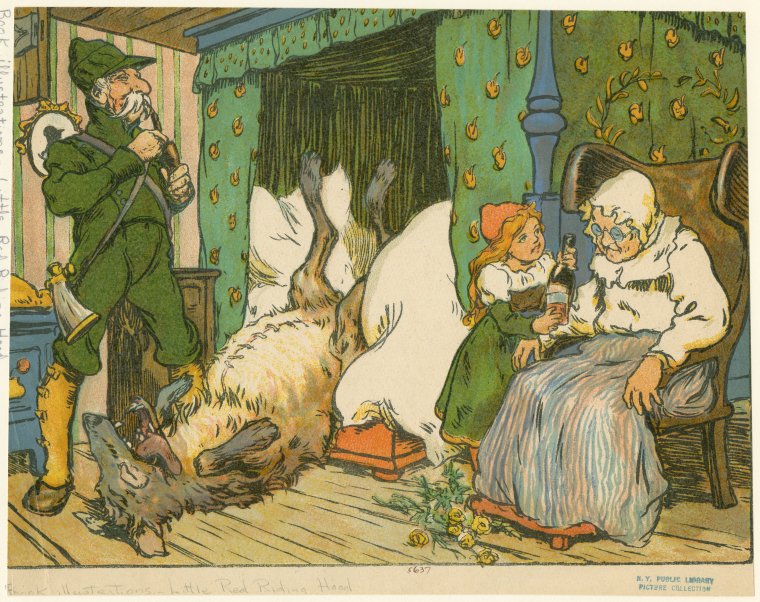
    Oh my God, the wolf has swallowed her! He is sleeping. Its belly is enormous; I wouldn’t have thought it could expand so much, and it’s snoring out loud. I will approach it carefully with my knife; it is fast asleep and won’t hear me. I am anxious, I don’t think I can take the sight of this nice old lady dead. Here, I cover its head with a sack and I cut its belly. The fear of what I might see almost makes me faint.

    What is this? The old lady, embracing her granddaughter, are ejected from the huge belly. At first, I think they are dead, but they open their eyes and watch me with bewilderment that quickly transforms into joy. “We’re saved, we’re saved,” they cry and stand up, as I fill the wolf’s empty stomach with stones I carry in my backpack. It opens its eyes, gets up and, like a drunk trying not to fall, escapes from the house, emitting cries of pain that gradually fade away in the forest.

    [1] I (single version) by Kendrick Lamar.

  • The Beggar

    The Beggar

    The metallic sound of the doorbell filled the house. I hurried to see who was at the door. I opened the chain top lock, turned the deadbolt – an elderly woman living alone can never be too careful. The door slid back, and I looked into the hallway. A man in rags was facing me, about fifty years old. He had big dark eyes, deep wrinkles and a full beard. He was watching me as if I were about to test him and he needed to find the right answers.

    “I’m sorry to interrupt. I would like to ask for your assistance. My daughter is sick with a chronic disease, and I need money to buy expensive medications. May I ask for a donation? I have a job—I’m not a beggar—but I have no choice. I want to help her.” He held a picture of a young girl and turned it toward me. Although he spoke in a very direct, sensible manner, his tone was slightly groveling as if he were trying to use his voice to express what he wasn’t actually saying: His daughter was suffering, he was desperate and afraid that the disease had no cure, he was forced to turn to strangers and ask for money.

    I shook my head to indicate refusal and immediately closed the door, but for some reason, I didn’t lock it. Something about his expression made me feel uncomfortable. Normally, I refuse without giving it any thought. I don’t believe all of these stories, and I’m positive that beggars ask for money for themselves. There are no sick family relatives, only a picture torn out of some magazine. But this time, I was left standing behind the door.

    Suddenly, I felt as if the guests at the birthday party were watching me in eager anticipation.

    The memory surfaced and felt so real as if I were now sitting in the pleasant backyard. A couple of days ago, on a sunny Saturday, family members and friends gathered to celebrate my cousin’s birthday in her roomy yard under a tall oak tree, casting a pleasant shadow. Two tables covered with white table cloths were packed with food: on one table was a huge baking dish with roasted beef, a bowl with baked potatoes, and various salads, and on the other table were fine pastrami and sausages, various kinds of Dutch hard cheeses, dips, and fresh pies with the tempting smell of freshly baked pastries. Her husband opened wine bottles that made a cheerful bursting sound, followed by the perky sparkling of alcohol. A pleasant bustle filled the place as the doorbell rang.

    My cousin hastened to open the gate. A blond woman holding the hand of a girl about ten years old stood there. They had a short conversation, after which my cousin went into the house and returned with some money. She was about to hand it to the blond woman when one of the guests, about sixty years old, suddenly screamed, “Don’t give her any money! She should go to work! Find a job! You shouldn’t give them anything. You only make things worse, especially for the girl who will grow up thinking that this is the way to have a good life. Get them out of here! Right now!”

    The pleasant hustle died out at once, and everyone watched the man. His yelling made his face blush and sweat. The blond woman looked around embarrassed but didn’t leave, her eyes fixed on the bills in my cousin’s hand. But as the guest kept screaming, she turned around and left with her daughter, and I could see my cousin following her with the money. The man turned to the other guests and explained passionately that one should never give money to beggars but rather make them find jobs. This is especially true for parents because they teach their children the wrong values. In his view, giving money to individuals should be forbidden by law, especially for those capable of working. My cousin, who returned to the birthday party, mumbled apologetically, “It’s not the girl’s fault, is it?” trying to appease the aggressive guest, who was now dining with the others.

    After a couple of minutes, the turmoil faded away, but a slightly cold spirit filtered into the cheerful family atmosphere; a transparent film enveloping the guests had been torn, setting loose an inner boundary that was previously very tight. Another cousin sitting next to me said that the loud guest was extremely rich, her husband commented quietly that he may be right but he didn’t know what pity was. A woman sitting on the other side added in a righteous tone that it was very impolite of him to yell like this at a birthday party, he should have refrained from screaming, and a young man said he didn’t understand what the fuss was all about; no one was forcing him to give money. A slab of reality that was supposed to be left out of the cheerful backyard permeated the party, awakening turbulences everyone was eager to conceal.

    I sat there deep in thought, watching my cousin apologize awkwardly—trying not to annoy anyone—and the guests who overlooked her obvious embarrassment. Suddenly, through a hidden slot the memory of the event in the café crept out and materialized.

    A couple of months ago, we sat together in the morning in a café—a couple of elderly ladies who meet once a week. On the table were beautifully decorated cups with coffee and tea, various pastries, shining and spreading odor of fresh dough recently removed from the oven. At the center of the table were a green glass water pitcher and a small vase with a tiny bouquet. Napkins with a beautiful pattern of squares and circles were placed in an elegant ceramic napkin holder. The waitress kept asking us with a forced smile if we needed anything else.

    Sometimes our conversation resembles a random collection of words picked from a certain page in a book; they must be connected somehow, but the logic isn’t clear. One woman emits a couple of sentences about how depressing politics is at the moment, her friend comments that her daughter-in-law works in a government office, a third one declares that her grandson is so gifted that he won a prize at school, another woman murmurs that the prices of food have gone up lately. And though the words seem detached and lacking a common context, still the conversation progresses.  Every sentence is met with some response, the pastries and drinks are gradually consumed – a dialogue between people doesn’t always fall into a rational systematic pattern. The words echoing around the table illustrate that deep communication can take place even if the proper words haven’t been found.

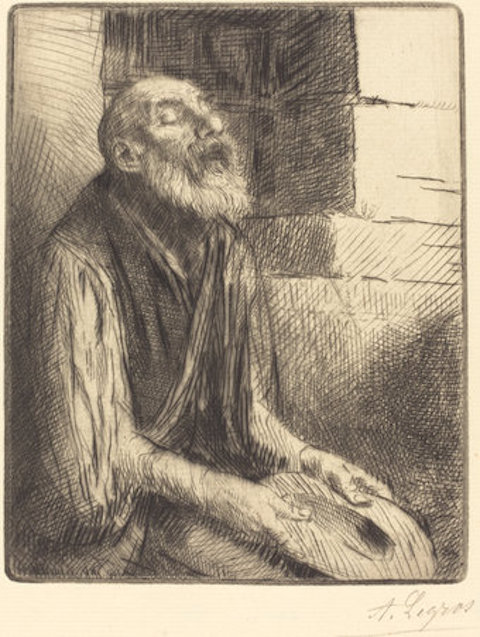
    But on that particular day, in early fall, a beggar slowly approached our table. He was an elderly man, around our age, with disheveled hair and a small humpback, wearing an oversized coat and worn-out shoes. He walked between the tables, saying nothing, only stretching a rough, scratched hand, asking for money. Most people ignored him; one woman gave him a coin. He paced toward us, taking very small steps. I’m not sure why, but I was anxious as he approached. He didn’t look aggressive or violent but rather submissive, but I found him frightening; eyes looking around purposefully, every person in a vehicle, a possible source of some money. He seemed to see nothing but only followed certain body movements that normally precede a hand stretching toward a purse.

    As he stood by our table, one woman whispered, “I wish he would go away. He is so filthy.” Another added, “Be careful; he might be ill.” He looked at us and then hunched his back more to make his humpback protrude even further. He then stretched a concave hand without saying a word.

    Half of a cinnamon croissant glittering in the sun, freshly made orange juice producing an orange glare, a chunk of tomato and cheese pie looking like a red-white mosaic, fruit salad leftovers resembling yellow-white pearls—the beggar stared at the food and said nothing. “Poor thing,” one woman said quietly. “Maybe we should give him something?” as her friends sighed. But then, one friend stood up in an exhibited manner, grabbed her wallet, and pulled out a twenty-dollar bill. Her face adopted a vain expression. The brows lifted and drew apart, the nostrils widened, and the mouth contracted in reproach. With a loud voice, she began to explain that everyone should have some pity, it is simply impossible to ignore the suffering of others. After all, we are all human beings. A person should be sensitive to other people’s wants, give some of what he or she has, and added more and more about the importance of having an open heart. At the end of this short speech, she placed the twenty-dollar bill in the dirty, scratched hand of the beggar in a demonstrative manner.

    He watched her indifferently, immediately stuck the bill in his pocket—but with a sharp, unexpected move, he snatched the half-eaten croissant from the table and hurried away, almost running, hearing loud cries of panic and a shout of “I wish I hadn’t given him the money.”

    I decided to look at the peephole to see if the beggar was still there. I saw nothing, but I could feel a breath on the other side of the door, like an animal sensing another animal. I told myself that he must have already left, I’ve been standing behind the door for a couple of minutes, immersed in my memories. I stopped my breath, stood on my tiptoes, and opened the door very slowly so that it wouldn’t make even the slightest squeak.

    He was standing there in the hallway, his hands limp next to his body, his head bent down. As he saw the door move, he lifted his head and looked at me with a slightly mocking smile. “No rush, ma’am. I’ll be waiting here,” he said in a hoarse voice, attempting to blur the touch of laughter that filtered into his voice; scoffing at me for not locking the door and ignoring him, an irrefutable manifestation of weakness.

    I closed the door at once and decided to give him a couple of coins so that he would leave. I began to look for some change—in a tiny bowl in the kitchen, in my handbag, in the bedroom, and in the living room. However, it seemed that all of the coins had disappeared. I walked in haste as if a catastrophe was about to take place and I was trying to stop it.

    Suddenly, an inner crust collapsed, unearthing the memory of the central bus station.

    A bubble of childhood that survived for so many years, voices and sights that seem to have sunk and disappeared but suddenly, unexpectedly, it turns out that they maintained their vitality and are still full of colors and odors. As a child, I sometimes traveled with my mother out of town. At the central bus station, we always passed by a beggar next to the entrance to the station. The first time I saw him I clang to my mother, and she looked at me surprised. A man was sitting on a brown cardboard on the floor, with both his legs amputated to the knees, and his filthy pants were tied under the knees. His body leaned against the wall. He looked at the passers-by, muttering unclear words interrupted by heavy coughing. In front of him was a small box with a couple of coins.

    I wanted to stop and look at him, and then escape. His forehead had vertical wrinkles, his eyes were wide open, his mouth had almost no lips, his beard was part long and part short, his shirt dark and stained. He had huge, rough hands and black nails. His amputated legs were placed before him as if they weren’t part of his body. Mom, let’s give him some money he is so miserable; don’t worry, people help him; but how? He can’t walk; there are people who assist beggars like him; why don’t we give him a coin? he can’t get up; I’m sure he has crutches, sometimes he isn’t sitting here; please, mom, let’s give him something, he is so poor; there are plenty of poor people, we can’t give them all money; so let’s give only him; he could be dangerous and aggressive to people who give him money; Why?; These beggars are sick. A normal person wouldn’t sit on the floor and ask for money, even if he was handicapped; he is so miserable, even if he’s crazy. How can he attack us if he doesn’t have legs?

    I could feel the smell of the central bus station. Busses rush into the station, unloading passengers on the docks and disappearing, people take quick steps, hurry to their destination. Escalators ascend and descend, the elevator moves up and down, a board with letters and numbers constantly changes. The announcer says a certain bus is about to leave any minute, fast food stands offer food without losing time. A crowd that is on its way to another place, in hurry to leave the station—and the beggar is implanted in place on the brown cardboard, watching legs pass by quickly, and only rarely does anyone toss a coin at him, which makes a metallic sound as it hits the rusty iron box.

    The childhood memory that suddenly fully materialized almost made me faint. In a moment, I would have dropped on the bed and lain motionless, but the thought of the beggar standing outside of the door was overwhelming. Suddenly, I realized that if he walked away, I would be relieved. A hidden weight I’ve been carrying for years would disappear, leaving a trail of fresh air. I went quickly to the kitchen and opened my purse, took out a twenty-dollar bill, and ran to the front door.

    As I opened the door, the beggar smiled at me with clear contempt. His dark eyes, which now seemed devious, watched me almost amused. In a moment, he would have burst out laughing at the frightened old lady who couldn’t eliminate the need to give him some change. But I felt my heart pounding and only wanted him to go away.  I threw the bill at him. I didn’t even wait to see if he managed to catch it or if he had to bend down to the floor to pick it up. I slammed the door and pressed my body against it as if an evil spirit were trying to break into my home and I was pushing it away as hard as I possibly could.

  • Anactoria

    Anactoria

    Some say a cavalry corps,

    some infantry, some, again,

    will maintain that the swift oars

    of our fleet is the finest

    sight on dark earth; but I say

    that whatever one loves, is.

    This is easily proved: did

    not Helen—she who had scanned

    the flower of the world’s manhood—

    choose as first among men one

    who laid Troy’s honor in ruin?

    wrapped to his will, forgetting

    love due her own blood, her own

    child, she wandered far with him.

    So Anactoria, although you

    being far away forget us,

    the dear sound of your footsteps

    and light glancing in your eyes

    would move me more than glitter

    of Lydian horse or armored

    tread of mainland infantry

    (Sappho, translation Mary Barnard, University of California Press,  2012, f. 41.

    Published with the kind permission of the University of California Press).

    The entire city stretched away from the window of our office—an architect firm—with modern towers and old buildings. Sometimes the view seemed like a punishment, as if we were doomed to watch constantly the success of others. A multitude of forms and materials blended into such a spectacular mosaic that following one distinct form was almost exhausting. A glass tower faced an old stone building; diagonal windows reflecting curved bars on the other side of the street; a curtain wall opposite a small, round balcony—this myriad of colors and shapes would discourage even the most experienced architect. Everything had already been invented, every material used, all forms adjusted to each other. An unusual combination of elements, a unique outline—they were all here facing us, just outside the window that was impossible to avoid.

    I didn’t mind looking out the window. A girl like me—an apprentice—wasn’t afraid of unreachable pinnacles. Sometimes I even found them comforting. Gabriel, the architect I worked for, whistled quietly as he reclined over his drafting table with his back toward the window. About fifty years old, his appearance exhibited his success. Thin and tall, his clothes were elegant but always showed a touch of mischief; an unusual belt, a very colorful tie, in the winter, even a strange hat. His tight shirt and trousers accentuated his good-looking body. His sneakers lent a light touch to his businesslike appearance. His face was bright and handsome, surrounded by a beard that was never too short or too long. His eyes, behind the expensive designer glasses, were inquisitive. His gray hair seemed disheveled but, in fact, it was meticulously cut. He drove a sports car, knew plenty of fine restaurants, and could suggest a bar for every mood: sadness, lust, naïve gaiety, and even an inclination to wax philosophical.

    Though his endless efforts to keep an attractive appearance may have appeared as evidence of a superficial character, his love of architecture was deep and overpowering. “Nothing in the world is as beautiful as an impressive building,” he always said, and I  looked at him speechless. Immersed in sketching, every line he drew was affectionate. At times, when he talked about his sketches, he sounded like a jealous husband. Comments about the angles or the proportions made his face twitch as if his lover had been offended. He would then explain in detail that there was no need to change anything, it was absolutely perfect. He talked loudly and assertively, but his voice revealed a hidden insult.

    As the building he planned was ready and he attended the opening event, a childish joy spread across his face. He ignored wine spilling on his elegant shirt and his jackets getting wrinkled by his sharp movements. His eyes followed the building as if it were an attractive woman he loved, he the only one who can see her true beauty. He knew the special angles, the innovative material underneath the polished front. He giggled quietly, as the windows faced the view and were not planned according to the inner space.

    Yesterday, as the new tower opened, he spoke in an emotional manner. He called it “the apple of my eye” and, in a moment of jovial carelessness, he said that “you can just tell it was planned with much love.”

    I found his happiness annoying. The pleasure he drew from the tower was irritating and, again, I felt what was lacking in my life. I was immediately reminded of the gossip I had heard. Two years ago his wife had left him and his daughter and moved to another city with another man. “She was stunning,” the secretary whispered with a vicious wink, “with huge brown eyes and shiny straight hair. Men would die for her.” Everyone thought he would break down, fall apart, maybe even retire, but he kept working as if nothing had happened. In fact, he even plunged deeper into planning inner and outer walls, division of space, natural and artificial lighting, elevators and stairs, as if he were trying to prove that architecture was his true love, not his wife who had left him. People watched him, bewildered, mumbling that he was pretending he was over it, but after months turned to years, they had to admit that perhaps he found his professional life more satisfying than they’d thought.

    I found the secretary’s story surprising and searched the web for his wife’s picture. I clicked her name, and a variety of photos filled the screen. Her beautiful face spread before me; eyes almost too big under soft, thick eyebrows. She was elegantly dressed, entering a party or leaving it. I looked at the photos for a long time, stretching an imaginary line between her and Gabriel. Her well-made-up face, her smart and slightly vain expression, a smile that stretched the lips but never reached the eyes, clothes intended to appease an unknown spectator who was an expert on the latest fashion. I could imagine this was what Gabriel’s wife would look like.

    I laid in bed watching my cat standing on the windowsill, turning its slanted eye toward elongated clouds that filled the sky, and in between them a meek moon emerged. Gabriel and his wife filled an inner space, and I couldn’t remove them—a handsome, cautious, moderate couple, so similar to each other that it seemed that if they took off their clothes two human bodies would appear, and it would be impossible to tell who was a man and who was a woman.

    Suddenly I was absolutely sure why the beautiful woman went away. She left Gabriel reclining on the sketching table and chose a man entirely different from her. I closed my eyes and envisaged him very clearly: a stormy, moody man, in the morning he hums cheerfully and in the evening he is silent and gloomy. During the day, he runs a family business, a night he makes huge pictures of children in an exotic land, again and again the same images, he never manages to paint what he sees in his mind. Gabriel’s wife lies next to him and looks at his hairy body with a mixture of pleasure and disgust. For a moment, she thinks he could adopt a more refined appearance, but she changes her mind and thinks it’s better this way; a bright inner string stretches and tightens only when it is wrapped around a dark wick. The slightly burly masculine body, without even a touch of childishness, lights an inner mirror, and she sees her own beauty as she has never done before. She finds her smooth body next to him arousing, creating an overpowering and unpleasant passion, which makes her look feverish.

    The thoughts about Gabriel’s wife grew thicker, spiraled and expended, and made me think of her.

    Of Anna.

    Rain was falling, pelting the window. The cat arched its back, jumped to the floor, and escaped in panic. Tears filled my eyes as Anna materialized in my mind; I looked at the other side of the bed and longed for my beloved. I recalled how I saw her for the first time, stepping lightly on campus, wearing a floral dress, her face shining and her short hair flying in the wind. Though she stood right next to me, her facial features seemed a bit blurred, and only as I returned home did I recall that her brown eyes were touched with spots of green.

    Anna and I are doppelgangers. We reflect each other; a branch that split into two small branches, which may look different but are made of the same cast. When I look at her—she has a sort of childish head, short hair, high cheekbones and thin lips—for a split second I feel I am a child. She always says that when I cook she realizes she has a homely side not yet revealed. When we lie side by side in bed, the space between us becomes a third woman, which is the combination of both of us: two heads, two breasts, a curving that becomes a thin line, and then two light legs.

    But her laughter is different from mine. When she is amused, the thin lips stretch into a reserved smile. But when she finds something funny she bursts out laughing. Her face blushes, the apples of her cheeks shine, her thin lips open and the small, pearl-like teeth are fully visible. Her eyes fill with tears and a clear roaring escapes her mouth, echoing and gradually fading away. Sometimes I think her laughter is a sort of self-exposure. The cover of a seed inside her is removed and left bare. For a couple of moments her memories, childhood agonies, passions and revulsions disappear, and all that is left is a pure spark of childish pleasure. When she is laughing, her curving mouth arouses deep passion. My hand touches her concave lower back and the curve below it, and she stops giggling and pulls me toward her. The cat, with fur made of black, orange and white spots, lies beside us, looking at us curiously and sometimes rubbing its head against a hand or a foot.

    But Anna had left me.

    A couple of weeks ago, I came home and found a letter on the table. Short lines in sloppy handwriting filled the page that ended with “and therefore, my love, I am leaving you.” I read the words, the sentences, the paragraphs, and I couldn’t understand anything besides the conclusion. Though it was noon, darkness fell. I thought I felt a draft in the house. I sat motionless, looking around, staring at the cat, who looked at me with black glass eyes. But, after a couple of days, unexpected tranquility took over me, a sort of mental laxity. The fickle finger of fate created acceptance, as a lack of hope is a mixture of desperation and calm.

    But now, as I lie in bed in the dark room, on the other side of the room the cat’s shining eyes emerge, Gabriel’s words on love foam and lather, the whistle of acids gradually expanding; soon, a huge eruption would be heard. Only a couple of hours ago he was facing the audience, excited and removing invisible sweat from his forehead, loosening his tie to breathe more easily. Everyone watched him with admiration, a brilliant architect who created such an intriguing building, but his childish joy made him blind, unable to see the passionate crowd. His speech was childish and confused; he kept saying “I truly love architecture.”

    I now repeat his speech silently, word by word, trying to imagine the beautiful tower, but it is eclipsed by the memory of Anna’s face. The brown eyes with dancing green spots, the thin mouth bitten by the tiny teeth—an agonizing longing overtakes me. My hair is messy, tears run down my cheeks. Anna, my love, my foreign twin, my unlike doppelganger, I stretch my arm to the empty side of the bed, but my hand touches the soft fur of the cat, who stretches out to the limit and emits a soft howl.

  • The Stain

    The Stain

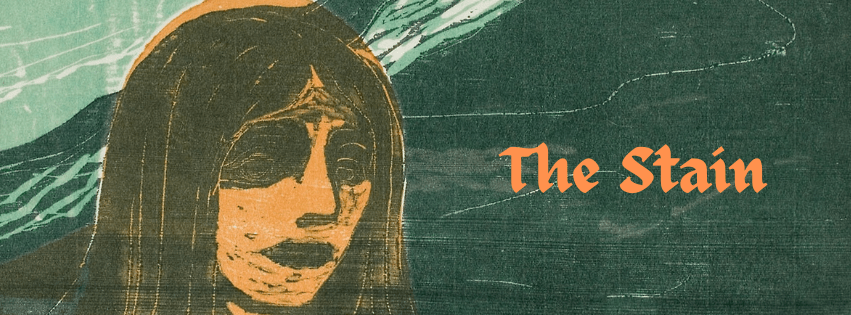
    First, there was a stain at the head of the bed—something amorphous, a certain discoloration without clear borders. I thought I spilled some coffee I’d had in the morning on the bedsheet, or perhaps I’d been careless with the wine I’d drunk the day before. I touched the stain, even smelled it, but I couldn’t determine its origin. For a moment it seemed slightly rough, but I told myself immediately that that would make no sense. Anyway, I placed a pillow over it and laid out the blanket, tucking it under the mattress to make sure the stain is hidden.

    Late that night, I was eager to get into bed. I dropped my coat at the entrance hall and tossed my handbag on the table, I threw my clothes on the end of the bed, put on faded pajamas and lifted the blanket. I was about to lie down and relax, but to my utter surprise I saw that the stain expanded. From its place next to the pillow it had spread to the center of the bed, assuming the shape of a funnel. And not only that, but it had also swelled slightly, adopting a sort of thickness. A light brown rising with air bubbles, it had somehow glided to the center of the bed. It also had a sort of inner movement, almost as though it were breathing. But as I watched it closely I burst into laughter – clearly my sight was not as good as it used to be; apparently I had to get new glasses. How was it possible that a stain that had been created yesterday would grow and swell and become a living creature? It seemed like a wet mass, but as I stretched out my hand and touched it, it was dry and rough.

    I stood there watching the stain, wondering if at this late hour I should remove the bed sheet, toss it into the laundry bag and put a new sheet, but I was overcome by strange dizziness, which removed any rational consideration. For some strange reason I was positive that even if I put a new bedsheet, the stain wouldn’t be removed. Suddenly my cell phone rang. A friend apologized for calling so late at night. She couldn’t find her wallet and she had no idea what to do. The panic that came from the phone made me alert. I suggested she should call and cancel her credit cards and she thanked me, and the conversation was quickly over. Exhausted, I collapsed on the inner side of the bed, curving my body so I wouldn’t touch the stain. Before I fell asleep I heard a strange whistle, and then a sort of ticking, as if at the heart of the stain was an old clock. I thought I really must remove the sheet at once, but instead I fell into a deep, dreamless sleep.

    Early in the morning, a cool wind awakened me. With eyes closed, I stretched a hand to further cover myself, and to my utter surprise, I touched an obscure humidity. I opened my eyes and saw that the stain had expanded along the bed, and now it was as long as my body. Like me, it was covered with a blanket made of a pleasant fabric, and underneath it was that denseness that seemed alive, like exposed viscera, skinless tendons and muscles; a motionless stain that yet clearly exhibited invisible breathing. I could hear ticks coming from it, muffled yet distinct.

    I was stunned. Petrified. My heart was pounding rapidly and sweat accumulated on my temples. My fingers crushed the blanket so hard I almost tore it. I couldn’t move. Various questions emerged and struck me: is someone hiding in the bed? An animal? A person? Maybe an unfamiliar material? Drug? Poison? Possibilities materialized in my mind, each one worse than the one before, but then dissipated when put to the test of pure reason. After a couple of minutes my breath became normal again, and I reproached myself for believing in such ridiculous horror stories. I decided to get out of bed at once and replace the dirty sheet with a new one.

    But as I moved, the stain moved with me.

    My left foot turned left, and the stain crawled to the left; my right leg folded, and the stain wrapped into itself; my hand stretched above my head and the stain broke forward to the headboard, lively, and now also chirping. To quiet the sound of my heart pounding, which emerged from every pore of my body, I yelled at myself to stop, this is complete nonsense, a hallucination; a stain in the bed cannot become a person’s shadow. Apparently, I hadn’t woken up yet. Here, in a moment I will get up, wash the rebellious sheet—

    As I got up a peep emerged from the stain, and somehow it vibrated as if it contained water that moved from side to side. It gurgled and became quiet.

    I collapsed on the floor and laid on the carpet for two hours, my eyes closed and my body trembling.

    *

    Rain pelted the window, gusty winds plucked at the treetops, hailstones fell on the street, making an aggravating rustle. I laid in bed next to the stain, listening to the winter storm. I’d been sleeping next to it for a week—not really sleeping but resting, stretching my body as it expanded with me. I placed my head on a high pillow and it poured toward the headrest.

    The fear of the first days had been replaced by a vague alarm. The stain had not been removed, even though I’d changed the bed sheet twice. It was floating up and shrinking, spreading on the right side of the bed and then contracting itself and turning into a long worm. Something was existing next to me though I didn’t quite know what it was. My various speculations were all ruled out. I’d pondered for hours—what is this thing?—all I knew was that a certain physical relation between us existed. A sort of interaction that I didn’t understand, a reciprocal movement that I couldn’t figure out.

    Before I got into bed I took off my clothes and laid naked next to the stain. At first, I was lying on my back, my head on the pillow and my body stiff, hands fixed on the sides, and my breath shallow. But after a couple of minutes, the thread stretching my body loosened and I relaxed. Lying on my side as my full breasts pressed against the mattress, a heavy thigh stretched forward, a light soft belly protruding down—my body was fully lax, almost as if it was about to be absorbed into the bed. And the stain adopted my body’s form, making chirps and whistles.

    Had I been lying next to a man I definitely would have contracted my bulging belly, trying in vain to conceal its softness. Every once in awhile I dated men, sometimes I had a partner for a couple of months. Men tended to take off their clothes at once; passion blunts self-reservation. Maybe they thought there was no need to pretend for a woman who looked like me. I, by contrast, constantly compared myself to the body of an anonymous woman that had been engraved in my memory, a long thin stalk, so different from me that it was hard to believe we were part of the same species. I would loathe myself and detest the man next to me, and then make loud moans.

    But next to the stain I’d spread myself, and it adopted the form of my body without creating any oppressive self-reservation. My leg moved to the side and the stain poured in the same direction, my arm folded above my head and the stain expand upward. A denseness that was an echo, a reflection, a blunt mirror that though it reflected my body, it provoked no comparison to other women, to other body types; an entity without judgment. For a moment I even thought it restored the ancient mysterious nature of femininity that had been utterly lost.

    *

    A howling wind came from the street. In the silence of the night, it was possible to hear night birds chirping. I was lying in bed, I’d looked outside the window. I saw a fuzzy moon and closed my eyes.

    The stain had grown. Extended. Spread across more than half the bed. It had been here next to me for two weeks, enveloping a hidden movement, and I found that it was sprouting. Every morning, I slid a bit farther to the left side of the bed, but I could still relax comfortably. The moving stain emitted its ticking, its motion resembled mine but only bigger. Sometimes I moved my body only to watch it changing, crystallizing into a bulge that was swallowed into itself. A movement that in spite of being visible, occurred within itself. A hand moving aside and the stain dripped toward me; I recoiled so it wouldn’t touch me. But immediately it withdrew, making a gurgle, returning to the right side of the bed. I was lying on the left side of the bed, moving slightly farther away from the center, wishing to relax in the space left. I was thinking what would happen if the stain went on expanding, but I fended off the thought, and it dissipated and disappeared.

    I began to suspect the stain was also crawling into my tablet. Late at night I couldn’t sleep, I surfed the web. Mostly I was on Facebook; a variety of unrelated posts blended into each together, making my loneliness yet another story emitted into the world. No longer was I feeling suffocated and breathless, as if I were alone in the world, but instead I saw smiling or sad faces, a tragic and then funny headline, photos of animals and then political declarations. So I also became part of a constant stream of impressions that emerged for a single second and then sank into the darkness, moderating any sadness or joy, illustrating well the proverb that all things must pass.

    But I suddenly realized there was a link between the stain and the images on my tablet. As a lovely animal appeared—a dog surrendering to the hug if its owner, a cute cat looking out the window—the stain made a light, delicate chirp, almost pleasant, and I could feel a soft movement within it. As I watched an embarrassing or ugly image, it made a shrill peep, and something appeared to be moving with disagreeable sharpness. So, late at night, I was on the side of the bed, watching images, letters, numbers on my tablet, attentive against my wishes to the echoes they created in the stain. A recumbent full-bodied woman was watching pieces of reality that were visible for a couple of seconds and then sank into oblivion, drowning the oppressive silence of the night and her complaints, which nobody answered, in the echo that emerged from the entity next to her.

    *

    People think better late at night. A complicated exercise, income minus expenses that every time add up to a different amount, regular working hours plus overtime that make an unreasonable number—they all disappear late at night. Everything falls into place, the numbers make sense, an inner logic that agrees with the facts. I realized that exactly twenty-three days ago, the stain appeared on the bed. Twenty-three nights and three hours since this small bulkiness at the head of the bed, which I thought had dripped from my coffee, became a lasting entity. I fell asleep next to it and expected to see it as I woke up in the morning.

    Strangely, a certain intimacy was created between me and the stain, as if we were both part of a hidden plan. If I watched a movie, I was constantly attentive to the sounds it made; if immersed in Facebook, I wondered if it would generate a gurgle of pleasure or an inner movement, nervous and full of resentment; if I read the headlines, I was waiting to feel its internals currents. Sometimes I felt an unpleasant ticking coming from it, and I tried to speculate why it was annoyed.

    The stain, so I’ve discovered, detested strong feelings. If my tablet revealed a young man holding back his tears facing his dying father, a woman’s face twisted by pain watching her sick child, a young girl crying as her lover travels far away, it made shrill sounds. For a moment, I thought I heard two pieces of metal rubbing each other, a creak that made me shiver, and I immediately removed the images, deleting faces showing pain or longing. The stain especially liked colorful images. Funny scenes made it rattle. Torn body parts, murder and rape only generated a tiny croak; violent scenes created a slight, almost unnoticed, movement. But it found a clear strong emotion, the heart artery fully exposed, detestable. An inner movement would become apparent, and though its source was obscure, clearly the stain expressed resentment, almost always accompanied by a loud, unbearable whistle. Stop it, enough, I yell at it, but the stain was indifferent to my screaming. Only as the gliding tears were replaced by a smiling or violent face did the stain stop moving and seemed enveloped by pleasant tranquility.

    When my son was a child, I used to tell him stories at bedtime. Lying in bed, wrapped in a duvet, his eyes were closing but they opened at once if the story was about a horrifying monster, a preying animal, robbers awaiting an unsuspecting convoy. But if accidentally a broken-hearted mother appeared in the story, or a beaten boy betrayed by his friend, rage filled his child’s eyes and his small hands clenched into fists. In a loud voice, he demanded that I remove these oppressive characters; he had no desire to listen to a story that fills the eyes with tears. He was only interested in an adventure with a happy ending. Well, no one is eager to unearth his inner abyss, overflowing with particles of pain and primordial tears, a crevasse implanted already in a newborn baby. And, no matter what a person does to please himself, the soul’s crevice would always remain open, and one story would suffice to make the pain erupt and break the thin crust covering it.

    Thus, I also silenced my complaints, muted my bitterness, swallowed tears over my son living so far away from me and delved into the characters on my tablet, funny or scary. And if, for a single moment, an aching or love-struck protagonist emerged, the stain revolted and made threatening sounds, and I would remove it at once, searching for a pleasant or chilling replacement. The stain and I were lying in bed, side by side, watching the small screen, facing a world of funny or intimidating adventures.

    *

    A full moon implanted in a bright winter sky always creates restlessness, an inner movement that can’t be comprehended. Something exceeds its proper place, but there is no telling what it is and how it can be fixed. An inner support is slightly shaken and can’t be righted. The stain was filling almost the entire bed, and I have shrunk to the far right end. A big, sharp moon glowed through the window.

    The stain and I have lain next to each other for seven weeks. It was still expanding, its movements wider, exhibiting a reserved power. Sometimes when it moved, I grabbed the bed sheet, so as not to fall down. There was only a very narrow space left for me at the end of the bed—the stain was already touching me. I felt cool wetness; it looked like a huge mollusk without its shell, but touching it felt scratchy and rough. But I didn’t recoil, I laid on my side; it never even crossed my mind to get up and sleep on the sofa. On the contrary, since I went to work every morning, I was eager to return home and lie beside the stain.

    One day I came home furious. I could hardly walk up the stairs; anger made my legs heavier. I opened the door and slammed it behind me, threw my handbag on the floor, took off my coat violently as the sleeves turned inside out, took off my clothes and hurried to bed. The phone rang a couple of times; maybe it was my son, but I didn’t answer. Someone rang the doorbell, perhaps a neighbor, yet I didn’t open it. All I wanted to do was lie beside the stain and plunge into my tablet. Facebook, Twitter, a short news release, a chapter of a familiar sitcom, I was watching them and listening to the stain, wishing to drown my pain in the pleasant humming it made.

    On that day the chief doctor had reproached me for an error in the files, though it wasn’t my fault. A medical secretary must be extremely punctual, make sure all the details are accurate, never make a mistake when reporting tests, every letter and digit should be in place. But it turned out that the blood tests of one patient were mistakenly added to the medical file of another patient. The doctor stood at the office door and said in a decisive tone that this never should have happened, it could be life threatening, and then suggested that it might be about time to find a new medical secretary. My broken sentences were useless—the laboratory had sent the wrong file, it isn’t my fault, I only wrote down what had been sent to me—he spoke in a loud voice so everyone would see how strict and careful he was. The head nurse looked at me with demonstrated contempt and the few patients who sat next to the office lowered their gazes, pretending not to see my tears.

    Finally, I got up and left the office. I’d had enough of the haughty doctor, who elaborated that there was no good medicine without an orderly procedure. I followed the rules, wrote down the numbers, and still an error had been made and everyone was sure it was a result of my negligence. Even if I could prove that the data from the laboratory was mistaken, no one would believe me. Justice, so I’ve learned, is made by the size of its executors. When I wished to put it on, everyone looked at me with contempt, with a touch of vulgarity. A secretary like me simply could not prove the doctor wrong. It was implausible and therefore impossible. I had better not try to claim I was right and spare myself the humiliation.

    But next to the stain, the doctor and nurse turned into blurred, faceless images, only a background to the screen of my tablet. Funny videos and works of art, politicians giving speeches followed by beauty salons promising eternal youth, singers from the seventies and then women’s clothes—and the stain gurgled, hummed, kept an inner movement that was obvious in spite of not being fully visible.

    An angry woman with messy hair was lying in bed, biting her nails next to an entity she couldn’t figure out, a swelling that had become part of her life. She preferred it over her son, temporary partners, her workplace for years. She found comfort in its inner movement, created by images on her tablet. The stain reacted to what she said but didn’t respond, reflected her movement but kept its own form, was not taken aback by her full body but rather stretched toward it.

    *

    A nightmare. A horrible dream. I could hardly breathe; cold sweat rolled down my back, my heart pounded rapidly. I couldn’t wake up from this distressing dream: I had returned home, took off my clothes and hurried to bed with my tablet, but to my utter surprise another woman was lying next to the stain. Not prettier, not younger, but someone else. Not me. A stranger. I was standing naked, facing her, watching her, not knowing what to say. How could someone else take my place?

    As I was trying to stop my tears, wishing to fend off the pain that became sharper every minute, she stretched in bed. The soft arms spread upward, the back straightened, the full legs were pushed farther away from the torso—and the stain followed suit. The flowing swelling adopted the form of that woman, and when she relaxed the stain returned to its previous form. It became a mirror of this stranger, who acted very naturally, as if she had always been lying next to a stain that moved in accordance with her motion.

    The rage woke me up. I opened my eyes and saw I had fallen off the bed. My naked body was on the cold floor, shrinking and shivering. My knee joints were stiff, my muscles exhausted; somehow I managed to get up and stand next to the bed. The stain now filled the entire bed, humming and sending invisible currents everywhere, making a silent ticking, indifferent to the fact that I wasn’t lying next to it.

    A horrible cry came from my mouth, like an animal trying to escape a predator when it is so close it can smell its sweat. I reclined toward the bed and I tried to push the stain away to make room for myself, but my hand sank in the lively swelling; its inner breath was tranquil and the humming coming from it was constant and unchanging.

  • River Birth: Beloved by Tony Morrison

    River Birth: Beloved by Tony Morrison

    Perhaps no other literary work revives black slaves’ suffering in the United States as vividly as Beloved, a novel by Tony Morrison, which she published in 1987. Morrison’s descriptions of how brutally the slaves were treated are horrifying and heartbreaking. The novel takes place immediately after the Civil War, between 1865 and 1882, but it also revisits events that took place before these years as well. In 1872, Sethe, the novel’s protagonist, escapes slavery in the state of Kentucky. She crosses the Ohio River to get into Ohio, where slavery had already been abolished. She then lives with her daughter, Denver, in what she comes to understand is a haunted house. After she had escaped with her children and settled in Kentucky, the reader discovers that Sethe’s former owners come after her and capture her and her children. Terrified at the thought that her children would have to experience the unbearable suffering of slavery, she tries to kill them—she is willing to do anything to stop them from becoming slaves. She succeeds in killing her eldest daughter, while the others survive. Later, her two boys escape from home, and she is left with her youngest daughter, Denver. Beloved, a young and mysterious young black woman, joins them, and Sethe is convinced that Beloved is the reincarnation of her murdered daughter.

    The novel portrays various aspects of slavery, the most important being how it affected family relations, motherhood in particular, which is the most basic human sentiment. Black women were treated ruthlessly. Sethe’s mother-in-law had eight children, and they were all taken from her and sold into slavery. Sethe sees her mother only a couple of times, including once after she was hanged. She manages to raise her children, but at a certain point, she sends them to Kentucky in order to save them from the cruelties of slavery. When she is pregnant, the schoolteacher and his nephew abuse her—the nephew and his friends hold her and steal milk from her breasts while the schoolteacher is taking notes. After reporting their misdeeds, the schoolteacher whips Sethe severely, despite her being pregnant. She escapes into the forest, but the wounds on her back the burden of being pregnant cause her to collapse. She is positive that the fetus is no longer alive, and she believes she is about to die. But a young white woman comes along and helps her give birth, even though she could have turned her in for money. Sethe disguises her true identity, and claims that her name is Lu.

    Beloved is one of the very few novels that depict the act of giving birth. No other topic is as repressed as that of a baby coming into the world. Western fiction is full of descriptions of childhood experience, adolescence, love and the loss of it, illness and death, but there is almost nothing about giving birth. Tolstoy, Stern in Tristram Shandy, Tony Morison, and of course Margaret Atwood are virtually the only writers that refer in detail to the physical process of the fetus emerging from its mother’s body. Despite the massive progress in women’s rights in our society, it seems that this feminine experience is still consistently overlooked. One could almost believe that the legend about storks delivering babies is still a popular one today.

    But Toni Morrison chooses not to ignore the act of giving birth. In a world that abuses mothers, she portrays the birth of Denver with great detail. Not far from the Ohio River lies Sethe, her back aching from the previous whipping, her legs bleeding from walking without shoes, and a six-month fetus in her womb. First, the author establishes a fundamental theme that comes to be interwoven throughout the novel, applicable to everything: pain has value, and overcoming it brings forth redemption. Sethe likens the scars of whipping on her back to a tree with branches and fruits. The white girl asks Sethe if she is in pain, and adds: “More it hurt more better it is. Can’t nothing heal without pain, you know.” The Christian spirit is echoing here: suffering has a purpose; it brings a person to a better place. Pain does not exist in itself but is rather a vehicle for change.

    The white girl puts a bed of leaves under Sethe’s aching body and massages her feet. Both of them know that the labor will take place soon, and they look for a proper place for Sethe to give birth. As they walk towards the river, a miracle occurs: they find a deserted boat next to the riverside, which might be a good hiding place suitable for giving birth: “At noon they saw it; then they were near enough to hear it. By late afternoon they could drink from it if they wanted to. Four stars were visible by the time they found … a whole boat to steal.” The white girl says, “There you go, Lu. Jesus looking at you.”

    But as the labor begins, an entirely new perspective blends into the Christian viewpoint: labor is portrayed in terms of the fundamental forces of nature. “As soon as Sethe got close to the river her own water broke loose to join it,”  writes Morrison. The embryonic fluid and the water of the river are one. She lays down in the boat as the water filters in when “when another rip took her breath away.” The contraction is described as a “rip was a breakup of walnut logs in the brace, or of lightning’s jagged tear through a leather sky.” Pain is like a breaching tree, like lightning in the sky. The head of the fetus is stuck, drowning in his mother’s blood, as the white girl “stopped begging Jesus and began to curse His daddy.” Sethe pushes, the girl pulls, but eventually, an entirely different force causes the labor to end successfully—that of the river itself. “When a foot rose from the river bed and kicked the bottom of the boat and Sethe’s behind, she knew it was done and permitted herself a short faint.” The river brought the labor to a fruitful completion—not God, not Jesus, but rather an ancient primordial power, a wide river rolling across America.

    To further emphasize the transition from the primal world to the Christian one, as they find that the baby is indeed alive, “Amy wrapped her skirt around it and the wet sticky women clambered ashore to see what, indeed, God had in mind.” River and land are entirely separated, which is a metaphor for two different modes of existence. In the place where the birth ultimately occurs, the primary forces of nature take action. After the birth, on land, there exists a world dominated by God, with good and evil, ruthless brutality and compassion. “A pateroller passing would have sniggered to see two throw-away people, two lawless outlaws—a slave and a barefoot whitewoman with unpinned hair—wrapping a ten-minute-old baby in the rags they wore. But no pateroller came and no preacher. The water sucked and swallowed itself beneath them.”

    In historical circumstances in which motherhood is a source of endless misery, and mothers are willing to kill their own children in order to prevent them from becoming slaves, the act of labor is a moment of uniting with natural forces. Sethe and the girl bid each other farewell, as they will never meet again. Sethe asks her for her name, and she answers, “Amy Denver.” And so it is thus determined that the newborn baby will be called Denver.

  • Birth in War and Peace

    Birth in War and Peace

    The renowned poet and cultural critic Matthew Arnold, who is widely regarded as the father of modern literary critique, famously stated: “a work of Tolstoy is not a piece of art but a piece of life.” His novels reveal a viscerally realistic worldview, aiming to depict the essence of the human condition in an accurate and authentic manner. Tolstoy once noted: “the one thing necessary in life, as in art, it to tell the truth. Truth is my hero.”

    War and Peace, the masterpiece published in 1869, depicts Russia when it was invaded by Napoleon. In addition to the main protagonists, Natasha, Pierre and Prince Andrew, Tolstoy presents a variety of supporting characters, each of whom is layered and fascinating.  The reader learns about Russian society, which is described in a very realistic manner. 

    It is evident that the novel is an outstanding literary pinnacle – as well as the first modern literary work to realistically depict giving birth. Various works of art portray children’s arrival into the world, but not many of them give insights into the process of giving birth itself. From antiquity to the modern age, artists have chosen not to elucidate the baby’s arrival into the world. Literary fiction portrays various ruthless painful events, which are not very appealing (wounds and illnesses, beheading and other forms of death), but the feminine experience of extracting one body from another tends to get undermined.

    Tolstoy, an author fully attentive to the experience of the individual, depicts the first birth in War and Peace. Although the narrator is not present in the delivery room, he maintains the focus on giving birth. Lisa, also referred to as “the little princess”, is Prince Andrew’s wife. She is portrayed as a young and naïve woman with a juvenile beauty. She wishes no harm, but her frivolous nature stands in contrast to that of Andrew. He leaves his pregnant wife to join the battle against Napoleon. Everyone believes Andrew has died in the battle of Austerlitz. His father and sister decide to conceal his death from his wife who is nine months pregnant – but he returns home unexpectedly right before the delivery.

    Even before Lisa’s husband appears, the princess is portrayed as follows: “And besides the pallor and the physical suffering on the little princess’ face, an expression of childish fear of the inevitable pain showed itself.” And then “the little princess began to cry capriciously like a suffering child and to wring her little hands with some affection.”

    This description palpably evokes mixed feelings. On the one hand, Tolstoy has unequivocally affirmed that Lisa isn’t crying because of an immediate pain but because she presciently knows that she is about to experience profound suffering. The fear of giving birth is therefore acknowledged as a common feminine phenomenon, which is self-evident in my opinion. On the other hand, fear is still portrayed as capricious and childish.

    As the midwife arrives Andrew’s sister tells her, “with eyes wide-open with alarm,” that the birth had begun, to which the midwife replies “You young ladies should not know anything about it.” Here again, Tolstoy acknowledges young women’s fear of giving birth, which is not typical of a single character. Furthermore, the author suggests there is a systematic attempt to conceal the pain and anguish associated with the process of giving birth from young women, perhaps because they might avoid it altogether. In 1959, Simone de Beauvoir argued in her book The Second Sex that women are subjected to myriad psychological manipulations to have children, in order to serve the larger purpose of maintaining masculine superiority. Eighty years earlier, Tolstoy portrays how young women, who had never had children, are intentionally kept away from a woman giving birth.

    Andrew returns home unexpectedly and rushes to his wife’s room. The excruciating pain and excitement make her oblivious to his sudden appearance. From this point onward, she is portrayed in a rather extraordinary manner. “’I love you and had done no harm to anyone; why must I suffer so? Help me!’ her look seemed to say.” Her husband tries to assuage her but then again, her expression conveys it all: “I expected help from you and I get none, none from you either! Said her eyes.” In my view, there is nothing more authentic than a sense of helplessness being confronted with severe pain. Pangs can turn an adult to a child begging for help. The woman who is in the process of giving birth becomes a sort of baby crying and imploring for help, even from those she knows cannot assist her.

    As was customary at the time, everyone leaves the room with the exception of the doctor and the midwife. Andrew covers his face with his hands and hears “piteous, helpless, animal moans” coming through the door. He paces in the room, tries to open the door to the delivery room, but then silence falls. “The screaming ceased, and a few more seconds went by. Then suddenly a terrible shriek – it could not be hers; she could not scream like that – came from the bedroom. Prince Andrew ran to the door; the scream ceased and he heard a wail of an infant.” The pain of giving birth makes his cute wife yell in a way he never thought would be possible.

    This first literary birth ends tragically. Andrew enters the room, “He went into his wife’s room. She was lying dead, in the same position he had seen her in five minutes before and, despite the fixed eyes and the pallor of the cheeks, the same expression was on her charming childlike face with its upper lip covered with tiny black hair. ‘I love you all, and have done no harm to anyone; and what have you done to me?’—said her charming, pathetic, dead face. In a corner of the room something red and tiny gave a grunt and squealed in Mary Bogdánovna’s trembling white hands.”

    Lisa’s tragic demise while giving birth supports her psychological stand and her justifiable fear of the delivery. It is impossible to argue she is spoiled and childish; after all, the birth had cost Lisa her life. In order to emphasize her pleas for help and amelioration of pain, her eyes reveal that she continues to implore even when she is dead.

    Indeed, Tolstoy remained true to his promise, to tell nothing but the uncompromising truth. Portraying young women anxious due to the painful process of giving birth is both genuine and accurate, and this fear shapes them already at a young age. Facing the pangs of giving birth is a substantial experience, and at times very onerous indeed. However, the crucial point is that giving birth is a fundamental human experience that should have its proper place in fiction in particular and art in general.