Author: Emanuela Barasch Rubinstein

  • Giving Birth to Jesus

    Giving Birth to Jesus

    One cannot overstate the importance of the birth of Christ – the Western world was profoundly affected by Christianity, which ascribes the utmost religious importance to the birth of God’s son. Mary, as we all know, conceived though the power of the Holy Spirit and gave birth to Christ in spite of being a virgin. We could almost mistakenly say that this divine birth appears in various works of the art, but the truth is that the birth itself is never portrayed. We only ever see Mary holding the newborn baby in her lap. I’m wondering, was the birth painful? Long? How did Mary cope with the contractions? In spite of extensive discussions on this divine birth – its religious, philosophical and artistic meaning – we know almost nothing about how Mary herself experienced it. Western culture got used to deliberating on the birth of Christ without paying any attention to the actual birth, to the point that it seems natural to discuss the birth of who many believe is God without asking how his mother felt.

    The experience of giving birth wasn’t always denied. In fact, at the heart of the Judea-Christian tradition lies a description of giving birth, in the story of Adam and Eve. After Eve made Adam eat the fruit of the Tree of Knowledge, God punished them and all humanity: “to the woman he said I will make you pain in childbearing very severe; with painful labor you will give birth to children … to Adam he said … by the sweat of your brown you will eat food until you return to the ground” (Genesis 3:16-19). And so, two related facts were implanted in western consciousness: the suffering of women at childbirth and the need to work to make a living. Some traditions that are the source for the Book of Genesis already existed in the tenth century B.C., and others came later – so for thousands of years, the western world internalized the pain of giving birth and accepted it as a fact to life, just like the need to work. To give birth is to experience a substantial torment; that’s the way of the world.

    So why is there no depiction of Mary’s pains while delivering Christ? By the time Christianity was born, the pains of giving birth were self-evident. The image of the Madonna had dramatically changed the attitude towards the birth. Since she had given life to the Son of God, she herself had a unique nature, essentially different from any other woman. As she was impregnated by God and not by man, Mary was holy, a woman who—unlike any other human being—does not carry the burden of the Original Sin. And thus a belief had been created that her giving birth to Jesus was painless.

    The New Testament provides two version of the holy birth. In Luke, it says “she gave birth to her firstborn, a son. She wrapped him in cloths and placed him in a manger, because there was no guest room available for them” (Luke 2:7). There are no anxieties, no contractions, no changing body – only giving birth, wrapping the baby, and putting him to sleep. Matthew’s version is different. “This is how the birth of Jesus the Messiah came about: His mother Mary was pledged to be married to Joseph, but before they came together, she was found to be pregnant through the Holy Spirit. Because Joseph her husband was faithful to the law, and yet did not want to expose her to public disgrace, he had in mind to divorce her quietly. But after he had considered this, an angel of the Lord appeared to him in a dream and said, “Joseph son of David, do not be afraid to take Mary home as your wife, because what is conceived in her is from the Holy Spirit. She will give birth to a son, and you are to give him the name Jesus, because he will save his people from their sins” (Matthew 1:18-21). Also here, there are no details of the physical process of giving birth.

    But generations of Christian theologians developed the notion that since Christ’s birth was divine, it was painless. Christian thinkers dealt with almost any aspect of the Madonna (Mariology is the theological study of Mary) – but since the Gospels don’t provide any details of the birth, gradually a doctrine of the painless birth came into being. Eventually, the very lack of suffering became the proof of Mary being impregnated through the Holy Spirit.

    There are various examples for this view. One well-known example is the protocols of the Roman Catholic Council of Trent, which took place in the sixteenth century. In this ecumenical council, the Roman Catholic Church rephrased its dogmas in the face of the growing Protestant movement. It promulgated a catechism which states “just as the rays of the sun penetrate without breaking or injuring in the least the solid substance of glass, so after a like but more exalted manner did Jesus Christ come forth from His mother’s womb without injury to her maternal virginity.” The Roman Catholic Church and the Orthodox Church held this view of the sacred birth. Protestants didn’t ascribe such theological important to Mary but have adopted her image as a virgin and a righteous person.

    Thus, two ‘types’ of birth were implanted in the common consciousness: a divine one, which isn’t a result of a sin and isn’t a punishment, and is a painless birth; and a human negative birth, which is both a result of a sin and involves much suffering. There is a sublime birth, adorned, a ‘role birth’ in contemporary terminology, and a birth that is better forgotten because it is an agonizing divine torture.

    Eventually, the Christian world completely repressed the simple feminine experience of giving birth – one that is painful but not because of a sin, it involves profound physical and emotional changes, and usually ends with profound joy. The mixture of accepting the pain of giving birth as a fact of life and ascribing such negative value to this suffering ended in an almost complete neglect of the normal feminine experience.

    Examining modern literature reveals that the number of birth descriptions is almost negligible compared to any other meaningful human experience. If we look at how many books have been written on love, sex, divorce, sickness, or death, we would have to reach the conclusion that birth has been almost fully repressed. But since we are so used to not reading about giving birth, we casually accept this as normal without questioning. How is it possible that such a deep and meaningful experience is missing from all forms of art?

    We might try to do some justice to Mary and imagine her giving birth in more human terms:

    The air in the barn was thick, full of the smell of animals. She needed plenty of blankets, it is cold in Bethlehem at the end of December. The midwife was completely unaware of the special nature of this delivery, she boiled water at the far end of the barn to clean Mary during and after the birth. Like most first births, it was very long. Mary sank into despair and cried bitterly, begging for help. Hours of pain blurred the hopeful expectation; at certain moments she didn’t know what she was doing there. As Jesus’s head finally appeared, she knew the suffering was close to being over. Jesus was pulled out of her body and made a cry that resembled a bleat. The midwife placed him on her naked body, covered with fluids and still attached to the umbilical cord. Mary hugged him, thrilled as she saw his eyes open for a split second and then close again. As the midwife took him away, Mary leaned back, heaving a quiet sigh. Through a hole at the top of the barn, she could see stars in the sky, gleaming in an unusual light.

  • The Grammar Teacher

    The Grammar Teacher

    The Grammar Teacher the third story in Five Selves, Holland House Books, 2015. 

    Under my shirt, tucked somewhere between my skirt and my body, I smuggle something out. It may be a camisole I fold to the size of a cigarette pack, perhaps a small piece of tableware I would like to have; a couple of times I have even taken cosmetic creams which I could hardly hide under my arm, they almost fell out as I walked to the exit. First I look to see if the security guards are nearby. If the coast is clear I begin to walk slowly, in a casual manner, towards the exit, making sure to stop on the way to examine another small object so as not to arouse suspicion. About five steps from the door there is always a childish desire to run out, as if it is all a game and I am one step away from winning. In a moment I will cross the store’s wide exit doors and the stolen treasure will be mine. But it is here that self-control is needed: a slow and moderate step, one that doesn’t betray the wish to escape as quickly as possible.

    Sometimes on the way out I have to give up, accept a loss, place the object somewhere and leave empty-handed. The security guards, however, are not inclined to suspect women like me. I often see them following groups of young girls, who hope that if they are caught they will be able to blame each other and the thief won’t be arrested. First they gather around the hangers, examining and inspecting, then they decide which garment they want; one of them tucks it into her handbag and together, laughing loudly, they walk slowly and leave the store. The security guards, mostly young and inexperienced men, can’t face a group of young women chatting and smiling on their way out. Once, a new guard on his first shift made a mistake and asked the girls where the bathing suit they were holding was. The bursts of laughter and the blunt remarks embarrassed him to tears and he swore he would never stop them again, even if he was absolutely sure they were stealing from the store.

    But no one suspects me. I am a woman of somber, respectable appearance. My black hair is simply cut and pulled up in a plain rubber band, my shirts are always tucked in to dark, straight skirts; I carry a gray handbag, I am slightly over-weight but exuding vitality; my entire appearance, aside from my pug nose, speaks of decency and good manners. When I enter the store no one could possibly guess my intentions. Saleswomen treat me kindly, obviously a customer like me must be satisfied; clearly I don’t intend to waste my time walking aimlessly between the counters. I pace quickly, as if I were in a hurry to carry out a busy daily routine. There is always a diligent saleswoman who will suggest garments on sale, her instincts leading her to believe I want to make the most of my money. I smile kindly. I am sorry that although she is trying so hard, I refuse politely and keep walking around the store. After she gives up and immerses herself in conversation with other faded and tired saleswomen I advance towards the object I am about to take.

    It’s been several months now that I have been wandering through stores. I covet things and take them secretly. I never imagined that circumstances would make me do this. I used to think that a person growing up in a stable and respectable family like mine could never end up stealing. I felt I could see my life stretching ahead, and every stage would follow the previous one clearly and naturally. I never imagined I would walk out of a department store with a shirt hidden in my pocket, an overwhelming happiness at not having being caught taking me over completely.

    I used to be a grammar teacher. I always knew I would be a teacher. As a child I really liked school; I always answered questions in class and at home correctly, simply, and clearly. The teachers used to comment on my ability to explain everything in a mature and responsible way. I was hard-working and tidy, my books and notebooks were always placed neatly in my backpack; more than once a teacher who lost her notes would ask to take a look at what I had written. In full, rounded handwriting, which never exceeded the top or the bottom of the line, without any decorations or scribbling created by boredom, I wrote down everything that was said in class. I detested children who interrupted. Next to me sat a fat, stupid girl with almond eyes who giggled constantly; if I could have, I would have expelled her from school.

    In high school I invested all my energy in learning. My homework was always ready and I never forgot anything at home.  Every evening the backpack was placed buckled beside the bed, ready for the next day. My parents were very proud of my achievements, but a couple of times my mother suggested that I spend some time with friends and ease up on the studying. I, however, felt I was standing in a sort of confined zone, whose boundaries must never be crossed. I found it hard to explain, the boys and girls around me seemed to me distant, almost strange, living according to a different inner mechanism, following a tune I never heard. Yet in spite of the isolation from my peers, except for one girl friend, I felt I had a special place in class that couldn’t be taken by anyone else.

    Of course there were unpleasant moments: next to me sat a slender girl with wide open blue eyes encircled by a stroke of black paintbrush, ignoring lustful looks and amusing remarks and looking at me with a mixture of wonder and contempt. I would rather have sat alone; the teacher who made her sit next to me said loudly that she was hoping I would encourage her to study more seriously. She merely watched me distantly, wondering what she could possibly learn from me. There were also a couple of boys who used to take my notebooks before class and copy homework, laughing and grabbing the notebook before I agreed that they take it. At first I didn’t dare refuse. Later I used to pretend I didn’t hear them asking.

    But all these embarrassments evaporated when I got the highest grade in class, or when teachers openly praised me. Then I felt everyone acknowledged that my presence in class was worthwhile and justified. Endless hours of studying boiled down to a couple of moments of explicit joy; but they supported me in days in which I was entirely steeped in solving math problems or summarizing history chapters.

    Thus, it was only natural that I decided to become a teacher. When I came to my first job interview at a comprehensive school I was excited and somewhat confused. I put on a dark gray skirt and a straight shirt with small buttons, my appearance conveying integrity and earnestness.  As I waited behind the closed door of the teachers’ room, I saw my reflection in a window—a young woman with a rounded figure, a solemn countenance, squinting in order to detect any invisible flaw that might impede her. Suddenly I saw that a button in my shirt was unfastened; my fingers were shivering as I fastened it, before I was asked to come in. The principal greeted me with a forced smile and asked me to follow him. On the way to his room he ordered the janitor to fix the school’s gate, reproached a young teacher for being late for class, and gently rebuked the secretary for not preparing a list of required equipment. When we got to his room he left the door open, and sat down without inviting me to sit. Out of embarrassment I collapsed into one of the chairs, and then he lifted his eyes and looked at me as if seeing me for the first time. He looked at my CV very briefly, as if it was an irksome duty that must be completed, as though I was a student presenting last year’s report. Then he asked me about my experience. His expression betrayed neither sympathy nor reservation. Finally, considering every word, he said a teacher was going to leave the school soon, but he was not sure when exactly she would leave or whether a new teacher would be hired to replace her. When she did leave, the school would contact me.

    While I was waiting at the bus stop outside the school, a young girl sat next to me, her body soft and adolescent, her face full of acne, carrying a faded, graceless backpack. As the school bell rang, she turned her head backward and looked with hostility at the schoolyard, almost with revulsion. Then she let her hair out of the thin rubber band, twirled it around her short fingers several times and tied it behind her head again, without leaving a single hair to sway in the light wind.

    At the next job interview the principal was much nicer. An elderly woman, her face made up not to beautify herself but merely to convey an effort of embellishment. She suggested that I give a grammar class and she would observe my teaching. Of course I consented, but her testing me without letting me know in advance and allowing me to prepare myself made me feel I had failed before I even started. My explanations were vague, I made serious mistakes about issues I knew perfectly well, and towards the end of the class I was confused by a simple question from one of the students. When the bell rang I left the class in a hurry, without even asking the principal if she would consider hiring me.

    Finally I got a job at an old, respectable high school with students from well-established families. During the first days I was extremely embarrassed; I felt as if I was a student that was being allowed to substitute for a teacher. In class I shivered a bit, but the students were full of the excitement of the beginning of the school year and didn’t notice it. I made several mistakes reading the names, and laughter and gloating erupted in the class. But slowly silence came, the whispers and broken words were hushed, and my voice was heard, stable and clear.

    The large, well-lit teachers’ room was a hive of activity. The huge windows were wide open and the windowsill packed with textbooks and workbooks. Teachers who hadn’t met during the summer break greeted each other loudly, almost shouting. Calls were heard from all corners of the room, a nasty remark about a teacher who had gained weight during the summer, a warm embrace to another teacher who had just gotten married. Some of the male teachers, a small minority among the many women, sat in their armchairs next to the wall and gazed with amusement at their noisy colleagues. A short while before the bell rang the principal entered the room. In spite of his solemn expression, his eyes betrayed a light smile. Due to a stroke half of his face was motionless; as he spoke he filtered the words, orderly and disciplined, never leaving an unfinished sentence or allowing a slang word to creep in. I was told he never engages in idle talk with the teachers, but on the first day of school his face assumes a unique expression resembling a smile, a twitch that could develop into a fully contented countenance and that might even have a touch of humor.

    Embarrassed, I looked for a place to sit. At the end of the room, in a shadowy corner, some seats were vacant. I crossed the room cautiously, ignoring the loud voices, and sat on a plain wooden chair beneath the window. The hustle and bustle in the room, the cries, sometimes harsh and graceless, created a sense of disappointment. This is not how I imagined my first day as a teacher; everything about the teachers’ room seemed vulgar, lacking the refinement I was expecting to find. Two teachers sat next to me, speaking loudly. The older one was heavily made up, looking more like a sales assistant than a teacher; the younger had short light hair, her dress was plain, almost sloppy, and her strong voice echoed in the room; she burst into roaring laughter and clapped her hands. I sat there, staring at the teachers around me and wondering what went wrong.  After a couple of minutes the school secretary came and asked me to fill out some forms. While I was engaged in the details the school bell rang, and all the commotion moved towards the door, fading gradually until all that was heard were thin, quiet voices from the other side of the room and the echoing voices of students playing in the schoolyard.

    In the following lessons I managed to establish my straight, moderate voice in the classroom. The students looked at me with a mixture of respect and reservation. The unrestrained bursts of laughter were gone. I outlined the curriculum for the entire year and explained what assignments would be required for each class. I described the exams that would take place during the year. And so the process of studying began, orderly and structured, every class the logical consequence of the previous one. The entire year was spread before them, its limits well set and clearly divided. The distant gaze ahead created a peaceful and pleasant atmosphere in class, which only a couple of moments earlier had been full of a nervous, anxious murmur.

    After a few weeks I made friends with a couple of teachers. An elderly lady with a thin, girlish figure and a pointed face used to sit next to me in the teachers’ room. She was a biology teacher, constantly complaining about the students: they don’t do their homework, they chatter in class, they are indifferent to the material, the boys and girls lack a fundamental curiosity, a desire for knowledge. She makes an effort to prepare the classes, carefully planning every lesson, but all in vain. Her graceless face stretches even further as she becomes absorbed in this monologue, a long speech with question marks, which she hastily replaces with exclamation marks. In fact, there was no conversation; I sat next to her and she muttered endless complaints.  A literature teacher joined us, a woman with a somewhat sad face, who was nearly always checking homework in the teachers’ room. She gave endless assignments and read them with a grave expression, as if in one of them the solution to a riddle was concealed.  She placed the assignments on the table, a pile of papers, some tidy some wrinkled, written in distorted handwriting, meticulously read them and wrote notes in red ink in the margins—though she had plenty of notes she never exceeded the margins. Finally she placed the papers in a stack, inserted them into a big envelope, and folded the top flap inwards. Then she lifted her brown eyes and looked sadly at the teachers’ room, desperate and proud, asking for assurance that she is indeed an extremely devoted teacher.

    I also used to check the students’ assignments rigorously and fastidiously; I thought homework involved an element of imposing discipline, it was an exercise to tame one’s cravings, devoting oneself to a useful but unpleasant activity. Therefore I was very strict when it came to setting assignments. I detested students who didn’t prepare their homework; I thought they had a fault that must be corrected, a flaw containing a seed of peril.

    After a couple of months everyone knew I was a diligent, committed, and punctilious teacher; true, some said that I was too rigid, I tended to concentrate on every word and to overlook the general context, that perhaps I neglect the personality of the student and ascribe too much importance to test scores. One teacher even suggested that my huge effort conceals a void in my personal life. Had I been married and a mother I wouldn’t have spent so much time reading assignments; but all these remarks were insignificant and negligible in comparison to the many compliments I received. The principal, who never joked with the teachers, would pass by me with his twitch that resembled a smile and a nod, and several times he even praised me explicitly. Some teachers openly disapproved of me, as though they considered me a traitor, betraying a common struggle to decrease duties. Others wished to befriend me, sometimes even asking for my advice on assignments and tests.

    By the end of the school year everyone acknowledged my special place in school. The brown, faded armchair in the teachers’ room was always reserved for me, and even older teachers moved away when I approached it. The students knew I was highly esteemed, and some parents asked to meet me; they would begin by inquiring about their son or daughter but quickly the conversation turned to focus on me, hoping that the affinity between us might prove helpful in future crises. Whenever I entered the classroom the commotion and giggling died down immediately, and I walked at a moderate pace to the teacher’s desk. First I would place my books on it, then take out my notebook and turn to the board to write the subject of the day’s class.

    My gestures in front of the class were slow and confident, I was never hasty. I erased the board with long movements, not stopping to read it but without any hurry; only when the board was completely clean did I begin writing the subject of the lesson in full, rounded letters, distinct but identical in size. Finally I turned to the students, looking at them gravely, and asked in a low voice who had prepared their homework.

    Most of them watched me with awe. Sometimes I felt they could see the pupil that I used to be, a classmate standing in front of them whose sole advantage is that she prepared the material in advance. Yet it was these moments that made me feel my superiority, since even if I had been a student sitting in the first row and writing down every word, I definitely would have been the best in class. Some of them probably would have mocked me, but no one could take away the hint of a smile, subtle but apparent, as I looked around when on my desk there was an A+ exam, marked in red ink.

    Once in a while there were unruly students who refused to accept my authority. In one class, a boy sitting next to the window kept staring at the schoolyard throughout the lesson. At first I decided not to say anything though I detested the way he ignored the lesson, like an explicit statement that it would be better to look outside than to pay attention to class. I thought it would be wise to leave him alone. But once in a while he stopped gazing out at the yard, and out of sheer boredom looked at me in a conceited, scornful manner, as if I were the student and he the teacher. I could hardly conceal my embarrassment; I turned immediately to the board, my shoulders rounded and my body shrinking into itself. With broken movements I began writing lengthy lines, so my blushing face could be hidden and the transparent tear would disappear by itself.

    Against my better judgment, I was distressed every time I taught this class, as if a latent, obscure danger was materializing, even if momentarily, between the straight wooden chairs and the bright desks, etched with endless diagonal lines. Even before I entered the class I could envisage his beautiful face, decorated with blond curls, green eyes surrounded by almost white eyelashes, always looking into the distance to the school yard and beyond it. Sometimes he would squint, gazing outwards but looking as if steeped in a dream. Before every class I wavered, considering what I should do; sometimes I was determined to reproach him but I never dared to do so, I was afraid I would look silly: you can’t be angry at a student only because he is smiling. Thus I chose to ignore him.

    But once, as a girl asked that I repeat an explanation, he burst into loud laughter. His striking beauty prevented others from rebuking him, and the miserable girl sat humiliated and blushing. I heard my voice, loud and harsh, in admonition, speaking of a student’s right to get an additional explanation and of the obligation not to embarrass a classmate, but I was horror-stricken. I thought the other students would join in his cheerfulness. In a moment the entire class would be in stitches, the disgraced girl would burst into tears, which would create further joy, more vulgar this time, and my voice would be swallowed in a stream of giggling and cries, the endless gaudy prattle of teenagers.

    The handsome boy looked at me with contempt, listening to my reproach and smiling, sitting comfortably in his chair and stretching his legs forward, wondering what his punishment would be. Finally I asked him to leave the class. He sniggered, got up and slowly walked out, as though he had heard that he won a prize and he was going to collect it. When he left the classroom I was relieved. For a moment I feared I had sighed out loud, but as I saw the students returning to their books and notebooks, and the girl still expecting an explanation, I rebuked myself for being so scared: everybody knows I am such a gifted teacher, the fear that my voice won’t be heard in class is preposterous, even childish. Only the bell ringing halted the long, fully elaborated and well-reasoned answer to the girl’s question.

    My parents were very proud of my success. Time and again they inquired how the classes are conducted, whether the students are obedient, what do I teach, how the other teachers like me. In spite of my embarrassment I told them about my success; they sat quietly, absorbing every word, never stopping my fluent speech, but apparently accumulating questions to be asked when I was finished. My father tried to follow the material; he always had remarks that were intended to illustrate how well he knew grammar. My mother was focused on the mundane aspects of school life, her questions always revealing a concern, an anxiety about the future: aren’t the other teachers jealous of me? Perhaps they would try to diminish my achievements?  She heard of successful people who had failed because of the envy of colleagues. I should be careful not to disagree with senior teachers, try not to emphasize how well I am doing, and prepare everything in advance so no one would complain. So she immersed herself gradually in the troubles that could emerge any moment, struggling with obscure enemies that for her were so real. She lowered her gaze, her voice became somewhat whiny, and it was apparent she could visualize all these dangers that must be avoided; she was about to burst into tears, since in an instant I would be shamefully expelled from school.

    Even though I knew every conversation would end this way and that my entire success, which initially had been so pleasant, would metamorphose into a danger that might break out at any time, each time a deep anger was awakened in me, spreading and filling every corner. My mother tried to conceal her anxiety in the recounting of how well I was doing: it was because I was so successful I should be watchful. But I heard the profound doubt in her words, a feeling that my many achievements, which to me seemed so solid, the result of talent and hard work, could disappear in an instant due to dark, obscure forces she failed to understand.

    On the last day of the school year a slightly wild spirit prevailed in the teachers’ room: cries were heard everywhere, a pile of papers for recycling dropped on the floor and spread all over the room, dirty glasses were left on the tables, and one teacher told a dirty joke out loud. The giggling didn’t cease even when the principal entered the room. My two friends seemed alert, as if at the end of the day the invisible tie chaining them to this room—normally subordinated to strict, unequivocal rules but now touched by chaos—would be undone. As the bell heralded the end of the year both teachers and students rushed outside, impatient and nervous, barely stopping themselves from racing to the school doors as they opened with a rasping squeak.

    I also stepped outside; already in the corridor, amidst the tumult of the students, among the backpacks rubbing against my arms on their way to the gate, I felt a gloomy spirit overcoming me. I planned to take advantage of the day to do some shopping and pay bills, but as I stood outside the school I felt such a deep distress that I decided to rush home. My bag, normally full of books and assignments, was annoyingly light and insubstantial. I walked away from school, marching briskly to the bus stop; all of a sudden I decided to return. I reproached myself for escaping from school, for joining the run to the gate without making sure that my stuff was safely locked away. I turned back and entered the building, which was by now completely empty except for faint voices coming from the upper floor. I walked slowly along the corridor towards the teachers’ room, finding it hard to accept the silence. An annoying thought crossed my mind: now the school resembles a market without any merchants; the food stands are untouched, full and seductive, but customers and vendors are all gone. I entered the teachers’ room and went to my locker. But next to the locker I saw a small wrinkled piece of paper on the floor, torn from a full page, written in a rounded handwriting. I picked it up and read: I thought about what you said and have reached the conclusion that you were right, there is no knowing what she will do, you had better watch out…

    I dropped the paper, tossed my books into my bag, and ran in panic to the entrance; once again I saw the familiar pictures on the wall, the sports trophies, and the announcement of an end-of–the-year party, but I ran, gasping and breathless, in order to exit the school gate as quickly as possible.

    During the summer I met Matan, my future husband. He introduced himself: a computer engineer in a developing company. He looked like a hard-working, ambitious man, determined to invest most of his time and talent in his job. When I saw him for the first time I could hardly conceal a smile. He had on a ribbed shirt, ironed and tight, tucked into pants with a laundry scent. When the shirt became slightly stained by the ice cream we were eating, he looked at me deeply embarrassed, as if he had failed to conceal a shameful flaw. Immediately he asked where I worked, and when I told him I was a teacher I saw content in his eyes, though he tried to disguise it. He asked me why I chose this profession. My explanations, about a desire to educate young people, to teach them the right habits, were loose, almost misleading. Finally I simply admitted that it was a natural choice, I had never considered any other occupation; my childhood and adolescent experience had made me become a teacher. Even though I saw he was relaxed and feeling at ease, I kept describing how well I was doing and added that in the coming years I might attempt to be appointed head grammar teacher in school.

    Our wedding was attended not only by the principal and several teachers but also by the heads of the computer company employing Matan.  The president, a chubby old man with hair dyed black, kissed me gracefully. He embraced Matan, and as he was holding him in his curved arm he turned to me and said in a pleasant, cordial manner that I should remember that we are family, and that from now on I am part of it too, and added that I should feel free to approach him with any problem or concern at any time. In the confusion of the wedding I didn’t pay attention to these words; but in the following days I was often bewildered by what he had said, inviting and uninhibited, moving me from the office to the warm bosom of the family, as if the gap between superior and subordinates didn’t exist. When I told my mother about it she looked at me, distant and absorbed in thoughts, and then asked me how long Matan had been working in this company. My father, overhearing the conversation from the next room, burst angrily into the kitchen. He was proud of Matan and thought he was a gifted, successful husband, and in no way was he willing to accept any doubt regarding the future flourishing career of his son-in-law. He reproached my mother and said he didn’t understand why she has to doubt everything; apparently the president really felt that Matan and I are part of the company’s family, and no wedding greeting could have been more appropriate and touching.

    At the end of the summer I returned to school. I found the hubbub of the students pleasant, I walked along the corridors, pretending to look for someone just so I could listen to the calls and giggles, to smell the odor of teenagers, and to see how they walked into class with joy and not with desperation.

    As always, the first class was devoted to a description of the curriculum for the entire year. I wrote on the board the subjects that would be taught, how many classes would be devoted to each subject, and what the required assignments would be. I was careful to explain the value of homework, how an extra revision of the material deepens our knowledge and, most of all, that learning habits are the foundation on which human knowledge is constructed. To create a certain connection with the students I admitted that youngsters of their age are normally preoccupied with things other than homework—words that generated pleasant smiles in the classroom—but still they must understand that discipline is a vital instrument for success in any field, and only a constant and structured effort would lead to achievements. This is the reason, I added, that I ascribe so much importance to homework and why in each class I would check if they were prepared properly.

    My lessons were conducted in perfect order; the classes were quiet, with a touch of tension. The material was presented in a clear and simple way; therefore the students understood it very well. In exams at the school, my classes always got the highest scores for each grade. The principal pointed this out in the teachers’ monthly journal, and added his congratulations. My two friends were somewhat surprised, though everyone knew I was an esteemed teacher. The biology teacher, her face gloomy, said that apparently the students were more interested in grammar than in biology, and no wonder, they would use it in real life whereas biology would remain nothing more than a part of their general knowledge. The literature teacher looked at me sadly, trying to compliment me, but her gaze betrayed an inarticulate complaint.

    My excellent reputation made students who refused to study look unruly or lazy. Some were angry at my fastidiousness, at the way I emphasized that assignments must be fully completed. In one class I encountered a slim girl with honey-colored hair almost down to her waist, who never prepared her homework. Whenever I reprimanded her she said nothing, blushing and looking at me with a penetrating look, full of wonder, as if she couldn’t understand why I insisted on creating such obstacles. Since her manner lacked any impertinence or insolence, I found it hard to enforce my way. Whatever I did was in vain: every time she was asked, she blushed and answered she hadn’t prepared her homework.

    I don’t know why, I simply couldn’t accept the way she ignored any threat or punishment, acting as if school was a remote hotel she happened to be visiting where for some strange reason the manager of the hotel insisted that she clean her room. I decided to talk to her in private, without her classmates watching her in anticipation, alert to see how she would answer my question. As we entered a side room at school, she seemed embarrassed and shy. She stood motionless and waited for me to sit down, her face flushed but looking at me with concentration. I began by saying I don’t want to hurt her, on the contrary, I like her very much and I see she is an intelligent, talented girl, but she won’t meet the school’s requirement if she doesn’t practice at home. I added an explanation of the importance of constant perseverance, a striving not limited to a single achievement, brilliant as it might be, but to continuous progress, which is the only way to achieve anything substantial.

    She looked at me with her huge eyes, making no attempt to refute my arguments or answer me. For a moment I thought she didn’t hear me, but immediately I reproached myself, this is a silly thought, clearly she is listening but she doesn’t respond. After minutes of explanations, which seemed extremely long due to her continuing silence, I decided to demand an explanation of her.

    If the meeting had taken place today I think I would have burst into tears; perhaps I would even have embraced her and kissed her cheek when I heard her answer; but at that time she provoked a latent anger, a fury I didn’t know existed within me. Very simply, without any pretense, she said there is no need for that since once she graduated from high school she intended to move to a secluded village in the Galilee and live a plain, rural life, devoid of any professional ambition, and her most ardent wish was to sit on the porch and watch the view, especially during the evening hours, since the light is so soft and pleasant then.

    When I answered her I realized my back was arched and my hands were joined fiercely. My voice sounded metallic, I used pompous language, words I would normally avoid. I spoke about duties everyone has, man’s responsibility to his society, I even said something about the moral implications of our actions. Though I knew I was using vague, empty clichés, I had no intention of stopping. Anger filled me, like a strange bubbling, as if my inner organs were disarranged and the order within my body was being violated; the wrath wasn’t directed outwards but it was merely pushing every organ away. Finally I was silent, and she looked at me with eyes full of wisdom, as if she was sharing my pain due to a misfortune or loss. Then I added that if she didn’t change her habits she wouldn’t be permitted to participate in the class, and at the end of the year she wouldn’t be allowed to continue to the next grade. She looked at me surprised, her face reddening and in her eyes a film of tears. In spite of the harsh threat she tried to understand the source of my arbitrary decision, but I added nothing and left.

    One Saturday we dined at my parents’ place. The table was covered with an embroidered tablecloth with a delicate flower print. My mother decided to use the beautiful porcelain dishes, reserved for festive dinners. Next to every plate was a matching napkin, and beautiful glasses, long and oval, stood at a perfect distance from the plates. All the lights were on, reflected in the large glass bowls at the center of the table, and the room, that normally looked ordinary and even sloppy, was now dignified and inviting.

    My father questioned Matan about his work. He never got tired of listening to stories about the computer company. He remembered every piece of gossip about junior employees and memorized any information on the senior staff. Matan began telling my father about a quarrel that had taken place at the office: the manager was angry at a young engineer who was negligent in his work and went home early in the evening, leaving on his desk e-mails that should have been answered instantly. The young engineer pulled his long hair behind his head, removed his glasses and put them on the desk, and replied that though he cares dearly about his work he refuses to be enslaved by it, and even if he doesn’t complete all the tasks by the end of the day, he will hurry home to be with his children.

    Matan and my father disapproved of the insolent reply of the young engineer; my father noted, smiling, that perhaps he is not that smart, and Matan replied with a blink of agreement. My father said that you can’t just leave everything and walk away at five o’clock; one has a responsibility to the company, which may lose valuable contracts if the engineers don’t stay on schedule. Matan added that in order to work at a computer company and to achieve certain goals, one has to be consistent over time. Everyone thinks that computer guys succeed due to one brilliant idea, but the truth is that success is the result of constant hard work, and sometimes it takes years to execute an idea that was born almost randomly, in an idle conversation.

    To support his point I told them about the student who never prepares homework and my conversation with her. As I concluded, I saw my mother putting down the boiling soup pot on the table, and staring at me. She seemed surprised, perhaps by my determined arguments, or maybe by my explicit threats; but her gaze revealed no satisfaction. Her thick eyebrows curved, she looked down at the table and began pouring soup into the small bowls. Matan and my father, unlike her, listened carefully to the details of the story, and as I concluded they began speculating on the student—maybe she quarrels with her parents, maybe it is an unstable family, perhaps her parents are uneducated and don’t know she is not preparing homework, perhaps she lies to them. I was forced to admit I don’t know anything about her family, but obviously she can’t go on like this, it’s clear, she understands it very well.

    My mother seemed very disturbed by my story. In a low voice, as if a stranger was speaking from within her, she asked whether it was possible that the girl was telling the truth, that she indeed intends to move to a farm in the Galilee and therefore she is indifferent to success at school. Matan only smiled slightly, suffocating a giggle out of politeness, and after a couple of moments asked if he could have some more of my mother’s wonderful chicken which today, as always, was juicy and tasty. She gave him some more chicken, adding baked potatoes, and smiled at him aloofly, in her eyes a touch of ridicule, not to say contempt.

    As we left, Matan hugged me warmly and complimented the way I had spoken with the student. He apologized—he didn’t want to say it in front of my mother, but sometimes she doesn’t understand what it is all about. He, however, is very proud of me, he wishes all the teachers would act like me. Gently he ran his hand through my hair, carefully, as if he had just found out how precious I was, and now there was a double need to take care of me.

    Towards the end of the year national assessment tests to evaluate the students’ achievements took place. A gloomy spirit took over the school. The teachers were inclined to speak less in the teachers’ room, as if every moment should be devoted to preparing for the exams. In the many teachers’ meetings that took place in the evening hours, various suggestions were raised as to how to improve the scores. At first everyone sat next to a clean, tidy table, with plates full of cakes, juice bottles standing in two rows at its ends. But during the meeting, often prolonged into the night, pieces of cake dropped on the table, spreading crumbs which mixed with the sheets of paper scattered all around; disposable plastic cups fell on their side, rolling on their stomachs as the last drops of juice dripped on the table. The colorful napkins that the secretary bought were scattered all around, wrinkled and torn, hiding food residue in their folds, and some even fell to the floor and were left there untouched. The bottles passed from hand to hand, one accidently slipped on the table and left a golden puddle, which dripped to the floor. The secretary rushed to clean the syrupy fluid, but annoyingly it refused to be absorbed by the damp mop, and drops were smeared all over the table, leaving a trail of napkins dipped in sweet, sticky juice.

    I sat there self-absorbed, holding my cup. My skirt remained straight and tight, free of crumbs. I never said a word, the agitation around the table was strange to me; I knew with full certainty that my students’ scores would be excellent. Months of organized, structured work would no doubt bear worthy fruits.

    When the results of the tests were posted I smiled shyly. On the bulletin board in the teachers’ room they were arranged according to class and teacher. As I saw the papers hanging on the board I was a bit anxious, but a quick glance revealed that the scores of my classes were extremely high, and in one class they were even the highest in the country. A couple of teachers complimented me, but I smiled and looked down modestly, my countenance conveying humility. As the bell rang, I walked slowly to the classroom.

    A couple of minutes after the beginning of the class a knock was heard at the door, and immediately it opened with a squeak.  At the entrance stood the principal, and next to him was a woman of about my age, dressed very elegantly, her face made up and her light straight hair well-coiffed. As they entered the room the principal gestured that I should continue with my work. They stood in the corner, next to the wall, whispering and looking at me and at the students. The principal smiled at her; it was like a twitch of pain. There was something strange in his expression, a hint of a weakness he had never exposed. The woman moved her head in agreement, her hair moving forward and backward, and then, in a casual manner, she stretched one foot forward and leaned it on the thin, high heel of a red, shining sandal.

    During class I wondered who she might be; probably a supervisor from the Ministry of Education who had come to watch a lesson due to the high scores of this class in the national assessments. Then I thought she might be a member of one of the many delegations that often visited the school. Dressed in an elegant shirt tucked in a straight, flattering skirt, her hair perfectly styled, by her appearance it was evident she was not a member of the staff. As I was asking the students questions and they replied, she laughed quietly with the principal, and then they both turned and left the class. I don’t know why, but I felt angry. Normally I was indifferent to visitors in the classroom, I perceived them as a necessity that couldn’t be avoided. But something about the posture of this woman, her cold look, the foot in the red shining sandal that she stretched gracefully forward, made me seethe with rage. As the bell rang I quickly collected my stuff and hastened to the teachers’ room, wishing to tell my friends about the annoying visit.

    But as I entered the room I ran into the principal and the visitor. With a straight face he signaled me to come, and as I approached them he introduced her: a new grammar teacher, she came from a very prestigious school, and now we were extremely fortunate, so he said, that she had agreed to be part of our school. The teacher shook my hand coldly, examining me with a disengaged curiosity, while I stood before her discomforted and shy, wondering why the school needed another grammar teacher. The principal added that we should meet and discuss the teaching materials, looking at me indifferently and then smiling at her. She nodded, her hair bouncing back and forth, thanked him abruptly, and without waiting for his response turned around and left the teachers’ room. The principal’s gaze followed her and as she exited the room he muttered something about how we should decide together about the requirements, and then gave another vague sentence regarding fruitful cooperation between the two of us; his black eyes were wide open but he seemed like a blind man watching shadows and trying to make sense of them.

    As I dropped into the armchair in the corner of the room I heard the word ‘cooperation’ over and over again. A dark, gloomy cloud began to take form in my mind, something somber and turbid; I felt other teachers were talking to me from behind a screen, as if they were far away, though they could reach out and touch me. I tried to convince myself that the somber spirit was created by mistake, by confusion, by a misunderstanding that would be resolved soon. Maybe the principal hadn’t seen the test scores: surely when he saw them everything would change, return to its normal course, and there would be no need for a new grammar teacher. But beneath this dismal spirit I could see the red, shiny sandals, the tight flattering skirt with a slit on the right side, the hair bobbing from side to side, and the eyes staring aloofly at the principal and me.

    When I told my mother about all this she shook her head in desperation. I waited for the right moment, and only when the two of us were alone in the kitchen did I tell her about the new teacher, so that my father and Matan wouldn’t hear about it. She followed every word, took interest in every detail, like someone who had predicted a terrible disaster and now wants to find out how exactly it came to be. I tried to describe the new teacher, but the details seemed insignificant, irrelevant. No, she is not exceptionally beautiful, though she is very feminine, but something about her appearance is too erect and stiff. I am positive there isn’t a trace of hubbub in her class: I suppose she intimidates the students with her low, quiet voice, without saying anything explicitly dominating. When Matan and my father entered the kitchen we became silent. They felt a conversation was interrupted and tried to inquire what it was about, but my mother looked down and began washing the dishes, while I left the kitchen immediately.

    At the beginning of the week, as I entered the classroom and placed my books on the desk, the door opened and the principal and the new teacher appeared once again. Wearing a tight dress with a floral print design and the red sandals, she smiled at the students, and stood right next to me. I was horror-struck; the notebook I was holding dropped to the floor, the pen rolled on the desk and stopped at the very corner, right before falling down. I bent to pick up the notebook but in my confusion bumped my head into the corner of the desk. I felt my face flushing, my hands shivering slightly, and for a moment I thought I would burst into tears. But then I told myself I was behaving like a silly child, surely there is a perfectly acceptable explanation for her standing next to me, in a moment the humiliation will turn out to be a mistake, an error that will be rectified immediately.

    But the principal looked indifferently at me with a straight face, a vibrating chin and quiet, practical eyes—he stood before the class, waiting for silence. He began by saying that a new grammar teacher was coming to our school, a talented, successful teacher whom we are fortunate to have with us, and she will teach this lesson instead of the permanent teacher. He didn’t say my name, only called me the ‘permanent teacher’. He was asking the students to behave well and assist the new teacher to become part of our school. After these short sentences he left the class in haste.

    A girl sitting in the first row is watching me with pity. I freeze, I don’t know if I should step aside and leave or stay and watch her teach. My expression may resemble a smile, but my body is motionless and disobeys me, refusing to go away, yet unable to claim its place. As I am stretching a hesitant hand and leaning on the desk, the new teacher steps forward then stands facing the first row of desks. Her body is peaceful and tall, she doesn’t straighten her shirt or push a lock of hair to its place, but turns to the students and in a low, quiet voice she says that in this lesson we will talk about a new subject that hasn’t been taught so far, the analysis of complex sentences. For a single moment I become the student I used to be. I want to raise my hand and say that this subject is not a part of this year’s curriculum; immediately I understand how pointless and futile these words would be. In small, hesitant steps, looking neither at the students nor at the new teacher, I walk toward the door and exit the class.

    I walked through the corridors as if I were blind, oblivious of where the walls are and whether I should turn left or right. A student who passed by said something, but I heard nothing but noise. I reached the teachers’ room, drew my handbag out of the small locker, opened it and looked for my purse and the keys, though no one had ever touched them, and when I found them I closed the locker, took my handbag and walked in a strange, disjointed way out of the school, without letting anyone know that I was leaving or asking someone to substitute for me in the next classes. After a strained walk of about half an hour, I found myself at the entrance to my parents’ home.

    My mother, who opened the door, looked at me in silence and made an inviting gesture with her hand. Even before I told her what had happened tears began running down my cheeks, and she wiped them quickly with a folded tissue. The principal, the new teacher, the red sandals, the notebook that fell down and the way my head had bumped into the desk, they all accumulated to form a pile of discontents, yet their order was unclear and it was impossible to tell which one preceded the other; eventually they amalgamated into a future disaster from which there could be no escape.

    My mother listened to me mutely, asking nothing, only nodding as if she was familiar with the story but wanted to make sure that I was recounting it correctly and that the details were accurate. Finally I was silent, and she kept shaking her head from one side to the other, like a person who knows a calamity is looming and cannot be avoided. So we sat together in silence. She kept nodding her head and making a small sigh once in a while and I stared at the embroidered tablecloth, my tears dried and my face red and swollen. Finally she said that maybe I would be able to find a job as a grammar teacher in another school.

    A terrible rage took over me, an anger that spread and became physically painful. I felt as if an animal was running in panic within my body, unable to find its way out. I almost grabbed the vase from the table and tossed it against the wall. Again I pictured the new teacher and the principal, and then I looked at my mother: she should have cried out, come to my defense, struggled with the new teacher, and instead she lowered her gaze, yielding, suggesting that I escape before the iron school gate would slam behind me. All the good manners are gone, a daughter’s respect for her mother, it’s all over. I began shouting, accusing her of encouraging me to give up and not to struggle, she should have been there for me, who knows, maybe she even thinks the new teacher is really better than me. I stood there screaming, making ridiculous, preposterous accusations, arguing that she never appreciated me, complaining she thinks Matan is more gifted than I am, reminding her how my father knows the names of every employee at Matan’s workplace but he never asked what the teachers are called; finally I even said that perhaps she prefers that I fail, it would be easier this way. She sat there looking at me, neither replying nor denying, in her eyes a new, unfamiliar tinge of despair. As I turned to the door it crossed my mind that I had never noticed that she is a bit hump-backed. I pushed the thought away and left my parents’ place, slamming the door behind me, ignoring the welcome of a neighbor, and bursting into the street, full of red sunshine.

    I don’t know how long I walked. I saw nothing but dusty pavements, the white stripes of zebra crossings, feet in shoes walking next to me. Every now and then I bypassed pits and other obstacles, once I almost slipped and fell but I grabbed an iron rail and kept walking. In one alley an old woman with a dark scarf on her head said something to me, but I didn’t understand her; I nodded and kept walking. Only when I felt exhausted and couldn’t walk anymore did I realize I was not far from my own place. After a couple of minutes I climbed up the stairs and drew out the keys; then the door opened and Matan stretched his arms towards me and embraced me.

    First I cried, the teacher, the principal, the desk, the sandals, they were all transformed into one, long whine. My nose running, my hair disheveled, my eyes full with tears, I told him everything. Matan again embraced me warmly, wiped my tears with his fingers and said we must calculate our next steps. When I went into the kitchen I saw a fresh salad in a nice bowl, sweet-smelling, freshly baked bread, various cheeses: he had prepared dinner for the both of us. Moved and excited I sat down, and he put food in my plate.

    While I began to eat he was thinking out loud. My mother had called him and told him what happened today.  He simply couldn’t figure out why the principal wants to hire a new teacher, I have such an excellent record, one only has to take a brief look at the national test scores to see it. And why this teacher in particular? Is he acquainted with her? Perhaps they worked together somewhere, perhaps there is even a romantic issue here. My mother said she is too elegant, and completely unafraid of him—in fact it is the other way around, it seems that he is the one who is scared of her. Matan kept talking, determined to reach an accurate description of the teacher though he had never seen her, but I felt his depiction of the unfolding of events had a hidden purpose. He emphasized again and again the tight dress, the somewhat vulgar sandals, the brash, or at least extroverted, character, her apparent vanity, and even the complete silence in the class as she stood strong and erect facing the students. Finally, in a casual manner, he added that perhaps it would be wise of me to adopt some of these habits: clearly they would very useful to my career, and it could be argued that they are much more important than diligence and a continuous structured effort.

    The walls of the kitchen turned vague, the delicate flowers on the tablecloth became blurred and the food residue on the plate blended into an obscure stain. I tried to comprehend Matan’s arguments but fatigue overtook me. For a moment I felt as if the entire kitchen was moving slowly. Matan saw my expression and said that perhaps I was not feeling well, I had such a hard day, I had walked for several hours, I had better lie down. He held my hand and I got up, went after him and relaxed on the bed. He took off my clothes, overcoming the obstacle of opening a button or a zipper as if it was a major task, and then he began to fondle me.

    I am exhausted and Matan is absorbed in my curves, his hand seems heavy, and now I realize that he is crossing the boundaries, granting himself a new freedom, daring to touch me as if I were a stranger, as if we met in this room by chance and in a moment each one of us will go his own way. At first I try to protest, but weakness and pleasure prevent me from resisting him, and so we are caught in a whirlpool, both overpowering and illusive.

    The next morning I decided to approach the principal directly. There was no point in being cautious, soon the new teacher would take my place. I put on a tight, straight skirt, tucked into it an ironed shirt; my face portrayed courage and even a hint of humor. When I got to school I turned immediately to the principal’s office. The secretary greeted me kindly. In a deep, husky voice she said hello and then asked how she could help me. She is very sorry, the principal is busy today, important appointments from early morning until late evening, could I tell her what it is about? No, of course, she understands. By the way, did I have a chance to meet the new grammar teacher? Amazing woman, isn’t she? So elegant, so talented, they say that as she enters the classroom the students are simply eager to study. We are so fortunate that she accepted the job offer at our school, it is teachers like her that make this school such a prestigious institution. In a moment she will ask the principal when he can meet me.

    She stretched a rough hand, full of rings and with long red fingernails, to the phone and pushed an invisible button, whispering into the receiver and watching me; then she said in her hoarse voice that the principal hopes he will have time tomorrow. She will look for me at the teachers’ room and let me know when I can meet with him. As she saw the disappointment on my face she faked a smile, and promised that the appointment would indeed take place. I stood there in front of her embarrassed, as if I was a student reporting late for class, trying to convince the secretary that it wasn’t my fault, that circumstances beyond my control made me linger elsewhere. Before I left I said again that the appointment is very important for me, and she smiled and assured me that she would let me know as soon as possible when I could meet with the principal.

    As I entered the class where the new teacher had replaced me I felt a certain laxity, as if a hidden, invisible stitch had been unraveled.  The students didn’t hasten to sit down, a couple of boys kept talking even though I sat in my place, a kind of murmur was heard in the classroom, half-words, whispers, and a quiet giggling, even a long cough, which normally would stop abruptly as the teacher enters the class. As I got up the whispers decreased, but a buzz kept rolling through the class, vague and soft. When I turned to the board and began writing the subject of the lesson I heard behind me, loud and clear, laughter expanding in the classroom.

    Already then, as I stood with my back to the students, I knew something had gone wrong and couldn’t be fixed; in an instant it hit me that all this gradual, constructed effort was in vain, a futile attempt to advance to a place no one wanted to reach. For a moment I saw the image of my mother, sad and modest, and immediately she disappeared and I heard the roaring, derisive laughter again. I should have ignored the noise coming from the class but habit made me turn around to the students.

    Two boys sitting at the far end of the classroom next to the wall were laughing out loud, grabbing the desk and chair in a twitch, as if the laughter had been imposed on them. The other students looked at them and at me alternately, wondering what would happen now. In a loud, harsh voice I asked what was so funny. Something about my tone made one of them stop roaring.  With a face full with tears he sputtered that his friend had told him a joke. Had he apologized, muttered something about being sorry, I would have gone on with class. But his provocative words, the amused voice, and the insinuating looks at his friend still choking with laughter made me furious; it was a rage I often saw in other teachers but I was inclined to dismiss it, to perceive it as evidence of weakness, perhaps even of laziness.

    A cry startled the classroom. As I heard my voice it crossed my mind that it resembled a saw cutting rusty iron. Get out, I screamed, get out and don’t come back, there is no room for students like you in my class. The laughing boys were silent: apparently they had never suspected the quiet, polite teacher could shout like that. They both stood motionless, paralyzed by surprise, looking at me and wondering whether I might burst into laughter and all this would turn out to be a silly joke. The eyes of one of the boys were filled with tears, in a minute he would be crying; he leaned on the desk as if he was about to fall down, reclining his head and looking down at the floor, attempting to conceal the tears that began rolling slowly on the smooth cheek. Then his friend looked at him and said quietly: if he goes, so do I.

    In a gesture of resolve I raised my hand and pointed at the door. I stood motionless, without dropping the hand, as the two of them stepped outside: both thin, one short and sloppy, the other with a slightly bent back. Only as the door was shut did I drop my hand and turn to the board. Even though I asked a couple of questions, no one replied. The silence oppressing the room was so heavy that even when the bell rang the students remained seated, while adolescent voices and brisk foot-tapping were heard from the corridor.

    I collected my things and walked slowly to the teachers’ room. As I entered, my friend hurried towards me, grabbing my hand and pulling me as if someone was chasing us and we needed to escape.

    I heard what happened in class, she whispered in my ear, these students are obnoxious; they should be expelled from school, so disrespectful, they think they can do anything, shameless, everyone is talking about it, they came crying to the teachers’ room and talked with one of the teachers, and she called the principal, and he spoke with them at length. Perhaps their parents will be called to school, I hope this time they will learn a lesson.

    As I followed her, slowly other teachers began asking me what happened in class, with obvious excitement. I tried to explain – —the mocking laughter, the twitching, the degrading words about a joke, but it all sounded so foolish now, lacking the insolence of the roaring laughter, almost like a childish prick, something that would evoke, at most, a warning look.

    As the teachers were surrounding me, repeating my words and interpreting every gesture, the secretary came in. Now she wasn’t smiling anymore; though her face was heavily made up and pink, clown-like circles were drawn on her two cheeks, her expression was as grave as could be. In her low, husky voice she muttered that the principal would see me the next day at ten o’clock, dropped a pile of papers on the table and left.

    As the teachers around me were contemplating what I should say to the principal, one suggesting that I demand that the students be expelled, another saying they should be forgiven, I saw at the far end of the room the new teacher, sitting in the armchair, alert and probing and following the excitement around me. She sat erect, her bare legs crossed, wearing a dark dress and a golden necklace, her light hair swinging with the movement of the head, and her eyes watching me with a mixture of curiosity and contempt. I closed my eyes for a moment; then I tossed my books and notebooks into my handbag, said goodbye to the teachers and left school almost in a run.

    Sky frightfully bright, sunlight nauseatingly blinding, wind carrying dust from a remote desert; I walked slowly, dragging my feet aimlessly only to be able to endure the distress spreading within me, threatening to become a huge growth that might suffocate me. One step after the other, the tears pouring down my face, my entire body struggling not to fall down and collapse.

    I hear the cellphone ringing in my purse but I don’t answer.  The streets of the city change, first I walk in broad avenues under the wide leafs of palm trees, then the streets fill with small fabric stores, furniture and house decoration shops, and finally I think I am in poorer quarters. My feet ache, I hurry to a bench in a small park and relax onto it as if it was a comfortable armchair. Then I realize the cellphone keeps ringing. Matan is looking for me. Someone called from school and said I didn’t attend class, they don’t know where I am. He is very busy with work now but distracted by his concern. Am I out of my mind, to disappear like that? Where am I? He will come to pick me up immediately. I don’t know in what street? What is wrong with me? Here, the name of the street is written. I will sit still, I won’t move from the bench; he will be there in a couple of minutes.

    When we got home I lay motionless on the black sofa. Matan kept asking what had happened in school; though I did try, I was unable to tell him anything. The words didn’t add up to full sentences, the grammar was faulty, instead of saying ‘school’ I kept saying ‘synagogue’, and when trying to depict the secretary threatening me with an appointment with the principal tomorrow, I had to repeat the description several times since it was impossible to tell whether she had approached me or I was the one who asked for the appointment. I wanted to describe the teachers surrounding me and the new teacher gazing arrogantly at me from a distance, but all I could say was that I have no more strength, I can’t fend off the people around me anymore, and that I am tired to death.

    I woke up after two hours. As I opened my eyes I knew a vague danger was slowly materializing but I couldn’t remember what it was. The anguish remained, as oppressive as ever, but lacking a distinct shape. Something ceased to be what it was, it was broken and could never be mended, but what was it? Murmuring voices emerged from the kitchen; I heard my parents and Matan whispering. Only when I heard them repeat the word Principal did I recall everything. The events of the day unfolded in my mind, the wild laughter, the weeping students, the teachers whose tranquility had been disturbed, and the secretary threatening me that tomorrow morning the principal would see me.

    I got up from bed and walked to the kitchen. My parents and Matan sat around the table. As I entered they seated me on a chair as if I was sick, and my mother placed a cup of tea in front of me. They stood around me, their faces revealing concern and devotion, watching me and wondering how to start a conversation. Finally my father cleared his throat, caressed me lightly, and said he had heard that something happened again in school, apparently it was very serious, otherwise it would be inconceivable that I should leave school without saying a word, and it was practically impossible that I forgot a class was scheduled. Something about his tone made me feel resentful, he spoke to me as if I was a naughty child: you don’t want to shout at her but she shouldn’t be allowed to carry on with her tricks, she should be addressed softly but told very clearly that order and discipline must be kept. But in spite of the anger I managed to tell them, slowly and in sequence, all that had happened that day in school. When I was done they remained silent, immersed in their thoughts.

    My father sat next to me, running his bony hands through his hair out of habit; he was wearing a ribbed shirt with brown and blue stripes, faded and old-fashioned, with a detergent odor. I saw he wasn’t sure what he should say. Finally, in his deep voice, he said that sometimes people don’t understand properly what is going on at the workplace, and this is particularly true for those growing up in a warm, supportive environment, among loving family members; they are unfamiliar with a strict approach and they tend to interpret any blunt word as an insult. However, I have to understand—now he was looking at me directly—the students are indeed rude but it is impossible to walk away during school hours. In spite of the vulgarity, the lack of discipline, the teacher should set an example for the others. He understands my agitation but I was wrong. He is positive that this is exactly what the principal will say when I see him tomorrow.

    My mother looked at him. For a moment a hint of a smile appeared on her sad face and then it evaporated. She sat next to me and caressed me, her hand touching my hair, my face, my arm. It was her silence, fondling me but saying nothing, that brought me to tears. It’s all lost, this is what she is thinking, the new teacher will take my place and there is no way to reverse the verdict. Nothing can beat the tall, erect posture, the arrogant look, the hair swinging forward and backward with the movement of the head, the red sandals, not even absolute success in the national tests. I had better leave as soon as possible, before being expelled shamefully.

    Matan said nothing. But in the evening, when we were alone at home, he began explaining what should be done, speaking rapidly, without breathing between the sentences, every observation creating a new concern. It would be wise to meet with the principal but it might make things worse, if I don’t present my achievements maybe the principal won’t take them into account, but clearly he is aware of the test scores, but if he knows, why did he hire the new teacher? She may be a good teacher, and clearly her appearance is an advantage, but doesn’t the principal want his school to do well in the national tests? Obviously he does, so how can he even consider replacing me with another teacher?  The thread of thought was tangled, twisted and curved, sometimes disappearing and then emerging at an unexpected place, becoming a dense, matted skein, a knot that couldn’t be unsnarled, and all of Matan’s attempts to grab an end of the thread and untie it were bitter and insulting.

    Late at night Matan hugs me, kisses my forehead, and fondles my hair. His face reveals his pain. He creases his eyebrows; I can feel his disturbed look even though his eyes are closed. I also shut my eyes, lying covered and motionless in bed, and then I feel his hand, crossing the limits again, dominating me, perhaps even with a touch of aggression. I open my eyes and look at him. Strange, but there is a sparkle of joy in his eyes, a glimpse of victory, sorrow mixed with provocation. He is not afraid that I will refuse, that I will avoid his body, acting as if he can do with me whatever he wishes, careful not to hurt me but fully absorbed by his pleasure. Enough, Matan, I push him away, leave me alone. He is looking at me with surprise, as if he has just found out that I am there, withdrawing slowly, turning his back to me, and after a couple of minutes I hear a slow, steady breathing.

    The next morning I pushed the closet doors wide open and examined the dresses: one was white with tiny flowers scattered on it, a light summer dress that I had bought in a moment of weakness a day after I met Matan. Another one was brown with a narrow cut, I purchased it for a friend’s wedding but it was left untouched in the closet. There was also a blue dress with buttons, not too light and not too elegant; it glided easily onto my body. The high-heeled pumps were painful, my feet felt contorted, as though in a splint, but I paced slowly to the mirror and put mauve lipstick on my lips.

    When Matan saw me he was speechless. His eyes were wide open, I couldn’t tell if it was lust or disgust. His expression, like that of a boy watching a magic show who can’t believe what he sees, made me smile. Then he got a grip on himself and muttered: are you out of your mind?

    At exactly ten o’clock I got to school and turned to the principal’s office. The secretary examined me head to toe, faking a smiling without concealing her contempt, and then she said in her deep husky voice that the principal is still busy; please be seated in the waiting hall, she will call me when he is available. After a couple of minutes she pointed her colored finger, suggesting I should enter his office. The principal was immersed in writing. Without diverting his look, he mumbled between his teeth sit down.

    I sat on a brown armchair, my heart pounding and I hardly breathed, repeating to myself the speech I had prepared at home: I would open with an apology, perhaps hint that I wasn’t feeling well, and then immediately elaborate on my various achievements, without modesty, and refer in detail to the national tests scores. I had better not say anything about the new teacher, it would make me look petty, I should focus on my own advantages. This speech, which I memorized carefully all the way to school, now turned nebulous, parts of it disappeared. I couldn’t extricate them, and the words were stored in my memory without any logical sequence. But as I was trying to reconstruct it, to gather the various parts into a whole, the principal raised his eyes and looked at me.

    A horrible smile, mean and mocking, spread in an instant across his face. Even though his big dark eyes remained frigid under his black thick eyebrows, a wide smile emerged on half of his face, revealing perfectly straight and identical teeth, almost as if they were machine-made; the other side of the mouth was inclined downwards.  A scornful snort followed this twitch, like an engine’s blowing, a roaring that had it not immediately followed a smile one would have thought revealed resentment, or even anger.  Exactly as the smile appeared in an instant, so it died in a split second, disappearing without a trace. Only the dark eyes watched me with concentration, and an irksome silence spread through the room.

    I felt my back wet, my fingers were stuck on the sides of the armchair and my feet were painfully deformed in my pumps. I thought I heard bells ringing, something like a whistle, a rising and descending voice, like a screen with a low voice emerging from behind it, you can’t walk away whenever you feel like it, you have a responsibility to the students, what kind of example are you setting, any one of them might think that he or she can skip school whenever they feel like it, if a student behaved this way she would be severely punished, and now I will have to consider what to do. In between the harsh words I suddenly saw my mother’s face: she was right, I should have left before being expelled in disgrace, but the memory of her submissive face made me angry.

    I interrupted him. I apologized but I was unwell, perhaps the beginning of a ’flu, I wanted to call but I found it hard to talk, and when I got home I lay on the bed and couldn’t move. And in spite of all this I believe my achievements should be kept in mind. I described myself as if I was not present in the room: an endlessly devoted teacher, thorough and well-organized, and all these qualities had borne such beautiful fruits, as my students got the highest scores in the country.

    Where did it all go wrong, turn twisted and broken? Where was the flaw that distorted and falsified the path of the righteous, making it a damaged road, full of obstacles? Had I been blind to the warning signs, ominous signals that all that appeared reasonable and clear was leading to a huge crater, visible only when standing at its brink? The principal’s words echoed in the room, one word after the other, a description of errors and faults adding up to a detailed, well-reasoned verdict.

    The problem is not that I left without any notice, though that is a severe violation of the regulations, but the way I conduct the lessons. My presence as a teacher is not strong enough, not to say deficient. The students feel no one is instructing them, the teacher has to be a defining person, a kind of leader, he is not afraid to say it, a charismatic personality. Though I teach well and I make sure that the students understand the material and prepare homework, this is not enough, memorizing and precision are not the heart of the teaching profession. Look at the new teacher, for example, she could set a good example for me.  When she enters the classroom silence immediately prevails; the point is that the students are not afraid of her. She is both determined and relaxed, confident in her talent, and therefore the young adolescents follow her enthusiastically.  And not that she is careless of the teaching itself, on the contrary, she is very meticulous, but her main advantage lies in an appropriate posture facing the class, the assertive and decisive spirit in which she directs the lesson. And by the way, yesterday she was appointed head of the grammar teaching in our school. Therefore I must meet with her so she can explain in detail what I should be teaching this year. And since lately I tend to disappear without notice, from now on I will have to report to her every time I arrive at or leave the school.

    When I left the office I saw my image reflected in the wide, vitrine-like glass windows facing the principal’s office: a young woman, slightly bent, limping in her twisted high-heeled shoes, her dress missing a button and a white, stained tank top poking out of it. Her hair is disheveled, the red color that covered her lips in now smeared on her chin, and her eyes are wide open, as if she was walking in darkness. One of my students passed by me; she almost greeted me but when she saw me she screamed and walked away in panic.

    The ringing bell echoes in the corridors. Boys and girls are running past me, rushing to class, stampeding in a mixture of laughter and alarm, once in a while bumping into each other, giggling and swearing, and only as they see me does the stream split, and they run to either side of me, watching me with amazement and horror as I limp slowly, looking down at the ground. Finally I reach the gate and leave the school.

    As I stand on the pavement I take off my shoes and walk barefoot to the bus stop. My feet are wounded; I see the scratches yet I feel nothing. The bus stop is empty, but in a couple of minute several people come, standing one behind the other. I am second in the queue. Before me is a tall man, I see his sweating back. A few women arrive, speaking in whispers. After several minutes a packed bus approaches the stop. The line advances towards the entrance door, which opens with a bang, in perfect order, but then the woman who is behind me jumps the queue and hurries to the open door, and all the other passengers follow her. If it had still been morning and I on my way to school I would have said something about the need to wait in a queue, and I would probably have added, with a smile, a couple of words about people who lack decent habits and should return to school to learn some discipline. But now I stand motionless, pushed away by a woman with shopping bags, by an elderly man with a walking stick; a teenager with headsets moving his head to the rhythm of the music hits me with his elbow, the whispering women touch me lightly and get on the bus, and after them comes a slightly dirty man with strong alcoholic breath; he bumps into me heavily and pushes me, I trip and fall down. As I raise my eyes from the pavement I see that they are all on the bus, the doors are silently closed, then the bus growls and disappears.

    I am sitting on a bench. I am not sure where I am, my cell phone is right next to me. A couple of moments ago I pushed one of its buttons because it cried out and trembled for a while; Matan’s voice came out of it, he was speaking constantly, neither stopping nor waiting for a response. I heard the word fired several times, something about the money that we need, again and again he was screaming that I should consider my moves. As his voice broke and he said he was sorry I pushed the button again, and the phone was silent. I tossed it into my bag and began to walk.

    I am staggering along a long, narrow street. The sun is burning, drops of sweat roll down my back. The faces I see around me are somewhat blurred, perhaps because I am so thirsty. I look at the shop windows: elegant clothes, sweets in endless shapes, colorful ladies’ lingerie.  A toy shop attracts my attention. I don’t know why but I enter the store. As I walk in I halt, astonished, standing with my mouth wide open in front of an endless variety of colorful trains, tiny cars, strange figures, half-man half-machine, building blocks in all tones combined in ways I have never seen before. I stand still, staring at every corner of the store, and then I see the dolls’ shelves. I hasten to them like a little girl, watching them yearningly. They look like beautiful toddlers, their big eyes open with amazement, their pink cheeks rounded, and their tiny mouths slightly open, perhaps smiling, perhaps revealing adoration. For one moment the envelope of primeval, boundless darkness surrounding me is slightly ruptured. Here is a beautiful doll, her light hair glides on her neck, she is wearing a glossy purple dress. I stretch out my hand and hold her.

    The face of the saleswoman is as colorful as that of the doll. She is smiling at me with obvious contempt, and doesn’t conceal her disgust that a sloppy, dirty woman like me is rushing so happily to the shining toys. But I ignore her, I hold the doll carefully, sliding my hand over her pretty hair, straightening the purple dress, but then I feel there is something strange, irksome about her, something which makes me angry—but I don’t know what it is; I examine her carefully, searching for the obscure fault, inspecting her meticulously from head to toe, and then I discover that on her rounded, graceful feet she has red, glossy sandals, exactly like those of the new teacher.

    Once again insult and humiliation turn into physical pain, like a disease spreading fast, filling every space without leaving a single spot void of illness. I glance at the saleswoman; she is helping a mother and daughter to find a present. I turn my gaze in the opposite direction: no one is there, the store is empty. I toss the doll into my handbag, fasten the lock quickly, and turn to the entrance door. My heart is pounding, my knees are shaking, but I am careful not to drop anything, God forbid, so no one will notice me.  A spark of childish joy is taking over me, as if I am participating in a game and am about to win, just one last sprint and I will beat the entire group; don’t lose your head, keep calm, one moment and I cross the wide entrance door and step outside.

    A feeling of victory overwhelms everything, submerging any dark, dreary emotion. I insert my hand into my handbag and touch the doll’s hair, her muslin dress, the pleasant plastic, and I burst into short, sharp laughter. A toddler walking in the street looks at me with horror and quickly grabs his mother’s hand.

    How easy winning was, how perfectly simple. The fear it provoked was almost pleasant, clearing the distress and replacing it with a childish excitement, a burst of vitality I thought I had lost long ago. The thought of victory makes me so joyful, I recall with pleasure the scornful smile of the saleswoman, the shining dolls, some set on shelves, others locked in transparent boxes, the light stains on the red carpet I saw on my way out, and the striking hot air outside, the pleasant fumes rising from the steaming pavements, illuminated by a summer sun.

    I take light steps, as if I was in a hurry. I don’t know where I am heading but I am hungry. Here there is a bakery, I see that it is full of fresh cakes, shining in the sunlight, placed in bright straw baskets. In the store stands an elderly lady wearing a white apron, taking the fresh cakes out of the oven and putting them on the shelves. I walk into the store; the fragrance of fresh pastry is sweet and seductive. The store is crowded, people look eagerly at the glossy cakes, some cakes decorated with colorful candies, others covered with light powder. Hands are stretched out everywhere, grabbing the cakes and placing them in swishing bags, and I, too, pull out a round cake, shaped like a coiled snake. It smells of freshly ground cinnamon. I put it in a brown bag, in a moment I will stand in line for the cashier. But the desire to win is awakened again, to be in the lead, to walk past obedient clients, humble and submissive, waiting for their turn to pay, and to burst outside, to pace my way courageously to the door without revealing any weakness, my face strong and assertive, as if no one could stop me.

    I am hiding the brown bag under my arm, clasping it tightly so it doesn’t fall, and walking quickly to the door. When I am in the street I take out the cake, right in front of the store, before the elderly lady’s eyes, and bite it deliberately, in a provocative manner. Piece after piece is ripped from the cake, and I swallow it in haste, enjoying the sweet soft dough and the crunchy top.  As the last piece disappears I look at the startled elderly lady in an offensive manner and march away.

    Now that I am no longer hungry I am more relaxed. Again I am walking in the street, inspecting the colorful windows. The street is full of people, shoppers holding elegant paper bags, looking at the merchandise in the windows with obvious pleasure. The memory of the meeting in school is gloomy and depressing, but on top of the sadness there is a certain joy, a light, playful spirit, it doesn’t banish the sadness but it prevails in spite of it; devastating bitterness and pleasant sweetness held side by side, without disrupting each other.

    Here is a men’s apparel store; I watch the window. The colors are pleasant and subtle, the pants perfectly fit the shirts above them, boyish shoes are placed under elegant trousers. The garments match each other in an obscure, indistinct manner. At the center of the window there is a beautiful tie, made of fine fabric, artfully stitched, with perfect proportions. Why don’t I get it for Matan? His clothes are so modest, even an inexperienced eye could see that they were purchased at a cheap department store, and though he thinks there is no difference, that all men’s clothes are the same, the shabbiness of the inexpensive and over-ironed pants and shirts, with hidden traces of old stains, is evident.

    When I think of Matan the hatred materializes again, detaching from the misery and becoming a separate entity, at first progressing slowly in a narrow winding lane, and then gradually drifting away into a fast, slashing stream; the way he pronounced the word ‘fired’ over and over again, as if it holds a hidden spiritual significance, the hints that I am irresponsible, that I act like a spoiled child, the vulgar certainty that the chain of events that led to my dismissal were merely the result of my mistakes; all these evoke anger, destroying the pleasure of the game. I hear his shrill, cracked voice as he expresses his sorrow in spite of his reservations, and then I decide I will get him the tie.

    I come into the store. An elegant saleswoman is smiling at me, greeting me and asking if she can assist me. No thanks, no need, I would like to look around. To avoid suspicion I turn first to the shirts, looking and touching them, and then I slowly advance to the trouser shelves.  Once in a while I look back. I see the saleswoman watching me, smiling as our eyes meet. I hesitate, perhaps it would be too risky and I should give up; a remote possibility that I might be caught begins to emerge, something about a paralyzing shame and nothing more. But the desire to get Matan the expensive tie, to put it on the table and watch his surprised face conceal a trace of insult, must be satisfied. My heart is pounding, my legs shake, but I don’t give up. I advance to the ties counter. An abundance of shapes, colors and patterns is spread on a table. The colorful mixture makes me forget my intention for a second, but I pull myself together and begin to look for the tie I saw in the window. Here it is, at the center of the counter.

    I pick it up, an elegant, shining tie—clearly it is expensive, anyone can see that. My hands are shaking, I hesitate, wondering whether I should turn around and look or just act confidently, as if it is unthinkable that I might want to steal it. My fingers slide along the fine fabric, drop it as though accidentally into my handbag. That’s the way to go, drop it and immediately close the zipper, but then a deep voice is heard behind me, a salesman is asking me if I would like to purchase it. A quiet sigh of relief is coming out of my mouth, I am almost grateful, an underlying order which was violated is being re-established now, a string that was stretched to its very end, its edges torn and about to rupture returns in an instant to its normal size, making a strange, metallic sound. Of course, I reply, I would like to purchase the tie. I follow him to the register and take the wallet out of my handbag.

    The salesman wraps the tie, watching the register attentively, pushes a couple of buttons, but now he is being called to the other side of the store, he is asked to come urgently. I am sorry, he apologizes politely, with your permission, one moment and I will be back.

    I took five long steps from the register to the entrance door; I grabbed the wrapped tie and rushed outside, and as I stepped on the pavement I started to run; my heartbeats were deafening, my breath lost, my legs heavy, dragging in the high-heeled shoes, twisted and injured. People look at me, a woman with entangled, wild hair and a stained dress is running as fast as she can, but I keep speeding until my strength is gone and I can’t breathe anymore.

    As I placed the small package wrapped in decorated paper on the table, Matan watched me, astonished. The merciful expression with which he welcomed me, compassionate but with some resentment, was gone, and instead he had a frightened countenance. I bought you a present, I announced with a smile, bluntly ignoring the question about where I had been until now. I removed the wrapping and held the tie in front of his wide-open eyes; in spite of the bewilderment and the reproach, a sparkle of admiration crept into his eyes, was exhibited for a second, and was gone. The bright colors, the perfect shape—the beauty of the tie was evident. Matan tried to conceal his delight, to mask the hint of a smile on his face, but once it was revealed there was no way to deny it. The satisfaction that crept into his face, slight and almost inconspicuous, made shame a pretense, nothing more. The moralizing words he meant to say in a soft, almost fatherly tone were needless and tasteless now. He stood embarrassed, lowering his gaze, neither taking the tie nor turning it down.

    I smiled at him and said in a somewhat cheerful tone that I was tired, I wanted to rest, that in a couple of minutes I would go to bed. After I had dinner I returned to the room. He sat motionless in the old armchair, his back twisted and bent, his head dropped, hidden in his hands, his legs spread forward. For a moment I thought I heard a quiet groan, like a wail, but it wasn’t heard again. Matan, I called him. He raised his head, tears covering his face, and his eyes full of alarm and horror.

    This is the third story in Five Selve, Holland House Books. 
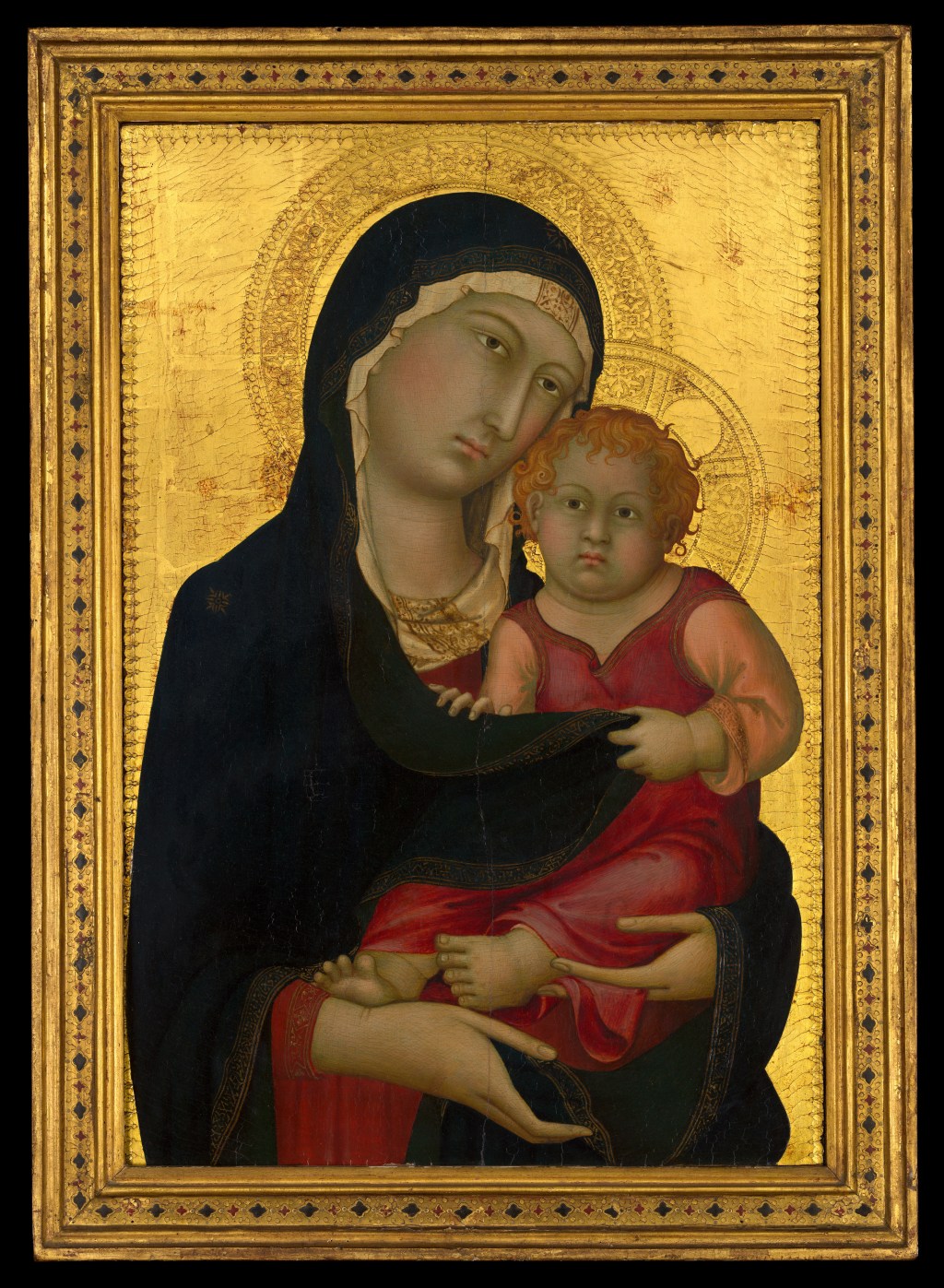
  • Velázquez and the Working Class

    Velázquez and the Working Class

    The “working class” is a term we tend to associate with the Marxism and socialism of the nineteenth and twentieth centuries. Although it was already in use in the Middle Ages and during the Industrial Revolution, when we think of the weaker segments of society making a living from manual labor, poor people whose rights are sometimes entirely neglected, it seems that only in the nineteenth and twentieth centuries they got the attention they deserved. But a change in social attitudes is almost always the result of a long and latent process, sometimes lasting decades and even centuries.

    The Spanish painter, Diego Velasquez (1599-1660), was a man ahead of his time in many ways. Opposing the spirit of the Spanish Inquisition, he painted the human body realistically and nude, as did his Italian contemporaries. He was an individualist, an innovator, describing how reality can be reflected in endless ways; when his work was discovered in England in the nineteenth century, students of art were astonished: it turned out that what they considered to be modern and innovative existed in Spain two hundred years before.

    Christ in the House of Martha and Mary,” painted in 1618, depicts a story from the New Testament (Luke 10:38-41). While traveling, Christ stops at a village. A woman called Martha invites him to her house. Mary, her sister, sits at his feet and listens to him speak. Martha complains that Mary doesn’t help her prepare the food, to which Christ answers, “Martha, Martha, you are worried and upset about many things, but only one thing is needed. Mary has chosen what is better, and it will not be taken away from her.”

    The painting is composed of two parts: a scene in the foreground and a small scene in the background. The manner in which Velasquez integrated various images in his art has been studied extensively by art historians. In this painting, they debated whether the small scene in the background is a picture hung on the wall, a mirror, or the second part of a simultaneous depiction of two scenes. It would suffice to say that most scholars agree that the smaller picture is a description of the biblical scene, and the bigger one is Velasquez’s interpretation of it. In the small picture we see Christ sitting on a chair, Mary is sitting at his feet, listening to him, and Martha stands behind her, complaining that she isn’t being helped. In the picture in the foreground, we see Martha, looking like a maid, after she has prepared dinner, wearing a bitter expression. She isn’t looking at the small picture but at the spectator. Her resentment is clear. An old woman stands behind her, probably lecturing her, reminding her of her duties.

    Velasquez’s choice to depict these verses is interesting and compelling: Jesus, whose is always devoted to the meek and the needy, overlooks Martha’s hard work and sides with Mary. This scene was interpreted in many ways; the most prominent is that Mary had chosen the contemplative life and Martha the active life, which made Christ prefer Mary. But if we ignore these explanations and simply read the verses, there is something upsetting about this story: Christ is depicted as preferring the believers to the workers. The scene generated two types of people: one working and the other avoiding work due to spiritual engagement. Christ ridicules Martha, disregarding her claim that there is injustice, and thus legitimizes an unfair division of labor. It could be argued that the scene entails a hidden criticism of Christ. From a modern perspective, his stand certainly is intriguing and does not agree with his constant prominent inclination to do justice and act for the weaker members of society.

    But Velasquez does more than simply depict this scene; he portrays very vividly Martha’s discontent. The major part of this painting focuses on Martha’s annoyance for having to prepare the food, set the table. She is a maid who has to work harder because Christ agreed that the preparation of the meal would not be divided between her and Mary. Martha looks like a hard-working young woman: with a ruddy face, blemished skin, and the hands of a manual worker, her appearance reveals no spirituality, only labor. She may be one of the earliest examples of the depiction of a “laborer” in the modern sense of the word: a person engaged in manual work, his or her description characterized by a sense of injustice. Not only did Christ refrain from helping her, the elderly lady behind her is preaching to her, telling her she should not be so bitter.

    Many of Velasquez’ works depict biblical scenes, and it is generally assumed he was very religious. But this painting suggests this may have not been true. He may have been closer to the spirit of twentieth-century socialism than we assume. The clothes of the characters indicate they lived in different times. Martha seems like Velasquez’s contemporary, thus the painting can be interpreted as a cause and effect: Christianity generated inequality between people, religion created different classes (a working class and those who take advantage of it). Martha turns her gaze away from the biblical scene as not to see the Christian message, which she perceives as unjust.

    It goes without saying that Velasquez, who lived in the seventeenth century, did not perceive the laborer as we do today. But this painting lays the foundation for the modern idea of a working class. First, it illustrates different classes; the maid is engaged in hard physical work, she complains that she has to work while others avoid work. Her rights are kept by neither Christ nor the elderly woman (who probably stands for popular wisdom). And, eventually, the worker has to do her job. In spite of her resentment, she doesn’t really have the power to revolt against social injustice—that would be fully and theoretically formulated hundreds of years later.

  • A Horse Walks into a Bar – The Second Generation

    A Horse Walks into a Bar – The Second Generation

    The term “second generation,” for children of Holocaust survivors, has become inherent to Jewish identity, referring to those who did not themselves experience the Holocaust but whose lives have been shaped by the unbearable traumas suffered by their parents, generating common fears and integrating the Holocaust into their worldview. The term refers not only to son and daughters of concentration camps survivors, but also individuals whose parents experienced various aspects of Nazism, and extends even to students of the very small and intolerable details of the atrocities. All are a part of the generation living in the shadow of the Holocaust, though born after it was over.

    The brilliant book by David Grossman, A Horse Walks into a Bar, which earned him the International Man Booker prize, deals with this phenomenon. It is a rich, multi-dimensional novel with universal implications; a substantial part of it depicts a childhood and adolescence shaped by the Holocaust. The protagonist, Dovale Gee, is a stand-up comedian performing in a basement in Netanya, revealing details of his life to the audience. He invites a childhood friend, a retired judge, whom he hasn’t seen for forty years, to “judge” his performance, which unearths his life story. At first, the spectators—and with them, the reader—are led to believe it is an ordinary stand-up show, though unusually vulgar. Gradually, though, we learn about the early trauma experienced by the comedian. Most spectators leave, though some stay, eager to take part in and understand Dovale’s most difficult and meaningful moments.

    Dovale is the only son of a Holocaust survivor. His mother hid for months within a train car. “She spent six months of the war in a small train car, I told you that. They hid her there for half a year, three Polish train engineers in a little compartment on the train that ran back and forth on the same tracks. They took turns guarding her; she told me that once, and her face wore this little crooked laugh I’d never seen before.” After six months, they threw her “straight onto the gatehouse ramp,” where she fell into the hands of Doctor Mengele. His father escaped from Europe right before the war broke, but his entire family was exterminated.

    Dovale’s childhood experiences often refer to the Holocaust. For example, when he is sent to a Gadna (youth training) camp at the age of fourteen, he is terrified. It feels like going abroad, but “going abroad wasn’t done then, definitely not by our sort. Overseas, for us, was strictly for extermination purposes.” But it is the end of the story that illustrates the profound influence the Holocaust had on the “second generation”: when in a Gadna camp, Dovale is told that he has lost a parent, but no one tells whether his mother or father has passed away. On his way back to Jerusalem, he delves into a miserable calculation: who would he prefer to have died? Mom or Dad?

    How is that connected with the Holocaust?

    The desire to rank the atrocities of the Holocaust in order of importance or significance is, of course, wrong. One cannot weigh and measure the innumerable sufferings the Nazi mechanism generated. It is impossible to determine what was more or less terrifying. An analysis of various tortures turns into what is often called “a pornography of death,” dealing with details but missing the main point. But in spite of that, I feel that the worst torment some survivors had to go through was a command to choose between family members, as with Sophie in William Styron’s famous book, to choose who would live and who would die. Sometimes parents were given the opportunity to save one child, and they had to choose who would be sent to the gas chambers and who would be saved.

    David Grossman shows how this monstrous aspect of the Holocaust gradually becomes part of his protagonist’s life. Nazis forced Jews to make an impossible decision: who would be better dead, and who would be better to save. The first-born son? The youngest? Mother?  Husband? The possibility of such an unthinkable, atrocious contemplation had become part of our world. Acknowledging that someone forced our parents, remote family members, or even Jews we didn’t know, to decide which member of the family would live and who would die implied that this option existed and cannot be ignored anymore. It becomes an element of our self-perception, our common consciousness, even as we recognize it as detestable. The climax of the novel relates when, at the age of fourteen, Dovale is trying to “decide” who he would rather find out had died, father or mother, is nothing but a natural extension of the “second generation” experience, applying the tragic ordeals of the parents to the lives of the children long after the Holocaust was over.

    A word on the link between the comic and the tragic: Prof. David Flusser, my instructor at Hebrew University, grew up in Prague and knew some of Franz Kafka’s childhood friends (Kafka is mentioned in the novel). He told me that one of them described to him the details of the very first time Kafka read his work to his friends and they all burst into wild laughter and couldn’t stop. What eventually became the ultimate literary expression of the indifference to the fate of man and of impersonal cruelty was, at first, funny. So is David Grossman’s novel. But, unlike Kafka, he tempts the reader with jokes and gradually transforms his world into a dark and cruel place. The joke is the last resort, a means to escape the understanding that someone had to decide who of his family members would live and who would die. And Dovale, exactly like Kafka’s Joseph K., is awaiting the verdict for a crime he did not commit.

  • Democracy and the USA – Leonard Cohen

    The fall of the Berlin Wall in 1989 was perceived by many as a beginning of a new era, optimistic and full of joy. At the time is seemed that the influence of the US and western European countries was expanding, and nothing could stop it. Many thought the world is gradually advancing to a better future. Only some – Leonard Cohen among them – expressed concern regarding this very extensive historical process, arguing the promoting democratic values is a slow complex process, more complicated than simply establishing a democracy.

    Leonard Cohen began writing “Democracy” after the fall of the Wall. Many notebooks were filled with lines and rhymes, words crossed out time and again, there were more than fifty version of the song until he was happy with the final one, released on 1992. The song is an epitome of his perception of American culture and the way it metes out democracy. It is an intricate puzzle of serious historical observations and ironic references to sentences often heard in the US.

    The leitmotif is rather surprising: “democracy is coming to the USA.” We tend to think of the US as a source of inspiration for other countries; it is often referred to as the most prominent democracy on earth. But in the first line we are astonished to learn that democracy is penetrating into the US from holes in the air and in the walls, from the demonstrations in Tiananmen Square. Yet a couple of lines later we realize that Cohen is referring to places within the US (like Chevrolet workers) as sources of democratic ideas “coming” to America. So where exactly is the US and where are the democratic ideas coming from?

    If we follow the logic of the song we find that the US is essentially a concept, an idea, a place not defined by its geographic borders but by its fundamental values. I think the events of the last couple of months truly affirm this view: It is not the physical border of the US that is important but the American way of life. In an interview after the song had been released Leonard Cohen said, “It is a song where there’s no inside and no outside. This is just the life of the democracy.” And what is the US? “A lab of democracy,” a place where democratic ideas are truly tested. Democracy is not a steady state but a process, an infinite examination of ideas like equality, freedom, opportunities. The song compares the US to a sailing ship, which must be vigilant against greed and hate.

    From here Cohen attempts to define American culture. He first affirms America’s religious roots. “The Sermon on the Mount” is his point of departure, after which he provides a fascinating depiction of life in the US. Democracy, he argues, is not self-evident; it is acquired with effort, pain, it emerges “from the sorrow in the streets,” from inter-racial tension, from women kneeling down suffering, from a struggle about who would serve and who would eat – the song is full of descriptions of people in agony. Cohen’s US is not a tranquil wealthy place, a country in which human rights are secured. It is a country in which a constant battle is taking place, “the cradle of the best and of the worst,” where people can achieve the best and fall into deepest darkness.

    His observations of American individualism are especially interesting. The spirit that drives people to achieve their goals also pushes them away from one another. “It’s here they got the spiritual thirst,” he says, but then he connects self-fulfillment with the breaking of the family, “It’s here the family’s broken.” In an ironic tone he elaborated on the loneliness so typical of life in the US, along with a denial of its source, “and it’s here the lonely say that their heart has got to open in a fundamental way.” Clearly loneliness is not a result of the lack of openness; it is a mechanism of denial, unwillingness to admit that there is a link between extreme individualism and loneliness. And though the American spirit has a pronounced sexual character, sensual and passionate, ultimately people are alone.

    In the last stanza Cohen seems to break life in the US into the smallest components, almost into the physical material it is made of. “And I’m neither right nor left, I’m just staying home tonight, getting lost in that hopeless little screen.” This is a reduction of high principles into a very simple, uncomplicated life. Many American are not concerned with politics or the fundamental principles of democracy; they completely withdraw into their private space, watching TV for hours. But the strong determined spirit of America is also embedded in these people, who seem so detached from the public sphere, they are “like a garbage bag that time cannot decay.”

    There’s nothing like this metaphor to express a big idea with a small object: not passionate speeches on the American spirit, not the American bald eagle or the hand on the heart while singing the national anthem – but a disposable garbage bag; it is man-made, lacks any elegance or grace, but endures forever.

    Democracy/Leonard Cohen

    It’s coming through a hole in the air,
    From those nights in Tiananmen Square.
    It’s coming from the feel
    That this ain’t exactly real,
    Or it’s real, but it ain’t exactly there.
    From the wars against disorder,
    From the sirens night and day,
    From the fires of the homeless,
    From the ashes of the gay:
    Democracy is coming to the U.S.A.

    It’s coming through a crack in the wall
    On a visionary flood of alcohol
    From the staggering account
    Of the Sermon on the Mount
    Which I don’t pretend to understand at all.
    It’s coming from the silence
    On the dock of the bay,
    From the brave, the bold, the battered
    Heart of Chevrolet
    Democracy is coming to the U.S.A.

    It’s coming from the sorrow in the street,
    The holy places where the races meet
    From the homicidal bitchin’
    That goes down in every kitchen
    To determine who will serve and who will eat.
    From the wells of disappointment
    Where the women kneel to pray
    For the grace of God in the desert here
    And the desert far away:
    Democracy is coming to the U.S.A.

    Sail on, sail on
    O mighty Ship of State!
    To the Shores of Need
    Past the Reefs of Greed
    Through the Squalls of Hate
    Sail on, sail on, sail on, sail on.

    It’s coming to America first,
    The cradle of the best and of the worst.
    It’s here they got the range
    And the machinery for change
    And it’s here they got the spiritual thirst.
    It’s here the family’s broken
    And it’s here the lonely say
    That the heart has got to open
    In a fundamental way:
    Democracy is coming to the U.S.A.

    It’s coming from the women and the men.
    O baby, we’ll be making love again.
    We’ll be going down so deep
    The river’s going to weep,
    And the mountain’s going to shout Amen!
    It’s coming like the tidal flood
    Beneath the lunar sway,
    Imperial, mysterious,
    In amorous array
    Democracy is coming to the U.S.A.

    Sail on, sail on

    I’m sentimental, if you know what I mean
    I love the country but I can’t stand the scene.
    And I’m neither left or right
    I’m just staying home tonight,
    Getting lost in that hopeless little screen.
    But I’m stubborn as those garbage bags
    That Time cannot decay,
    I’m junk but I’m still holding up
    This little wild bouquet
    Democracy is coming to the U.S.A.

  • Miss La La – Degas and Show Business

    Miss La La – Degas and Show Business

    Miss La La - Degas and show business

    Edgar Degas (1834-1917) if often referred to as an impressionist. His choice of themes certainly agrees with this observation; he portrays people from dance halls, cafés, concerts, theater. Life on stage is often reflected in his work, but not only its glamorous side. He liked to describe himself as “realist”–a painter whose art reveals the true nature of his objects, not just the impressions they create. Originally, he wanted to be a history painter, but he later decided to dedicate his creative faculties to portraying the modernist spirit in an urban setting.

    Unlike other Impressionists, Degas ascribed much importance to composition. Boldly calculated, his characters–mostly women–are depicted from unique angles, with special reflections of light. As part of his attempt to capture modernism, his characters reveal his observations on the relationships between life on and off stage.

    Miss La La at the Cirque Fernando, created in 1879, depicts a real-life acrobat, Miss La La, performing at the Fernando Circus in Paris. She was slowly suspended 70 feet high in the air from the rafter of the circus dome by a rope clenched between her teeth. Degas was captivated by this performance. For eight consecutive nights, he went to the circus, painting her from different directions (the Tate Gallery has a painting from this series from another angle) until he felt the result fully grasped the essence of her show.

    I find the depiction of Miss La La essentially different from his many paintings of women and the female body. His portrayals of various dancers and women in the toilettes have a pronounced aesthetic quality, pleasant to a layman’s eyes. Not so Miss La La. Though a female performer, she almost lacks the sex appeal so typical of his female characters. She is an abstraction of the woman performer, an emblem of show business in its most simple and unsophisticated form: the circus. A closer examination of this painting reveals Degas’s profound insights into certain aspects of popular show business in the modern age, which prevails in TV shows today.

    The strange angle: The most prominent feature of Miss La La is the angle from which we see her. The spectators are underneath her, looking up, without even seeing her face. This striking perspective is intriguing, and we know Degas planned the composition meticulously, saying “no art was ever less spontaneous than mine.” This painting portrays the show as fantastic, spectacular, utterly remote from real life. The spectators can’t see the face of the performer, but it doesn’t matter. They are not looking for insights into human nature or profound observations on the human condition; they want highly exciting entertainment, a woman clinging to a rope with her teeth, dangling high in the air. Aristotle named “the spectacle” (opsis) as one of six elements of a theatrical performance but felt it was the most superficial one; “spectacle has, indeed, an emotional attraction of its own, but, of all the parts, it is the least artistic, and connected least with the art of poetry.”

    A faceless acrobat: The heart of this performance is Miss La La’s biting the rope with her teeth, yet we can’t see this in the painting. The spectators need to know that the artist is doing something extremely difficult, but they don’t want to actually see the exertion. They want the performer to surmount physical or emotional obstacles, perhaps overcome personal misfortune or a tragic life story, but they have no desire to witness the disappointments, pain, heartbreak, and humiliations. This combination of unseen effort and astounding performance deepens the psychological effect of the show, because it adds a taste of triumph, a feeling of having witnessed some sort of victory. Miss La La’s body floating in the air is light and graceful, revealing nothing of her physical and psychological strain.

    The risk: Circus performance involves a special risk; it is part of their appeal. We know Miss La La was hanging high in the circus dome without any safety measures to save her if she were to fall. Contemporary entertainment shows don’t carry the physical risk anymore, but if you think about such reality shows as Big Brother, American Idol, The Voice, and X Factor, the contestants take the risk of being publicly humiliated, in some cases, and expelled from the show. It may be the case that the audience feels more satisfied, or even aggrandized, knowing that performers are willing to cope with difficult challenges in order to perform on stage.

    Miss La La

    The black performer: Miss La La is, I think, the only Black woman Degas ever painted. Because he was a profound conservative opposing any social reform (and also an anti-Semite), a black performer must have seemed slightly bizarre to him, perhaps even freakish. From this twisted and racist point of view, portraying Miss La La may refer to a certain tendency to look for unusual performers with abnormal characteristics. TV shows actively seek participants with some sort of bizarre feature and, even “ordinary” participants are often asked to reveal something embarrassing or kinky about themselves.This is not typical only of modern entertainment. The human tendency to peek at bizarre, strange, and sometimes sick people is as old as humanity. Masks of ancient Greek theater represented some abnormal characters; the commedia dell’arte, the first professional theater from the sixteenth century, had some bizarre-looking performers; Victor Hugo depicted The Hunchback of Notre-Dame; and modern films often portray people of “abnormal” body or mind (e.g. Rain Man, Mask). Modern show business, both live and recorded, enhance this inclination since the spectators can see the strange and bizarre in greater detail.

    Now take a look at Susan Boyle’s audition for American Idol – didn’t Degas foresee exactly this kind of entertainment?

  • Human Traffic

    Human Traffic

    Published on May 5th 2018 in Santa Ana River Review: 

    http://sarreview.ucr.edu/human-traffic/

    When Rupah arrives in London, she is overtaken with gloom. Foreign land again, strange faces, tall people she should appease, an unfamiliar tempo, cold air penetrating her clothes, raindrops running down her thin jacket, a depressing gray light, and the English language, that sounds so alien. Only yesterday she was standing in her garden in Sri Lanka, her husband watching her from the entrance to the house, her children hugging her and laughing at the heavy warm rain, her sari soaking it up, dimming its colors and turning it into a thin transparent piece of cloth. But now she takes the tube from Heathrow Airport into London, collapsing into a vacant seat. The exhaustion of a long flight does not obscure her aversion to the cold light, the distressing screeching the train is making, and the stuffy air in the crowded car.

    As she knocks on the door at Pembridge Place and hears Mr. Allen’s steps slowly approaching the door, a lump grows in her throat. She puts the suitcase down, unfastens a button of her jacket, removes her gloves, adjusts her scarf, actions done one after the other out of habit, intended to ease distress. Another visit in Sri Lanka is over, another journey home and back again to a foreign land, and now a new count must begin, of days, nights, hours, and minutes until the next trip home. When Mr. Allen opens the door Rupah wipes her tears and smiles at him. “I was expecting you,” he says kindly, and she follows him into the entrance hall.

    She pulls the suitcase up the stairs and into her room. Everything has been left unchanged: the colorful bed cover she bought on her last visit to Sri Lanka, the Indian cushions she found in a shop in London, a table made of heavy dark wood facing the window, a huge closet, two large plants on the windowsill, and on a small chest is her altar to home: a colorful embroidered cloth, at its heart stands a statue of Buddha, his legs crossed, his hands placed on his knees, and his smile illuminated.  Colorful candles surround him, and two vases, now empty, stand behind him. Rupah opens her suitcase and begins to arrange her clothes in the closet, only the long skirt and purple sweater she was wearing for the flight are tossed into the laundry basket. When she is done she lies on the bed and closes her eyes. The vibrant colors of Sri Lanka gradually fade, the smell of grass after the rain, the tall trees surrounding the village shedding heavy water drops that fall and crash on the water-soaked soil, the yellow-gray sky, the soft clouds, the boisterous laughter of her children, her husband looking at her from the entrance to the house, they all dissolve and lose their vitality and disintegrate in the gloomy room with its heavy furniture and oppressive silence. As she looks at Buddha’s face she thinks his smile is sad, and before she falls asleep she whispers to herself: May everyone be happy, may everyone be free from misery [Text in bold: popular Buddhist prayers].

    In the morning she gets up late, unlike her usual self, from a deep and dreamless sleep. When she wakes up she isn’t sure where she is, but the darkness outside reminds her that she is in Europe. She gets out of bed, washes and gets dressed, combs her long black hair and then gathers it up. It’s too late, she gives up morning meditation and goes down to make breakfast. To her surprise, Mr. Allen is already in the kitchen. “Well, dear, how was your visit home?” he asks. She looks at him and says nothing. He looks a bit unkempt, she thinks. Rupah assists Mr. Allen to take a bath. Every other day she goes to the bathroom with him, he takes off his clothes and sits on a chair in the bath tub. It’s hard for a man his age to stand for so long. She helps him soap and wash his body. The physical intimacy imposed on them causes them to speak in a somewhat alienated manner, in a very practical tone. Every morning he tells her what products she should buy, the medication she should get from the pharmacy, books that should be returned to the library. Rupah listens carefully, sometimes writing it down so as not to forget, giving in to the simple mundane spirit which turns them into partners, two people keeping a regular schedule, which brings tranquility to both of them.

    Twelve years ago Rupah left Sri Lanka. Premala was five years old, Sahil five months old. Cyprus, Greece, Italy and now England, she travels by herself, from house to house, from one old person to another. New languages, different streets, both repulsive and tasty food, but old age is one: a withering body, bursting anger, forgetfulness, stench. The first time she travelled was the easiest, she thought she would be back at home in a couple of months. Kumar came home furious, he had been fired again. He was angry at his boss, fuming how arrogant and vain he was, blaming him for his failure, while Rupah was thinking that perhaps if he hadn’t been two hours late for work he wouldn’t have been sacked. Whenever he started a new job she expected the moment he would come back home, bitter and resentful, arguing that he had been wronged, suggesting there are hidden motives, never admitting that the fault was his. When she tried to soothe him and served him food he tossed it on the floor. There is no other way, she thought, she must find a job abroad. He would never manage to provide for them, and Premala would soon be six years old. Only those who go to private school have a chance for a better life.

    At the airport she held Sahil on her lap. The baby clung to her, sticking his tiny fingernails into her body, leaning his curly head on her neck. When the time came to say goodbye he wouldn’t let go.  Rupah pulled him away from her body, seeing his tiny mouth wide open and hearing his sobs but saying nothing, she handed him over to her mother, turned around and left without saying goodbye. A couple of months, that’s all, she said to herself on the walkway to the airplane, wiping her tears, straightening her skirt, checking that her handbag was closed, gathering her hair into a ponytail.

    The toothless Cypriot woman Rupah cared for had a low, husky voice, she giggled for no reason, and called Rupah “honey.” She had old worn out dresses and a colorful head scarf. In her broken English she inquired why she left her family, and when Rupah told her that her husband was fired she chuckled in a voice resembling a crow’s caw and said, “Ah, good-for-nothing! Shame, a beautiful woman like you, couldn’t you find someone better?” Rupah liked her direct talk, with no pretense. She referred to her late husband as “the useless bum,” and to her only son as “the womanizer.” Time and again she warned Rupah that her husband was trying to get rid of her, maybe he wants to find another woman, probably younger, and begged her to return home.

    Every weekend she went to the phone booth next to the post office and called home. Familiar voices emerged from the receiver: her mother came to cook for the children, Premala started private school and said grandma bought her a new backpack, Sahil said “mama, mama.” After five months abroad she asked to talk to Kumar and inquired if he had found a job. The gush of complaints that came from the phone lifted her at once to the small village at the foot of the round hills. “I was sacked, the boss is a liar,” he complained and Rupah stood there and listened, and for a moment she was glad she was away from the village.

    A month later, half a year after she had left, she called early in the morning. Kumar answered the phone, surprised to hear her. Silence fell when she said she was planning to return home. Two girls holding hands passed by the phone booth; a car was blowing its horn in the crowded morning street; pigeons landed on the bench nearby. “They all go,” Kumar’s voice was heard. “What? Who is going where?” she wondered, and he said “All the women.” Perhaps Rupah’s silence made him more talkative: all the women of the village – mothers of small children – left to go abroad, to work outside Sri Lanka. Chand’s wife, Harish’s wife, Mohan’s daughter, they all went away. Only elderly ladies and young girls were left here, he said, and she thought she heard a chuckle. Her spirit traveled from one house to another, from family to family, and she had to admit there was much truth in his claim: the mothers left, leaving the children behind, flying off to remote countries to provide for their families.

    Rupah returned to the old woman’s house, ignoring her husky voice that came from the kitchen, and walked straight to her room. She took off the pink blouse and put on a white shirt and sat on the carpet facing the low cabinet, the altar she made for herself with the statue of Buddha. She could feel the pulse in her temples, a headache spreading gradually, becoming an obscure pain in an unfamiliar part of her body. The die is cast, she thought desperately; there is no way back. She had been sentenced to wandering, she would have to live away from her children for years. Premela, Sahil, there is no knowing when she would ever see them again. Her long black hair spread out on her shaking back. She lowered her head and cried bitterly, torn by yearning for her children. Buddha watched her, smiling as always, a breeze made the candle’s flames flicker, a pleasant scent of the purple flowers behind him wafted over the room, and she murmured in tears, may I be a guard for those who need protection; a guide to those on the path.

    In Greece she cared for an elderly man, tall and heavy, with huge hands, who had a large family. A strange character, a mixture of vulgarity and outstanding generosity. His daughters, who lived nearby, came to see that she was looking after their father properly, each one giving different instructions. One said he should take the medication in the morning, the other said at noon. One prepared food for him, the other throwing it away and making her own dish. At first Rupah tried to make peace between them, but after a while she let them have their own way. Every time one would complain she pointed a finger at her sister. Nikos, now almost ninety years old, used to try and touch her breasts, and when he succeeded he giggled, as if the attempts of this pretty woman to avoid him were funny. But every couple of weeks, he would draw a pile of fifty dollar bills from under his bed and hand them to her, out of sight of his vigilant daughters.

    Asking her about her family and listening to her explanations, how she provides for the family, giving her children a better future, her husband is at home but doesn’t care for the children properly, he inquired: “Do you have friends here?” She was taken by surprise. Yes, of course she knew a couple of foreign workers, women from Sri Lanka and India who worked in the neighborhood. They used to exchange information: where is the best Indian food store, how can you find a doctor, what is the best time to go to the post office. Rupah never saw them as friends but as sort of sisters, sharing a similar destiny. When she remained silent he said, “You live here, and that’s it. You make sure you have a good life.”

    She was overwhelmed. She felt her life was devoted to a single purpose, aimed at nothing but providing for the family. She never thought about whether she was happy, only if what she did benefited her children. The life of wandering was justified only because they went hand in hand with devotion and sacrifice; this prevented further suffering. But suddenly Nikos’s words seem so reasonable, consistent with an irrefutable wisdom. In an instant, unconsciously, passionate fervor was awakened, an urge for happiness and pleasure she thought had been lost forever.

    On Sunday, her day off, she got up in the morning and sat facing the mirror. She combed her shiny black her, put on burgundy lipstick, and circled her eyes with eyeliner she had brought from Sri Lanka. She then put on a white dress, becoming to her round figure, drew out of the closet the embroidered purse her mother had bought her, and left the room. When Nikos saw her she thought she saw a touch of admiration in his eyes. He smiled at her, waved his hand and returned to his room.

    She walked in the narrow streets of northern Athens, between dilapidated houses and people sleeping on the sidewalk, looking for an address a friend from Sri Lanka had given her. After about half an hour she found the building, covered with graffiti. Already as she climbed the filthy stairs, careful not to step on broken glass, avoiding a broken step, she heard the chanting. But as the door opened bright light enveloped her, a glimmer of glittering candles, and in front of her was Buddha, illuminated and affectionate. The room was crowded, men and women sat barefoot on the floor, chanting prayers. She took off her shoes, sat with the worshippers and joined the singing. Smiling faces around her, the familiar smell of incense, the long table abundant with food, the colorful fabric covering the walls, Rupah gave in to the joy that filled the room, the smiles and laughter, the pleasant odors, asking people where they came from and telling them about her village. And so, inadvertently, a spirit of home materialized in this room with its small shrine, a captivating warm coziness, breaking another miniature blood vessel that attached Rupah to her family and accelerating her path to liberation. And only as the dancing was finishing and food was gone did she go down the shaky stairs – she suddenly thought of Premala and Sahil. She halted. Panic took over her. She gripped the banister and closed her eyes, shattered by her own contentment, which seemed so treacherous.  She thought she would never see her children again. Leaning her head against the stairs she whispered: may all beings everywhere plagued with sufferings of body and mind quickly be freed from their illness.

    Signora Bosco lived in a town in northern Italy, in a house with a porch facing a view of the valley. Always wearing black, she walked slowly, leaning on a walking stick, smiling at Rupah as she spoke to her in Italian. After every couple of words her face grew grave, she said Gésu Cristo and crossed herself. Every now and then she would use the very few English words she knew, “food,” “bathroom,” “drink,” and then she would go back to Italian. Rupah’s room faced the view, through the window she could see a wide valley and beyond it the surrounding hills. The abundance of greenery,  the grazing cows, the bright paths meandering through the meadows, Rupah felt she had been here before. Only the thin sharp light, so different from the yellow-gray sky in Sri Lanka, reminded her she was in a foreign land. There is something transparent about the sky here, she thought. Strange, in Sri Lanka it is heavier.

    Every Sunday Rupah went with Signora Bosco to church. Early in the morning Rupah helped her dress up, gently combed her gray hair back and tied it with a black clip, and they walked together to church. The road was slightly uneven, once in a while Rupah had to hold her to stop her from falling, bypassing puddles or stones on the narrow path. Though the church was rather close, they had to walk for more than half an hour. At first, upon entering the church, she was alarmed. The dusty air, light coming from a narrow window in the ceiling, creating a ray piercing the darkness, the intimidating pictures on the walls, the priest walking around with such a grave expression, the statue of Jesus tormented on the Cross, she nearly ran out, leaving the Signora by herself. Also, her silence on the way back was oppressive. She normally chatted constantly, talking to Rupah and ignoring the fact that she did not speak Italian. But on the way back from church she was always mute and introspective. She seemed immersed in contemplation, and now and then her countenance would change. Anger, sigh, sadness, a dismissive hand gesture, Rupah found it strange that the visit to the church made her sad, silenced her chatter and generated an unpleasant inner conversation. It’s a shame she can’t come with me to the temple in Milan, she thought. The simple natural chanting, sitting on the floor with the crowd, knee touching knee, the vibrant colors all around, red, orange, yellow, the flickering candles around Buddha, and the pleasant smell of incense – they would have made the Signora’s prayer pleasant and uninterrupted, without the misery Rupah couldn’t comprehend.

    Rupah bought a laptop computer. A friend she met at the temple in Milan managed to buy one for her at a special price. At first all those keys confused her, but in two weeks she could manage it well. She had heard people talking about Skype, and she wished to call her family in Sri Lanka. She sat facing the laptop, dressed neatly, her hair coiffured and her face made up, waiting impatiently to see her children. An ascending and descending tone, blue color spreading on the screen, stripes moving in circles, and suddenly she could see Premala shouting joyfully, “Come, come quickly, mommy’s here!” Immediately Sahil appeared, and as he saw his mom he started kissing the screen without hesitation and yelling “mommy, come home, come home, when are you coming?” Her mother stood facing the camera, smiling and waving, as if she saw her daughter sailing away on a ship. Though they only laughed, blew kisses in the air and said almost nothing, when the conversation was over she remained seated almost an hour, facing the laptop. Her children smiling but missing her, her home, the familiar light coming through the window, her mother so thrilled to see her, they were all revived in her spirit, one after the other, bringing her distant home closer, but undermining the comfortable daily routine of the last years. In an instant, broken blood vessels were healed; torn when she left her family, they bled and almost died after years of living by herself.

    The Skype conversation became part of her daily routine. Rupah sat facing the laptop, now wearing loungewear, her hair disheveled. At one o’clock, as the Signora took her siesta, Rupah spoke with Premala, Sahil and her mother. At first, small mundane details filled her with joy: Premala’s school mates, her success at school, she showed Rupah her notebooks. The teacher said she was the best student in her class, and grandma bought her a new dress. She turned around facing the camera, and Rupah laughed and complimented her: a pretty girl with a beautiful dress. Sahil practiced bouncing a ball in front of the computer: ten kicks without missing once. He then tried to impress his mom and jump when the ball was in the air, but fell on the floor, and his mother’s pleasant laughter came from the computer: “Be careful, Sahil, so you don’t get hurt.”

    There were also quarrels. Premala wished to tell mom a secret, Sahil wouldn’t leave the room. He pushed Premala, “I want to talk to mommy now,” she pushed him back and he burst into tears. Her mother came from the kitchen, trying to separate the two. Rupah tried to make peace, but they couldn’t hear her. Finally, she turned off the computer. By tomorrow her mother will make peace between the children, and soon the Signora will wake up and she needs to help her get out of bed.

    The Signora’s son was courting Rupah. A slightly shabby widower, when his children left home he came to live with his aging mother. A man about sixty years old, his hair dyed black and saturated with hair oil. A heavy smoker, his shirt was slightly stained, and he spoke broken English. His small dark eyes moved anxiously from side to side, examining everyone in haste. From the very moment Rupah arrived at the Signora’s home he smiled at her, offered help time and again, and also inquired: “Doesn’t your husband care you are here alone? Aren’t you lonely? Would you like to have dinner with me? How do you spend your day off?” Rupah smiled bashfully. This attention could have been pleasurable if she hadn’t felt men cannot be trusted. Her mother made her marry Kumar. She was in love with a boy in high school, but her devoted mother thought she had to find someone who would provide for her daughter. For months she paid visits to almost every family in the village, examining young men, wondering who would best suit her daughter. Even though Rupah cried when the date for the wedding had been set, her mother was determined, smiling to herself with confidence that the craze of youth would surely be replaced by a peaceful comfortable life.

    But at the airport, before Rupah left for Cyprus, the mother stood pale and upset, as if she had been found guilty of a crime but someone else was about to be punished for it. Her hand touched her daughter’s arm, perhaps caressing it perhaps grabbing it. And when Rupah forcibly detached Sahil from her body her mother held him tightly, and tears covered her face. From that day she had almost never spoken to Kumar. Without asking for permission she moved in with them, cooking and cleaning, caring for the children. During the day Kumar sat in the back yard, in the evening he watched TV. His life amounted to hours of staring at the sky, the ceiling, the TV. Her mother got used to the lifestyle of her son-in-law. Only sometimes, late at night, when his friends came to play cards, putting money on the table, she sat on her bed, leaning her head against the wall and closing her eyes, pondering time and again why she had insisted her daughter marry this lazy man. All are nothing but a flower in a flowing universe, she said to herself, but still, this bitter drop, biting and excruciating, wouldn’t evaporate and disappear.

    Six times Rupah visited Sri Lanka. Every two years she traveled to visit home. Her preparation lasted months, she bought presents for her children, her mother, her cousins and their children, and also collected packages for relatives of friends. Yet she always returned in despair. From the moment she was picked up at the airport, in spite of the joy and excitement, the future separation from her children materialized in her mind. Every moment held a seed of departure.

    She spent six weeks in the village. First she went home, hugging Premala and Sahil and crying. She then embraced her mother, and finally kissed Kumar on the cheek. She didn’t pretend there was any intimacy between them, and everyone accepted it naturally, without question.  Kumar had changed over the years. The somewhat elegant clothing he used to wear, slacks made of a shiny brown fabric and tight checked shirts, were replaced by visible shabbiness, as if he wished to display the fact that no one is taking care of him. His eyes, once merry, were now empty, and his hair turned gray.  When Rupah stood next to him she could see his hands were shaking. Even when everyone was at home he sat in the back yard and smoked, sometimes closing his eyes, sometimes gazing at the tall trees.

    Rupah accompanied the children to school, prepared food, played with Sahil, shared Premala’s secrets. A dispossessed mother, for a couple of weeks pretending she was raising her children. Premala showed her where the spices are now, Sahil explained how they rearranged the storeroom, and she smiled at them, embarrassed at being a stranger in her own home. The children ate the food she made, but it was clear they were used to their grandmother’s dishes. When she picked up Sahil from school the teacher asked that the “grandma should call her,” he needs some help with math. Even her mother asked Premala to help her with cooking. Surrounded by joy, warmth, love, yet her foreignness was clear. A woman who, while visiting home, experienced a life that could have been hers. And as she was about to bid farewell, she was horror struck since she couldn’t escape the notion that in spite of the enormous pain of leaving her family, there was also a slight relief. A stranger both abroad and at home, she closed her eyes facing Buddha and said nothing.

    Mr. Allen walks slowly from his bed to the kitchen. His back slightly bent, he leans on his walking stick, still there is much dignity about him. The white hair looks like an aura encircling his head, the big brown eyes spritely in spite of the heavy eyelids, the body moving with effort to preserve vitality in spite of old age. Rupah prepares breakfast. She serves porridge and a cup of tea, and sits next to him to have breakfast. “Well, Rupah, you still haven’t told me how the visit to Sri Lanka was,” he says, a small smile spreading over his face, but the eyes are serious. He looks at her intently, awaiting a response. Rupah looks down at her plate, puts more jam on her bread and adds two teaspoons of sugar to her tea.  The sour steam of boiling Sri Lankan tea fills the kitchen. Mr. Allen is waiting, and Rupah sees she needs to reply. “I hope this will be my last visit there,” she says, and immediately sips the scalding tea.

    Mr. Allen says nothing. Rupah is also silent, sipping tea and eating bread and jam. Finally, he clears his throat and says, “Do you want to return to Sri Lanka?” “No,” she replies, “I want to bring my children over here and never return there.” Mr. Allen seems shocked, but his furrowed brow indicates that he is not entirely taken by surprise. He makes a small ahem, a sort of short snort, as if he had revealed an unknown truth, but it makes so much sense that it’s no wonder. He eats some porridge, wipes his mouth with a napkin, and asks, “It won’t be easy, you know. Why now?” Rupah nibbles on her bread. She gets up, picks up the plates and places them in the sink, and as she turns toward him she says, ‘’It’s a distorted life, wrong both for me and for my children. It leads to no joy, tranquility or liberty. A mother should be with her children. I give them money, but not a better future.”

    Mr. Allen puts down his cup and looks at her. What a shame that she’s wearing cheap jeans and a shabby sweater, his thinks. When she had the long skirt and the Indian fabric blouse she was so beautiful, the vibrant colors flatter her dark skin and shiny black hair. “It won’t be easy to bring them here, you know,” he says, knowing that Rupah is already thinking how to proceed. “Wouldn’t it be hard for them to fit in here?”

    When Rupah turns he sees her face is full of tears. “Leave everything on the table, I will be back in a minute,” she says. As she climbs up to her room the stairs look blurred and the room obscure. She walks towards the altar, lights the candles and bows three times to the statue of Buddha. Rain is pelting down outside, the sky is dark and somber, but she sees nothing but the glare enveloping Buddha’s face. Light is kindled within her, legions of stars are illuminated, ancient moons move in a predetermined path, she closes her eyes and chants, May I be well, happy, and peaceful; may my teacher be well, happy and peaceful; may my parents be well, happy and peaceful; may my relatives be well, happy and peaceful; may my friends be well, happy and peaceful; may the indifferent persons be well, happy and peaceful; may all meditators be well, happy and peaceful; may all beings be well, happy and peaceful.

  • Moonlight – an Old Fashion Love Story

    Moonlight – an Old Fashion Love Story

    Moonlight, the winner of the Academy Award for Best Motion Picture of 2016,  depicts the lives of Black people in Florida: economic hardship, violence, drugs, a life of misery with almost no escape. The film presents three stages in the life of Chiron, its main character: as a child, an adolescent, and an adult. We witness him mature from a frightened boy into a threatening drug dealer.

    Chiron is raised by a drug-addicted single mother who sometimes turns to prostitution for survival.  Children bully him, and he comes under the protection of Juan, a drug dealer. Juan takes him to his home, where he lives with his girlfriend, and there Chiron finds the shelter and warmth that he lacks at home. But after he finds Juan sell drugs to his mother he leaves, returning to this home only after Juan’s death.

    In the second part Chiron is a teenager, still being bullied by his classmates and living with his drug-addict mother. Only one boy, Kevin, become his friend. In a moment of emotional intimacy a certain sexual encounter develops.  But later, his classmates forces Kevin to hit Chiron, who is left bleeding and crying on the floor. This part ends with Chiron returning to his classroom — his face revealing that can’t take the misery any more — grabbing a chair and breaking it on the back of one of his abusers.

    In the third part of the movie, Chiron is a muscular young man, a scary drug dealer in Atlanta. His mother has gone into rehab. To his utter surprise Kevin, who he hasn’t seen for years, calls him. Chiron decided to drive to Florida to meet him. The encounter between them is the climax of the film. We find that Chiron had been in love with Kevin for years, and since their sexual encounter he had not been with anyone else. In Kevin’s house by the sea, Chiron gently rests his head on his lover’s shoulder.

    The film was highly praised for a complex presentation of life of poverty and the development of homosexual identity. Slums are imbued with violence – but also with grace and generosity. And the discovery of a homosexual identity is a complicated process of self-acknowledgement.

    But if we examine the story from a universal perspective, we find an old-fashioned love story – one that is rarely seen in fiction and in cinema today. For the sake of argument, let’s try to describe the story as a relationship between a man and a woman: the male protagonist falls in love with a woman in his youth and has a limited sexual encounter with her. She leaves, but the memory of the happy moment a prevents him from engaging with other women for years. As they meet again he gently confesses his love and rests his head on her shoulder. Would the spectators believe such a story?

    The absolute link between feelings and sexual attraction, time that stops after an encounter with the loved one, years of yearning for him, the tender sexual relations – the great love stories of the nineteenth and twentieth century were made of such materials. Moonlight is a story about profound love, lacking any skepticism, almost anachronistic. A story more typical of our days would present Chiron having sex without love, perceiving the connection with Kevin in a different light as time goes by, and developing meaningful emotional relations with another man.

    But Moonlight is a monumental love story – like Anna Karenina or Casablanca, and perhaps mostly like Thomas Mann’s Death in Venice. But unlike these love stories, it takes place in the lowest social layer, among people whose lives are almost entirely determined by their being born into poverty; very few – like Kevin – manage to break out of violence and drugs.

    The poor social circumstances emphasize Chiron’s unique character, making his love even more astonishing. But isn’t this a distorted perception of poverty? A romanticization of deprivation and violence? A similar argument had been put forwards against Dostoevsky’s writing. It has been suggested that his portrayal of love and generosity emerging especially in hardship justifies poverty, makes it valuable, and undermines any efforts to eradicate it.

    Kevin, unlike Chiron, leaves the criminal life. He works as a cook, and he fathers a child. He states that though his life is not perfect, he is happy. Here, again, the film agrees with the spirit of monumental love stories: they drive the protagonist to outstanding pinnacles and disheartening falls – but not to a happy life.

  • Autumn in Jerusalem

    Autumn in Jerusalem

    The story was published in Tikkun Magazine on March 5th, 2017 :

    http://www.tikkun.org/nextgen/autumn-in-jerusalem

    Jerusalem is most beautiful in the autumn. In the evening a grey purple light envelops the city, the air is so lucid you can almost see it, heavy clouds move across the sky and light winds rattles branches scorched from summer heat. Grass that has turned yellow, flowers withering in the dry heat, thorns covering the hillsides all bow their heads and surrender to the pure air and soft light. The stone buildings look lighter; dark alleys appear slightly festive; the hills around the city are kindled with a dim glow.

    I ran into Luisa this morning. She smiled at me bashfully, and I said hello. We live on opposites sides of Emek Refaim Street, in the German Colony in Jerusalem. I am sixty-three years old, she is sixty. I am short and round, she is a tall, erect woman. I walk slowly, stop once in a while, and then I continue walking. She takes long steps, wondering if there is a shortcut. I am suspicious, one can’t be too careful, especially with older women. She is smiling and inviting, fearlessly talking to strangers.

    Actually, that’s how we met, Luisa and I, in early autumn. I was carrying heavy baskets with fruits and vegetables—I buy so much food when my son comes for a visit on the weekend. Though the grocery store is close to my house, I could barely carry the bags all the way. As I walked slowly, I suddenly felt there was a huge shadow behind me; for a moment I thought clouds were obscuring the sun. I was alarmed, I thought maybe someone was going to attack me, but immediately I scolded myself: no one assaults people like that on Emek Refaim Street. I put the heavy bags down on the pavement and turned to see who was standing behind me. Brown brogues under a long gray dress made of thick fabric, a tall wide feminine body and a face surrounded by a Christian headdress. Ah, I got it, she was a nun from the Borromean Sisters’ convent, in nearby Lloyd George Street. She smiled at me, her eyes bright, and suggested, in English with a heavy foreign accent, that she help me carry the bags.

    I found her suggestion strange. For a moment I thought I may have been wrong about her age. Her skin was so pale, as if it had never been touched by the sun, which burns here mercilessly in the summer. Small dark eyes, full brows curving above the eyes and dropping almost to the cheek bones, a cheeks too smooth, almost lifeless, and a slightly fleshy mouth – all encircled by a nun’s wimple, white and grey.  Since not even a single hair could be seen and the nun’s body, even her neck, were completely covered, the features seemed somewhat bizarre, somewhat mysterious.

    “No, thanks, I’ll manage,” I heard myself saying, though I did wonder how I would pick up the bags; the apples almost falling on the sidewalk. She smiled, revealing slightly crooked teeth, offered again to help, and as I refused said, “Well, see you, we are neighbors, aren’t we?” and disappeared.

    This encounter with the nun kept bothering me. A sort of annoying mosquito, which keeps buzzing in spite of the rapid hand gestures pushing it away. Maybe she wanted to know where I live? And why “see you”? Why would we meet again? More questions kept coming up, each one generating others, which seemed even more complicated. That Saturday I told my son and daughter-in-law about the nun. My son dismissed my agitation, saying, “it’s nothing really, somebody offered help, that’s all.” But my daughter-in-law, a secular woman from a religious family, inquired about the details. “You need to be very careful,” she kept saying, though she didn’t explain how exactly an encounter with the nun might be dangerous.

    Two weeks later, as I was walking with my grandson on Emek Refaim Street, the nun suddenly appeared. “Hello,” she said very pleasantly, as though we had known each other for a long time, smiling at my grandson and asking sweetly how old he was. Sagi scrutinized her, holding my hand tightly, and after she left he whispered in my ear: “Grandma, why is that woman wearing such a long dress? And why is a handkerchief on her head?” I suggested we have ice cream in the next coffee shop, ignoring his questions. I found her display of joy in meeting me disturbing, but said nothing. Sagi and I had our ice cream and watched the passers-by. He was staring at them with a dreamy look, while I focused on every one, examining their faces, hair, dress. At this afternoon hour the street was crowded. A pleasant autumn wind shook the branches of a pine tree casting its shadow on the coffee shop, birds huddled on the iron fence around it, and people with thin sweaters were walking by in the street. When we left the coffee shop Sagi took my hand, and so we strolled home, very slowly.

    In the following weeks I met the nun almost every day probably because I broke my years-old routine and went shopping in the morning. For years I had gone to the small grocery store down the road, to the greengrocery shop and sometimes to the bookstore on Emek Refaim Street. A routine born out of distress — my late husband had been ill for years, and I left him alone at home only in the evening when he was napping — became instinct, even after his death. But lately I have woken up early in the morning with a strange desire to do something new, to break a habit, to find a corner of a street I have never seen before.

    I leave early in the morning and buy freshly made bread. The scent of loaves just out of the oven inspires a giddy happiness. I add fresh cheese, sometimes even a cup of coffee from the coffee shop near the corner. I have a sort of desire to explore pleasure. And, as I was walking down the street, excited by this unfamiliar indulgence, a I would encounter the nun.

    She now addressed me directly, introduced herself — Luisa — shook my hand, lingering to talk, as though it was clear we would make conversation.

    “Hello, neighbor, how are you?”

    I heard the heavily accented English and saw a smile spreading over her very fair face, untouched by the sun’s rays. I replied politely. I disregarded my natural distrust, my fear of strangers, and made conversation. Almost every morning we discussed the weather, products in the grocery store, the road works that make it practically impossible to cross the street. Luisa inquired about Sagi, how old he was, how often does he come for a visit, where does my son live. Loneliness is more compelling than natural vigilance. Then, one day, as we were deep in conversation, standing on the street, Luisa suddenly said, “Why don’t you visit me, at the convent?”

    The Borromean Sisters never walk around Emek Refaim Street. Secluded in the convent surrounded by a high stone wall, they are never seen. Luisa’s invitation took me by surprise. For a moment a thought appeared that maybe she was not really a nun, but it was immediately ruled out.

    “I don’t know, I am not sure where it is.” Hollow, meaningless words came out of my mouth, my gaze traveling to a bus parked in the stop, the nearby bakery, and then to a group of girls chattering loudly. When I turned and looked at Luisa, I saw a touch of laughter in her dark eyes, maybe even mischief; for a moment she seemed like a little girl resisting an urge to break into laughter.

    “Well, then, tomorrow at four o’clock in the afternoon? Come to the brown door in Lloyd George Street, I’ll be waiting for you,” she said smiling and left.

    In the evening I cooked as I haven’t done for years. I always prepare food when my son and his family come for the weekend, but this time I made eight different dishes, running around, pulling baked dishes out of the over, stirring the stew, kneading dough, calculating quantities — moving frantically around the kitchen. When I was done cooking I was so exhausted that I fell asleep in the living room, without drawing the blinds or turning off the lights.

    When I woke up the next morning I felt something was wrong but couldn’t remember what it was. I tried to recall what had happened yesterday, but in vain. Something took place, but I wasn’t sure what. Only as I saw the many dishes I had prepared did Luisa’s invitation surface. In an instant the convent materialized in my mind: high stone wall around it, no one seen entering or leaving, dark prayer rooms, solemn-looking nuns, long narrow corridors leading to obscure places, a dining room smelling of simple food, and cold air filling the entire space. I considered avoiding the visit altogether. Well, I couldn’t telephone the convent. Maybe I simply wouldn’t go, and when I meet Luisa I will say I wasn’t feeling well. Or perhaps I will say my son suddenly came for a visit, and there was no way to let her know. Various excuses came up and were then ruled out, and each pretext seemed utterly ridiculous.

    I was standing by the window, looking outside and thinking about the upcoming visit. A hoopoe bird hopped on branches of a high pine tree, soft grey clouds covered the sky and a pleasant light filled the street. Fear, that’s all, fear is stopping you, a thought surfaced and disappeared. In the house across the street a gardener was working in the yard, pulling weeds and planting flowers. A bus moved along the street. An old women walked slowly on the pavement; she stopped every now and then, looked at the street, and then went on. I will meet Luisa at the convent, fearlessly pay her a visit and then forget about it. I will dare to look at all those dark rooms, thank her, and be on my way. And when I meet her on Emek Refaim Street we will chat amiably, and I won’t lower my eyes with embarrassment.

    That day, at four o’clock in the afternoon, I walked slowly towards the brown door in the stone wall.  Trees shaded the houses the Templars had built more than a century ago in the German Colony, rustling in the wind, yet an eerie silence filled the street. When I reached the brown door I wasn’t sure what to do. There wasn’t a doorbell and I didn’t know if I should knock, but to my surprise Luisa opened it, smiling and inviting me in.

    I stepped on a stone path after her, passing lush greenery, and went into a narrow hall that led to a very small room, a sort of entrance hall with nothing but an old wooden bench. An old nun sat there, as though she was expecting me. Short and chubby, her round face wrinkled, the corners of her mouth pulled down, wearing glasses with a heavy old black frame.

    “This is Mother Superior,” Luisa introduced her, and turned to her and said, “this is my friend.” The loose handshake and the suspicious gaze were unpleasant, so different from Luisa’s welcoming nature. The Mother Superior inquired whether I live in the neighborhood, if I have family, how old are my son and grandson, when did my husband pass away, do I manage by myself, and more and more questions. Finally she asked if I go to the synagogue.

    I couldn’t catch my breath. The room suddenly seemed obscure, the bench casting a shadow on the floor, and now I observed a spider web in the corner. Even Luisa’s face became grave. “No, I am not religious, I am a secular Jew,” I said, making an effort to look straight into the Mother Superior’s eyes. But she was indifferent to my response. Immersed in thought she added, “But you do pray sometime?”

    “Pray? I don’t know. When my husband was dying I prayed.”

    “And you asked God to help you?”

    “I asked that if he must die he be spared terrible suffering.”

    “I see.”

    She said nothing more. We were silent, the Mother Superior sitting and Luisa and I standing. In a moment I would have apologized, said I must return home, but before I managed a word she said, “Luisa will show you the convent. We have a school for sick, invalid children. We try to help them as much as we can.” She shook my hand and disappeared into one of the corridors.

    Luisa turned to a dark narrow passageway, and I followed her. Again I was about to apologize and leave, but I thought it would be very rude to go now. The ceiling was low, chilly air filled the passage as we walked step after step, my heart pounding, and then we reached a heavy wooden door. Luisa pulled it and we went outside.

    Bright light hit me as we entered the inner courtyard. I was overwhelmed by the abundance of trees, tall bushes, flowers everywhere, all turning their heads to the sun. Radiance filled the garden surrounded by a stone wall. Little round pebbles covered the ground, climbing plants clung to the walls, reaching for the sky, green branches shaded the open space, instilling a peaceful and pleasant atmosphere.

    As I was standing there, astonished, attempting to see every detail and every corner, Luisa kept explaining: we run an elementary school, most of the children are handicapped, they come from Arab villages around Jerusalem. And here, in the building facing us, there is a very modest guesthouse, with a handful of visitors. And some people simply live here. Here, can you see the old man watching us from the porch? He is a Holocaust survivor, very ill, we take care of him.

    A sound of creaking wheels came from behind us, disturbing the peaceful silence. From a hidden corner came a boy of about six or seven years old, limping heavily but pushing a wheelbarrow full of plants. As he saw Luisa, a broad smile spread on his face and he said hello. She introduced him, “this is Said, our most gifted gardener,” fondling his hair and sending him on his way. Following him came a group of children, almost all of them handicapped: a limping girl, a boy with a paralyzed hand, two boys who were partially blind. They all smiled at us, their faces full of light and happiness, devoid of darkness and bitterness. A nun walked behind them, and she also greeted me with a pleasant smile.

    As I walked home I felt as if my feet weren’t touching the ground. The bright faces of the handicapped children were imprinted in my memory, and now I thought of each one of them, walking and singing, the nuns looking after them. I retained the light of the convent within me: its grace touched me, expanding an inner space, cheering unknown corners. I strolled home in the twilight, walking slowly, thinking about my visit. I have never noticed that the street lights in Emek Refaim Street cast such a warm pleasant glow, I thought, and that the houses made of Jerusalem stone look so cool and inviting in the evening.

    When I told my son – I called him immediately after I got home – he seemed a bit worried.

    “You went to the convent? Why? I don’t understand.” He was surprised that the nuns had invited me. On the weekend, when he came with his family he inquired again about the visit. I told him about the happy handicapped children and the beautiful garden. His wife kept warning me, saying, “you better watch out, you never know what they are really up to,” but I calmed them, promising to be very careful. I placed the many dishes I had prepared on the table, and they ate them heartily.

    I went to the convent for four weeks, once a week, every Thursday afternoon. At four o’clock Luisa was expecting me behind the brown door, inviting me in, and I followed her gladly, eager to play with the children and enjoy the peaceful garden. The children greeted me with cries of joy, sitting next to me, leaning against me, touching my clothes, asking my name, where do I live, what’s my grandson’s name. The smiling faces around me, the tranquility of the garden, the plants with such a pleasant scent – being at the convent was so delightful. Luisa sat next to me, and sometimes the teacher would join us. After about two hours I said farewell and the children left for their homes. If I could I would have stayed there longer. I always left in high spirits. A new happiness, an almost childish joy, filled me. On the way home I stopped at the deli and bought some delicacies.

    By the fifth week in which I went to the convent it was late autumn, or rather early winter. Luisa asked that I come on Friday since she was busy on Thursday. The children came to the garden wearing jackets, laughing and playing as usual, happy to see me. Heavy clouds covered the sky and a cool wind rattled the high bushes. Some flowers had withered, and the children picked them and placed them in the wheelbarrow.

    As Luisa and I were sitting on the bench, the Mother Superior appeared. Luisa stood up as she saw her approaching. She announced that now it was prayer time. The children immediately stood in line. I was about to apologize, I didn’t know, I was just leaving – and Luisa, seeing how embarrassed I was, was about to say something too. But the Mother Superior turned to me and said, “Maybe you want to pray with us?”

    “Excuse me?”

    “Why don’t you come and pray with us?”

    Behind the heavy glasses I saw small penetrating eyes, observing me intensely, waiting impatiently for my response. It seemed she felt my presence there was inappropriate if I wasn’t going to join in the prayer.

    “I’m Jewish. I told you this when I first came here.”

    “What difference does that make?”

    “I don’t pray in a church.”

    “God is the same god.”

    I stood up, my body tense and stiff, and the Mother Superior stood facing me.  The children surrounded us, watching worriedly. Again Luisa almost said something, but the Mother Superior gestured with her hand that she should not interrupt and so she was silent, lowering her gaze to the ground. A strong gust of wind swung the wooden door leading to the garden, and it slammed hard. Dry leaves fell off the trees, spreading in the garden. The stone wall surrounding the convent seem dark and alarming.  Behind the heavy glasses I saw eyes looking at me, apprehensive and unsparing.

    “I am sorry. I am leaving.”

    “Why are you here?”

    “I came for a visit.”

    “Then join our prayer.”

    When the brown door closed behind me my heart was pounding and I could hardly stand. I began to walk without knowing where I was heading. Step after step, I saw almost nothing except for the pavement. The wind was blowing my hair, my jacket wasn’t keeping me warm, but I kept walking, trying to erase the humiliation. The condemning gaze of the Mother Superior, cold and condescending, the children who immediately took a step back, Luisa lowering her gaze and blushing. My friendship with her, the enchanted garden, the children with glowing faces – they all turned into an obviously grave mistake, which everyone besides me had seen.

    I started northward on Emek Refaim Street, trying to contain my rage. I could see the Old City in the distance. Friday prayer hustle echoed from the mosque afar, the remote voice of a muezzin came from the other side of Gehenna Valley. The thick wall surrounding the Old City curved up the hill between olive trees, the brush on the hillside withered to brown, and on the road a group of Orthodox Jews were walking.

    The clouds turned bleak and threatening. Huge drops of water falling from the sky left round spots on the ground; they multiplied rapidly and turned into heavy rain. Dark light enveloped the city, the water flowed from the mountains and rushed down the hillsides. The scent of summer dust washing away filled the air, and the Jerusalem stone houses seemed oppressive, shedding their autumn cloak and adopting the austere uncompromising appearance of winter.

  • Toy Story – an American Ambivalence

    Toy Story – an American Ambivalence

    Most children’s stories are educational. The characters, the plot, the happy ending serve as vehicles to convey a message: encourage moral behavior, promote consideration, develop sensitivity—the lessons are usually rather straightforward and simple, so children can easily follow them. This also goes for children’s films and animations. Some of the most well-known cartoon figures are both funny and instructional. A couple of weeks ago, tired and bored on a long flight, I decided I would watch Toy Story. The more I saw, the more puzzled I became. What, exactly, was the moral of the story?

    Released in 1995, Toy Story was the first feature-length, computer-animated film. It revived an old idea prevalent in folk stories: when hidden from human eyes, toys come to life. At night, these inanimate objects move, talk, think and feel. Perhaps this was derived from the urge to further develop the toys as an imitation of their human counterparts, as means of preparing the child viewer for real life. In the film, a cowboy doll named Woody is Andy’s favorite toy. Woody becomes anxious as Andy receives Buzz Lightyear, a modern space ranger, for his birthday. The old toys are all excited as new birthday toys join them, both expecting new friends and fearing rivals that may take their place. The story revolves around the relations between Woody and Buzz; the first wants to keep his place as the favorite toy and the latter can’t accept the fact that he is a toy. On top of this, Andy’s family is moving, and the toys go through all sorts of adventures. Together they are lost and then find their way to Andy’s new home.

    Andy is a “good boy”, well-behaved and nice. He loves his toys and takes care of them. He is sad when Woody and Buzz disappear and thrilled when they return. Unlike Andy, his next door neighbor, Sid Phillips, is the “bad boy”, a disturbed and aggressive child who makes scary experiments with toys. Playing doctor, he cuts them, mutilates them, and then puts together parts of different toys, creating revolting, monster-like creatures: a baby’s head with a spider’s body, a frog with wheels for legs, a woman’s legs attached to a fishing rod, a fly’s head stuck on a Combat Carl’s body—the victims are just as horrified at what they have become as we are upon seeing them emerge from the shadows of Sid’s room.

    Naturally, the young spectators are led to like Andy and dislike Sid. The explicit message of the story is clear: children are encouraged to respect others, human or toy, and accept them for who they are. The film conveys a purely progressive message. But certain aspects of the film do not agree with this message. For example, the “bad boy” is physically unattractive, with a most repellent set of braces. The correlation between morality and appearance stands in sharp contrast to the progressive spirit of the work. Are ugly people bad? The mutilated toys are good-hearted, but this isn’t always true for ugly humans. Also, though Sid lives next door to Andy, his environment seems different, not at all cozy and loving. Andy’s mom is always in the background, and Phil’s parents are never seen; Andy sleeps in a nice, clean bed, covered with a pleasant duvet, while Phil’s bed is messy and lacks a homely appearance; Andy’s mom drives him to the Pizza place, as Phil returns alone on his skateboard. And despite of his disturbed way of playing, there are no parents in sight to help him. Is the film suggesting that children from good, loving families are simply better from those coming from neglectful homes?

    The mutilation of the toys is another ambivalent aspect of the film. Of course it is shocking to see a bird’s head attached to a girl’s body, or a baby’s head to a spider’s body. But it should be pointed out that Andy’s toys, the nice, clean ones purchased at a toy store, are not exact replicas of natural forms, either. Mr. Potato Head’s facial features keep falling off and are sometimes placed “wrongly”, eyes where the nose and mouth should be. The dog has a Slinky for a body. The piggy bank has a cork in his belly.

    So, what’s actually wrong with Sid’s mutilation of his toys? Seen from an alternate perspective, one could present an entirely new interpretation to Toy Story: the only difference between good and evil is that good is prettier, more refined, and not as extreme as evil. But there is no fundamental difference between the two. Evil actions are fine as long as you don’t do them yourself. And the problem with brutality is that it’s not graceful and appealing, not that it causes pain.

    Strangely, the two conflicting interpretations are possible. Two mutually exclusive sets of values—one exemplifying morality and compassion, the other only aesthetic values—lie at the heart of the story. One wonders if this isn’t what we see in the United States these days, so deeply embedded in American culture: two sets of values coexisting, and we are constantly wondering if people are judged by their morality and compassion or only by their appearance.