Category: feminism

  • River Birth: Beloved by Tony Morrison

    River Birth: Beloved by Tony Morrison

    Perhaps no other literary work revives black slaves’ suffering in the United States as vividly as Beloved, a novel by Tony Morrison, which she published in 1987. Morrison’s descriptions of how brutally the slaves were treated are horrifying and heartbreaking. The novel takes place immediately after the Civil War, between 1865 and 1882, but it also revisits events that took place before these years as well. In 1872, Sethe, the novel’s protagonist, escapes slavery in the state of Kentucky. She crosses the Ohio River to get into Ohio, where slavery had already been abolished. She then lives with her daughter, Denver, in what she comes to understand is a haunted house. After she had escaped with her children and settled in Kentucky, the reader discovers that Sethe’s former owners come after her and capture her and her children. Terrified at the thought that her children would have to experience the unbearable suffering of slavery, she tries to kill them—she is willing to do anything to stop them from becoming slaves. She succeeds in killing her eldest daughter, while the others survive. Later, her two boys escape from home, and she is left with her youngest daughter, Denver. Beloved, a young and mysterious young black woman, joins them, and Sethe is convinced that Beloved is the reincarnation of her murdered daughter.

    The novel portrays various aspects of slavery, the most important being how it affected family relations, motherhood in particular, which is the most basic human sentiment. Black women were treated ruthlessly. Sethe’s mother-in-law had eight children, and they were all taken from her and sold into slavery. Sethe sees her mother only a couple of times, including once after she was hanged. She manages to raise her children, but at a certain point, she sends them to Kentucky in order to save them from the cruelties of slavery. When she is pregnant, the schoolteacher and his nephew abuse her—the nephew and his friends hold her and steal milk from her breasts while the schoolteacher is taking notes. After reporting their misdeeds, the schoolteacher whips Sethe severely, despite her being pregnant. She escapes into the forest, but the wounds on her back the burden of being pregnant cause her to collapse. She is positive that the fetus is no longer alive, and she believes she is about to die. But a young white woman comes along and helps her give birth, even though she could have turned her in for money. Sethe disguises her true identity, and claims that her name is Lu.

    Beloved is one of the very few novels that depict the act of giving birth. No other topic is as repressed as that of a baby coming into the world. Western fiction is full of descriptions of childhood experience, adolescence, love and the loss of it, illness and death, but there is almost nothing about giving birth. Tolstoy, Stern in Tristram Shandy, Tony Morison, and of course Margaret Atwood are virtually the only writers that refer in detail to the physical process of the fetus emerging from its mother’s body. Despite the massive progress in women’s rights in our society, it seems that this feminine experience is still consistently overlooked. One could almost believe that the legend about storks delivering babies is still a popular one today.

    But Toni Morrison chooses not to ignore the act of giving birth. In a world that abuses mothers, she portrays the birth of Denver with great detail. Not far from the Ohio River lies Sethe, her back aching from the previous whipping, her legs bleeding from walking without shoes, and a six-month fetus in her womb. First, the author establishes a fundamental theme that comes to be interwoven throughout the novel, applicable to everything: pain has value, and overcoming it brings forth redemption. Sethe likens the scars of whipping on her back to a tree with branches and fruits. The white girl asks Sethe if she is in pain, and adds: “More it hurt more better it is. Can’t nothing heal without pain, you know.” The Christian spirit is echoing here: suffering has a purpose; it brings a person to a better place. Pain does not exist in itself but is rather a vehicle for change.

    The white girl puts a bed of leaves under Sethe’s aching body and massages her feet. Both of them know that the labor will take place soon, and they look for a proper place for Sethe to give birth. As they walk towards the river, a miracle occurs: they find a deserted boat next to the riverside, which might be a good hiding place suitable for giving birth: “At noon they saw it; then they were near enough to hear it. By late afternoon they could drink from it if they wanted to. Four stars were visible by the time they found … a whole boat to steal.” The white girl says, “There you go, Lu. Jesus looking at you.”

    But as the labor begins, an entirely new perspective blends into the Christian viewpoint: labor is portrayed in terms of the fundamental forces of nature. “As soon as Sethe got close to the river her own water broke loose to join it,”  writes Morrison. The embryonic fluid and the water of the river are one. She lays down in the boat as the water filters in when “when another rip took her breath away.” The contraction is described as a “rip was a breakup of walnut logs in the brace, or of lightning’s jagged tear through a leather sky.” Pain is like a breaching tree, like lightning in the sky. The head of the fetus is stuck, drowning in his mother’s blood, as the white girl “stopped begging Jesus and began to curse His daddy.” Sethe pushes, the girl pulls, but eventually, an entirely different force causes the labor to end successfully—that of the river itself. “When a foot rose from the river bed and kicked the bottom of the boat and Sethe’s behind, she knew it was done and permitted herself a short faint.” The river brought the labor to a fruitful completion—not God, not Jesus, but rather an ancient primordial power, a wide river rolling across America.

    To further emphasize the transition from the primal world to the Christian one, as they find that the baby is indeed alive, “Amy wrapped her skirt around it and the wet sticky women clambered ashore to see what, indeed, God had in mind.” River and land are entirely separated, which is a metaphor for two different modes of existence. In the place where the birth ultimately occurs, the primary forces of nature take action. After the birth, on land, there exists a world dominated by God, with good and evil, ruthless brutality and compassion. “A pateroller passing would have sniggered to see two throw-away people, two lawless outlaws—a slave and a barefoot whitewoman with unpinned hair—wrapping a ten-minute-old baby in the rags they wore. But no pateroller came and no preacher. The water sucked and swallowed itself beneath them.”

    In historical circumstances in which motherhood is a source of endless misery, and mothers are willing to kill their own children in order to prevent them from becoming slaves, the act of labor is a moment of uniting with natural forces. Sethe and the girl bid each other farewell, as they will never meet again. Sethe asks her for her name, and she answers, “Amy Denver.” And so it is thus determined that the newborn baby will be called Denver.

  • Birth in War and Peace

    Birth in War and Peace

    The renowned poet and cultural critic Matthew Arnold, who is widely regarded as the father of modern literary critique, famously stated: “a work of Tolstoy is not a piece of art but a piece of life.” His novels reveal a viscerally realistic worldview, aiming to depict the essence of the human condition in an accurate and authentic manner. Tolstoy once noted: “the one thing necessary in life, as in art, it to tell the truth. Truth is my hero.”

    War and Peace, the masterpiece published in 1869, depicts Russia when it was invaded by Napoleon. In addition to the main protagonists, Natasha, Pierre and Prince Andrew, Tolstoy presents a variety of supporting characters, each of whom is layered and fascinating.  The reader learns about Russian society, which is described in a very realistic manner. 

    It is evident that the novel is an outstanding literary pinnacle – as well as the first modern literary work to realistically depict giving birth. Various works of art portray children’s arrival into the world, but not many of them give insights into the process of giving birth itself. From antiquity to the modern age, artists have chosen not to elucidate the baby’s arrival into the world. Literary fiction portrays various ruthless painful events, which are not very appealing (wounds and illnesses, beheading and other forms of death), but the feminine experience of extracting one body from another tends to get undermined.

    Tolstoy, an author fully attentive to the experience of the individual, depicts the first birth in War and Peace. Although the narrator is not present in the delivery room, he maintains the focus on giving birth. Lisa, also referred to as “the little princess”, is Prince Andrew’s wife. She is portrayed as a young and naïve woman with a juvenile beauty. She wishes no harm, but her frivolous nature stands in contrast to that of Andrew. He leaves his pregnant wife to join the battle against Napoleon. Everyone believes Andrew has died in the battle of Austerlitz. His father and sister decide to conceal his death from his wife who is nine months pregnant – but he returns home unexpectedly right before the delivery.

    Even before Lisa’s husband appears, the princess is portrayed as follows: “And besides the pallor and the physical suffering on the little princess’ face, an expression of childish fear of the inevitable pain showed itself.” And then “the little princess began to cry capriciously like a suffering child and to wring her little hands with some affection.”

    This description palpably evokes mixed feelings. On the one hand, Tolstoy has unequivocally affirmed that Lisa isn’t crying because of an immediate pain but because she presciently knows that she is about to experience profound suffering. The fear of giving birth is therefore acknowledged as a common feminine phenomenon, which is self-evident in my opinion. On the other hand, fear is still portrayed as capricious and childish.

    As the midwife arrives Andrew’s sister tells her, “with eyes wide-open with alarm,” that the birth had begun, to which the midwife replies “You young ladies should not know anything about it.” Here again, Tolstoy acknowledges young women’s fear of giving birth, which is not typical of a single character. Furthermore, the author suggests there is a systematic attempt to conceal the pain and anguish associated with the process of giving birth from young women, perhaps because they might avoid it altogether. In 1959, Simone de Beauvoir argued in her book The Second Sex that women are subjected to myriad psychological manipulations to have children, in order to serve the larger purpose of maintaining masculine superiority. Eighty years earlier, Tolstoy portrays how young women, who had never had children, are intentionally kept away from a woman giving birth.

    Andrew returns home unexpectedly and rushes to his wife’s room. The excruciating pain and excitement make her oblivious to his sudden appearance. From this point onward, she is portrayed in a rather extraordinary manner. “’I love you and had done no harm to anyone; why must I suffer so? Help me!’ her look seemed to say.” Her husband tries to assuage her but then again, her expression conveys it all: “I expected help from you and I get none, none from you either! Said her eyes.” In my view, there is nothing more authentic than a sense of helplessness being confronted with severe pain. Pangs can turn an adult to a child begging for help. The woman who is in the process of giving birth becomes a sort of baby crying and imploring for help, even from those she knows cannot assist her.

    As was customary at the time, everyone leaves the room with the exception of the doctor and the midwife. Andrew covers his face with his hands and hears “piteous, helpless, animal moans” coming through the door. He paces in the room, tries to open the door to the delivery room, but then silence falls. “The screaming ceased, and a few more seconds went by. Then suddenly a terrible shriek – it could not be hers; she could not scream like that – came from the bedroom. Prince Andrew ran to the door; the scream ceased and he heard a wail of an infant.” The pain of giving birth makes his cute wife yell in a way he never thought would be possible.

    This first literary birth ends tragically. Andrew enters the room, “He went into his wife’s room. She was lying dead, in the same position he had seen her in five minutes before and, despite the fixed eyes and the pallor of the cheeks, the same expression was on her charming childlike face with its upper lip covered with tiny black hair. ‘I love you all, and have done no harm to anyone; and what have you done to me?’—said her charming, pathetic, dead face. In a corner of the room something red and tiny gave a grunt and squealed in Mary Bogdánovna’s trembling white hands.”

    Lisa’s tragic demise while giving birth supports her psychological stand and her justifiable fear of the delivery. It is impossible to argue she is spoiled and childish; after all, the birth had cost Lisa her life. In order to emphasize her pleas for help and amelioration of pain, her eyes reveal that she continues to implore even when she is dead.

    Indeed, Tolstoy remained true to his promise, to tell nothing but the uncompromising truth. Portraying young women anxious due to the painful process of giving birth is both genuine and accurate, and this fear shapes them already at a young age. Facing the pangs of giving birth is a substantial experience, and at times very onerous indeed. However, the crucial point is that giving birth is a fundamental human experience that should have its proper place in fiction in particular and art in general.


  • Female Body Image: The Mona Lisa

    Female Body Image: The Mona Lisa

    Many many years ago, I happened to be invited to the home of a huge cosmetic brand owner. We were sitting in his lovely dining room, and as a pleasant conversation flowed, he was asked what his fundamental marketing strategy was. It is very simple, he replied immediately without any hesitation, any product that we sell must convey the notion that the woman is not only purchasing a foundation, a lipstick, a mascara, but she is getting “a whole new you”. Sales would drop drastically, he explained, if women were interested only in the products themselves. They must be persuaded that the use of a new product will create a transformation; their older self, with all its flaws and blemishes, will be gone, and a new, better woman will emerge.

    This observation, articulated in a dispassionate and impartial tone, reveals an unbelievably simple truth: women are motivated by a profound need to cease to be who they are and to become someone else. One could described it, in terms of female body image, as a seed of self-hatred; I tend to think of it as self-rejection, or self-negation. The striving to be another person is so powerful that it nourishes huge industries.

    Of course, feminine embellishment in itself is not new. It is documented since the dawn of humanity, in all cultures, regardless of their time and place. But the modern age has altered its nature, as it has done with so many of our desires. The hunger to go beyond the limits, to reach a new pinnacle, has been the source not only of endless achievements, but also, unfortunately, of a deformed self-perception. If one is to constantly try and ameliorate oneself, then perhaps his or her self is faulty and poor. This is the psychological mechanism, not the rational analysis, and it is true for both character and appearance. And since women were traditionally more prone to invest in their exterior aspect, they were more affected by the constant drive to both find faults and correct them.

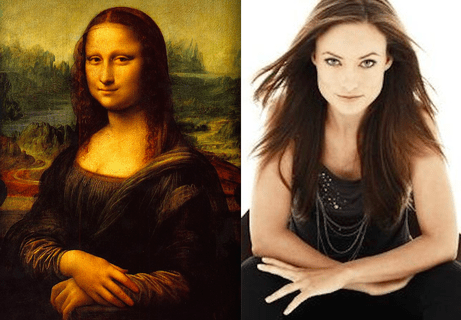
    Think, for example, of the Mona Lisa, created in the beginning of the sixteenth century. Let us ignore the many theories of her enigmatic expression and smile, and look at her simply as a woman modeling for an artist. Facing Leonardo Da Vinci, her countenance doesn’t reveal self-criticism but rather self-acceptance; and though she is modeling, her body seems relaxed, at most she is sitting erect. One could hardly imagine her trying to be anyone but herself. Could we imagine a contemporary model sitting like that in front of a camera, self-absorbed, perhaps indifferent to how she would look in the picture? Nowadays models always pose, either in a subtle manner or vulgarly, without concealing the attempt to please the spectator.

    The drive to look better, to fix flaws, to cover blemishes — with the profound dissatisfaction associated with it — is overpowering. Somehow, awareness of its destructive nature doesn’t abolish it. To escape it, people sometimes seek refuge in other cultures lacking this constant drive, which is both compelling and oppressive.

    Last summer I traveled for the first time to India. I spent the first day in Mumbai, touring the city with a friend. The first hours were overwhelming; a crowd huddling in muddy alleys on its way to a temple, children and elderly exhibiting their deformities as though they were treasures, foulness which is a pillow to rest one’s head on and fall asleep, starved dogs, and high society people dining at the fancy Taj Mahal Hotel. But in spite of the exhausting attempt to absorb it all, I immediately observed how Indian women walk gracefully in their traditional cloths, soft, colorful fabrics wrapped around their torsos, following the contour of the female body without forcing it into rigid forms. Rich or poor, full-figured or thin, young or old, they seemed at peace with themselves, so utterly remote from the Western inclination to constantly compare oneself to others, to try to be “a whole new you”. When I was leaving the Taj Mahal Hotel an elderly woman holding a basket of flowers approached me, her entire body covered yet her round belly bare, and she asked me in a soft voice: “Madam want flower?”