Category: Film and Fiction

  • The Fabelmans

    The Fabelmans

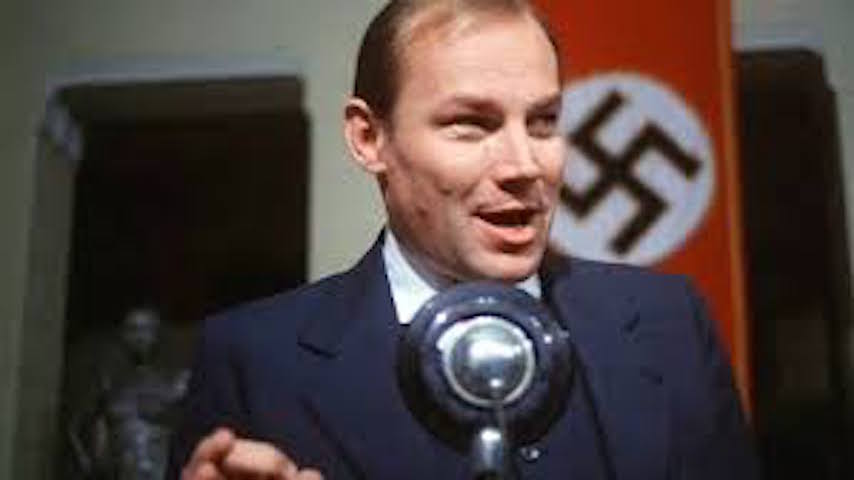
    Unlike most of Steven Spielberg’s films, The Fabelmans has a pronounced autobiographical tone (the script was written by Steven Spielberg and Tony Kushner). The film closely mirrors Spielberg’s own childhood from the ages of 5 to 18. Key scenes in the movie are grounded in the life of his family, portraying his relationships with his parents, their marriage and subsequent divorce, the family’s relocation to Arizona and California, and his experiences with anti-Semitism. The heart of the film is the mental process which ultimately makes Spielberg a filmmaker. However, it also explores the complexities of Jewish self-image during the 1950s and 1960s.

    The film opens with a scene that later seems quite telling. Sammy, the main character, is a five-year-old boy going to the cinema with his parents for the first time. He is anxious about sitting in the theater and watching the movie. When his father asks him why he is scared, Sammy responds, “The characters are gigantic…you said they are gigantic.” His father attempts to reassure him, explaining that the characters only appear gigantic because they are on the cinema screen.

    The unsuspecting viewer does not realize how illuminating this scene is in foreshadowing a side of Sammy’s life that will develop in a fascinating way: Sammy is aware of the physical gap between himself as a young child and the “gigantic” characters he fears. Although his father assures him that they are only an illusion created by the projector, at the age of five, Sammy already senses that they represent a reality external to the cinema, with clear physical advantage over him. When the family returns home after the movie, it becomes evident that their house, the only home of a Jewish family on the street, is not adorned with Christmas lights. Sammy’s mother asks him what he wants for Hanukkah, and he quickly answers, “Christmas lights.” For the young boy, being Jewish means not only being different from his environment but also lacking something others have—in this case, the developed aesthetics that add beauty to his Christian neighbors’ homes.

    Sammy’s mother lets him use his father’s 8mm camera, which opens up a new perspective for him. He recreates a violent scene he witnessed in a movie to overcome his fear. He documents his family’s move to Arizona, accompanied by a close friend. Through the lens, Sammy uncovers his mother’s affair with the friend, which she has carried out unbeknownst to his father. The camera is also a way to find his place among his peers as they join in his filmmaking projects, which he showcases at school.

    When the family relocates to California, Sammy is confronted with overt anti-Semitism. First, we observe that he is surrounded by very tall and strong boys who are physically different from him. He tells his sisters, “It’s like we got parachuted into the land of the giant sequoia people.” At school, he faces bullying from two boys because he is Jewish. Chad is openly anti-Semitic and physically assaults Sammy in front of everyone. Logan, a handsome and muscular boy and a leader, embodies a more subdued form of anti-Semitism. Although he tells Sammy that no one likes Jews except other Jews, he still intervenes to stop Chad from beating Sammy. Spielberg’s indictment of the anti-Semitic environment is clear and unequivocal: Sammy lies beaten in the schoolyard, and no one steps in to help. However, a fascinating aspect of the film is Sammy’s psychological and spiritual struggle with anti-Semitism. Near the end of high school, he is given an opportunity to get back at his anti-Semitic classmates by filming a social event, “ditch day,” which is then shown at the school’s prom. The film, however, contains some surprising elements. Chad, as expected, is portrayed unfavorably and is laughed at by his peers. Feeling humiliated, he attempts to hit Sammy again. Logan, on the other hand, is depicted as physically impressive—handsome and muscular. Sammy strays from a strictly accurate physical portrayal, and it is evident that he views Logan with admiration, even if only as a director, despite Logan having embarrassed and humiliated him.

    Sammy’s feeling of physical inferiority to Logan can be interpreted in various ways. Firstly, the phenomenon of a victim admiring their abuser comes to mind. This is a well-known psychological defense mechanism, where victims internalize the negative image imposed on them, and view their abuser as admirable. It’s easier to handle the humiliations this way. This mechanism can easily be applied to Logan since, in certain situations, he also defended Sammy.

    On another register, Sammy’s portrayal of Logan may echo the Nazi ideal of the Aryan as a superior human. The weak Jewish character looks with admiration at the non-Jewish young man, who resembles an image from a Nazi pamphlet: fair-skinned with straight facial features and a muscular body. The film highlights Logan’s athletic prowess—we see him winning a running competition, in contrast to Sammy, who struggles with sports. Although the Nazi ideal of a superior human has been widely rejected, arguably this image has nonetheless permeated Jewish consciousness and perhaps become part of it. Even though Sammy was born and raised after World War II, these masculine ideals have become an unavoidable point of reference. It is possible that Jews, against their conscious will, have collectively internalized the belief that they are physically inferior to other groups.

    Another interpretation of this scene derives from Sammy’s evolution into a filmmaker. The artist within him perceives beauty and seeks to capture it on film. This age-old artistic inclination to depict human perfection runs as a consistent theme throughout Western art. Sammy’s admiration for Logan’s beauty is, in a way, conceptual rather than personal. The artist in him is drawn to physical beauty and wishes to display it in all its splendor. Interestingly, Logan feels hurt by his portrayal because he feels it is unrealistic. He thinks he is not as handsome as Sammy made him out to be, interpreting this as a subtle attempt at revenge by the Jewish boy, who he thinks aims to embarrass him now that Logan has been depicted almost as an idol, any real-life encounter with him will inevitably be disappointing.

    Sammy’s interaction with the Christian world which explicitly identifies Jews also has an entirely different dimension: he has a romantic relationship with Monica, a devout Christian girl. While Spielberg has stated that most events in the film are based on real-life experiences, he has not commented on the romance with Monica. The viewer observes two teenagers drawn to each other—Sammy is anxious, and Monica is giggling. However, their relationship reflects a fundamental insight about anti-Semitism.

    Monica’s room is adorned with pictures of Jesus, whom she describes as “sexy,” alongside images of Paul McCartney, John Lennon, and Pat Boone. She is surprised that Sammy doesn’t believe in Christ and suggests that they pray together to Jesus. Once it is clear that Monica sees Jesus as an attractive and appealing man, her attraction to Sammy makes perfect sense. She admits that she likes him because she thinks he looks like how Jesus looked; like “a handsome Jewish boy, just like you [Sammy].” She then turns to an image of Jesus and says, “Jesus, I’m here with my good friend Sam, who’s Jewish. He’s a nice boy, Lord. He’s good, brave, and funny, and I like him.”

    The film depicts various Christian attitudes towards Sammy: alongside a physical threat, there is also an attraction to the Jewish boy. His peers perceive him as a Jew living in the first century. This facet of the film provides a fundamental insight into the roots of anti-Semitism: the shared origin of Judaism and Christianity is the source of the distorted attitude towards Jews. For Sammy’s classmates, there is almost no historical distance between the events believed to have taken place in the first century and their current reality; the Jewish boy is expected to apologize for crucifying Jesus and is also desirable because he resembles Jesus. Sammy is acutely aware of this historical misconception—he points out that he is not two thousand years old and that no one knows what Jesus looked like. Yet, he realizes that to them, he is a representative of the Jewish people. This perception can be threatening, frightening, and sometimes rewarding.

    The final scene, captivating and enigmatic, relates to the beginning of the film. Sammy meets the renowned director John Ford in Hollywood. Ford asks him to describe two pictures hanging in his office. As Sammy starts to describe them, Ford abruptly interrupts, telling him he is wrong and explaining that in one picture, the horizon is at the bottom, and in the other, it is at the top. Before sending Sammy off, he offers him this piece of advice: “Now remember this! When the horizon’s at the bottom, it’s interesting. When the horizon’s at the top, it’s interesting. When the horizon’s in the middle, it’s boring as shit! Now good luck to you.” Sammy exits the office, and the camera follows him. He briefly turns around before we see him from behind, walking into the distance (perhaps a subtle nod to the final scene of Charlie Chaplin’s The Circus?). Then, the camera angle shifts, placing the horizon at the bottom of the frame instead of the center. In this final scene, Spielberg himself becomes an invisible actor in the film, adjusting the camera angle. The scene is an illustration of the importance of perspective.

    If the film begins with a Jewish boy feeling threatened by the characters on the movie screen because they seem to represent a real-world threat, then the final scene reflects Spielberg’s development as a person and an artist: he realizes the importance of perspective in understanding the world. Anything can be seen—and presented—from different angles, including the experience of a Jewish boy in the United States during the 1950s and 1960s. Sammy’s childish anxiety, which is somewhat amorphic, and his sense of deprivation gradually transform into an understanding that reality, including anti-Semitism, is complex and multi-faceted and can be viewed and portrayed in various ways. Dealing with anti-Semitism involves changing one’s perspective; it means replacing the basic and intuitive feeling of being weak and disadvantaged with a clear and sharp view of the diverse attitudes toward Jews.

  • River Birth: Beloved by Tony Morrison

    River Birth: Beloved by Tony Morrison

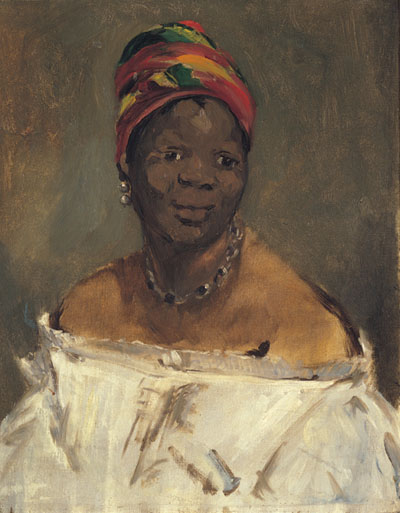
    Perhaps no other literary work revives black slaves’ suffering in the United States as vividly as Beloved, a novel by Tony Morrison, which she published in 1987. Morrison’s descriptions of how brutally the slaves were treated are horrifying and heartbreaking. The novel takes place immediately after the Civil War, between 1865 and 1882, but it also revisits events that took place before these years as well. In 1872, Sethe, the novel’s protagonist, escapes slavery in the state of Kentucky. She crosses the Ohio River to get into Ohio, where slavery had already been abolished. She then lives with her daughter, Denver, in what she comes to understand is a haunted house. After she had escaped with her children and settled in Kentucky, the reader discovers that Sethe’s former owners come after her and capture her and her children. Terrified at the thought that her children would have to experience the unbearable suffering of slavery, she tries to kill them—she is willing to do anything to stop them from becoming slaves. She succeeds in killing her eldest daughter, while the others survive. Later, her two boys escape from home, and she is left with her youngest daughter, Denver. Beloved, a young and mysterious young black woman, joins them, and Sethe is convinced that Beloved is the reincarnation of her murdered daughter.

    The novel portrays various aspects of slavery, the most important being how it affected family relations, motherhood in particular, which is the most basic human sentiment. Black women were treated ruthlessly. Sethe’s mother-in-law had eight children, and they were all taken from her and sold into slavery. Sethe sees her mother only a couple of times, including once after she was hanged. She manages to raise her children, but at a certain point, she sends them to Kentucky in order to save them from the cruelties of slavery. When she is pregnant, the schoolteacher and his nephew abuse her—the nephew and his friends hold her and steal milk from her breasts while the schoolteacher is taking notes. After reporting their misdeeds, the schoolteacher whips Sethe severely, despite her being pregnant. She escapes into the forest, but the wounds on her back the burden of being pregnant cause her to collapse. She is positive that the fetus is no longer alive, and she believes she is about to die. But a young white woman comes along and helps her give birth, even though she could have turned her in for money. Sethe disguises her true identity, and claims that her name is Lu.

    Beloved is one of the very few novels that depict the act of giving birth. No other topic is as repressed as that of a baby coming into the world. Western fiction is full of descriptions of childhood experience, adolescence, love and the loss of it, illness and death, but there is almost nothing about giving birth. Tolstoy, Stern in Tristram Shandy, Tony Morison, and of course Margaret Atwood are virtually the only writers that refer in detail to the physical process of the fetus emerging from its mother’s body. Despite the massive progress in women’s rights in our society, it seems that this feminine experience is still consistently overlooked. One could almost believe that the legend about storks delivering babies is still a popular one today.

    But Toni Morrison chooses not to ignore the act of giving birth. In a world that abuses mothers, she portrays the birth of Denver with great detail. Not far from the Ohio River lies Sethe, her back aching from the previous whipping, her legs bleeding from walking without shoes, and a six-month fetus in her womb. First, the author establishes a fundamental theme that comes to be interwoven throughout the novel, applicable to everything: pain has value, and overcoming it brings forth redemption. Sethe likens the scars of whipping on her back to a tree with branches and fruits. The white girl asks Sethe if she is in pain, and adds: “More it hurt more better it is. Can’t nothing heal without pain, you know.” The Christian spirit is echoing here: suffering has a purpose; it brings a person to a better place. Pain does not exist in itself but is rather a vehicle for change.

    The white girl puts a bed of leaves under Sethe’s aching body and massages her feet. Both of them know that the labor will take place soon, and they look for a proper place for Sethe to give birth. As they walk towards the river, a miracle occurs: they find a deserted boat next to the riverside, which might be a good hiding place suitable for giving birth: “At noon they saw it; then they were near enough to hear it. By late afternoon they could drink from it if they wanted to. Four stars were visible by the time they found … a whole boat to steal.” The white girl says, “There you go, Lu. Jesus looking at you.”

    But as the labor begins, an entirely new perspective blends into the Christian viewpoint: labor is portrayed in terms of the fundamental forces of nature. “As soon as Sethe got close to the river her own water broke loose to join it,”  writes Morrison. The embryonic fluid and the water of the river are one. She lays down in the boat as the water filters in when “when another rip took her breath away.” The contraction is described as a “rip was a breakup of walnut logs in the brace, or of lightning’s jagged tear through a leather sky.” Pain is like a breaching tree, like lightning in the sky. The head of the fetus is stuck, drowning in his mother’s blood, as the white girl “stopped begging Jesus and began to curse His daddy.” Sethe pushes, the girl pulls, but eventually, an entirely different force causes the labor to end successfully—that of the river itself. “When a foot rose from the river bed and kicked the bottom of the boat and Sethe’s behind, she knew it was done and permitted herself a short faint.” The river brought the labor to a fruitful completion—not God, not Jesus, but rather an ancient primordial power, a wide river rolling across America.

    To further emphasize the transition from the primal world to the Christian one, as they find that the baby is indeed alive, “Amy wrapped her skirt around it and the wet sticky women clambered ashore to see what, indeed, God had in mind.” River and land are entirely separated, which is a metaphor for two different modes of existence. In the place where the birth ultimately occurs, the primary forces of nature take action. After the birth, on land, there exists a world dominated by God, with good and evil, ruthless brutality and compassion. “A pateroller passing would have sniggered to see two throw-away people, two lawless outlaws—a slave and a barefoot whitewoman with unpinned hair—wrapping a ten-minute-old baby in the rags they wore. But no pateroller came and no preacher. The water sucked and swallowed itself beneath them.”

    In historical circumstances in which motherhood is a source of endless misery, and mothers are willing to kill their own children in order to prevent them from becoming slaves, the act of labor is a moment of uniting with natural forces. Sethe and the girl bid each other farewell, as they will never meet again. Sethe asks her for her name, and she answers, “Amy Denver.” And so it is thus determined that the newborn baby will be called Denver.

  • Birth in War and Peace

    Birth in War and Peace

    The renowned poet and cultural critic Matthew Arnold, who is widely regarded as the father of modern literary critique, famously stated: “a work of Tolstoy is not a piece of art but a piece of life.” His novels reveal a viscerally realistic worldview, aiming to depict the essence of the human condition in an accurate and authentic manner. Tolstoy once noted: “the one thing necessary in life, as in art, it to tell the truth. Truth is my hero.”

    War and Peace, the masterpiece published in 1869, depicts Russia when it was invaded by Napoleon. In addition to the main protagonists, Natasha, Pierre and Prince Andrew, Tolstoy presents a variety of supporting characters, each of whom is layered and fascinating.  The reader learns about Russian society, which is described in a very realistic manner. 

    It is evident that the novel is an outstanding literary pinnacle – as well as the first modern literary work to realistically depict giving birth. Various works of art portray children’s arrival into the world, but not many of them give insights into the process of giving birth itself. From antiquity to the modern age, artists have chosen not to elucidate the baby’s arrival into the world. Literary fiction portrays various ruthless painful events, which are not very appealing (wounds and illnesses, beheading and other forms of death), but the feminine experience of extracting one body from another tends to get undermined.

    Tolstoy, an author fully attentive to the experience of the individual, depicts the first birth in War and Peace. Although the narrator is not present in the delivery room, he maintains the focus on giving birth. Lisa, also referred to as “the little princess”, is Prince Andrew’s wife. She is portrayed as a young and naïve woman with a juvenile beauty. She wishes no harm, but her frivolous nature stands in contrast to that of Andrew. He leaves his pregnant wife to join the battle against Napoleon. Everyone believes Andrew has died in the battle of Austerlitz. His father and sister decide to conceal his death from his wife who is nine months pregnant – but he returns home unexpectedly right before the delivery.

    Even before Lisa’s husband appears, the princess is portrayed as follows: “And besides the pallor and the physical suffering on the little princess’ face, an expression of childish fear of the inevitable pain showed itself.” And then “the little princess began to cry capriciously like a suffering child and to wring her little hands with some affection.”

    This description palpably evokes mixed feelings. On the one hand, Tolstoy has unequivocally affirmed that Lisa isn’t crying because of an immediate pain but because she presciently knows that she is about to experience profound suffering. The fear of giving birth is therefore acknowledged as a common feminine phenomenon, which is self-evident in my opinion. On the other hand, fear is still portrayed as capricious and childish.

    As the midwife arrives Andrew’s sister tells her, “with eyes wide-open with alarm,” that the birth had begun, to which the midwife replies “You young ladies should not know anything about it.” Here again, Tolstoy acknowledges young women’s fear of giving birth, which is not typical of a single character. Furthermore, the author suggests there is a systematic attempt to conceal the pain and anguish associated with the process of giving birth from young women, perhaps because they might avoid it altogether. In 1959, Simone de Beauvoir argued in her book The Second Sex that women are subjected to myriad psychological manipulations to have children, in order to serve the larger purpose of maintaining masculine superiority. Eighty years earlier, Tolstoy portrays how young women, who had never had children, are intentionally kept away from a woman giving birth.

    Andrew returns home unexpectedly and rushes to his wife’s room. The excruciating pain and excitement make her oblivious to his sudden appearance. From this point onward, she is portrayed in a rather extraordinary manner. “’I love you and had done no harm to anyone; why must I suffer so? Help me!’ her look seemed to say.” Her husband tries to assuage her but then again, her expression conveys it all: “I expected help from you and I get none, none from you either! Said her eyes.” In my view, there is nothing more authentic than a sense of helplessness being confronted with severe pain. Pangs can turn an adult to a child begging for help. The woman who is in the process of giving birth becomes a sort of baby crying and imploring for help, even from those she knows cannot assist her.

    As was customary at the time, everyone leaves the room with the exception of the doctor and the midwife. Andrew covers his face with his hands and hears “piteous, helpless, animal moans” coming through the door. He paces in the room, tries to open the door to the delivery room, but then silence falls. “The screaming ceased, and a few more seconds went by. Then suddenly a terrible shriek – it could not be hers; she could not scream like that – came from the bedroom. Prince Andrew ran to the door; the scream ceased and he heard a wail of an infant.” The pain of giving birth makes his cute wife yell in a way he never thought would be possible.

    This first literary birth ends tragically. Andrew enters the room, “He went into his wife’s room. She was lying dead, in the same position he had seen her in five minutes before and, despite the fixed eyes and the pallor of the cheeks, the same expression was on her charming childlike face with its upper lip covered with tiny black hair. ‘I love you all, and have done no harm to anyone; and what have you done to me?’—said her charming, pathetic, dead face. In a corner of the room something red and tiny gave a grunt and squealed in Mary Bogdánovna’s trembling white hands.”

    Lisa’s tragic demise while giving birth supports her psychological stand and her justifiable fear of the delivery. It is impossible to argue she is spoiled and childish; after all, the birth had cost Lisa her life. In order to emphasize her pleas for help and amelioration of pain, her eyes reveal that she continues to implore even when she is dead.

    Indeed, Tolstoy remained true to his promise, to tell nothing but the uncompromising truth. Portraying young women anxious due to the painful process of giving birth is both genuine and accurate, and this fear shapes them already at a young age. Facing the pangs of giving birth is a substantial experience, and at times very onerous indeed. However, the crucial point is that giving birth is a fundamental human experience that should have its proper place in fiction in particular and art in general.


  • A Horse Walks into a Bar – The Second Generation

    A Horse Walks into a Bar – The Second Generation

    The term “second generation,” for children of Holocaust survivors, has become inherent to Jewish identity, referring to those who did not themselves experience the Holocaust but whose lives have been shaped by the unbearable traumas suffered by their parents, generating common fears and integrating the Holocaust into their worldview. The term refers not only to son and daughters of concentration camps survivors, but also individuals whose parents experienced various aspects of Nazism, and extends even to students of the very small and intolerable details of the atrocities. All are a part of the generation living in the shadow of the Holocaust, though born after it was over.

    The brilliant book by David Grossman, A Horse Walks into a Bar, which earned him the International Man Booker prize, deals with this phenomenon. It is a rich, multi-dimensional novel with universal implications; a substantial part of it depicts a childhood and adolescence shaped by the Holocaust. The protagonist, Dovale Gee, is a stand-up comedian performing in a basement in Netanya, revealing details of his life to the audience. He invites a childhood friend, a retired judge, whom he hasn’t seen for forty years, to “judge” his performance, which unearths his life story. At first, the spectators—and with them, the reader—are led to believe it is an ordinary stand-up show, though unusually vulgar. Gradually, though, we learn about the early trauma experienced by the comedian. Most spectators leave, though some stay, eager to take part in and understand Dovale’s most difficult and meaningful moments.

    Dovale is the only son of a Holocaust survivor. His mother hid for months within a train car. “She spent six months of the war in a small train car, I told you that. They hid her there for half a year, three Polish train engineers in a little compartment on the train that ran back and forth on the same tracks. They took turns guarding her; she told me that once, and her face wore this little crooked laugh I’d never seen before.” After six months, they threw her “straight onto the gatehouse ramp,” where she fell into the hands of Doctor Mengele. His father escaped from Europe right before the war broke, but his entire family was exterminated.

    Dovale’s childhood experiences often refer to the Holocaust. For example, when he is sent to a Gadna (youth training) camp at the age of fourteen, he is terrified. It feels like going abroad, but “going abroad wasn’t done then, definitely not by our sort. Overseas, for us, was strictly for extermination purposes.” But it is the end of the story that illustrates the profound influence the Holocaust had on the “second generation”: when in a Gadna camp, Dovale is told that he has lost a parent, but no one tells whether his mother or father has passed away. On his way back to Jerusalem, he delves into a miserable calculation: who would he prefer to have died? Mom or Dad?

    How is that connected with the Holocaust?

    The desire to rank the atrocities of the Holocaust in order of importance or significance is, of course, wrong. One cannot weigh and measure the innumerable sufferings the Nazi mechanism generated. It is impossible to determine what was more or less terrifying. An analysis of various tortures turns into what is often called “a pornography of death,” dealing with details but missing the main point. But in spite of that, I feel that the worst torment some survivors had to go through was a command to choose between family members, as with Sophie in William Styron’s famous book, to choose who would live and who would die. Sometimes parents were given the opportunity to save one child, and they had to choose who would be sent to the gas chambers and who would be saved.

    David Grossman shows how this monstrous aspect of the Holocaust gradually becomes part of his protagonist’s life. Nazis forced Jews to make an impossible decision: who would be better dead, and who would be better to save. The first-born son? The youngest? Mother?  Husband? The possibility of such an unthinkable, atrocious contemplation had become part of our world. Acknowledging that someone forced our parents, remote family members, or even Jews we didn’t know, to decide which member of the family would live and who would die implied that this option existed and cannot be ignored anymore. It becomes an element of our self-perception, our common consciousness, even as we recognize it as detestable. The climax of the novel relates when, at the age of fourteen, Dovale is trying to “decide” who he would rather find out had died, father or mother, is nothing but a natural extension of the “second generation” experience, applying the tragic ordeals of the parents to the lives of the children long after the Holocaust was over.

    A word on the link between the comic and the tragic: Prof. David Flusser, my instructor at Hebrew University, grew up in Prague and knew some of Franz Kafka’s childhood friends (Kafka is mentioned in the novel). He told me that one of them described to him the details of the very first time Kafka read his work to his friends and they all burst into wild laughter and couldn’t stop. What eventually became the ultimate literary expression of the indifference to the fate of man and of impersonal cruelty was, at first, funny. So is David Grossman’s novel. But, unlike Kafka, he tempts the reader with jokes and gradually transforms his world into a dark and cruel place. The joke is the last resort, a means to escape the understanding that someone had to decide who of his family members would live and who would die. And Dovale, exactly like Kafka’s Joseph K., is awaiting the verdict for a crime he did not commit.

  • Democracy and the USA – Leonard Cohen

    The fall of the Berlin Wall in 1989 was perceived by many as a beginning of a new era, optimistic and full of joy. At the time is seemed that the influence of the US and western European countries was expanding, and nothing could stop it. Many thought the world is gradually advancing to a better future. Only some – Leonard Cohen among them – expressed concern regarding this very extensive historical process, arguing the promoting democratic values is a slow complex process, more complicated than simply establishing a democracy.

    Leonard Cohen began writing “Democracy” after the fall of the Wall. Many notebooks were filled with lines and rhymes, words crossed out time and again, there were more than fifty version of the song until he was happy with the final one, released on 1992. The song is an epitome of his perception of American culture and the way it metes out democracy. It is an intricate puzzle of serious historical observations and ironic references to sentences often heard in the US.

    The leitmotif is rather surprising: “democracy is coming to the USA.” We tend to think of the US as a source of inspiration for other countries; it is often referred to as the most prominent democracy on earth. But in the first line we are astonished to learn that democracy is penetrating into the US from holes in the air and in the walls, from the demonstrations in Tiananmen Square. Yet a couple of lines later we realize that Cohen is referring to places within the US (like Chevrolet workers) as sources of democratic ideas “coming” to America. So where exactly is the US and where are the democratic ideas coming from?

    If we follow the logic of the song we find that the US is essentially a concept, an idea, a place not defined by its geographic borders but by its fundamental values. I think the events of the last couple of months truly affirm this view: It is not the physical border of the US that is important but the American way of life. In an interview after the song had been released Leonard Cohen said, “It is a song where there’s no inside and no outside. This is just the life of the democracy.” And what is the US? “A lab of democracy,” a place where democratic ideas are truly tested. Democracy is not a steady state but a process, an infinite examination of ideas like equality, freedom, opportunities. The song compares the US to a sailing ship, which must be vigilant against greed and hate.

    From here Cohen attempts to define American culture. He first affirms America’s religious roots. “The Sermon on the Mount” is his point of departure, after which he provides a fascinating depiction of life in the US. Democracy, he argues, is not self-evident; it is acquired with effort, pain, it emerges “from the sorrow in the streets,” from inter-racial tension, from women kneeling down suffering, from a struggle about who would serve and who would eat – the song is full of descriptions of people in agony. Cohen’s US is not a tranquil wealthy place, a country in which human rights are secured. It is a country in which a constant battle is taking place, “the cradle of the best and of the worst,” where people can achieve the best and fall into deepest darkness.

    His observations of American individualism are especially interesting. The spirit that drives people to achieve their goals also pushes them away from one another. “It’s here they got the spiritual thirst,” he says, but then he connects self-fulfillment with the breaking of the family, “It’s here the family’s broken.” In an ironic tone he elaborated on the loneliness so typical of life in the US, along with a denial of its source, “and it’s here the lonely say that their heart has got to open in a fundamental way.” Clearly loneliness is not a result of the lack of openness; it is a mechanism of denial, unwillingness to admit that there is a link between extreme individualism and loneliness. And though the American spirit has a pronounced sexual character, sensual and passionate, ultimately people are alone.

    In the last stanza Cohen seems to break life in the US into the smallest components, almost into the physical material it is made of. “And I’m neither right nor left, I’m just staying home tonight, getting lost in that hopeless little screen.” This is a reduction of high principles into a very simple, uncomplicated life. Many American are not concerned with politics or the fundamental principles of democracy; they completely withdraw into their private space, watching TV for hours. But the strong determined spirit of America is also embedded in these people, who seem so detached from the public sphere, they are “like a garbage bag that time cannot decay.”

    There’s nothing like this metaphor to express a big idea with a small object: not passionate speeches on the American spirit, not the American bald eagle or the hand on the heart while singing the national anthem – but a disposable garbage bag; it is man-made, lacks any elegance or grace, but endures forever.

    Democracy/Leonard Cohen

    It’s coming through a hole in the air,
    From those nights in Tiananmen Square.
    It’s coming from the feel
    That this ain’t exactly real,
    Or it’s real, but it ain’t exactly there.
    From the wars against disorder,
    From the sirens night and day,
    From the fires of the homeless,
    From the ashes of the gay:
    Democracy is coming to the U.S.A.

    It’s coming through a crack in the wall
    On a visionary flood of alcohol
    From the staggering account
    Of the Sermon on the Mount
    Which I don’t pretend to understand at all.
    It’s coming from the silence
    On the dock of the bay,
    From the brave, the bold, the battered
    Heart of Chevrolet
    Democracy is coming to the U.S.A.

    It’s coming from the sorrow in the street,
    The holy places where the races meet
    From the homicidal bitchin’
    That goes down in every kitchen
    To determine who will serve and who will eat.
    From the wells of disappointment
    Where the women kneel to pray
    For the grace of God in the desert here
    And the desert far away:
    Democracy is coming to the U.S.A.

    Sail on, sail on
    O mighty Ship of State!
    To the Shores of Need
    Past the Reefs of Greed
    Through the Squalls of Hate
    Sail on, sail on, sail on, sail on.

    It’s coming to America first,
    The cradle of the best and of the worst.
    It’s here they got the range
    And the machinery for change
    And it’s here they got the spiritual thirst.
    It’s here the family’s broken
    And it’s here the lonely say
    That the heart has got to open
    In a fundamental way:
    Democracy is coming to the U.S.A.

    It’s coming from the women and the men.
    O baby, we’ll be making love again.
    We’ll be going down so deep
    The river’s going to weep,
    And the mountain’s going to shout Amen!
    It’s coming like the tidal flood
    Beneath the lunar sway,
    Imperial, mysterious,
    In amorous array
    Democracy is coming to the U.S.A.

    Sail on, sail on

    I’m sentimental, if you know what I mean
    I love the country but I can’t stand the scene.
    And I’m neither left or right
    I’m just staying home tonight,
    Getting lost in that hopeless little screen.
    But I’m stubborn as those garbage bags
    That Time cannot decay,
    I’m junk but I’m still holding up
    This little wild bouquet
    Democracy is coming to the U.S.A.

  • Moonlight – an Old Fashion Love Story

    Moonlight – an Old Fashion Love Story

    Moonlight, the winner of the Academy Award for Best Motion Picture of 2016,  depicts the lives of Black people in Florida: economic hardship, violence, drugs, a life of misery with almost no escape. The film presents three stages in the life of Chiron, its main character: as a child, an adolescent, and an adult. We witness him mature from a frightened boy into a threatening drug dealer.

    Chiron is raised by a drug-addicted single mother who sometimes turns to prostitution for survival.  Children bully him, and he comes under the protection of Juan, a drug dealer. Juan takes him to his home, where he lives with his girlfriend, and there Chiron finds the shelter and warmth that he lacks at home. But after he finds Juan sell drugs to his mother he leaves, returning to this home only after Juan’s death.

    In the second part Chiron is a teenager, still being bullied by his classmates and living with his drug-addict mother. Only one boy, Kevin, become his friend. In a moment of emotional intimacy a certain sexual encounter develops.  But later, his classmates forces Kevin to hit Chiron, who is left bleeding and crying on the floor. This part ends with Chiron returning to his classroom — his face revealing that can’t take the misery any more — grabbing a chair and breaking it on the back of one of his abusers.

    In the third part of the movie, Chiron is a muscular young man, a scary drug dealer in Atlanta. His mother has gone into rehab. To his utter surprise Kevin, who he hasn’t seen for years, calls him. Chiron decided to drive to Florida to meet him. The encounter between them is the climax of the film. We find that Chiron had been in love with Kevin for years, and since their sexual encounter he had not been with anyone else. In Kevin’s house by the sea, Chiron gently rests his head on his lover’s shoulder.

    The film was highly praised for a complex presentation of life of poverty and the development of homosexual identity. Slums are imbued with violence – but also with grace and generosity. And the discovery of a homosexual identity is a complicated process of self-acknowledgement.

    But if we examine the story from a universal perspective, we find an old-fashioned love story – one that is rarely seen in fiction and in cinema today. For the sake of argument, let’s try to describe the story as a relationship between a man and a woman: the male protagonist falls in love with a woman in his youth and has a limited sexual encounter with her. She leaves, but the memory of the happy moment a prevents him from engaging with other women for years. As they meet again he gently confesses his love and rests his head on her shoulder. Would the spectators believe such a story?

    The absolute link between feelings and sexual attraction, time that stops after an encounter with the loved one, years of yearning for him, the tender sexual relations – the great love stories of the nineteenth and twentieth century were made of such materials. Moonlight is a story about profound love, lacking any skepticism, almost anachronistic. A story more typical of our days would present Chiron having sex without love, perceiving the connection with Kevin in a different light as time goes by, and developing meaningful emotional relations with another man.

    But Moonlight is a monumental love story – like Anna Karenina or Casablanca, and perhaps mostly like Thomas Mann’s Death in Venice. But unlike these love stories, it takes place in the lowest social layer, among people whose lives are almost entirely determined by their being born into poverty; very few – like Kevin – manage to break out of violence and drugs.

    The poor social circumstances emphasize Chiron’s unique character, making his love even more astonishing. But isn’t this a distorted perception of poverty? A romanticization of deprivation and violence? A similar argument had been put forwards against Dostoevsky’s writing. It has been suggested that his portrayal of love and generosity emerging especially in hardship justifies poverty, makes it valuable, and undermines any efforts to eradicate it.

    Kevin, unlike Chiron, leaves the criminal life. He works as a cook, and he fathers a child. He states that though his life is not perfect, he is happy. Here, again, the film agrees with the spirit of monumental love stories: they drive the protagonist to outstanding pinnacles and disheartening falls – but not to a happy life.

  • Toy Story – an American Ambivalence

    Toy Story – an American Ambivalence

    Most children’s stories are educational. The characters, the plot, the happy ending serve as vehicles to convey a message: encourage moral behavior, promote consideration, develop sensitivity—the lessons are usually rather straightforward and simple, so children can easily follow them. This also goes for children’s films and animations. Some of the most well-known cartoon figures are both funny and instructional. A couple of weeks ago, tired and bored on a long flight, I decided I would watch Toy Story. The more I saw, the more puzzled I became. What, exactly, was the moral of the story?

    Released in 1995, Toy Story was the first feature-length, computer-animated film. It revived an old idea prevalent in folk stories: when hidden from human eyes, toys come to life. At night, these inanimate objects move, talk, think and feel. Perhaps this was derived from the urge to further develop the toys as an imitation of their human counterparts, as means of preparing the child viewer for real life. In the film, a cowboy doll named Woody is Andy’s favorite toy. Woody becomes anxious as Andy receives Buzz Lightyear, a modern space ranger, for his birthday. The old toys are all excited as new birthday toys join them, both expecting new friends and fearing rivals that may take their place. The story revolves around the relations between Woody and Buzz; the first wants to keep his place as the favorite toy and the latter can’t accept the fact that he is a toy. On top of this, Andy’s family is moving, and the toys go through all sorts of adventures. Together they are lost and then find their way to Andy’s new home.

    Andy is a “good boy”, well-behaved and nice. He loves his toys and takes care of them. He is sad when Woody and Buzz disappear and thrilled when they return. Unlike Andy, his next door neighbor, Sid Phillips, is the “bad boy”, a disturbed and aggressive child who makes scary experiments with toys. Playing doctor, he cuts them, mutilates them, and then puts together parts of different toys, creating revolting, monster-like creatures: a baby’s head with a spider’s body, a frog with wheels for legs, a woman’s legs attached to a fishing rod, a fly’s head stuck on a Combat Carl’s body—the victims are just as horrified at what they have become as we are upon seeing them emerge from the shadows of Sid’s room.

    Naturally, the young spectators are led to like Andy and dislike Sid. The explicit message of the story is clear: children are encouraged to respect others, human or toy, and accept them for who they are. The film conveys a purely progressive message. But certain aspects of the film do not agree with this message. For example, the “bad boy” is physically unattractive, with a most repellent set of braces. The correlation between morality and appearance stands in sharp contrast to the progressive spirit of the work. Are ugly people bad? The mutilated toys are good-hearted, but this isn’t always true for ugly humans. Also, though Sid lives next door to Andy, his environment seems different, not at all cozy and loving. Andy’s mom is always in the background, and Phil’s parents are never seen; Andy sleeps in a nice, clean bed, covered with a pleasant duvet, while Phil’s bed is messy and lacks a homely appearance; Andy’s mom drives him to the Pizza place, as Phil returns alone on his skateboard. And despite of his disturbed way of playing, there are no parents in sight to help him. Is the film suggesting that children from good, loving families are simply better from those coming from neglectful homes?

    The mutilation of the toys is another ambivalent aspect of the film. Of course it is shocking to see a bird’s head attached to a girl’s body, or a baby’s head to a spider’s body. But it should be pointed out that Andy’s toys, the nice, clean ones purchased at a toy store, are not exact replicas of natural forms, either. Mr. Potato Head’s facial features keep falling off and are sometimes placed “wrongly”, eyes where the nose and mouth should be. The dog has a Slinky for a body. The piggy bank has a cork in his belly.

    So, what’s actually wrong with Sid’s mutilation of his toys? Seen from an alternate perspective, one could present an entirely new interpretation to Toy Story: the only difference between good and evil is that good is prettier, more refined, and not as extreme as evil. But there is no fundamental difference between the two. Evil actions are fine as long as you don’t do them yourself. And the problem with brutality is that it’s not graceful and appealing, not that it causes pain.

    Strangely, the two conflicting interpretations are possible. Two mutually exclusive sets of values—one exemplifying morality and compassion, the other only aesthetic values—lie at the heart of the story. One wonders if this isn’t what we see in the United States these days, so deeply embedded in American culture: two sets of values coexisting, and we are constantly wondering if people are judged by their morality and compassion or only by their appearance.

  • When Facing God – Leonard Cohen

    [Originaly published on September 23rd 2016, two months before Leonard Cohen had passed away]

    On his eighty-second birthday, Leonard Cohen released, “You Want It Darker”—a somber reflective song on the perception of God and the inner world of the believer. Cohen is a Canadian Jew who leads a secular lifestyle. However, his entire body of work is related closely to Judaism. He often embeds biblical motifs in his songs, and some poems reflect a deep connection with Israel. He also incorporates Christian imagery in his songs.

    Now, at eighty-two, Cohen is contemplating death. After a long and successful career, he dares to look forward into the passage to “the other world.” This reflection on his mortality is really a dialogue with God. The feeling that death is close creates an affinity with the Almighty and makes Him a partner in conversation, although it is, of course, a monolog without answers.

    The lyrics consist of two fundamental elements: Cohen’s open and explicit accusations of God, and then his calling to God: I am ready, my Lord, “Hineni” (biblical Hebrew for: “Here I am.” Bible for Jews, Old Testament for Christians).

    In the first part, Cohen articulates a profound philosophical argument: God is the cause of endless suffering, and horrible crimes were committed in His name. However, this is not the statement of an atheist, a non-believer. He is not saying that ­­­if religion didn’t exist, the world would have been a better place. That he is having a conversation with God illustrates a belief in His existence.

    He then argues that God Himself has made human existence difficult and painful. “You want it darker,” he says to God time and again, suggesting that God does not want human life to be happy and fulfilling, but rather sad and agonizing. This argument, as paradoxical and anti-religious at it may appear, was also put forward by the great Christian writer, Fyodor Dostoevsky. A naïve believer may think that God is the source of all that is good, and that eventually, His power will overcome evil. But God himself is also the source of human misery. We came into this world not to rejoice, but to suffer. God made this happen; we “killed the flame.” Salvation cannot be found in this life, but only in another world. “It is written in the scripture,” he concludes; if you read the bible, you will see that God never promised worldly happiness.

    From this perspective, Cohen juxtaposes man and God. “If you are the dealer, I’m out of this game/If you are the healer, it means I’m broken and lame.” Because the omnipotent God is not the source of good, He is not an ideal one should strive to emulate. The provocative tone is clear: if You (God) are the emblem of good, I would rather be bad. If God is the source of so much evil, I would rather be on the side of the sinners and wrongdoers.

    However, as harsh and daring as these words directed to God, they are put in perspective by the other element of the song: “Hineni,” “I’m ready, my Lord.” Hineni denotes a highlighted presence, used either by God before proclaiming action, or by men who are approached by God. In the binding of Isaac, Abraham says to God, “Hineni.” When God appeared in Jacob’s dream, he quickly said, “Hineni.” Moses saw God in the burning bush and cried, “Hineni.” Samuel the prophet told God, “Hineni,” and so on. Facing an omnipotent God, biblical protagonists often said “Hineni” to denote full obedience, to demonstrate the negation of their own desires and thoughts when facing the Almighty.

    The magic of the song is the interweaving of two disparate states of mind: one is that of a bitter believer, asserting that the anticipation of divine help and love ended in utter disappointment: “A million candles burning for the help that never came,” or “… for the love that never came.” Another is that of a profound believer, one who lacks doubt and hostility, and anticipates his death, which he envisages in purely religious terms: to die is to be taken by God. The ambivalent state of mind is also reflected in the music: part modern and rhythmic, part Jewish cantorial singing. If we are to speculate which part is more substantial, the song ends with cantor Gideon Zelermyer and a synagogue choir singing.

    Perhaps future historians will examine this song to understand our era. They may conclude that, despite the very modern and secular appearance of western civilization, the religious past was still very much alive, in particular when people were facing questions of life and death.

    You Want It Darker / Leonard Cohen

    If you are the dealer, I’m out of the game

    If you are the healer, it means I’m broken and lame

    It thine is the glory then mine must be the shame

    You want it darker

    We kill the flame

    Magnified, sanctified, be the holy name

    Vilified, crucified, in the human frame

    A million candles burning for the help that never came

    You want it darker

    Hineni, hineni,

    I’m ready, my lord

    There’s a lover in the story

    But the story’s still the same

    There’s a lullaby for suffering

    And a paradox to blame

    But it’s written in the scriptures

    And it’s not some idle claim

    You want it darker

    We kill the flame

    They’re lining up the prisoners

    And the guards are taking aim

    I struggled with some demons

    They were middle class and tame

    I didn’t know I had permission to murder and to maim

    You want it darker

    Hineni, hineni

    I’m ready, my lord

    Magnified, sanctified, be the holy name

    Vilified, crucified, in the human frame

    A million candles burning for the love that never came

    You want it darker

    We kill the flame

    If you are the dealer, let me out of the game

    If you are the healer, I’m broken and lame

    If thine is the glory, mine must be shame

    You want it darker

    Hineni, hineni

    Hineni, hineni

    I’m ready, my lord

    [Cantor Gideon Zelermyer]

    Hineni

    Hineni, hineni

    Hineni

  • Who Is an Idiot?

    Who Is an Idiot?

    Most of Dostoevsky’s novels are in fact experiments. He sends his protagonists into the world to test a certain hypothesis on the nature of man or society. As we follow a murderer, a gambler, a monk, a prostitute—or simply ordinary people—we are driven to pose the questions Dostoevsky wants us to ask. And though the novels are extremely exhaustive and complex, they can be reduced to rather simple intelligible questions.

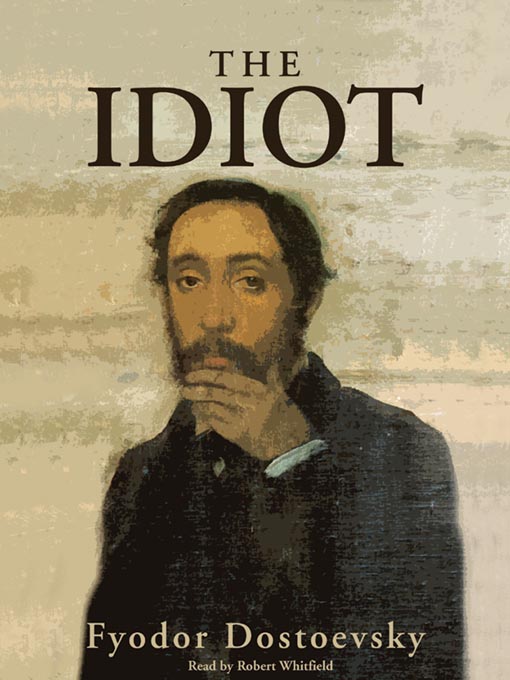
    In 1868 Dostoevsky began publishing his novel The Idiot in a journal titled “The Russian Messenger”. It is a story of a truly good person: innocent, kind-hearted, selfless, forgiving, a man without moral faults. Prince Myshkin—this is his name—is “a positively good and beautiful man”, as the author describes him. The experiment in this novel was a rather odd one: what would happen if ordinary men and women were to encounter a man who is utterly good? The intuitive answer, I think, is that it would somehow ameliorate their lives. But the great author demonstrates his belief that the result would be altogether different.

    The novel begins as Prince Myshkin arrives in St. Petersburg after spending years in Switzerland for treatment of epilepsy. He comes to meet a distant relative of his and encounters the various characters. Rogozhin, a passionate and violent man, is infatuated by a societal beauty; he inherits a fortune and wants to marry her. She, Nastasya Philippovna, was made a concubine at the age of sixteen by her legal guardian, appointed after the death of her parents. She threatens to expose him; he promises her 75,000 rubles if she marries his assistant, Ganya, an ambitious young man. Myshkin himself falls in love with the beautiful Aglaya, the daughter of his family relative; she is infatuated with him, almost against her will, though ridiculing his good nature and naiveté.

    Myshkin, as has been pointed out, is an extremely good person. He sees the positive side of everyone, always offering help, calming any dispute—and taking the blame for the sins of others. This makes the various characters think he is, well, an idiot… They see self-sufficiency, egotism and selfishness as evidence of intelligence; their absence implies stupidity. Yet this protagonist, clearly somewhat of a Christ-like figure, ignores common beliefs and adheres to his strictly good ways.

    The plot takes several dramatic turns. Rogozhin confesses that his deep desire for Nastasya Philippovna is so overpowering that it makes him think of cutting her throat. She is so traumatized by her sexual exploitation at a young age that she is overtaken by self-destruction. Ganya wants to marry her to upscale his social status. And poor Myshkin, shaken up by her sufferings, offers to marry her to prevent a catastrophe, and thus disappoints the lovely Aglaya. At the end, after many vicissitudes, Nastasya Philippovna runs off with Roghozin, who then murders her. Aglaya, broken-hearted, marries a ‘wealthy exiled Polish count’ who is revealed to be neither wealthy nor a count, and turns her against her family. Myshkin finds Rogozhin with the body of Nastasya Philippovna, and they both lament her. Rogozhin is sentenced to fifteen years of hard labor in Siberia. Myshkin goes mad and returns to the sanatorium in Switzerland.

    Clearly Dostoevsky is portraying tragic consequences of the encounter with this perfectly good man. Yet the roots of these misfortunes are not unequivocal. Myshkin is something of a Christ figure. Is it possible that the encounter with Christ leads to nothing but misery? Though profoundly religious, Dostoevsky often points out the paradoxical nature of religious belief; it is the most profound yearning for something beyond our reach.

    Possibly Myshkin’s habit of taking the blame for others is the cause of all this misery, as some scholars have pointed out, since it seems to drive his sinful friends to more desperate misdeeds. It is a fundamental criticism of Catholicism and the Eastern Orthodox Church: forgiving the sinners only drives them to commit worse crimes.

    But Dostoevsky’s work cannot be reduced to a religious statement. This novel seems to convey a very strong message: taking the blame for others is harmful, aspiring for eternal good is destructive, and forgiving anything is detrimental. Oddly, in spite of his being a profoundly religious man, this comes rather close to contemporary secular values: personal responsibility for one’s achievements and failures; the aspiration to relative advantages rather than absolute ones; the treatment of mental defects by science, not devotion. George Panichas, a noted scholar of Dostoevsky, said that “Through Myshkin, Dostoevsky gives his prophetic vision of a modern world in which a life ordered by Revelation and the ability to experience the world in a religious way are lost.”

    So is Myshkin an idiot? Not in a simple way, of course. His choice of self-sacrifice is conscious and not the result of stupidity. But in a more profound way, Dostoevsky is suggesting that perhaps he is.

  • Falling into Nazism

    Falling into Nazism

    There is something enigmatic about the way the Nazi regime came into being. I am not referring to its profound historical sources, but to the gradual transformation of Germany from what seemed like a normally functioning society into one that endorsed a state of ecstatic devotion to a ruler, a nation, a race, an ideology. The shift of values and habits is intriguing, especially when we compare the early manifestations of Nazism with the end result – WWII and the Holocaust. In retrospect, Germany underwent a comprehensive change. But was it possible to grasp the enormity of the transformation as it was taking place?

    Klaus Mann (1906-1949), a German writer and publicist, began writing his well-known novel Mephisto in 1933 and concluded it in 1936. A fierce opponent of National Socialism, the son of Thomas Mann and brother of Erica, he fled Germany in 1933 to reside in Amsterdam and in the United States. His public criticism of the Nazi ideology made Nazi Germany strip him of his German citizenship. Mephiso, later adapted as a film, focuses on the psychological mechanism of adjusting to a new spiritual atmosphere, a new regime.

    The protagonist, Hendrik Hoefgen, is an ambitious young man. At the beginning of the novel he is a young actor with a revolutionary spirit, supporting Communist groups; at the end he is the head of the German National Theater in the Nazi era. So how does a man who publicly opposed Nazi ideals become part of the Nazi establishment?

    Mann’s answer is subtle gradation: a very slow and gradual process of moral decadence, in which every step appears almost plausible. There is no one moment of moral collapse, of adoption of racial or anti-Semitic ideas, only a very slow process of adjusting to a new regime, gradually adhering to its standards.

    When Nazi ideas begin to spread, the young Hendrik gets a role in a major theater in Berlin. He openly denounces racism, calling Herman Goering’s girlfriend, herself an actress, ‘a stupid cow’. As the Nazis are gaining power, he is shooting a film in Spain. The director cancels the making of the film. His friends and wife decide to leave Germany – but not him. His burning ambition to become a famous artist, well-known and wealthy, makes him persuade himself that free art will always survive, regardless of political developments.

    Strangely, Goering’s girlfriend, oblivious to his past remark, asks him to appear on stage with her in Berlin. Hoefgen hesitates, but the professional temptation overshadows everything. He returns to Nazi Germany to play with her, also becoming acquainted with Herman Goering. The latter grants him the role of Mephisto in Goethe’s Faust. He even attends the opening gala; in the intermission he invites Hoefgen to his stall, shaking his hand as the audience watches. At that very moment Hoefgen becomes a famous actor. “How easily everything went! Hendrik feels he must have been born under a lucky star! … Should I have refused so much splendor? No one else would have done so given the same opportunities; and if someone was to claim otherwise, I should denounce him as a liar and a hypocrite.”

    The next step is using Goering’s affection to save an old friend who was engaged in anti-Nazi activity. He takes pride in saving his friend, but not only in that: “I have rescued a man, he thought proudly … But might there not be a day of upheaval and great wrath? In case that happens it would be wise – and indeed necessary – to take insurance. The good deed constituted a particularly valuable insurance policy. Hendrik congratulated himself on that.” He is cold and calculating. Should the Nazi regime collapse, it would be wise to be able to justify his collaboration with it.

    When Goering is about to eliminate Hendrik’s black mistress, he manages to have her deported to Paris. He meets her in her dark prison cell, before deportation, warning her: “There is one condition attached to this great favor … you must keep quiet! If you can’t keep quiet then it’s finished for you.” He now explicitly threatens a woman he cherishes dearly.

    His appointment as head of the National Theater is a moment of personal triumph; he remarries and lives in extravagant wealth, yet members of the underground threaten him: “we will know who to hang first.” His shaken sense of security leads to his emotional collapse, and, in tears, he cries: “what do they want from me? … All I am is a perfectly ordinary actor.”

    This last sentence encapsulates Klaus Mann’s historical observation: many Germans who were not ardent Nazis yet fully cooperated with the Nazi regime did not accept the moral responsibility for their deeds. The gradual development of the adherence to Nazism made the avoidance of a full reckoning possible. Hendrik may have even argued that he was a victim; but Nazism couldn’t have thrived without people like him.