Category: israel

  • The Colors of Jerusalem

    The Colors of Jerusalem

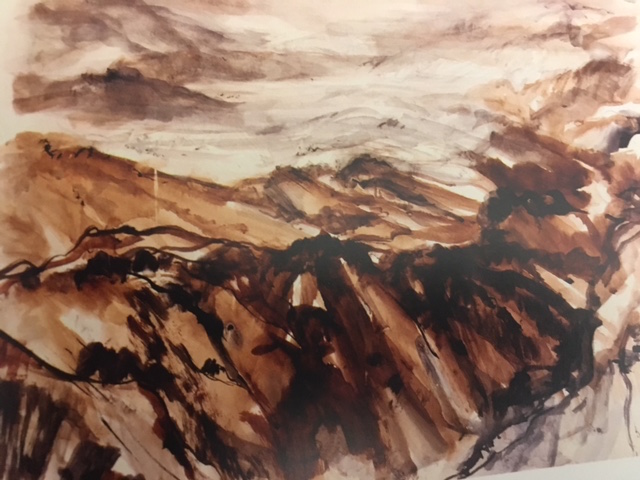
    There is something elusive about the Middle Eastern landscape: a blazing sun creates vivid colors, yet the dusty air blurs the contours; desert sand makes the lively hues of rocks, bare hills, olive trees dull and faded. Many European artists have tried to capture the unique light and the peculiar landscape, often perceiving it as a sort of primordial scenery. So different from the European landscape, at times it seemed almost mystical, with its ravines, meandering hills, and arid vegetation.

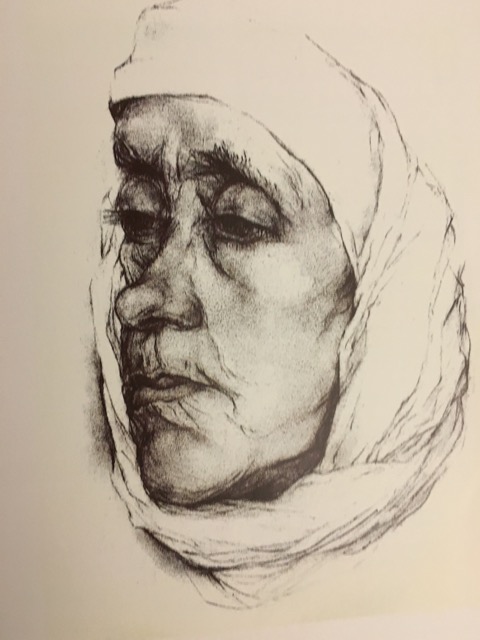
    Anna Ticho (1894-1980) was an Israeli painter who devoted her life to depicting Jerusalem and the Judean Mountains. Born in Brno, then part of the Austro-Hungarian empire, her family moved to Vienna to enjoy its flourishing culture. Anna often visited the Albertina Museum, admiring the works of Durer and Bruegel. She took art classes and began to draw at the age of fourteen.

    When she was eighteen years old, the Jewish organization “For Zion” sent her cousin Dr. Abraham Ticho, an ophthalmologist, to Palestine to open an eye clinic in Jerusalem. Anna decided to join him on his journey. The cousins fell in love and married.

    When they arrived in 1912 Anna was in a state of shock. The views, the colors, the buildings, the people – everything was so different from anything she had ever seen. She was so overwhelmed by the new surroundings that she could not even express her feelings through art. For four years Anna made not a single painting.

    As WWI broke, Dr. Ticho, a reserve officer in the Austrian army, was sent to Damascus, where he served as a surgeon. He couldn’t find a suitable nurse, so Anna volunteered to be his assistant, an occupation she continued until his death. As the war ended they returned to Jerusalem and purchased a beautiful house in the center of Jerusalem. The lower floor was an eye clinic where Dr. Ticho treated all sorts of patients – rich and poor, high officers of the British Mandate and Jewish immigrants, mainly from Germany – with his wife as his nurse.

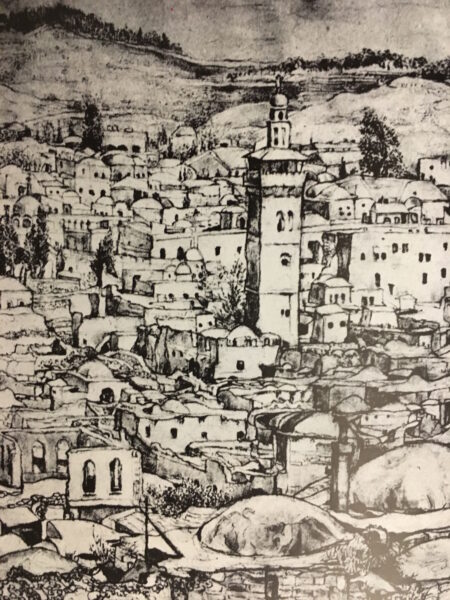
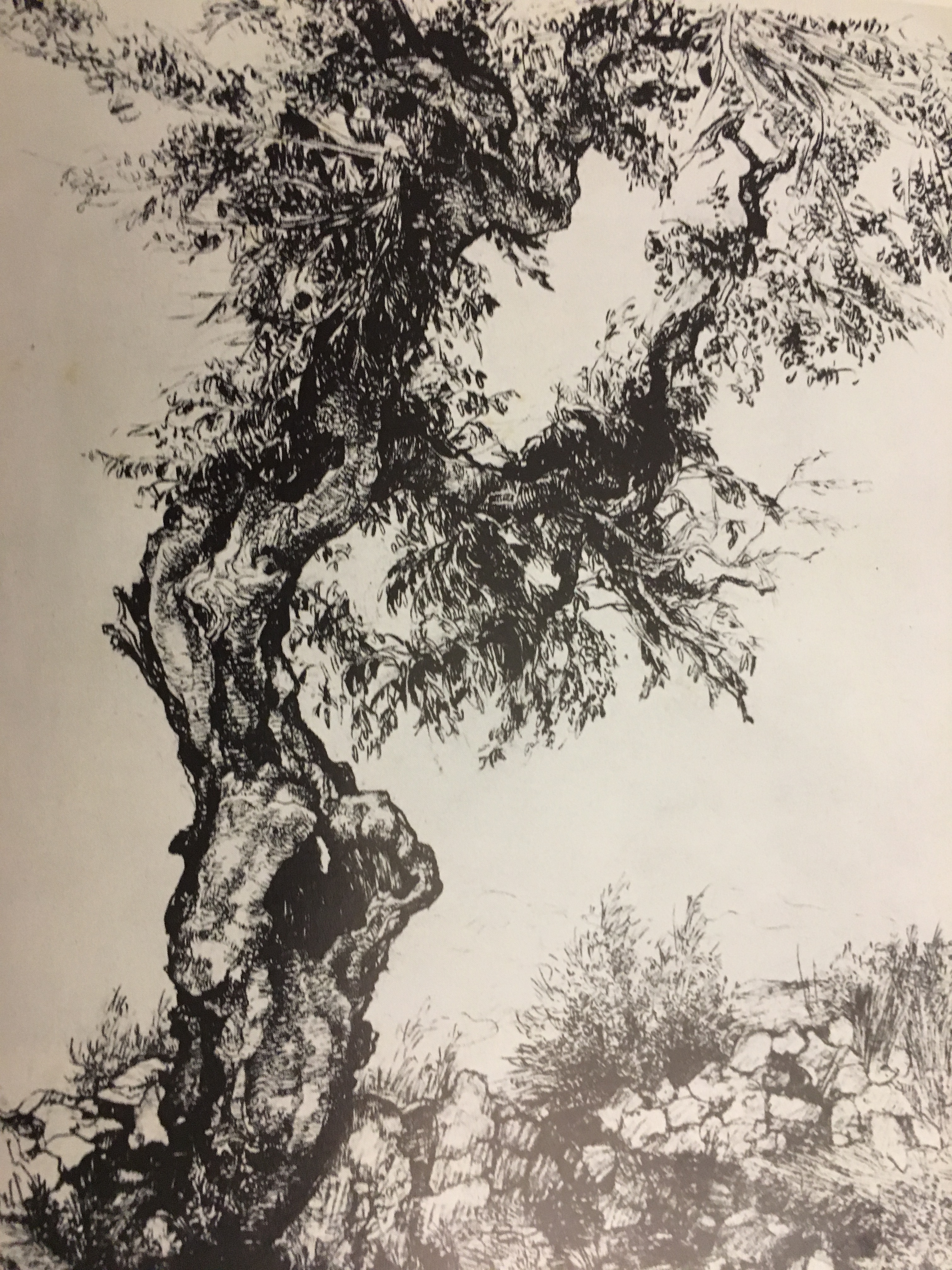
    Now, after years in the Middle East, Anna had already grown accustomed to the strange country. She was completely fascinated by the landscape surrounding the city. On the edge of the desert, with buildings covered by Jerusalem stone, Anna walked for hours around the city, trying to capture the unique landscape in her drawings, mostly using nothing but a black pencil. Walking alone in uninhibited areas wasn’t safe, but she wouldn’t give it up. She fell in love with the surroundings. She dedicated her time to both assisting her husband and creating wonderful drawings. The influence of Durer is clearly reflected in her work from that time: delicate pencil drawings, detailed description of the landscape, very expressive. The hills of Jerusalem, people of very different origins, the exceptional light are all found in her drawings.

    Unlike many Israeli artists of this time, Anna did not make any attempt to embellish the landscape or the city. Her art was utterly detached from any Zionist notions. She depicted stony ground, huge thorns, leafless trees, poor people, making no effort to adorn the bare land or soften its bleakness. At times her art seems almost religious – the views seem so primordial that they appear like some kind of pre-human land, almost divine. There is no reference to Jewish or Israeli themes, only a direct unmediated observation of nature.

    In 1960 Dr. Ticho passed away, and Anna decided to leave their home and move to Motza, a neighborhood on the outskirts of Jerusalem, located on one of the hilltops of the Judean Mountains. The view was breathtaking, magnificent. But Anna, following her inner artistic drive, began to paint in her studio. No longer did she feel the need to see the landscape as she portrayed it – now she allowed her recollections to shape her art.

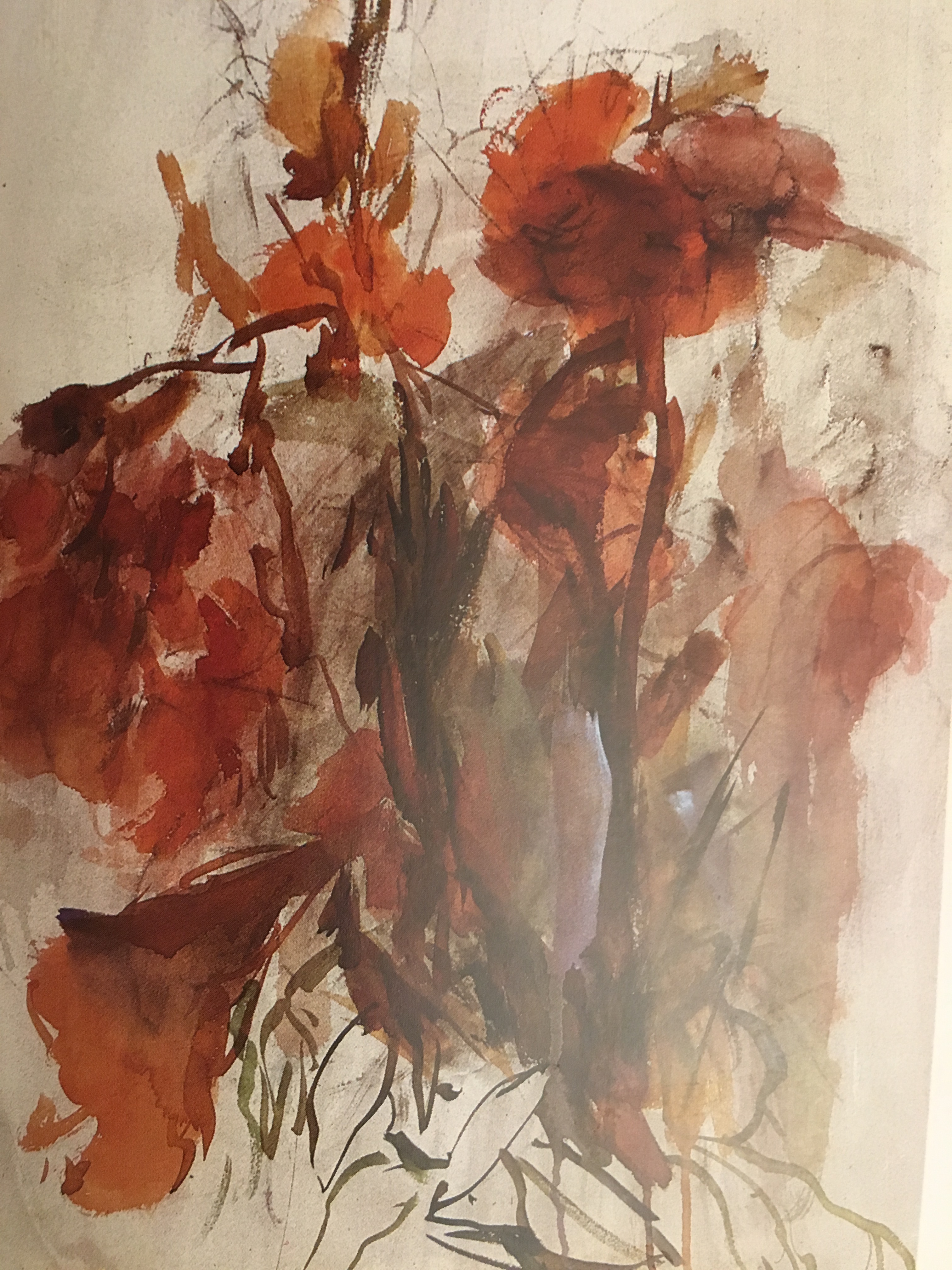
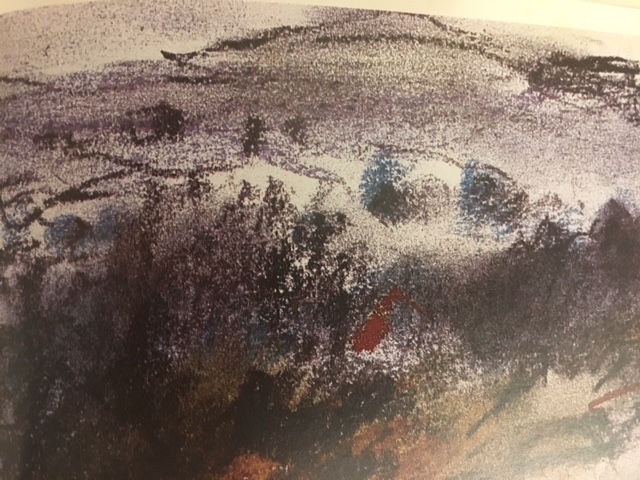
    In the balance between a realistic depiction of concrete objects and a portrayal of an inner experience, the latter had the upper hand now. Anna began to use colors and to experiment with pastels to try and express her impression of the landscape. This withdrawal into the studio, reliance on past impressions, perhaps now more processed, generated wonderful paintings of the views around Jerusalem. Her art now lacked the almost mystic character of the past. It became softer, with greenery and flowers, perhaps revealing more affinity to the land.

    Many immigrants coming to Israel have been overwhelmed by the landscape, so different from their natural environment; not taken aback by ideological barriers or the social obstacles, but simply unnerved by the foreign landscape. Anna, gifted artist that she was, depicted the very slow and sometimes painful process of adjusting to this new geographic region. First came shock and inertia, then an attempt to grasp the strange land through detailed observations, and finally, after containing it, an inner freedom to express both reservation and affection.
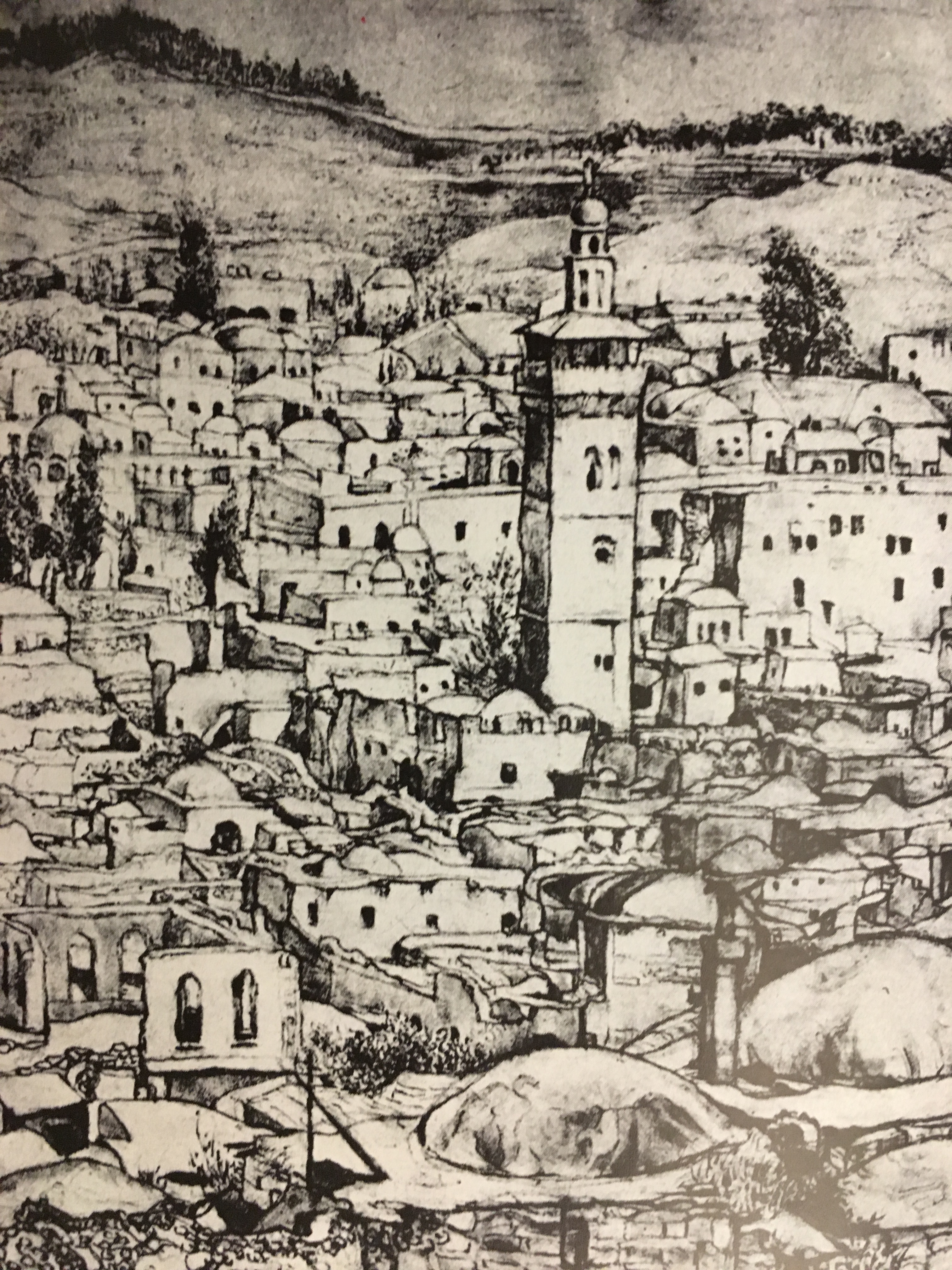
    The Old City, Jerusalem 1928
    Ancient Olive Tree, 1943
    Old Woman, 1940
    Landscape, 1960
    Withering flowers, 1975
    Landscape, 1979

  • A Crazy Pioneer

    A Crazy Pioneer

    The history of Zionism was written by men, no doubt. Its ethos is abundant with daring masculine pioneers and brave soldiers sacrificing their lives for the Jewish state. Also, the prevailing notion of a strong, self-defending ‘new Jew’ was closer to the popular perception of masculinity, making the aggrandizement of heroic men almost natural. But some women played a substantial role in the development of Jewish life in Palestine, later Israel. Unfortunately, they were deprived of their proper place in history books, in the past and also today.

    One cannot overestimate the importance of the Kibbutz, the collective settlement traditionally based on agriculture, in the history of Zionism – an idea initiated and exercised for the first time by Manya Shochat (1880-1961). Born in Grodno, part of the Russian Empire, she was the eighth daughter of ten children. Her grandfather was one of Napoleon’s soldiers who remained in Russia, converted to Judaism and married a Jewish woman. They were secular middle-class Jews, but their son, Manya’s beloved father, became an orthodox Jew, creating an open rift with his parents. Like other family members he was prone to depression and suicide. His parents tried to prevent his turn to religion, but gave up after he tried to take his life.

    Manya’s character could be described as a blend of depression and suicidal inclination with a tendency to act in imaginative, unconventional ways. Already as a child her uncontrolled moods made attending school impossible. As a teenager she escaped home and, wearing men’s clothes, found a position as a porter. She later became a carpenter in her brother’s factory, a profession from which women were completely excluded in those times. Manya was deeply touched by the suffering and poverty of the workers around her and fully adopted socialist ideals. She joined the Bund, a Jewish revolutionist socialist movement, and later founded a Jewish Labor Party, which collapsed in 1903. Broken-hearted and depressed, she accepted her brother’s invitation to visit Palestine.

    Like other pioneers before her, Manya fell in love with the land. She joined her brother in a tour looking for water and minerals, riding a horse from the Galilee to Jerusalem, to the Judea desert, and then to the south. The journey of the brother and sister, with two friends, lasted weeks. Manya cut her hair short; the two women dressed like men. She later said it was difficult to ride a horse with a long dress, but no doubt her appearance betrayed resentment against feminine embellishment. It illustrates well the nature of socialist feminism – focused on the social and economic oppression of women, and not on feminine identity and self-perception. Manya wished to work like a man and wear men’s clothes. Only once, as a child, did she want a velvet dress, but she was too embarrassed to ask for it.

    The journey in Palestine pulled her out of her depression and she decided to stay, giving up her hope to be part of the socialist revolution in Russia. She wished to implant socialist ideas in the future Israel. Yet some Zionist pioneers already living in Palestine saw her as an imbalanced – not to say deranged – woman, with bizarre ideas of equality between people. But she didn’t give up her well-defined plans. In 1908 she was the one to initiate the first experimental collective farm in Sejera, in the Galilee, on land purchased by Edmond de Rothschild. This collective community was, in fact, the first Kibbutz – a unique way of life that made a substantial contribution to Israeli society.

    Manya married Israel Shochat, a handsome man and one of the founders of the first Jewish military organization. Together they ran Sejera. Within a couple of months the collective community had eighteen members, six of whom were women, wearing pants and working in the fields with a pistol tied to their belt. There was something of a fraternity about this group of young people: the common jokes, a spirit of non-conformism, physical and mental strength, a profound knowledge of agriculture. Together Manya and Israel set the major principles of Israeli society in its first decades: military self-defense and socialist communities.

    Manya was not oblivious to the Arab-Jewish conflict; her attitude towards the Arab communities was ambivalent. As a socialist, she was eager to advance social unions among the Arab population. As a Zionist she couldn’t help but admit the conflict of interest between the Jewish pioneers and Arab villagers and Bedouins. Yet she often demonstrated her fascination for the local Arabs – conducting long conversations whenever possible, paying them visits, and even attempting to adopt their daily habits.

    With the foundation of the State of Israel, other leaders replaced Manya and Israel. She joined another kibbutz; he moved to Tel Aviv, leaving her with two children. Her son, a pilot in the RAF and one of the founders of the Israeli Air Force, committed suicide in 1967. Her daughter lived in Australia. But Manya, in spite of her suffering, remained unchanged: struggling with depression, finding solace in decisive action, and always looking for innovative ways to create a better society.

  • The Six-Day War – East and West

    The Six-Day War – East and West

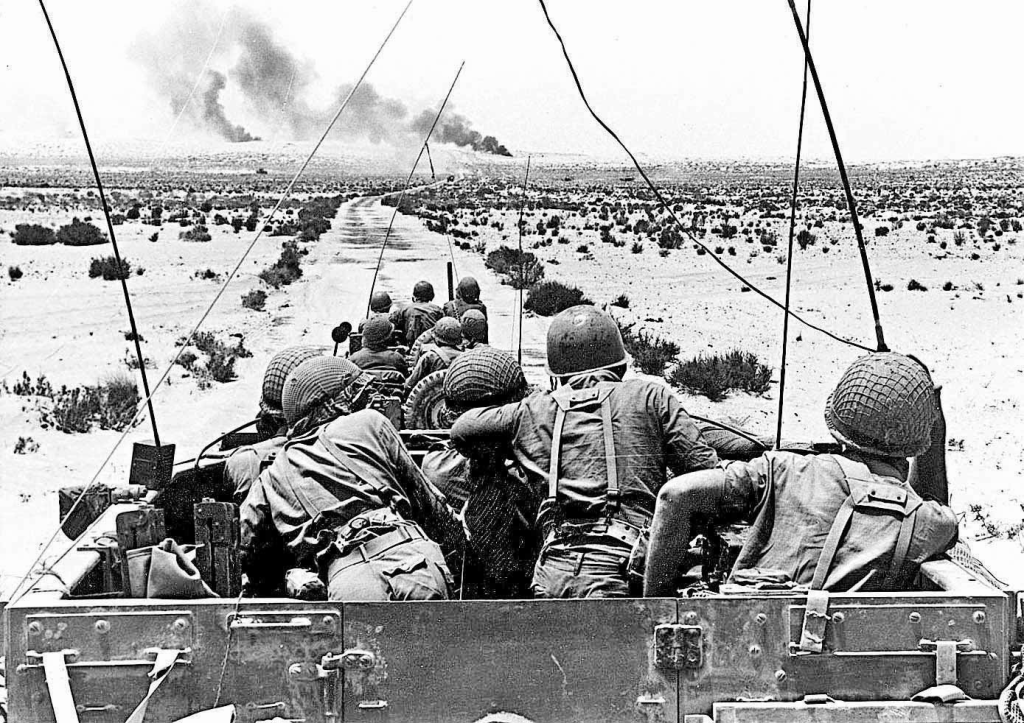
    One cannot over-estimate the implications of the Six-Day War, which swept the Middle East in 1967. It completely changed the political shape of the area, creating new circumstances and new difficulties in the Arab-Israeli conflict. A less-known aspect of the war is its effect on Israeli society. As is often the case with wars, it brought to the surface frustration and anger that otherwise perhaps would have remained dormant: the feeling of Sephardi Israelis (people whose families came from Middle Eastern countries) that they were discriminated against by the Ashkenazi elite (the Ashkenazi Jews being those who were descendants of European Jewry).

    Eli Amir (1937– ) is an insightful Iraqi-born Israeli writer. At the age of thirteen he emigrated with his family from Bagdad to Israel. He experienced the difficulties of Sephardic Jews coming to Israel in the fifties: due to lack of accommodation and funds, the huge influx of immigrants were placed in refugee absorption camps; he went to school in a kibbutz, where he encountered a condescending Ashkenazi elite; he then moved to Jerusalem, slowly advancing as a civil servant, struggling with prejudice against immigrants from the Middle Eastern countries. In 1983 he published his first novel, which was followed by several others.

    Yasmine, published in 2005, is a love story between a young Israeli man and a beautiful Palestinian woman. Nuri, the protagonist, a character with a strong autobiographical quality, is a soldier fighting in the Six-Day War on the Egyptian front. Like the author, he emigrated from Iraq as a child, went to school in a kibbutz, left for Jerusalem, and is part of the Israeli forces in the war. Being a fluent speaker of Arabic and well-educated, in the wake of the war he is appointed to a government post in East Jerusalem, where he meets Yasmine. She left her parents to study in the Sorbonne, but concern for them prompted her to visit them. The passionate love story between the two eventually ends in her returning to Paris, feeling that marriage between a Palestinian and Israeli is practically impossible.

    The entire novel revolves around Nuri’s self-perception in terms of East and West. The turmoil generated by belonging to two different cultures drives him to constant contemplation of the nature of each one, and how he is part of it: “I am a Jew born in Arabia, who holds dear the treasures of the West. In the morning I listen to classical music, in the evening to Arab music. A bird traveling between two worlds”.

    But Nuri is not simply wavering between two worlds; he feels the contempt many Ashkenazi Israelis have for Middle Eastern culture. This deepens his solidarity not only with Sephardic immigrants but also with Middle Eastern culture in general: “I am at odds with myself, and with those who are believed to be my brothers. Sometime very close to them, sometimes horrified by them. I miss the Tigris River, the palm trees, my home in Bagdad, but I will never return there”.

    So, strangely, this young man who fought against the Egyptian army in the Six-Day War finds himself feeling more at ease with Arab culture than with the values and lifestyle of many Israelis. He even defends the Egyptian soldiers, ridiculed by Israelis for fleeing without fighting.This inevitably brings to the surface the Sephardi-Ashkenazi conflict, in a way that leaves no room for any ambiguity or avoidance.

    Amir further elaborates on the role of the Six-Day War in the worsening of ethnic tensions in Israel. In the frame of his post in the Israeli government, Nuri meets several cabinet ministers, and also Levi Eshkol, the prime minister at the time. To his utmost surprise they converse in Yiddish (the language of Ashkenazi Jews); affectionately they call him yunger-man, young man. But not only that: he then realizes that the Ashkenazi elite perceives the victory of Israel in the war in terms of West vs. East. The prime minister, his cabinet, and in fact most Ashkenazi Israelis, believe that Israel won because it is a western country; to put it more precisely, they think that the Arab nations lost due to their backward Middle Eastern mentality. This leads Nuri to an almost impossible emotional dilemma, not knowing where he belongs.

    All this does not lead Amir to a simplistic preference for the Middle Eastern mentality – in fact, is it the other way around. Nuri says: “I love the east, the role of the family, the manners, the warmth, the colors, the odors, the crowd, the sweat, but I also detest it for its stench, hypocrisy, treachery, its blind and cruel fanaticism, and I prefer the open-mindedness of the West, its airy alienation and distance”.

    The novel follows the emotional dilemma that led to the outbreak of protests by Sephardic Israelis. In 1971 the ‘Black Panthers’ violently challenged the Israeli establishment for its discrimination against Sephardic people. And though the intensity of these feeling has diminished greatly today, the issue of Ashkenazi-Sephardi relations is still very relevant; it is certainly part of party agendas in the coming elections.

  • A feminine Christ – A.B. Yehoshua

    A feminine Christ – A.B. Yehoshua

    In the decades since the formation of the State of Israel, a slow and gradual change has been taking place in the attitude of Israelis towards Christianity. When the country was founded, the memory of being a persecuted minority in a Christian world was vivid in the minds of many; large numbers of new immigrants bore the trauma of the Holocaust. Thus, Christianity was seen mainly as an anti-Semitic phenomenon, and teaching it never became part of high school curriculum. Today the Christian world evokes some antagonism perhaps – but mainly increased curiosity.

    A.B. Yehoshua (1936-2022 ), a well-known Israeli author, exemplifies this change. Born in Jerusalem to a Sephardic Jewish family that has lived in the city for five generations, he served as a paratrooper in the IDF, studied philosophy at the Hebrew University, and later became a literature professor at Haifa University.

    In 2004 he published a novel titled A Woman in Jerusalem. During the second Intifada a terrorist explodes himself in the central Jerusalem food market. An anonymous woman is brought unconscious to the hospital on Mt. Scopus and dies after a couple of days. Her body lies nameless in the hospital morgue. Strangely the body is intact, except for wounds in her palms and feet and a scratch on her forehead. A local reporter learns that she used to work at a big bakery in Jerusalem. The owner, publicly criticized for not taking care of a wounded employee, is unable to find any record of her employment. He orders the human resources manager to find out who she was, and when the bakery had employed her.

    The reader becomes part of the human resources manager’s efforts to reveal her life circumstances. Yulia Ragayev, a woman about forty years old, came from the Former Soviet Union to live in Jerusalem. Her partner and a son left Israel as the threat of terror grew, yet she was determined to stay.

    Yulia was an illuminated person, charismatic in an introverted manner. Not exactly beautiful, not very sociable, yet there was something about her that made everyone love her. The night-shift manager at the bakery was touched by this foreign worker; thinking that a delicate woman like her shouldn’t be working at cleaning, he sent her off to find another job, without letting anyone know. She lived in a shack in an ultra-religious part of Jerusalem, and was loved by the people there “even though she wasn’t Jewish”. The doctors at the hospital were attached to her, in spite of her being unconscious. And the human resources manager became captivated by her image after her death, feeling she might emerge any minute now, alive and well. Her unique nature is emphasized by the fact that she is the only character who has a name.

    The owner of the bakery, feeling guilty for not visiting her at the hospital, decides to have her buried at home, in her village in Eastern Europe. So begins a long, hard journey. The human resources manager, the reporter, her son, her ex-partner, and other people, all join in accompanying Yulia on her way to her burial.

    After overcoming endless obstacles, they finally reach the remote village in the high mountains. Her mother returns from a short stay at a convent, wearing a nun’s robe. Learning that her daughter was brought to be buried there, “the old woman reacted like a wounded animal […] she threw herself at the human resource manager’s feet, pleading that her daughter be returned to the city that had taken her life. That way, she, too, the victim’s mother, would have a right to it”. The human resources manager, now fully absorbed by the character of Yulia, accepts the mother’s wish to take the body back to Jerusalem.

    A.B. Yehoshua’s way of familiarizing the reader with the Gospels is by dismantling the passion of Christ, and then embedding various elements in present-day Israel. The illuminated character, here a woman rather than a man; the wounds, which resemble those of the crucifixion; the days the body lies not in a cave but in the morgue; the journey of the disciples; a via dolorosa; Yulia’s preferring her religious belief over being with her family; the route to Jerusalem; the sensitivity to society’s weaker members  – all reflect Jesus’s life and death, yet A. B. Yehoshua has planted them in a new, modern story. In doing so, by no means is he voiding them of their spiritual meaning; on the contrary, they become more tangible, easily appreciated by the Israeli reader. The story of Yulia Ragayev’s life and death is about piety, grace, and generosity; it has nothing which provokes antagonism.

    And there is Jerusalem. In the midst of the bloody Arab-Israeli conflict and the struggle between Jews and Muslims over the city, A. B. Yehoshua reminds us that millions of Christians see it as their own – not in a political sense, but in a fundamental spiritual way. Whoever rules the city, should always keep this in mind.

  • Jesus in Israeli Society

    Jesus in Israeli Society

    Teaching Israeli students about Jesus Christ is a fascinating experience. I am not talking about Christian theology, but about his depiction in the Gospels, as a literary character.

    Generations of Jews saw Christ as an adversary and a foe, the cause of their endless sufferings. Most didn’t even pronounce his name, referring to him as ‘that man’. In the modern age, Zionism has focused completely on the future of the Jewish people. The Christian world, a variety of perspectives and worldviews, was perceived only through Zionist spectacles: as a realm exterior to Jewish life, distorting it by its ruthlessness. Eventually, this shaped the Israeli education system. Even today, most high schools do not teach the foundations of Christianity, which are, of course, imperative for understanding Western civilization.

    But art, as is often the case, heralded a change. From the early twentieth century, several Israeli writers attempted to examine Jesus from a fresh perspective – not as victims of Christianity, but as independent thinkers who are influenced by it. Since the foundation of the State of Israel, the common sentiment of a persecuted minority has been transformed into a notion of potency and stamina; this, in turn, created a new, open-minded attitude to the image of Christ.

    Pinhas Sadeh (1929-1994), an Israeli novelist and poet, was one of the forbearers of this change. Born in Poland, he immigrated to Israel with his family at a young age. A colorful character, some would say even controversial, a poetic soul surrounded by young admirers. At the age of 27 he published Life as a Parable. The book is a collection of personal experiences, each one illustrating a certain theme. Several years after its publication, it became a cult book among young people.

    Though all the events depicted in the book unfold in Israel, it is hardly apparent. They could have taken place anywhere. Sadeh neither accepts Zionism nor rejects it. He exists in a universal human sphere; an artist unchained by any ideology.

    Life as a Parable is profoundly influenced by the image of Jesus and the New Testament: an acknowledgement of human suffering, forgiveness, spiritual love, and the enlightenment of religious life. The author examines his surroundings from a fundamentally Christian perspective.

    In his portrayal of Christ, Sadeh completely ignores the complex historical questions regarding his life. Jesus is the emblem of universal good, the healer of the sick and the maker of miracles.  Yet he is also tormented and lonely, betrayed by his disciples. Chapter twelve is a direct depiction of the passion of Christ. It begins with the author’s description of his own loneliness. On a cold, rainy night in Jerusalem, freezing in an attic, he is looking through the window and the world looks like a “single thick cloud – opaque, black, eternal”. In his desperation he turns to the Gospels, “I have read the story of his life (perhaps twenty times, perhaps fifty)”.

    His point of departure for connecting with Christ is the notion of solitude; fundamental human loneliness, existential isolation. In his desperation he finds comfort in this ideal man, all generosity and kindness, who also experienced loneliness: “…lonely in the world, since his mother and brothers, it is told, felt he was dull-witted, and his disciples abandoned him in the hour of decision — so he lived the true and naked meaning of human life. He spoke of another life, another country, another time, of other rooms, faces, seasons and bodies, of another love…”.

    He then portrays the miracles Christ performed out of mercy for the poor, the sick and the miserable, his love of the sinners, his aching heart witnessing human pain. Sadeh also refers to the poetical aspect of the New Testament. Describing the Sermon on the Mount he says, “…then (the scripture says) he left the desert and came to the Galilee. And there he went up the mountain and said the most beautiful words ever uttered by a poet. He spoke of the comfort that is contained, like a fruit in the seed, in mourning, of the fulfillment that is contained in thirst, of the Kingdom of Heaven that shrines with a dim but never-fading glory from out of the rags and tatters of human existence… “. The greatness of Christ is illustrated in both his acts and his words.

    The students listen attentively; some look bewildered, encountering this perspective of Christianity for the first time. Here are some of their thoughts and questions:

    –       If Jesus was such an enlightened man, how come the Church was so cruel and ruthless, especially to us, the Jews?

    –       Why didn’t Sadeh convert to Christianity? Is it possible to believe in Christianity without being Christian?

    –       I am sure Sadeh read the Old Testament. How can he say that Christ’s words are ‘the most beautiful’?

    –       I never knew Jesus used so many parables. I feel it leaves more place for a personal religious experience than strict Jewish rules.

    –       Looking at Sadeh’s depiction of him, in what way is Jesus Christian, and not Jewish?

  • On Zionism and Gender – The Young Women’s Farm

    On Zionism and Gender – The Young Women’s Farm

    Women today find it hard to unite for the sake of a common cause. I mean, really unite – not simply share views on social networks, go to empowering women’s meetings, or vote for candidates who vow to promote feminist issues. Most of us, I believe, feel that in the daily struggle with discrimination we stand alone. We may gripe about it, take some action once in a while, but nothing more. However, profound social change probably requires an altogether different sense of commitment.

    A relatively unknown part of Zionist history is the role of women – their aspiration to be equal partners in this revolutionary movement. ‘Revolutionary’, because Zionism aimed not only to create a homeland for the Jewish people but also to change the Jewish character, to form a ‘new Jew’ (the ‘Sabra’). Those early Zionists saw the Jews living in the Diaspora as weak and unproductive. The ‘New Jew’ would be strong, able to defend himself, and productive. And in the eyes of Herzl and his contemporaries, productivity meant one thing: engaging in agriculture.

    In the late nineteenth century some Jews from Eastern Europe settled in Israel, then Palestine, with the hope of fulfilling the Zionist vision. First came some families, and then groups of socialist single men – with a very few young women – eager to make the barren land bloom. The Arab-Israeli conflict was still in its infancy. The real threats were death from starvation or malaria.

    The women – the very few who dared to travel to this god-forsaken place – were expected to work in the kitchen, wash the men’s clothes, and perhaps engage in some limited home-based farming. To be historically fair, this was before voting rights were granted to women both in the UK (1928) and in the USA (1920). But some of these girls were determined to take full part in the Zionist endeavor.

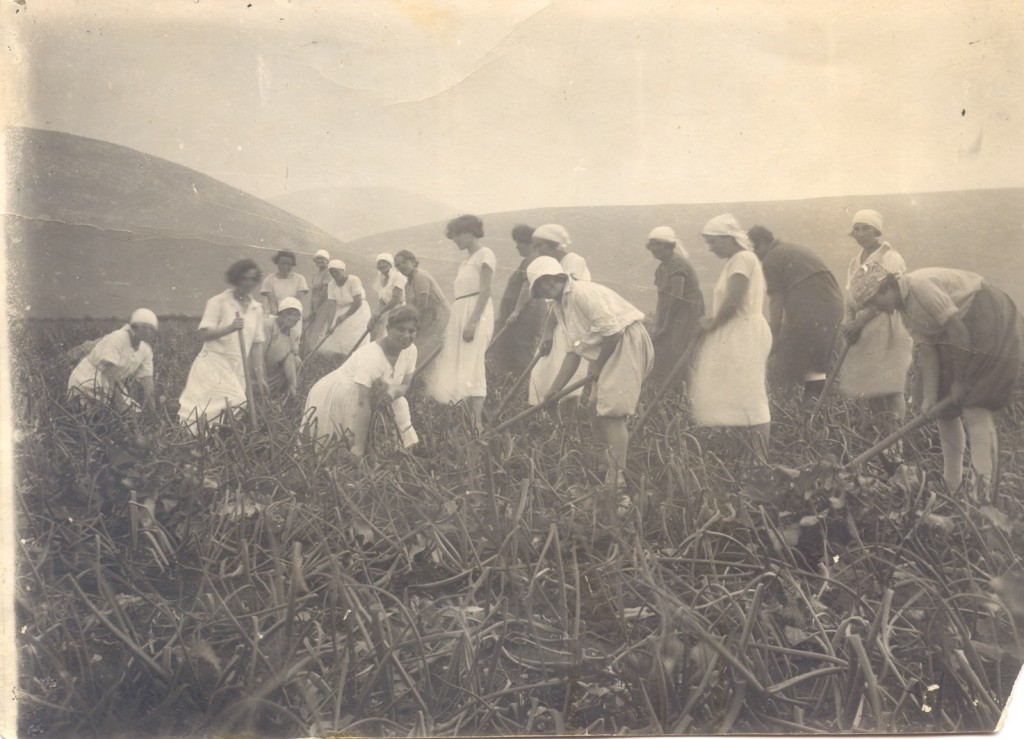
    In 1911 Hannah Meisel, a Russian immigrant with a PhD in agronomy, decided to establish a women’s farm, an agricultural training institution for young, unmarried women. She called it ‘The Young Women’s Farm’ (Havat ha’almot). Leasing a room from a Jewish settlement next to the Sea of Galilee, she came with two students; four others joined her later. The girls, sixteen or seventeen years old, were eager to master every theoretical and practical aspect of agronomy. 

    You would think the young men already settled there would have welcomed them. They did, but only as long as they were willing to take care of the cooking and laundry. At first the girls and the teacher lived in one room, with neither floor nor windows, but eventually the school had its own house. And other girls quickly followed the first students. The rumor of this revolutionary school for young women spread in Zionist circles, to the point that Hannah had to reject some of the applicants since there was room for only twenty girls at a time. One famous student was Rachel the Poetess.

    The girls worked in the fields for eight hours a day and their evenings were devoted to general education. They specialized in growing unique kinds of orchards and vegetables. They established a nursery that provided hundreds of olive, lemon, almond, and eucalyptus seedlings for other farms. They began the experimental planting of bananas, today a common crop in this part of Israel. Their eucalyptus trees were used to dry the swamps that inflicted malaria and other diseases. They had a productive dairy barn, and the decorative flower garden was another of their innovations.

    Hannah, in spite of her revolutionary spirit, was an extremely practical person. She thought that after two years of schooling the girls would marry and settle down with a husband and children, and therefore insisted they should also learn ‘household management’: cooking, sewing, cleaning. Her aim was to create a farmer’s wife with some agricultural skills.  But the girls, now an integrated group of determined young women, who had endured hardships and maladies, developed an altogether different image of their role in society. They wanted to engage in agriculture as their main vocation, not just for the sake of supporting a husband.

    The protests against ‘household management’ evolved into an open rift with Hannah, whom the girls now called ‘our older sister’. “What sort of subject is that?” they wondered. Some cleaned the kitchen out of respect for her, others openly refused, and some pretended to clean it but left the oven and pots dirty. The spirit of feminism that developed within the group could not be shaken even by the fierce stand of the respected teacher.

    It is most likely that if Hannah had had only one or two students, they would have adopted her worldview. But the united group she created formed new perceptions of gender role, more radical than her own; they wanted a new life style. Their mutual support made the different, innovative feminine identity possible. In many ways they were ahead of their time, a true ‘avant-garde’.

    The women’s farm lasted for six and a half years. The outbreak of WWI created new, insurmountable obstacles. Yet the determination and collective spirit of these young women had a profound and long-lasting affect on women’s role in Israeli society. If you had asked Hannah, she might have said their influence was somewhat too extreme.

  • Arc de Triomphe: Israel and the Holocaust Trauma

    This article was published in ReformJudaism.org

    The Arc de Triomphe, the grand monument at the heart of Paris, was build to celebrate victory. It honors those who fought and died for France in the French Revolution and in the Napoleonic Wars, but their memory is part of a happy moment of enjoying their achievements, a symbol of their victory.The many tourists that come to see the Arc every day are reminded that in spite of the many sacrifices, France won.

    The drive to celebrate a triumph in an act or gesture which has no practical aim other than demonstrating the joy of winning is part of our culture. It can be a collective act, like building a monument or throwing a grand ball, or it can be a personal expression, or decision. The Romans had Songs of Victory; in the Middle Ages rulers sometime celebrated a triumph with a popular fair. Military parades often follow a victory—in 1945 the Allied soldiers marched in the streets of Berlin in a victory parade. 

    As a child, I often wondered why my father smoked. When I asked him what had made him take the first cigarette he replied: when I heard that Nazi Germany had surrendered I felt a need to do something that would demonstrate that the constant oppressive strain of the war was over, so I lit a cigarette. Though unfortunately it was the source of an unhealthy habit, I could always imagine this moment of utter relaxation—the war is over, Germany was defeated, now is a time to smoke a cigarette.

    The need to celebrate the victory over the Nazis still exists in contemporary Israel. Various delegations travel to concentration camps, walking with flags of Israel and conducting ceremonies in memory of Holocaust victims. High schools, universities, the Israeli army – they all send hundreds of young men and women to Poland, mainly to Auschwitz.

     I always feel some resentment at this demonstratively triumphant walk in the concentration camps. I certainly understand its motivation; growing up in a Zionist home, I was often told by my parents that our true victory over the Nazis is the very existence of the Jewish state. But walking with Israeli flags next to the gas chambers seems to me unfitting.

    There are some instances in which speaking of victory is simply impossible, it is a categorical mistake. Any referral to the Holocaust in terms of a triumph is, in my opinion, completely erroneous. Victory is applicable to a struggle between two forces that even if not equal, are at least comparable. First there is a confrontation, then one side wins. The Allies defeated Germany in World War II. But in the case of the industrialized genocide of the Jewish people, men, women, and children were simply led to their death, with only a remote possibility of escaping the gas chambers. Thus, there is no room for a spiritual “Arc de Triomphe” in the concentration camps; it should evoke contemplation, and perhaps also tears.

    And also, if the triumph over the Nazis is to be celebrated, why there? Why in the concentration camps? If the true victory is the state of Israel, there is no point in celebrating it in Auschwitz. It is not a cemetery; the victims were not buried respectfully but murdered and cremated. If the collective memory is the purpose, the Yad Vashem museum in Jerusalem has an impressive collection of artifacts and documentation of the Holocaust. And as for education, one doesn’t have to travel around the globe to learn about historical events.

    After many deliberations on this matter, I believe that my resentment springs from a sense that the very need to come to Auschwitz reveals the depth of the trauma the Holocaust has created, even in young people, whose grandparents were possibly its victims Those ceremonies and flags seem to me more like an exposure of weakness than like a resounding victory. They are driven by a desire to prove to others, even if they are not physically present, that we prevailed.

    Youngsters and also adults often write about their experience in the concentration camps. They describe themselves clinging to each other, shivering as they see the horrors of the industry of death. Frankly, what each and every one of them is thinking is: what would have happened if I had been here? Would I have behaved differently? Would I have revolted? Would I have tried to escape? Would I have attempted to save my parents and siblings? Would I have died, like everyone else?

    It is here that a true victory is needed; and no ceremony in Auschwitz will grant it. This battle is an extremely difficult one. As the great English poet William Blake wrote: “Father, Oh Father, what do we here/ In this land of unbelief and fear?”