Category: Short Stories

  • Demonstrations

    Demonstrations

    We demonstrated in the square.

    Sweating, excited, we gathered together and cried out loud. A tremendous scream was emerging from the street. A blend of whispers, cries of pain, shrieks of anger, and moans of despair echoed over the city. The words ‘freedom’ and ‘equality’ were accompanied by drums and reverberated from massive speakers, generating joyful hope, and anxiety piercing the heart like a blunt needle. We stood beside each other, felt each other’s breath, and heard our repetitive shouts shot into a cloudless sky. We sang together and waved our flags, smiling.

    We weren’t always part of the demonstrations.

    At first, we only heard the noise coming from the square. Echoes of strange, shrill cries, feminine and then masculine voices, rhythmic music, and sometimes the sound of groaning metal. Elderly people and families with children gathered in the square, and we only passed by on the street, looked curiously, and went on. We heard the voices and drove away. Day after day, week after week, immersed in our phones, the loud cries became the background to a sequence of photos and videos. A finger hovering over a screen, replacing one image with another as the anger shared by many crept into a space existing between people.

    Not only anger.

    Danger. A hint of lost freedom, something about a diversion that cannot be overdone. A choice leading to destruction. The tumult coming from the square indicated that disaster was imminent. The threat was unequivocal. Soon, life would change completely. Freedom would be taken from us, equality would disappear as if it never existed.  A massive crisis was upon us.

    But we kept going to work, coming back home, going to a bar permeated with music and the scent of alcohol, ignoring the commotion on the square. On warm summer nights, we were absorbed in our flickering screens, consumed by a realm made of fluctuating images and piercing voices.

    It so happened that we were recently promoted.

    The company expanded, the boss smiled and offered a better position, with an option for another promotion soon. The salary increased, and the future looked promising. Various plans were born late at night: a vacation on an island surrounded by glistening sand and clear seas; skiing on snow-covered slopes that shone like glass at twilight; driving a car gliding along a curved road, and more and more. The days were full of action-boosting stamina rather than being exhausting. A strengthening effort. The nights stretched between yearning for future delights and indulging in the pleasures of the present, leaving the sound emanating from the square behind the closed windows.

    But a miniscule whimper cracked the silence that surrounded us.

    A very light motion, barely noticeable, broke the invisible barrier. In an obscure way, a faint movement in the baby’s bed in the next room was linked to the distant cries from the square. Somehow, through the light creak of the bed frame—nearly inaudible—the unsettling spirit of the demonstrators seeped in. The baby moved in his sleep, allowing waves of hope and despair to filter into the house.

    A chubby foot stretched, a tiny hand shifted, and the babyish mouth opened in slumber. As we watched the helpless child, the yelling of the demonstrators emanated from an inner space, warning of a danger still not fully defined. What would become of him? We thought, trying in vain to fend off the fear that turned into a viscous liquid, spreading gradually in the veins and the temples. A full life expanded in our imagination, laid out before us, vulnerable to a threat that seemed alarming, though it was impossible to describe it in detail. In some unknown way, our liberty would be lost, and our life would progress along a path that could not be avoided. Since that inner shell cracked, the spirit of the square hatched and enveloped us. It was impossible to push it to a distant corner.

    For long months, we stood in the square linking arms.

    Together we yelled ‘freedom’ and ‘equality’ with all our might.

    Together we marched in the streets, waving flags proudly.

    Together we confronted cavaliers riding horses with shiny black hair.

    Together we lingered in the square late at night, embracing each other in brotherhood.

    But some of us disappeared.

    As we marched together, some of our comrades didn’t show up. We searched the angry crowd, fearing the unknown. Dark cellars came to our minds, the sound of heavy iron doors slamming shut, sealed bags and thick ropes. We could almost hear the cries of pain. At times, the fear for the fate of our comrades turned into pain in an unknown organ.

    But it turned out that cunning words had pushed them away from the square. An obscure eye was observing us, luring some with a temptation wrapped in rustling cellophane, selecting its target meticulously. An enticing dessert given only to those leaving the square. A past offer for a distinguished public position suddenly resurfaced, but anyone wanting to seize it had to commit to never set foot in the square. A much-desired prize given only to those promising they won’t join us;  clearly, our pain should find better outlets. Various rewards were offered to those willing to leave the square. And there were threats. Embarrassing past events, long forgotten, suddenly surfaced, annoying and oppressive. A former legal complication, an assessor reevaluating an old debt and now demanding money, years-old fines that suddenly appeared. They all generated desperate silence and bitten nails.

    But we kept demonstrating in the square.

    Our numbers dwindled. Fewer people came to the square. The cries of grief were slightly less loud, and the messaging from the loudspeakers less strident. The anger was restrained; we whispered to each other. Though yelling still echoed from the square, we didn’t block cavalries with a staunch demeanor. No one inquired about those who disappeared. It was impossible to bring people back to the square; those who left us would never return. Comrades who gave in to fear and despair would never scream with us again. The invisible thread uniting us was gradually gnawed at, unraveled and split, becoming thinner and more fragile. We cried out loud, but our wailing did not echo above the city. The loud voices that filled the square dissipated quickly, leaving nothing but a steaming mist.

    I demonstrated in the square.

    Every day on my way home, I pause to sit on a side bench, my back hunched and my head held in my hands. People move through the square silently, walking in haste and never lingering. Crows with open beaks hop around, staring at me with dead eyes. I find the thought of the chubby baby waiting for me at home terrifying. When he wraps his soft arms around me and clings to me as tightly as he can, I smile at him, but I can’t stop the tears. I carry him to the window, and we look outside together. Gloomy people walk in the street alone.  As my child puts his head on my shoulder and gazes at the street with childish wonder, I tell myself that it’s fortunate he is still unable to see the future.

  • Clear Water

    Clear Water

    When Sari walks along the beach she has a strange sensation of lightness. The murmur of heavy waves turning thin and invisible as they slide on the sand, the scent of primordial water, perhaps the weightless air, she is not sure why, but sometimes she feels she could fly. She takes off the headphones for a moment, silencing the rhythmic music so she can hear the constant humming of the water, and then she listens to the songs again. Her full body moves in complete harmony, indifferent to the people on the beach, vital, full of life. A handsome young woman, her honey-toned hair is blowing in the sea breeze, she saunters rapidly on the trail along the water, sometimes she thinks that if she turned aside and walked to the sea she could walk on water.

    Sari knows heaviness for years. When she was twelve years old she went to a new school. An excellent student, she was admitted to a prestigious junior high school. Her parents were thrilled, they kissed her the first time she left for school, carrying a new backpack and wearing trendy sneakers, newly purchased. The first day was exciting, but an unfamiliar panic mingled with the joy: almost all the girls in her class were thin, almost transparent, wearing tight jeans and shirts covering their budding breasts. Next to them Sari’s round body seemed heavy, graceless, lacking the pleasant poise of her classmates, who seemed to almost dance while moving.

    “But you’re so pretty,” her mother says as she whispers in her ear about the girls in her class. Sari has an aristocratic face, big green eye, a narrow aquiline nose, straight fair hair falling down her back, an unusual look in the ordinary street she grew up in. Plain looking two-story buildings, slightly neglected back yards, old people sitting in a small park staring into space, neighbors walking slowly, carrying heavy bags from the grocery store. Sari’s body is becoming of the women walking down the street, but her face suits the wide bright roads of the northern part of the city. Though she wears oversized shirts to conceal her slightly protruding stomach, men look at her with lust.

    Sari is a bit sad in the new school. The girls move between the desks swiftly, she walks cautiously. They leap up the stairs, she takes one step at a time. They go shopping, she goes home to study. When they take dancing classes together, she whispers to her mom, “I hate them.” Mom fondles her hair, kisses her and says, “you’ll see, everything will turn out fine. It’s a difficult age.” But in the meantime, Sari feels heavy. Not fat, but lacking agility. A beautiful girl with a clumsy, awkward body: chubby arms, full breasts, a plump stomach, soft legs. Sometimes she thinks she is almost an invalid. If she could, she would have escaped her body. Even when she nearly fasts for a couple of days and faints in school, the body that became feminine at an early age maintains it roundness and doesn’t let go, refusing to adopt a childish form again.

    A hierarchy is created in Sari’s mind, from lightweight to heavy.  The girl sitting in front of her is not as slender as the thinnest girl is class. The most popular boy, with straight black hair and small blue eyes, is very muscular, but still lighter than her. The boy in love with her is very tall and skinny; Sari is not sure if she is heavier than he is. The biology teacher resembles her mom; they both have wide hips, a fault that cannot be concealed. A variety of human forms, different and distinctive, line up from thin to obese, and only rarely does she hesitate who stands before whom. But she always asks herself where exactly is her place, who is heavier than her, and who lighter.

    When Sari was seventeen she met Daniel, a forty-year-old man. Boys her age drove her to despair. Smiling and staring openly at her body, asking her for a date and immediately trying to touch her breasts, insinuating that other girls are thinner, but maybe she wouldn’t mind giving them some pleasure?! It’s pointless, she contemplates, they only make me sad, deepen my sensation of heaviness. Mom watches her worriedly; she put on a smile. “I’m the best is math,” she says, and mom hugs her closely. But ever since she had met Daniel she finds it hard to surrender to her motherly embrace; she feels like a thief. Sparks of joy fill his eyes as they meet, his body stretches, he coughs slightly and offers to drive her wherever she wants.

    He wants to sit in the coffee shops by sea, go to the movies, take a trip out of town. But ever since Sari discovered his desire she only wants to spend time at his home. When his body is on top of hers and his face is twisted by pleasure which looks more like pain, she feels a pleasant lightness.  Her body is so fair and he is so dark, smooth silk next to rough skin and a sturdy body, her blond hair and eyelashes shine against the grey pillowcase. I am not a virgin, she says to herself as she gets out of the wide bed, looking at herself in the mirror, as uninhibited joy takes over. “Why are you laughing?” Daniel asks. She says nothing, only takes out a new lipstick from her purse and covers her lips with a pale peach tone.

    “I want to marry you,” Daniel says one evening, the blush apparent even in his dark face. Sari looks at him, slightly sad. Soon we won’t meet anymore, she thinks, wondering if her heaviness will take over her again. After a couple of days, she doesn’t answer his calls, texts, emails, and he stops looking for her. Sari studies from morning to night, an exceptionally gifted student. “Why don’t you go out anymore?” her mother inquires quietly, and Sari puts her head on her shoulder and says nothing.

    When a boy in class tries to make fun of her excellent grades in math she looks at him, wondering how the mixture of lust and pain looks on his face, covered with acne and a sparse beard. And when she thinks she sees this weakness assuming the form of vanity, she approaches him, looks at him in a provocative manner, tosses her shiny hair from side to side, shedding the sensation of heaviness and adopting a new cover, seductive and mysterious; she stands erect, her breasts prominent in her white shirt, a slight, almost invisible smile on her lips, and she says in a deep soft voice: “Want to study with me?”

    The boy is trembling, he takes one step back and another one and walks away.

    The legs of the man leaving Sari’s home were trembling as he walked down the stairs and out into the street. Sex with this woman left him mute. He could hardly mumble the address to the taxi driver waiting for him. God, he thought, what a woman, what a woman. Sari was still in bed, under a heavy blanket, closing her eyes, envisaging again how her body became light and flexible, lacking the oppressive heaviness. The cell phone rings. Mom. The strong scent of flesh that still fills the room stops her from taking the call. She is waiting for it to stop ringing, and then she pushes the blanket aside and gets up and takes a shower. Another man, another victory, she smiles to herself as the water runs down her glistening skin and splashes all over, and a pleasant fall wind rattles the small window in the bathroom.

    Sari is the second woman to join a team of senior engineers. When she walks into the room everyone is watching her with curiosity. Her face is serious and she places a couple of diagrams on the desk. She presents herself, elaborating on her contribution to the team. Next to her sits a man about her age, who seems indifferent. When Sari sees the back of his hand on the desk she finds she is shivering. She isn’t sure why, something about the long thin fingers, a few hairs on each one, the white skin evokes an unfamiliar fear.  To drive it away Sari brushes her hair with one hand and turns her green eyes to look at him, as an almost imperceptible smile touches her lips. A surprised yet disinterested look appears behind the glasses. She leans back; he looks the other way.  A though about a collapse surfaces and disappears, something about a path leading to an abyss, and nothing more. When the meeting in over Sari rushes from the room; Saul walks slowly with a colleague.

    When Sari appears in his office he is taken by surprise, dropping a couple of papers from the desk. But he collects himself, invites her to sit down and inquires about the new project. When she sits next to him at lunch he is deep in conversation with his colleagues. At the tall entranceway to the building, huge glass panels reflecting each other, Sari sees him leaving work with a slender woman, her black hair is pinned up in a bow. Sari stands motionless, watching them pass by, smiling at each other and observing no one.

    When she walks in the parking lot her plump body is reflected in car windows. A transparent tear rolls down her smooth cheek and drops on the white shirt. On the way home she swears not to give up. Car horns are heard around her, but she is immersed in her plan, wiping her tears, ignoring the deepening sense of heaviness. As she gets home she calls mom, elaborating on the new project. When she is done mom asks: “Are you okay?”

    The humiliation, the humiliation, Sari sinks into it, recalling every word, turning every detail around in her mind, anything but admit she is teetering on the edge of an abyss. The doorbell, Saul taken by surprise, the plunging neckline and the smile, the dark room and old furniture, the sound of a TV from the other room, shining fair hair moving from side to side, a black transparent bra, suddenly he isn’t feeling well, excuse me, I am really sorry, you are truly a very attractive woman but not for me, the terrible wrath, the plate she tossed on the floor, never mind, I’ll clean that, I don’t understand you, why? You have such a beautiful face—

    Sari hastens to the beach, sobbing, screaming in pain. At night the water makes a sensuous sound, swallowed by the darkness. The waves whistle and a full moon is planted above. Salty smell and minuscule sand grains engulf her as she walks slowly on the beach. The water is heavy and the sky airy, the sand is wet and the walkway dry; her rounded body is covered by a thin dress, her feet are bare, and her green eyes, watching the tiny lights visible on the horizon, resemble those of a child in despair.  A handsome young woman, her honey-toned flowing hair is blowing in sea breeze, her legs stride heavily along the sea, she picks up a huge seashell from the sand and holds it close to her ear. If I only could hear its whisper, she thinks in desolation, I could have walked on water.

  • Yearning

    Yearning

    Every Friday morning, an inner struggle materializes, as if it were taking place for the first time: Should she leave Tel Aviv for two days, or call and offer excuses, which are always met with deep sighs? Travel to Kiryat Malakhi[1] or engage in studying in the small room in south Tel Aviv? Avoid the oppressive image of her mother crying and muttering in Amharic,[2] or surrender to the thought of her warm embrace?

    Pnina is sitting in the balcony, watching the street. The grocery store owner is pulling fruit stalls onto the pavement, two foreign workers speak in an unknown language, a woman is pushing a stroller, a whining child following her. A street corner between buildings that seem neglected, but are full of pain and vitality. The phone is right next to her; she is watching it but doesn’t reach her hand out to grab it. She can hear her mother’s soft, slightly wailing voice, watching her as she is studying, caressing her head and saying, when will you get married?

    To remove the growing grudge spreading within hidden curving tunnels, she reproaches herself, thinking of offensive words she hears in Tel Aviv. People call her ‘black’, sometimes even ‘nigger’, standing in a store, customers always assume she is the shop girl, even in college she was offered academic assistance, though her grades are excellent. And the flattering words of Omer, a blond young man who is courting her, that her dark skin is beautiful, left her annoyed, though he meant no harm. But all these self-admonitions dissipate as she thinks of her mother waiting for her in Kiryat Malakhi, smiling at her gladly though her eyes, as always, betray a bitter sadness.

    When Pnina was complimented for being a good student in elementary school, her mother smiled, as if she were mischievous. When she was accepted to honors class in middle school, her mother looked at her suspiciously. As she became an excellent student in high school, they were slightly drawn apart. As she said she planned to leave Kiryat Malakhi and go to college, the arm embracing her dropped and her mother took a step back. Leave?! The dark eyes were wide open, revealing a clear pain; the long way in the desert that left her mute, her son who died in a refugee camp in spite of her begging that he be saved, arriving in a foreign land with her young husband. From a small village next to a mountain, she moved to graceless buildings, and what followed was inevitable. A couple of pregnancies ended in abortions, her husband, who turned sullen and impolite, moved with his parents, and she was left alone with two children. And now the daughter wants to leave?

    A college in Tel Aviv had offered a scholarship for underprivileged students with excellent grades. When Pnina saw the advertisement, she had trembled. A small hidden wicket opened, leading to a different life, far away from Kiryat Malakhi. The excitement was well reflected in the gentle facial features: her straight eyebrows stretched, her thin lips tightened. Women spoke Amharic in the next room. As she heard approaching steps, she turned off the computer quickly and stood in the middle of the room.

    When she moved to Tel Aviv, she insisted her mother come to see the room she has rented. Maybe this would stretch an imaginary thread from Kiryat Malakhi to Tel Aviv, and she wouldn’t feel her daughter was moving to a strange city. Pleasant sun filled the sky as they walked together in the alleys of south Tel Aviv, a slim woman dressed in colorful clothes, a white scarf wrapped around her head, holding the arm of a young women wearing blue jeans and a tank top. But before the mother got on the bus back home she grabbed Pnina and wouldn’t let go, until the driver yelled that if she didn’t get on the bus right now he would leave without her.

    Professors with a grave countenance, unfamiliar academic language, well-lighted classes, text books, young people eager to immerse in conversation—in the first couple of weeks in Tel Aviv, Pnina was overwhelmed by college. Walking in the wide corridors, she felt she had been reborn. The shabby buildings disappeared, replaced by wide halls, air conditioned and comfortable. No longer was she a young woman men coveted, now she had become an inquisitive student. A years-long craving for a different life was finally found fully justified, materializing in every class, assignment, exam. Late at night, after she returned to the small room in south Tel Aviv, she sank into deep, dreamless sleep.

    But longing is a deceitful devil; when you think it’s gone it reappears, mocking and sticking a tongue out. One bus drove to Kiryat Malakhi, the other on the streets of the town. The steps on the path leading to the entrance of the building revealed vulgar graffiti, out in the open, empty cigarette packs and bottles of beer discarded next to the fence, a filthy stairwell, the door peeling and the handle broken—but the mother’s eyes splattered myriad flakes of love and sorrow. Embraced in the arms of a slim woman enveloped in colorful fabrics, Pnina was crying as if a disaster had taken place.

    At dinner, she emits various sentences, which disintegrate into words and syllables. Her mother watches her intently as she tries to describe what she is studying. And though she portrays her daily routine in very simple words, the mother’s eyes, filled with the pain of the desert and the shabby buildings, turn to her as she asks, are there any Ethiopian men there? Did you meet someone?

    Once again, resentment materializes, a long wick that tangles and becomes a ball of string that can’t be unraveled; the mother disapproving of her wish to have a different life watches her disappointed, Tel Aviv, that seems to belong to someone else, smiling and wealthy, the college that, in spite of her achievements, sees her as an Ethiopian young woman. Pnina’s face flush and her body weakens. Yearning had always been a support, a source of encouragement; now it becomes a heavy burden, exhausting and alarming.

    [1] Kiryat Malakhi is a poor town in the southern part of Israel.

    [2] Amharic is spoken by Israelis of Ethiopian descent. For immigration of Ethiopian Jews to Israel, see https://en.wikipedia.org/wiki/Aliyah_from_Ethiopia

  • Little Red Riding Hood

    Little Red Riding Hood

    It’s such a shame, really, such a shame. I was looking forward to visiting my daughter and granddaughter today. I’m not well, I’m coughing, I might even have a fever.

    When I visit them, I need to walk almost fifteen minutes to the bus stop, and there I normally wait for a good long time. When it arrives, I slowly get on the bus and sit down heavily, waiting to catch my breath, and then I relax in my seat. The ride is only a couple of minutes long, but it’s enough for me to close my eyes and think of my daughter and sweet granddaughter. When I arrive, the table is always set, and my daughter has prepared delicious food. She kisses me, invites me in and always says the exact same words: “Mom, why don’t you move into this neighborhood? Why do you live in that secluded place, deep in the forest? If you lived closer to us, you wouldn’t have to take the bus to see us.”

    I look at her and smile as my heart sinks. Every time we discuss where I live, an inner string stretches and detaches, and needs to be put back in place and tightened. She thinks the forest is intimidating, I find it charming; she thinks the trees are creepy and that one can get lost, I can see the trail with my eyes closed; she’s sure the wood is dangerous, I find it reassuring. People who lived through a world war know that it is humans who are threatening, not the forest. In the wood, one can find refuge. Early morning fog, tweets and growls of animals that blur the tread of footsteps, tangled plants, a tree with many branches one could climb quickly—they are all shelters, havens from oppressors. When the war was over, I’d lived in a condominium in the city. For years, I used to listen to the elevator going up and down, feeling that it held an obscure threat. Something about the light whistle and the dull ticking emerging from the shaft brought back memories I wished to bury, echoes of a foreign army marching in the city’s streets.

    When my husband passed away, I knew it was time to return to the forest. I purchased a small, decaying house; to get there I had to walk for quite a while along an isolated path. When she first saw it, my daughter looked around with horror, checking the window gratings and the door bolt. Finally, she made me promise I would install a new lock on the door, and so I did. I don’t always use it—if something bad were to happen I might be saved if I am not locked in and manage to escape to the wood.

    Ah, I am so sorry I can’t leave home, and it is time for my visit. All week I expect to see them. I was going to call my daughter to let her know I won’t be coming, but my cell phone is dead, refusing to connect to the world outside the forest. I’m not feeling well, and I have to lie down and cover myself with my warm duvet. Gloom overwhelms me as I think of my granddaughter, who I know is expecting me. She wears the red baseball cap I’d given her backward on her curly hair, her inquisitive eyes looking around as she rocks her head to the rhythm of the music coming from her headphones. She is very independent, more assertive than girls her age, maybe because she grew up without a father. When I can’t sleep, bitter thoughts surface, materializing in spite of my effort to dismantle and remove them: What would happen had she lived in times of war? First, I tell myself she never would have survived. She is so spoiled; if the pizza isn’t tasty she grumbles, if her mom brings cranberry juice instead of blueberry juice, she gets angry, and sometimes she watches her cell phone and almost cries. But then I change my mind. She is vigilant and slightly hotheaded, which is crucial for surviving a war. Sometimes I warn her: “Sweetheart, there are real dangers out there, ill-willed, evil people.” She smiles at me forgivingly and mutters, “I know, I know.”

    Where is Mom?! She should have been here more than two hours ago. I called her, but the network is unavailable. I’m sure everything is okay, but there is almost no reception in the middle of the forest. Every time she doesn’t answer the phone, a stream of anxiety overtakes me: Did she fall? Hurt herself? Did someone break into her house? Maybe she isn’t feeling well? Maybe even … this fear is paralyzing. When my dad was alive, he used to tease her and say she wouldn’t let her single child live independently, far away from her. She denied it vehemently, but after his death, she began to repeat his words. I knew the relationship between us was too tight, each part of it excessive. The compliments she paid me, the physical expression of her affection and, more than anything, her desire to protect me, to remove any threat. Ah, and also her disappointment that I never got married.

    My parents wanted me to marry a man with a nice salary, but not too rich, an educated person who made a good living; instead, I became a single mom. A years-long relationship with a rock-band guitar player left me with nothing but disappointments; a man with a small business went bankrupt and disappeared; and I decided to raise my child by myself. My parents opposed this idea; my mom even declared I was being irresponsible, and that in times of trouble or war, I wouldn’t be able to protect my daughter. I always wondered what war was she talking about. Which enemies? What kind of protection? The world war was over long ago. My one enemy? The shortage of money.

    Bills I can hardly pay, rent rising even in this neighborhood on the outskirts of the forest, food and other products are more and more expensive, the part that is missing from my salary constantly growing. The real danger I face is economic collapse, and the fear that it might take place filters into every crack within me. Economic scarcity it the hazard; evil is those who threaten to take my money. They pay very little for the long hours I work, and when I protest, they smile dismissively.

    If I could, I would live in an upscale quarter of the city, far from the wood. But life here is okay. I make sure my daughter has everything. I will soon leave for a night shift. I thought she could stay with my mom, but now I will have to send her to the wood to check on Grandma. I will give her a bottle of wine and the apple pie I made. I don’t protect my daughter the way my mom did. I raised her to be independent and slightly vain, charming and a bit spoiled, smart and selfish. This is the best protection.

    But she is not vigilant enough.

    Walking around with the baseball cap backward on her curly hair, a sweater and ripped denim, she is carried away by the music emerging from her headphones and sees nothing. She is a young teenager; men are attracted to her. I will warn her again before she goes to my mom: The bus drives through poor neighborhoods, you shouldn’t talk to strangers even if they approach you, and the forest – god forbid, who knows if criminals hang around there. You should never ever go off the path!

    Dreams of reality’s peace; Blow steam in the face of the beast; The sky could fall down, the wind could cry now; The strong in me, I still smile.”[1] I’m crazy about Kendrick Lamar. I love to go by bus and listen to my music without anyone interrupting me—Mom who keeps telling me I’m so beautiful and I need to watch out for guys, Grandma explaining that the world is not a safe place. I’m sorry the ride is over; in a couple of minutes I’ll get to Grandma’s house, and then I’ll have to remove the headphones. It’s kind of nice to walk in the forest and listen to music, only my bag is a bit heavy. Maybe I’ll sit down on this rock for a little while. No harm done if I’m a bit late. Surely Grandma is in bed. She doesn’t answer the phone because there is no reception in the wood. It is so pleasant here; next to the trees, you forget there’s a world out there. I’ll rest for a couple of minutes. When I get there, she’ll want me to have dinner with her, and just ask me about my friends and tell me I should always watch out for people, even if they look friendly. So, yeah-no rush.

    Wow, what is this?! I can’t believe it. A wolf! It looks like a dog, but it really is a wolf. It’s so cute, sniffing around, not like it wants to prey on me. I’ll take a photo and post it on Instagram. My friends won’t believe it! What a cool picture, it’ll get tons of likes. Two friends had told me that the photos I post are boring, and if I don’t have anything interesting to post I’d better not post at all. Every time I push the post button my heart skips a beat. I’m not sure what is it that I want more: to show what I like, or for my friends to like my posts.

    I’ve noticed I prefer different pictures than some of my friends. I like flowers, trees, wild animals, mountains covered with snow or a beach in the sunset. My girlfriends examine photos of models and actresses, checking their bodies, clothes, makeup. I pretend they’re interesting, but I would rather look at pictures of nature. Sometimes I post photos of flowers and everyone makes fun of me, adding sarcastic comments. I panic and delete them. I’d do anything to stop my friends from unfollowing me. There is nothing I fear more. Sometimes I imagine they did, and I begin to shiver and sweat. I will never leave the house if this happens. And my disgusting classmate scares me to death, threatening to make everyone turn against me, making sure no one would be my friend. Grandma thinks the enemies are on the other side of the border, but the real enemies are here, on Instagram.

    What beautiful flowers! I will pick a couple for grandma. The wolf is standing next to me now, making funny noises. What the hell is this? I need to take my headphones off. He’s talking?! Whaaaaaaat? I don’t believe it. It’s impossible. OMG, he is! He’s freaking talking! He’s asking where I’m going. I’ll answer him; what do I care? Anyway, there is no such thing as talking animals. I must be dreaming or something. I’m on my way to my grandma’s house in the middle of the forest. I’m in no hurry; the trees are so beautiful. I will take a short break and then go on.

    Finally, he’s gone.

    Ah, I’ve fallen asleep. This cold makes me drowsy. Oh, someone is at the door. Surely it is my sweet granddaughter; I knew that when my daughter saw I wasn’t coming she’d send her here. She may have brought that tasty apple pie my daughter usually bakes. Who is it? Come in, sweetheart, do come in and sit next to me. She answers, but her voice is strange, slightly hoarse. Maybe she, too, had caught cold?

    The high temperature creates a sort of daze; I can hardly see anything, and I feel a vague shadow passing in the room. I’m unable to follow it. Something is moving, but I can’t tell what or where it is. It can’t be my granddaughter; she always greets me loudly as she comes in, hugs me gladly and kisses my cheek. Who can it be? A criminal? A murderer? Ah, I need to escape quickly to the forest, only there will I be safe. During the war, the thick, opaque foliage saved my life. I’ll try to get up and get out, though my legs can hardly carry me. Who is here? Who is it?

    A wolf! Help, help! God, I hope my granddaughter isn’t on her way here. I don’t care if he eats me as long as he doesn’t hurt her. Anyone who survived the war knows this; people would die without putting up a fight if it meant saving their children, they would walk obediently to their death but leap into a pointed gun to protect their offspring. Maybe if it preyed on me it would leave her alone. No, no, evil can’t be satisfied; this hideous beast with filthy nails, even though it has been pushed to the abyss time and again, it always emerges once more.

    Help! Help! What evil eyes, what a malicious nose, what sharp teeth… that huge mouth and throat, dark and sticky…

    Finally, I’ve reached Grandma’s home. I thought this path would never end. The bag is heavy, and I’m tired of carrying it. The forest is kind of fun, but I’ve had enough. I might have fallen asleep, sitting on that rock. I will give grandma the pie, wine and the flowers I picked. Strange, the door is slightly open. To be on the safe side, I’ll knock, so as not to surprise her.

    Who’s there? Wow, Grandma sounds strange! She must be really sick. Her voice is so weird and low.  “It’s me, Grandma, I came to visit you and brought your favorite apple pie and a bottle of wine.” Grandma is lying in bed but she seems odd. Her head is wrapped with a scarf, and on top of it are her glasses. Her entire body is covered with her blanket. She doesn’t ask me, as always, to come close and kiss her.

    I ask: “Grandma, your ears are slightly sticking out, are you feeling okay?” She answers with this really strange voice that she’s sick but didn’t fully cover her ears so she could still hear me. She seems so different, but I’m not sure how. Her face is almost completely covered, I can hardly see her eyes. And her body looks weak, shivering slightly. What will I do if she gets even sicker? Maybe she is dying? There is no one to call for help here in the forest. I need to get to Mom. Something is wrong. I get a bit closer. Her eyes appear huge behind the glasses. “Grandma, why are your eyes so big?” I ask, and again she replies in this unfamiliar voice that she put on the glasses even though she’s sick so she could see me better. I take the cell phone out of my bag, I’m about to try to call Mom and tell her there’s a problem here, but before I touch the buttons I notice Grandma has hair around her mouth.

    There is something scary about old people. I love Grandma, but when I look at her closely sometimes I panic. The wrinkles, a couple of hairs on her chin, the curly eyebrows, even her thin gray hair—sometimes I feel like running away. But now her face looks different, awfully narrow, as if she’s lost a lot of weight. And the hairs above her lips don’t look like the ones she asks Mom to pluck—they’re brown and thick. “Grandma, are you okay? Your mouth is a bit dark. Would you like to have some water? Should I call Mom?”

    I can’t believe it! This can’t be for real! Out of the blanket a wolf is jumping, the one I saw in the forest, only now it has a huge belly. It’s leaping on me! It wants to EAT me. OMG, this is so scary, I’m glad I brought a bottle of wine. Here, I manage to smash it on its head. It turns around, dizzy, almost collapsing. I throw the blanket over it so it won’t be able to see. But wait, what’s going on?! It recovers, opens its mouth—its teeth are big, sharp and full of blood, it makes an awful growl, opens its huge muzzle…

    Human beings are afraid of the wood. They walk vigilantly among the trees, careful not to go off the path, looking around with a mixture of admiration and unease. In the daytime, faces of hikers reveal some tranquility. The tall trees create a pleasant humility, the green foliage is relaxing, the light breeze rattling the leaves is delightful, a soft caressing whistle. But as evening falls, they quickly walk away, watching the low shrubs and the tall trees above them with clear apprehension. The pleasant light and the green colors fade away, replaced by a hue that is both bluish and brown. Here and there sudden movements are alarming; a lizard passing swiftly on the branches, a thick-winged insect flying from side to side, a night bird waking from its sleep. What they find most intimidating is not what they see but what they think is hidden out there; dangerous animals might be anywhere, an unexpected obstacle might be right in front of them.

    But I like the wood. You can’t be a forest keeper if you’re afraid of its wild nature. As I walk among the trees—never along the paths—I feel there’s a perfect harmony between me and the world around me. I don’t feel this way elsewhere. In the city, in the village I live in, even at home, I always conceal a certain discomfort, a feeling that I have to adjust to my environment. But under the trees is the right place for me, a piece of the world that fits me perfectly. And I have no reservations about the violence revealed in the forest. A cute animal being eaten alive, bleating in pain as sharp teeth tear its flash; this is nature, the principle of sustainability that had always been there. But human violence, which I’ve seen in many places, is horrifying. People want to win, rule, command.

    What is this? I hear a strange sound. A sort of odd snore, like an electric saw cutting trees intermittently. What could this be? I follow the sound, trying to determine where it’s coming from. Here, I’m now next to the house of the old lady living alone in the wood. The lights are on, she must be at home, but the entrance door is wide open. Very strange. I know she never locks the door, but she has never left the door completely open. Hello? Is anybody home?

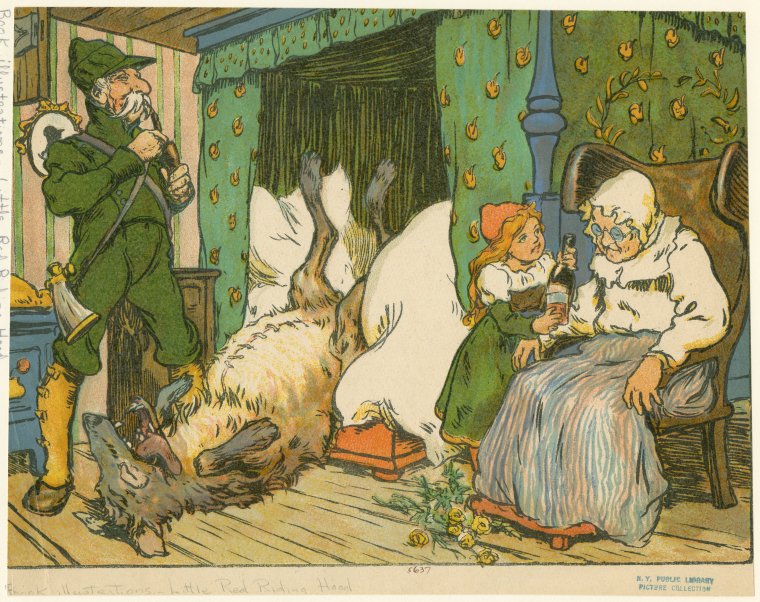
    Oh my God, the wolf has swallowed her! He is sleeping. Its belly is enormous; I wouldn’t have thought it could expand so much, and it’s snoring out loud. I will approach it carefully with my knife; it is fast asleep and won’t hear me. I am anxious, I don’t think I can take the sight of this nice old lady dead. Here, I cover its head with a sack and I cut its belly. The fear of what I might see almost makes me faint.

    What is this? The old lady, embracing her granddaughter, are ejected from the huge belly. At first, I think they are dead, but they open their eyes and watch me with bewilderment that quickly transforms into joy. “We’re saved, we’re saved,” they cry and stand up, as I fill the wolf’s empty stomach with stones I carry in my backpack. It opens its eyes, gets up and, like a drunk trying not to fall, escapes from the house, emitting cries of pain that gradually fade away in the forest.

    [1] I (single version) by Kendrick Lamar.

  • The Beggar

    The Beggar

    The metallic sound of the doorbell filled the house. I hurried to see who was at the door. I opened the chain top lock, turned the deadbolt – an elderly woman living alone can never be too careful. The door slid back, and I looked into the hallway. A man in rags was facing me, about fifty years old. He had big dark eyes, deep wrinkles and a full beard. He was watching me as if I were about to test him and he needed to find the right answers.

    “I’m sorry to interrupt. I would like to ask for your assistance. My daughter is sick with a chronic disease, and I need money to buy expensive medications. May I ask for a donation? I have a job—I’m not a beggar—but I have no choice. I want to help her.” He held a picture of a young girl and turned it toward me. Although he spoke in a very direct, sensible manner, his tone was slightly groveling as if he were trying to use his voice to express what he wasn’t actually saying: His daughter was suffering, he was desperate and afraid that the disease had no cure, he was forced to turn to strangers and ask for money.

    I shook my head to indicate refusal and immediately closed the door, but for some reason, I didn’t lock it. Something about his expression made me feel uncomfortable. Normally, I refuse without giving it any thought. I don’t believe all of these stories, and I’m positive that beggars ask for money for themselves. There are no sick family relatives, only a picture torn out of some magazine. But this time, I was left standing behind the door.

    Suddenly, I felt as if the guests at the birthday party were watching me in eager anticipation.

    The memory surfaced and felt so real as if I were now sitting in the pleasant backyard. A couple of days ago, on a sunny Saturday, family members and friends gathered to celebrate my cousin’s birthday in her roomy yard under a tall oak tree, casting a pleasant shadow. Two tables covered with white table cloths were packed with food: on one table was a huge baking dish with roasted beef, a bowl with baked potatoes, and various salads, and on the other table were fine pastrami and sausages, various kinds of Dutch hard cheeses, dips, and fresh pies with the tempting smell of freshly baked pastries. Her husband opened wine bottles that made a cheerful bursting sound, followed by the perky sparkling of alcohol. A pleasant bustle filled the place as the doorbell rang.

    My cousin hastened to open the gate. A blond woman holding the hand of a girl about ten years old stood there. They had a short conversation, after which my cousin went into the house and returned with some money. She was about to hand it to the blond woman when one of the guests, about sixty years old, suddenly screamed, “Don’t give her any money! She should go to work! Find a job! You shouldn’t give them anything. You only make things worse, especially for the girl who will grow up thinking that this is the way to have a good life. Get them out of here! Right now!”

    The pleasant hustle died out at once, and everyone watched the man. His yelling made his face blush and sweat. The blond woman looked around embarrassed but didn’t leave, her eyes fixed on the bills in my cousin’s hand. But as the guest kept screaming, she turned around and left with her daughter, and I could see my cousin following her with the money. The man turned to the other guests and explained passionately that one should never give money to beggars but rather make them find jobs. This is especially true for parents because they teach their children the wrong values. In his view, giving money to individuals should be forbidden by law, especially for those capable of working. My cousin, who returned to the birthday party, mumbled apologetically, “It’s not the girl’s fault, is it?” trying to appease the aggressive guest, who was now dining with the others.

    After a couple of minutes, the turmoil faded away, but a slightly cold spirit filtered into the cheerful family atmosphere; a transparent film enveloping the guests had been torn, setting loose an inner boundary that was previously very tight. Another cousin sitting next to me said that the loud guest was extremely rich, her husband commented quietly that he may be right but he didn’t know what pity was. A woman sitting on the other side added in a righteous tone that it was very impolite of him to yell like this at a birthday party, he should have refrained from screaming, and a young man said he didn’t understand what the fuss was all about; no one was forcing him to give money. A slab of reality that was supposed to be left out of the cheerful backyard permeated the party, awakening turbulences everyone was eager to conceal.

    I sat there deep in thought, watching my cousin apologize awkwardly—trying not to annoy anyone—and the guests who overlooked her obvious embarrassment. Suddenly, through a hidden slot the memory of the event in the café crept out and materialized.

    A couple of months ago, we sat together in the morning in a café—a couple of elderly ladies who meet once a week. On the table were beautifully decorated cups with coffee and tea, various pastries, shining and spreading odor of fresh dough recently removed from the oven. At the center of the table were a green glass water pitcher and a small vase with a tiny bouquet. Napkins with a beautiful pattern of squares and circles were placed in an elegant ceramic napkin holder. The waitress kept asking us with a forced smile if we needed anything else.

    Sometimes our conversation resembles a random collection of words picked from a certain page in a book; they must be connected somehow, but the logic isn’t clear. One woman emits a couple of sentences about how depressing politics is at the moment, her friend comments that her daughter-in-law works in a government office, a third one declares that her grandson is so gifted that he won a prize at school, another woman murmurs that the prices of food have gone up lately. And though the words seem detached and lacking a common context, still the conversation progresses.  Every sentence is met with some response, the pastries and drinks are gradually consumed – a dialogue between people doesn’t always fall into a rational systematic pattern. The words echoing around the table illustrate that deep communication can take place even if the proper words haven’t been found.

    But on that particular day, in early fall, a beggar slowly approached our table. He was an elderly man, around our age, with disheveled hair and a small humpback, wearing an oversized coat and worn-out shoes. He walked between the tables, saying nothing, only stretching a rough, scratched hand, asking for money. Most people ignored him; one woman gave him a coin. He paced toward us, taking very small steps. I’m not sure why, but I was anxious as he approached. He didn’t look aggressive or violent but rather submissive, but I found him frightening; eyes looking around purposefully, every person in a vehicle, a possible source of some money. He seemed to see nothing but only followed certain body movements that normally precede a hand stretching toward a purse.

    As he stood by our table, one woman whispered, “I wish he would go away. He is so filthy.” Another added, “Be careful; he might be ill.” He looked at us and then hunched his back more to make his humpback protrude even further. He then stretched a concave hand without saying a word.

    Half of a cinnamon croissant glittering in the sun, freshly made orange juice producing an orange glare, a chunk of tomato and cheese pie looking like a red-white mosaic, fruit salad leftovers resembling yellow-white pearls—the beggar stared at the food and said nothing. “Poor thing,” one woman said quietly. “Maybe we should give him something?” as her friends sighed. But then, one friend stood up in an exhibited manner, grabbed her wallet, and pulled out a twenty-dollar bill. Her face adopted a vain expression. The brows lifted and drew apart, the nostrils widened, and the mouth contracted in reproach. With a loud voice, she began to explain that everyone should have some pity, it is simply impossible to ignore the suffering of others. After all, we are all human beings. A person should be sensitive to other people’s wants, give some of what he or she has, and added more and more about the importance of having an open heart. At the end of this short speech, she placed the twenty-dollar bill in the dirty, scratched hand of the beggar in a demonstrative manner.

    He watched her indifferently, immediately stuck the bill in his pocket—but with a sharp, unexpected move, he snatched the half-eaten croissant from the table and hurried away, almost running, hearing loud cries of panic and a shout of “I wish I hadn’t given him the money.”

    I decided to look at the peephole to see if the beggar was still there. I saw nothing, but I could feel a breath on the other side of the door, like an animal sensing another animal. I told myself that he must have already left, I’ve been standing behind the door for a couple of minutes, immersed in my memories. I stopped my breath, stood on my tiptoes, and opened the door very slowly so that it wouldn’t make even the slightest squeak.

    He was standing there in the hallway, his hands limp next to his body, his head bent down. As he saw the door move, he lifted his head and looked at me with a slightly mocking smile. “No rush, ma’am. I’ll be waiting here,” he said in a hoarse voice, attempting to blur the touch of laughter that filtered into his voice; scoffing at me for not locking the door and ignoring him, an irrefutable manifestation of weakness.

    I closed the door at once and decided to give him a couple of coins so that he would leave. I began to look for some change—in a tiny bowl in the kitchen, in my handbag, in the bedroom, and in the living room. However, it seemed that all of the coins had disappeared. I walked in haste as if a catastrophe was about to take place and I was trying to stop it.

    Suddenly, an inner crust collapsed, unearthing the memory of the central bus station.

    A bubble of childhood that survived for so many years, voices and sights that seem to have sunk and disappeared but suddenly, unexpectedly, it turns out that they maintained their vitality and are still full of colors and odors. As a child, I sometimes traveled with my mother out of town. At the central bus station, we always passed by a beggar next to the entrance to the station. The first time I saw him I clang to my mother, and she looked at me surprised. A man was sitting on a brown cardboard on the floor, with both his legs amputated to the knees, and his filthy pants were tied under the knees. His body leaned against the wall. He looked at the passers-by, muttering unclear words interrupted by heavy coughing. In front of him was a small box with a couple of coins.

    I wanted to stop and look at him, and then escape. His forehead had vertical wrinkles, his eyes were wide open, his mouth had almost no lips, his beard was part long and part short, his shirt dark and stained. He had huge, rough hands and black nails. His amputated legs were placed before him as if they weren’t part of his body. Mom, let’s give him some money he is so miserable; don’t worry, people help him; but how? He can’t walk; there are people who assist beggars like him; why don’t we give him a coin? he can’t get up; I’m sure he has crutches, sometimes he isn’t sitting here; please, mom, let’s give him something, he is so poor; there are plenty of poor people, we can’t give them all money; so let’s give only him; he could be dangerous and aggressive to people who give him money; Why?; These beggars are sick. A normal person wouldn’t sit on the floor and ask for money, even if he was handicapped; he is so miserable, even if he’s crazy. How can he attack us if he doesn’t have legs?

    I could feel the smell of the central bus station. Busses rush into the station, unloading passengers on the docks and disappearing, people take quick steps, hurry to their destination. Escalators ascend and descend, the elevator moves up and down, a board with letters and numbers constantly changes. The announcer says a certain bus is about to leave any minute, fast food stands offer food without losing time. A crowd that is on its way to another place, in hurry to leave the station—and the beggar is implanted in place on the brown cardboard, watching legs pass by quickly, and only rarely does anyone toss a coin at him, which makes a metallic sound as it hits the rusty iron box.

    The childhood memory that suddenly fully materialized almost made me faint. In a moment, I would have dropped on the bed and lain motionless, but the thought of the beggar standing outside of the door was overwhelming. Suddenly, I realized that if he walked away, I would be relieved. A hidden weight I’ve been carrying for years would disappear, leaving a trail of fresh air. I went quickly to the kitchen and opened my purse, took out a twenty-dollar bill, and ran to the front door.

    As I opened the door, the beggar smiled at me with clear contempt. His dark eyes, which now seemed devious, watched me almost amused. In a moment, he would have burst out laughing at the frightened old lady who couldn’t eliminate the need to give him some change. But I felt my heart pounding and only wanted him to go away.  I threw the bill at him. I didn’t even wait to see if he managed to catch it or if he had to bend down to the floor to pick it up. I slammed the door and pressed my body against it as if an evil spirit were trying to break into my home and I was pushing it away as hard as I possibly could.

  • Anactoria

    Anactoria

    Some say a cavalry corps,

    some infantry, some, again,

    will maintain that the swift oars

    of our fleet is the finest

    sight on dark earth; but I say

    that whatever one loves, is.

    This is easily proved: did

    not Helen—she who had scanned

    the flower of the world’s manhood—

    choose as first among men one

    who laid Troy’s honor in ruin?

    wrapped to his will, forgetting

    love due her own blood, her own

    child, she wandered far with him.

    So Anactoria, although you

    being far away forget us,

    the dear sound of your footsteps

    and light glancing in your eyes

    would move me more than glitter

    of Lydian horse or armored

    tread of mainland infantry

    (Sappho, translation Mary Barnard, University of California Press,  2012, f. 41.

    Published with the kind permission of the University of California Press).

    The entire city stretched away from the window of our office—an architect firm—with modern towers and old buildings. Sometimes the view seemed like a punishment, as if we were doomed to watch constantly the success of others. A multitude of forms and materials blended into such a spectacular mosaic that following one distinct form was almost exhausting. A glass tower faced an old stone building; diagonal windows reflecting curved bars on the other side of the street; a curtain wall opposite a small, round balcony—this myriad of colors and shapes would discourage even the most experienced architect. Everything had already been invented, every material used, all forms adjusted to each other. An unusual combination of elements, a unique outline—they were all here facing us, just outside the window that was impossible to avoid.

    I didn’t mind looking out the window. A girl like me—an apprentice—wasn’t afraid of unreachable pinnacles. Sometimes I even found them comforting. Gabriel, the architect I worked for, whistled quietly as he reclined over his drafting table with his back toward the window. About fifty years old, his appearance exhibited his success. Thin and tall, his clothes were elegant but always showed a touch of mischief; an unusual belt, a very colorful tie, in the winter, even a strange hat. His tight shirt and trousers accentuated his good-looking body. His sneakers lent a light touch to his businesslike appearance. His face was bright and handsome, surrounded by a beard that was never too short or too long. His eyes, behind the expensive designer glasses, were inquisitive. His gray hair seemed disheveled but, in fact, it was meticulously cut. He drove a sports car, knew plenty of fine restaurants, and could suggest a bar for every mood: sadness, lust, naïve gaiety, and even an inclination to wax philosophical.

    Though his endless efforts to keep an attractive appearance may have appeared as evidence of a superficial character, his love of architecture was deep and overpowering. “Nothing in the world is as beautiful as an impressive building,” he always said, and I  looked at him speechless. Immersed in sketching, every line he drew was affectionate. At times, when he talked about his sketches, he sounded like a jealous husband. Comments about the angles or the proportions made his face twitch as if his lover had been offended. He would then explain in detail that there was no need to change anything, it was absolutely perfect. He talked loudly and assertively, but his voice revealed a hidden insult.

    As the building he planned was ready and he attended the opening event, a childish joy spread across his face. He ignored wine spilling on his elegant shirt and his jackets getting wrinkled by his sharp movements. His eyes followed the building as if it were an attractive woman he loved, he the only one who can see her true beauty. He knew the special angles, the innovative material underneath the polished front. He giggled quietly, as the windows faced the view and were not planned according to the inner space.

    Yesterday, as the new tower opened, he spoke in an emotional manner. He called it “the apple of my eye” and, in a moment of jovial carelessness, he said that “you can just tell it was planned with much love.”

    I found his happiness annoying. The pleasure he drew from the tower was irritating and, again, I felt what was lacking in my life. I was immediately reminded of the gossip I had heard. Two years ago his wife had left him and his daughter and moved to another city with another man. “She was stunning,” the secretary whispered with a vicious wink, “with huge brown eyes and shiny straight hair. Men would die for her.” Everyone thought he would break down, fall apart, maybe even retire, but he kept working as if nothing had happened. In fact, he even plunged deeper into planning inner and outer walls, division of space, natural and artificial lighting, elevators and stairs, as if he were trying to prove that architecture was his true love, not his wife who had left him. People watched him, bewildered, mumbling that he was pretending he was over it, but after months turned to years, they had to admit that perhaps he found his professional life more satisfying than they’d thought.

    I found the secretary’s story surprising and searched the web for his wife’s picture. I clicked her name, and a variety of photos filled the screen. Her beautiful face spread before me; eyes almost too big under soft, thick eyebrows. She was elegantly dressed, entering a party or leaving it. I looked at the photos for a long time, stretching an imaginary line between her and Gabriel. Her well-made-up face, her smart and slightly vain expression, a smile that stretched the lips but never reached the eyes, clothes intended to appease an unknown spectator who was an expert on the latest fashion. I could imagine this was what Gabriel’s wife would look like.

    I laid in bed watching my cat standing on the windowsill, turning its slanted eye toward elongated clouds that filled the sky, and in between them a meek moon emerged. Gabriel and his wife filled an inner space, and I couldn’t remove them—a handsome, cautious, moderate couple, so similar to each other that it seemed that if they took off their clothes two human bodies would appear, and it would be impossible to tell who was a man and who was a woman.

    Suddenly I was absolutely sure why the beautiful woman went away. She left Gabriel reclining on the sketching table and chose a man entirely different from her. I closed my eyes and envisaged him very clearly: a stormy, moody man, in the morning he hums cheerfully and in the evening he is silent and gloomy. During the day, he runs a family business, a night he makes huge pictures of children in an exotic land, again and again the same images, he never manages to paint what he sees in his mind. Gabriel’s wife lies next to him and looks at his hairy body with a mixture of pleasure and disgust. For a moment, she thinks he could adopt a more refined appearance, but she changes her mind and thinks it’s better this way; a bright inner string stretches and tightens only when it is wrapped around a dark wick. The slightly burly masculine body, without even a touch of childishness, lights an inner mirror, and she sees her own beauty as she has never done before. She finds her smooth body next to him arousing, creating an overpowering and unpleasant passion, which makes her look feverish.

    The thoughts about Gabriel’s wife grew thicker, spiraled and expended, and made me think of her.

    Of Anna.

    Rain was falling, pelting the window. The cat arched its back, jumped to the floor, and escaped in panic. Tears filled my eyes as Anna materialized in my mind; I looked at the other side of the bed and longed for my beloved. I recalled how I saw her for the first time, stepping lightly on campus, wearing a floral dress, her face shining and her short hair flying in the wind. Though she stood right next to me, her facial features seemed a bit blurred, and only as I returned home did I recall that her brown eyes were touched with spots of green.

    Anna and I are doppelgangers. We reflect each other; a branch that split into two small branches, which may look different but are made of the same cast. When I look at her—she has a sort of childish head, short hair, high cheekbones and thin lips—for a split second I feel I am a child. She always says that when I cook she realizes she has a homely side not yet revealed. When we lie side by side in bed, the space between us becomes a third woman, which is the combination of both of us: two heads, two breasts, a curving that becomes a thin line, and then two light legs.

    But her laughter is different from mine. When she is amused, the thin lips stretch into a reserved smile. But when she finds something funny she bursts out laughing. Her face blushes, the apples of her cheeks shine, her thin lips open and the small, pearl-like teeth are fully visible. Her eyes fill with tears and a clear roaring escapes her mouth, echoing and gradually fading away. Sometimes I think her laughter is a sort of self-exposure. The cover of a seed inside her is removed and left bare. For a couple of moments her memories, childhood agonies, passions and revulsions disappear, and all that is left is a pure spark of childish pleasure. When she is laughing, her curving mouth arouses deep passion. My hand touches her concave lower back and the curve below it, and she stops giggling and pulls me toward her. The cat, with fur made of black, orange and white spots, lies beside us, looking at us curiously and sometimes rubbing its head against a hand or a foot.

    But Anna had left me.

    A couple of weeks ago, I came home and found a letter on the table. Short lines in sloppy handwriting filled the page that ended with “and therefore, my love, I am leaving you.” I read the words, the sentences, the paragraphs, and I couldn’t understand anything besides the conclusion. Though it was noon, darkness fell. I thought I felt a draft in the house. I sat motionless, looking around, staring at the cat, who looked at me with black glass eyes. But, after a couple of days, unexpected tranquility took over me, a sort of mental laxity. The fickle finger of fate created acceptance, as a lack of hope is a mixture of desperation and calm.

    But now, as I lie in bed in the dark room, on the other side of the room the cat’s shining eyes emerge, Gabriel’s words on love foam and lather, the whistle of acids gradually expanding; soon, a huge eruption would be heard. Only a couple of hours ago he was facing the audience, excited and removing invisible sweat from his forehead, loosening his tie to breathe more easily. Everyone watched him with admiration, a brilliant architect who created such an intriguing building, but his childish joy made him blind, unable to see the passionate crowd. His speech was childish and confused; he kept saying “I truly love architecture.”

    I now repeat his speech silently, word by word, trying to imagine the beautiful tower, but it is eclipsed by the memory of Anna’s face. The brown eyes with dancing green spots, the thin mouth bitten by the tiny teeth—an agonizing longing overtakes me. My hair is messy, tears run down my cheeks. Anna, my love, my foreign twin, my unlike doppelganger, I stretch my arm to the empty side of the bed, but my hand touches the soft fur of the cat, who stretches out to the limit and emits a soft howl.

  • The Stain

    The Stain

    First, there was a stain at the head of the bed—something amorphous, a certain discoloration without clear borders. I thought I spilled some coffee I’d had in the morning on the bedsheet, or perhaps I’d been careless with the wine I’d drunk the day before. I touched the stain, even smelled it, but I couldn’t determine its origin. For a moment it seemed slightly rough, but I told myself immediately that that would make no sense. Anyway, I placed a pillow over it and laid out the blanket, tucking it under the mattress to make sure the stain is hidden.

    Late that night, I was eager to get into bed. I dropped my coat at the entrance hall and tossed my handbag on the table, I threw my clothes on the end of the bed, put on faded pajamas and lifted the blanket. I was about to lie down and relax, but to my utter surprise I saw that the stain expanded. From its place next to the pillow it had spread to the center of the bed, assuming the shape of a funnel. And not only that, but it had also swelled slightly, adopting a sort of thickness. A light brown rising with air bubbles, it had somehow glided to the center of the bed. It also had a sort of inner movement, almost as though it were breathing. But as I watched it closely I burst into laughter – clearly my sight was not as good as it used to be; apparently I had to get new glasses. How was it possible that a stain that had been created yesterday would grow and swell and become a living creature? It seemed like a wet mass, but as I stretched out my hand and touched it, it was dry and rough.

    I stood there watching the stain, wondering if at this late hour I should remove the bed sheet, toss it into the laundry bag and put a new sheet, but I was overcome by strange dizziness, which removed any rational consideration. For some strange reason I was positive that even if I put a new bedsheet, the stain wouldn’t be removed. Suddenly my cell phone rang. A friend apologized for calling so late at night. She couldn’t find her wallet and she had no idea what to do. The panic that came from the phone made me alert. I suggested she should call and cancel her credit cards and she thanked me, and the conversation was quickly over. Exhausted, I collapsed on the inner side of the bed, curving my body so I wouldn’t touch the stain. Before I fell asleep I heard a strange whistle, and then a sort of ticking, as if at the heart of the stain was an old clock. I thought I really must remove the sheet at once, but instead I fell into a deep, dreamless sleep.

    Early in the morning, a cool wind awakened me. With eyes closed, I stretched a hand to further cover myself, and to my utter surprise, I touched an obscure humidity. I opened my eyes and saw that the stain had expanded along the bed, and now it was as long as my body. Like me, it was covered with a blanket made of a pleasant fabric, and underneath it was that denseness that seemed alive, like exposed viscera, skinless tendons and muscles; a motionless stain that yet clearly exhibited invisible breathing. I could hear ticks coming from it, muffled yet distinct.

    I was stunned. Petrified. My heart was pounding rapidly and sweat accumulated on my temples. My fingers crushed the blanket so hard I almost tore it. I couldn’t move. Various questions emerged and struck me: is someone hiding in the bed? An animal? A person? Maybe an unfamiliar material? Drug? Poison? Possibilities materialized in my mind, each one worse than the one before, but then dissipated when put to the test of pure reason. After a couple of minutes my breath became normal again, and I reproached myself for believing in such ridiculous horror stories. I decided to get out of bed at once and replace the dirty sheet with a new one.

    But as I moved, the stain moved with me.

    My left foot turned left, and the stain crawled to the left; my right leg folded, and the stain wrapped into itself; my hand stretched above my head and the stain broke forward to the headboard, lively, and now also chirping. To quiet the sound of my heart pounding, which emerged from every pore of my body, I yelled at myself to stop, this is complete nonsense, a hallucination; a stain in the bed cannot become a person’s shadow. Apparently, I hadn’t woken up yet. Here, in a moment I will get up, wash the rebellious sheet—

    As I got up a peep emerged from the stain, and somehow it vibrated as if it contained water that moved from side to side. It gurgled and became quiet.

    I collapsed on the floor and laid on the carpet for two hours, my eyes closed and my body trembling.

    *

    Rain pelted the window, gusty winds plucked at the treetops, hailstones fell on the street, making an aggravating rustle. I laid in bed next to the stain, listening to the winter storm. I’d been sleeping next to it for a week—not really sleeping but resting, stretching my body as it expanded with me. I placed my head on a high pillow and it poured toward the headrest.

    The fear of the first days had been replaced by a vague alarm. The stain had not been removed, even though I’d changed the bed sheet twice. It was floating up and shrinking, spreading on the right side of the bed and then contracting itself and turning into a long worm. Something was existing next to me though I didn’t quite know what it was. My various speculations were all ruled out. I’d pondered for hours—what is this thing?—all I knew was that a certain physical relation between us existed. A sort of interaction that I didn’t understand, a reciprocal movement that I couldn’t figure out.

    Before I got into bed I took off my clothes and laid naked next to the stain. At first, I was lying on my back, my head on the pillow and my body stiff, hands fixed on the sides, and my breath shallow. But after a couple of minutes, the thread stretching my body loosened and I relaxed. Lying on my side as my full breasts pressed against the mattress, a heavy thigh stretched forward, a light soft belly protruding down—my body was fully lax, almost as if it was about to be absorbed into the bed. And the stain adopted my body’s form, making chirps and whistles.

    Had I been lying next to a man I definitely would have contracted my bulging belly, trying in vain to conceal its softness. Every once in awhile I dated men, sometimes I had a partner for a couple of months. Men tended to take off their clothes at once; passion blunts self-reservation. Maybe they thought there was no need to pretend for a woman who looked like me. I, by contrast, constantly compared myself to the body of an anonymous woman that had been engraved in my memory, a long thin stalk, so different from me that it was hard to believe we were part of the same species. I would loathe myself and detest the man next to me, and then make loud moans.

    But next to the stain I’d spread myself, and it adopted the form of my body without creating any oppressive self-reservation. My leg moved to the side and the stain poured in the same direction, my arm folded above my head and the stain expand upward. A denseness that was an echo, a reflection, a blunt mirror that though it reflected my body, it provoked no comparison to other women, to other body types; an entity without judgment. For a moment I even thought it restored the ancient mysterious nature of femininity that had been utterly lost.

    *

    A howling wind came from the street. In the silence of the night, it was possible to hear night birds chirping. I was lying in bed, I’d looked outside the window. I saw a fuzzy moon and closed my eyes.

    The stain had grown. Extended. Spread across more than half the bed. It had been here next to me for two weeks, enveloping a hidden movement, and I found that it was sprouting. Every morning, I slid a bit farther to the left side of the bed, but I could still relax comfortably. The moving stain emitted its ticking, its motion resembled mine but only bigger. Sometimes I moved my body only to watch it changing, crystallizing into a bulge that was swallowed into itself. A movement that in spite of being visible, occurred within itself. A hand moving aside and the stain dripped toward me; I recoiled so it wouldn’t touch me. But immediately it withdrew, making a gurgle, returning to the right side of the bed. I was lying on the left side of the bed, moving slightly farther away from the center, wishing to relax in the space left. I was thinking what would happen if the stain went on expanding, but I fended off the thought, and it dissipated and disappeared.

    I began to suspect the stain was also crawling into my tablet. Late at night I couldn’t sleep, I surfed the web. Mostly I was on Facebook; a variety of unrelated posts blended into each together, making my loneliness yet another story emitted into the world. No longer was I feeling suffocated and breathless, as if I were alone in the world, but instead I saw smiling or sad faces, a tragic and then funny headline, photos of animals and then political declarations. So I also became part of a constant stream of impressions that emerged for a single second and then sank into the darkness, moderating any sadness or joy, illustrating well the proverb that all things must pass.

    But I suddenly realized there was a link between the stain and the images on my tablet. As a lovely animal appeared—a dog surrendering to the hug if its owner, a cute cat looking out the window—the stain made a light, delicate chirp, almost pleasant, and I could feel a soft movement within it. As I watched an embarrassing or ugly image, it made a shrill peep, and something appeared to be moving with disagreeable sharpness. So, late at night, I was on the side of the bed, watching images, letters, numbers on my tablet, attentive against my wishes to the echoes they created in the stain. A recumbent full-bodied woman was watching pieces of reality that were visible for a couple of seconds and then sank into oblivion, drowning the oppressive silence of the night and her complaints, which nobody answered, in the echo that emerged from the entity next to her.

    *

    People think better late at night. A complicated exercise, income minus expenses that every time add up to a different amount, regular working hours plus overtime that make an unreasonable number—they all disappear late at night. Everything falls into place, the numbers make sense, an inner logic that agrees with the facts. I realized that exactly twenty-three days ago, the stain appeared on the bed. Twenty-three nights and three hours since this small bulkiness at the head of the bed, which I thought had dripped from my coffee, became a lasting entity. I fell asleep next to it and expected to see it as I woke up in the morning.

    Strangely, a certain intimacy was created between me and the stain, as if we were both part of a hidden plan. If I watched a movie, I was constantly attentive to the sounds it made; if immersed in Facebook, I wondered if it would generate a gurgle of pleasure or an inner movement, nervous and full of resentment; if I read the headlines, I was waiting to feel its internals currents. Sometimes I felt an unpleasant ticking coming from it, and I tried to speculate why it was annoyed.

    The stain, so I’ve discovered, detested strong feelings. If my tablet revealed a young man holding back his tears facing his dying father, a woman’s face twisted by pain watching her sick child, a young girl crying as her lover travels far away, it made shrill sounds. For a moment, I thought I heard two pieces of metal rubbing each other, a creak that made me shiver, and I immediately removed the images, deleting faces showing pain or longing. The stain especially liked colorful images. Funny scenes made it rattle. Torn body parts, murder and rape only generated a tiny croak; violent scenes created a slight, almost unnoticed, movement. But it found a clear strong emotion, the heart artery fully exposed, detestable. An inner movement would become apparent, and though its source was obscure, clearly the stain expressed resentment, almost always accompanied by a loud, unbearable whistle. Stop it, enough, I yell at it, but the stain was indifferent to my screaming. Only as the gliding tears were replaced by a smiling or violent face did the stain stop moving and seemed enveloped by pleasant tranquility.

    When my son was a child, I used to tell him stories at bedtime. Lying in bed, wrapped in a duvet, his eyes were closing but they opened at once if the story was about a horrifying monster, a preying animal, robbers awaiting an unsuspecting convoy. But if accidentally a broken-hearted mother appeared in the story, or a beaten boy betrayed by his friend, rage filled his child’s eyes and his small hands clenched into fists. In a loud voice, he demanded that I remove these oppressive characters; he had no desire to listen to a story that fills the eyes with tears. He was only interested in an adventure with a happy ending. Well, no one is eager to unearth his inner abyss, overflowing with particles of pain and primordial tears, a crevasse implanted already in a newborn baby. And, no matter what a person does to please himself, the soul’s crevice would always remain open, and one story would suffice to make the pain erupt and break the thin crust covering it.

    Thus, I also silenced my complaints, muted my bitterness, swallowed tears over my son living so far away from me and delved into the characters on my tablet, funny or scary. And if, for a single moment, an aching or love-struck protagonist emerged, the stain revolted and made threatening sounds, and I would remove it at once, searching for a pleasant or chilling replacement. The stain and I were lying in bed, side by side, watching the small screen, facing a world of funny or intimidating adventures.

    *

    A full moon implanted in a bright winter sky always creates restlessness, an inner movement that can’t be comprehended. Something exceeds its proper place, but there is no telling what it is and how it can be fixed. An inner support is slightly shaken and can’t be righted. The stain was filling almost the entire bed, and I have shrunk to the far right end. A big, sharp moon glowed through the window.

    The stain and I have lain next to each other for seven weeks. It was still expanding, its movements wider, exhibiting a reserved power. Sometimes when it moved, I grabbed the bed sheet, so as not to fall down. There was only a very narrow space left for me at the end of the bed—the stain was already touching me. I felt cool wetness; it looked like a huge mollusk without its shell, but touching it felt scratchy and rough. But I didn’t recoil, I laid on my side; it never even crossed my mind to get up and sleep on the sofa. On the contrary, since I went to work every morning, I was eager to return home and lie beside the stain.

    One day I came home furious. I could hardly walk up the stairs; anger made my legs heavier. I opened the door and slammed it behind me, threw my handbag on the floor, took off my coat violently as the sleeves turned inside out, took off my clothes and hurried to bed. The phone rang a couple of times; maybe it was my son, but I didn’t answer. Someone rang the doorbell, perhaps a neighbor, yet I didn’t open it. All I wanted to do was lie beside the stain and plunge into my tablet. Facebook, Twitter, a short news release, a chapter of a familiar sitcom, I was watching them and listening to the stain, wishing to drown my pain in the pleasant humming it made.

    On that day the chief doctor had reproached me for an error in the files, though it wasn’t my fault. A medical secretary must be extremely punctual, make sure all the details are accurate, never make a mistake when reporting tests, every letter and digit should be in place. But it turned out that the blood tests of one patient were mistakenly added to the medical file of another patient. The doctor stood at the office door and said in a decisive tone that this never should have happened, it could be life threatening, and then suggested that it might be about time to find a new medical secretary. My broken sentences were useless—the laboratory had sent the wrong file, it isn’t my fault, I only wrote down what had been sent to me—he spoke in a loud voice so everyone would see how strict and careful he was. The head nurse looked at me with demonstrated contempt and the few patients who sat next to the office lowered their gazes, pretending not to see my tears.

    Finally, I got up and left the office. I’d had enough of the haughty doctor, who elaborated that there was no good medicine without an orderly procedure. I followed the rules, wrote down the numbers, and still an error had been made and everyone was sure it was a result of my negligence. Even if I could prove that the data from the laboratory was mistaken, no one would believe me. Justice, so I’ve learned, is made by the size of its executors. When I wished to put it on, everyone looked at me with contempt, with a touch of vulgarity. A secretary like me simply could not prove the doctor wrong. It was implausible and therefore impossible. I had better not try to claim I was right and spare myself the humiliation.

    But next to the stain, the doctor and nurse turned into blurred, faceless images, only a background to the screen of my tablet. Funny videos and works of art, politicians giving speeches followed by beauty salons promising eternal youth, singers from the seventies and then women’s clothes—and the stain gurgled, hummed, kept an inner movement that was obvious in spite of not being fully visible.

    An angry woman with messy hair was lying in bed, biting her nails next to an entity she couldn’t figure out, a swelling that had become part of her life. She preferred it over her son, temporary partners, her workplace for years. She found comfort in its inner movement, created by images on her tablet. The stain reacted to what she said but didn’t respond, reflected her movement but kept its own form, was not taken aback by her full body but rather stretched toward it.

    *

    A nightmare. A horrible dream. I could hardly breathe; cold sweat rolled down my back, my heart pounded rapidly. I couldn’t wake up from this distressing dream: I had returned home, took off my clothes and hurried to bed with my tablet, but to my utter surprise another woman was lying next to the stain. Not prettier, not younger, but someone else. Not me. A stranger. I was standing naked, facing her, watching her, not knowing what to say. How could someone else take my place?

    As I was trying to stop my tears, wishing to fend off the pain that became sharper every minute, she stretched in bed. The soft arms spread upward, the back straightened, the full legs were pushed farther away from the torso—and the stain followed suit. The flowing swelling adopted the form of that woman, and when she relaxed the stain returned to its previous form. It became a mirror of this stranger, who acted very naturally, as if she had always been lying next to a stain that moved in accordance with her motion.

    The rage woke me up. I opened my eyes and saw I had fallen off the bed. My naked body was on the cold floor, shrinking and shivering. My knee joints were stiff, my muscles exhausted; somehow I managed to get up and stand next to the bed. The stain now filled the entire bed, humming and sending invisible currents everywhere, making a silent ticking, indifferent to the fact that I wasn’t lying next to it.

    A horrible cry came from my mouth, like an animal trying to escape a predator when it is so close it can smell its sweat. I reclined toward the bed and I tried to push the stain away to make room for myself, but my hand sank in the lively swelling; its inner breath was tranquil and the humming coming from it was constant and unchanging.

  • Human Traffic

    Human Traffic

    Published on May 5th 2018 in Santa Ana River Review: 

    http://sarreview.ucr.edu/human-traffic/

    When Rupah arrives in London, she is overtaken with gloom. Foreign land again, strange faces, tall people she should appease, an unfamiliar tempo, cold air penetrating her clothes, raindrops running down her thin jacket, a depressing gray light, and the English language, that sounds so alien. Only yesterday she was standing in her garden in Sri Lanka, her husband watching her from the entrance to the house, her children hugging her and laughing at the heavy warm rain, her sari soaking it up, dimming its colors and turning it into a thin transparent piece of cloth. But now she takes the tube from Heathrow Airport into London, collapsing into a vacant seat. The exhaustion of a long flight does not obscure her aversion to the cold light, the distressing screeching the train is making, and the stuffy air in the crowded car.

    As she knocks on the door at Pembridge Place and hears Mr. Allen’s steps slowly approaching the door, a lump grows in her throat. She puts the suitcase down, unfastens a button of her jacket, removes her gloves, adjusts her scarf, actions done one after the other out of habit, intended to ease distress. Another visit in Sri Lanka is over, another journey home and back again to a foreign land, and now a new count must begin, of days, nights, hours, and minutes until the next trip home. When Mr. Allen opens the door Rupah wipes her tears and smiles at him. “I was expecting you,” he says kindly, and she follows him into the entrance hall.

    She pulls the suitcase up the stairs and into her room. Everything has been left unchanged: the colorful bed cover she bought on her last visit to Sri Lanka, the Indian cushions she found in a shop in London, a table made of heavy dark wood facing the window, a huge closet, two large plants on the windowsill, and on a small chest is her altar to home: a colorful embroidered cloth, at its heart stands a statue of Buddha, his legs crossed, his hands placed on his knees, and his smile illuminated.  Colorful candles surround him, and two vases, now empty, stand behind him. Rupah opens her suitcase and begins to arrange her clothes in the closet, only the long skirt and purple sweater she was wearing for the flight are tossed into the laundry basket. When she is done she lies on the bed and closes her eyes. The vibrant colors of Sri Lanka gradually fade, the smell of grass after the rain, the tall trees surrounding the village shedding heavy water drops that fall and crash on the water-soaked soil, the yellow-gray sky, the soft clouds, the boisterous laughter of her children, her husband looking at her from the entrance to the house, they all dissolve and lose their vitality and disintegrate in the gloomy room with its heavy furniture and oppressive silence. As she looks at Buddha’s face she thinks his smile is sad, and before she falls asleep she whispers to herself: May everyone be happy, may everyone be free from misery [Text in bold: popular Buddhist prayers].

    In the morning she gets up late, unlike her usual self, from a deep and dreamless sleep. When she wakes up she isn’t sure where she is, but the darkness outside reminds her that she is in Europe. She gets out of bed, washes and gets dressed, combs her long black hair and then gathers it up. It’s too late, she gives up morning meditation and goes down to make breakfast. To her surprise, Mr. Allen is already in the kitchen. “Well, dear, how was your visit home?” he asks. She looks at him and says nothing. He looks a bit unkempt, she thinks. Rupah assists Mr. Allen to take a bath. Every other day she goes to the bathroom with him, he takes off his clothes and sits on a chair in the bath tub. It’s hard for a man his age to stand for so long. She helps him soap and wash his body. The physical intimacy imposed on them causes them to speak in a somewhat alienated manner, in a very practical tone. Every morning he tells her what products she should buy, the medication she should get from the pharmacy, books that should be returned to the library. Rupah listens carefully, sometimes writing it down so as not to forget, giving in to the simple mundane spirit which turns them into partners, two people keeping a regular schedule, which brings tranquility to both of them.

    Twelve years ago Rupah left Sri Lanka. Premala was five years old, Sahil five months old. Cyprus, Greece, Italy and now England, she travels by herself, from house to house, from one old person to another. New languages, different streets, both repulsive and tasty food, but old age is one: a withering body, bursting anger, forgetfulness, stench. The first time she travelled was the easiest, she thought she would be back at home in a couple of months. Kumar came home furious, he had been fired again. He was angry at his boss, fuming how arrogant and vain he was, blaming him for his failure, while Rupah was thinking that perhaps if he hadn’t been two hours late for work he wouldn’t have been sacked. Whenever he started a new job she expected the moment he would come back home, bitter and resentful, arguing that he had been wronged, suggesting there are hidden motives, never admitting that the fault was his. When she tried to soothe him and served him food he tossed it on the floor. There is no other way, she thought, she must find a job abroad. He would never manage to provide for them, and Premala would soon be six years old. Only those who go to private school have a chance for a better life.

    At the airport she held Sahil on her lap. The baby clung to her, sticking his tiny fingernails into her body, leaning his curly head on her neck. When the time came to say goodbye he wouldn’t let go.  Rupah pulled him away from her body, seeing his tiny mouth wide open and hearing his sobs but saying nothing, she handed him over to her mother, turned around and left without saying goodbye. A couple of months, that’s all, she said to herself on the walkway to the airplane, wiping her tears, straightening her skirt, checking that her handbag was closed, gathering her hair into a ponytail.

    The toothless Cypriot woman Rupah cared for had a low, husky voice, she giggled for no reason, and called Rupah “honey.” She had old worn out dresses and a colorful head scarf. In her broken English she inquired why she left her family, and when Rupah told her that her husband was fired she chuckled in a voice resembling a crow’s caw and said, “Ah, good-for-nothing! Shame, a beautiful woman like you, couldn’t you find someone better?” Rupah liked her direct talk, with no pretense. She referred to her late husband as “the useless bum,” and to her only son as “the womanizer.” Time and again she warned Rupah that her husband was trying to get rid of her, maybe he wants to find another woman, probably younger, and begged her to return home.

    Every weekend she went to the phone booth next to the post office and called home. Familiar voices emerged from the receiver: her mother came to cook for the children, Premala started private school and said grandma bought her a new backpack, Sahil said “mama, mama.” After five months abroad she asked to talk to Kumar and inquired if he had found a job. The gush of complaints that came from the phone lifted her at once to the small village at the foot of the round hills. “I was sacked, the boss is a liar,” he complained and Rupah stood there and listened, and for a moment she was glad she was away from the village.

    A month later, half a year after she had left, she called early in the morning. Kumar answered the phone, surprised to hear her. Silence fell when she said she was planning to return home. Two girls holding hands passed by the phone booth; a car was blowing its horn in the crowded morning street; pigeons landed on the bench nearby. “They all go,” Kumar’s voice was heard. “What? Who is going where?” she wondered, and he said “All the women.” Perhaps Rupah’s silence made him more talkative: all the women of the village – mothers of small children – left to go abroad, to work outside Sri Lanka. Chand’s wife, Harish’s wife, Mohan’s daughter, they all went away. Only elderly ladies and young girls were left here, he said, and she thought she heard a chuckle. Her spirit traveled from one house to another, from family to family, and she had to admit there was much truth in his claim: the mothers left, leaving the children behind, flying off to remote countries to provide for their families.

    Rupah returned to the old woman’s house, ignoring her husky voice that came from the kitchen, and walked straight to her room. She took off the pink blouse and put on a white shirt and sat on the carpet facing the low cabinet, the altar she made for herself with the statue of Buddha. She could feel the pulse in her temples, a headache spreading gradually, becoming an obscure pain in an unfamiliar part of her body. The die is cast, she thought desperately; there is no way back. She had been sentenced to wandering, she would have to live away from her children for years. Premela, Sahil, there is no knowing when she would ever see them again. Her long black hair spread out on her shaking back. She lowered her head and cried bitterly, torn by yearning for her children. Buddha watched her, smiling as always, a breeze made the candle’s flames flicker, a pleasant scent of the purple flowers behind him wafted over the room, and she murmured in tears, may I be a guard for those who need protection; a guide to those on the path.

    In Greece she cared for an elderly man, tall and heavy, with huge hands, who had a large family. A strange character, a mixture of vulgarity and outstanding generosity. His daughters, who lived nearby, came to see that she was looking after their father properly, each one giving different instructions. One said he should take the medication in the morning, the other said at noon. One prepared food for him, the other throwing it away and making her own dish. At first Rupah tried to make peace between them, but after a while she let them have their own way. Every time one would complain she pointed a finger at her sister. Nikos, now almost ninety years old, used to try and touch her breasts, and when he succeeded he giggled, as if the attempts of this pretty woman to avoid him were funny. But every couple of weeks, he would draw a pile of fifty dollar bills from under his bed and hand them to her, out of sight of his vigilant daughters.

    Asking her about her family and listening to her explanations, how she provides for the family, giving her children a better future, her husband is at home but doesn’t care for the children properly, he inquired: “Do you have friends here?” She was taken by surprise. Yes, of course she knew a couple of foreign workers, women from Sri Lanka and India who worked in the neighborhood. They used to exchange information: where is the best Indian food store, how can you find a doctor, what is the best time to go to the post office. Rupah never saw them as friends but as sort of sisters, sharing a similar destiny. When she remained silent he said, “You live here, and that’s it. You make sure you have a good life.”

    She was overwhelmed. She felt her life was devoted to a single purpose, aimed at nothing but providing for the family. She never thought about whether she was happy, only if what she did benefited her children. The life of wandering was justified only because they went hand in hand with devotion and sacrifice; this prevented further suffering. But suddenly Nikos’s words seem so reasonable, consistent with an irrefutable wisdom. In an instant, unconsciously, passionate fervor was awakened, an urge for happiness and pleasure she thought had been lost forever.

    On Sunday, her day off, she got up in the morning and sat facing the mirror. She combed her shiny black her, put on burgundy lipstick, and circled her eyes with eyeliner she had brought from Sri Lanka. She then put on a white dress, becoming to her round figure, drew out of the closet the embroidered purse her mother had bought her, and left the room. When Nikos saw her she thought she saw a touch of admiration in his eyes. He smiled at her, waved his hand and returned to his room.

    She walked in the narrow streets of northern Athens, between dilapidated houses and people sleeping on the sidewalk, looking for an address a friend from Sri Lanka had given her. After about half an hour she found the building, covered with graffiti. Already as she climbed the filthy stairs, careful not to step on broken glass, avoiding a broken step, she heard the chanting. But as the door opened bright light enveloped her, a glimmer of glittering candles, and in front of her was Buddha, illuminated and affectionate. The room was crowded, men and women sat barefoot on the floor, chanting prayers. She took off her shoes, sat with the worshippers and joined the singing. Smiling faces around her, the familiar smell of incense, the long table abundant with food, the colorful fabric covering the walls, Rupah gave in to the joy that filled the room, the smiles and laughter, the pleasant odors, asking people where they came from and telling them about her village. And so, inadvertently, a spirit of home materialized in this room with its small shrine, a captivating warm coziness, breaking another miniature blood vessel that attached Rupah to her family and accelerating her path to liberation. And only as the dancing was finishing and food was gone did she go down the shaky stairs – she suddenly thought of Premala and Sahil. She halted. Panic took over her. She gripped the banister and closed her eyes, shattered by her own contentment, which seemed so treacherous.  She thought she would never see her children again. Leaning her head against the stairs she whispered: may all beings everywhere plagued with sufferings of body and mind quickly be freed from their illness.

    Signora Bosco lived in a town in northern Italy, in a house with a porch facing a view of the valley. Always wearing black, she walked slowly, leaning on a walking stick, smiling at Rupah as she spoke to her in Italian. After every couple of words her face grew grave, she said Gésu Cristo and crossed herself. Every now and then she would use the very few English words she knew, “food,” “bathroom,” “drink,” and then she would go back to Italian. Rupah’s room faced the view, through the window she could see a wide valley and beyond it the surrounding hills. The abundance of greenery,  the grazing cows, the bright paths meandering through the meadows, Rupah felt she had been here before. Only the thin sharp light, so different from the yellow-gray sky in Sri Lanka, reminded her she was in a foreign land. There is something transparent about the sky here, she thought. Strange, in Sri Lanka it is heavier.

    Every Sunday Rupah went with Signora Bosco to church. Early in the morning Rupah helped her dress up, gently combed her gray hair back and tied it with a black clip, and they walked together to church. The road was slightly uneven, once in a while Rupah had to hold her to stop her from falling, bypassing puddles or stones on the narrow path. Though the church was rather close, they had to walk for more than half an hour. At first, upon entering the church, she was alarmed. The dusty air, light coming from a narrow window in the ceiling, creating a ray piercing the darkness, the intimidating pictures on the walls, the priest walking around with such a grave expression, the statue of Jesus tormented on the Cross, she nearly ran out, leaving the Signora by herself. Also, her silence on the way back was oppressive. She normally chatted constantly, talking to Rupah and ignoring the fact that she did not speak Italian. But on the way back from church she was always mute and introspective. She seemed immersed in contemplation, and now and then her countenance would change. Anger, sigh, sadness, a dismissive hand gesture, Rupah found it strange that the visit to the church made her sad, silenced her chatter and generated an unpleasant inner conversation. It’s a shame she can’t come with me to the temple in Milan, she thought. The simple natural chanting, sitting on the floor with the crowd, knee touching knee, the vibrant colors all around, red, orange, yellow, the flickering candles around Buddha, and the pleasant smell of incense – they would have made the Signora’s prayer pleasant and uninterrupted, without the misery Rupah couldn’t comprehend.

    Rupah bought a laptop computer. A friend she met at the temple in Milan managed to buy one for her at a special price. At first all those keys confused her, but in two weeks she could manage it well. She had heard people talking about Skype, and she wished to call her family in Sri Lanka. She sat facing the laptop, dressed neatly, her hair coiffured and her face made up, waiting impatiently to see her children. An ascending and descending tone, blue color spreading on the screen, stripes moving in circles, and suddenly she could see Premala shouting joyfully, “Come, come quickly, mommy’s here!” Immediately Sahil appeared, and as he saw his mom he started kissing the screen without hesitation and yelling “mommy, come home, come home, when are you coming?” Her mother stood facing the camera, smiling and waving, as if she saw her daughter sailing away on a ship. Though they only laughed, blew kisses in the air and said almost nothing, when the conversation was over she remained seated almost an hour, facing the laptop. Her children smiling but missing her, her home, the familiar light coming through the window, her mother so thrilled to see her, they were all revived in her spirit, one after the other, bringing her distant home closer, but undermining the comfortable daily routine of the last years. In an instant, broken blood vessels were healed; torn when she left her family, they bled and almost died after years of living by herself.

    The Skype conversation became part of her daily routine. Rupah sat facing the laptop, now wearing loungewear, her hair disheveled. At one o’clock, as the Signora took her siesta, Rupah spoke with Premala, Sahil and her mother. At first, small mundane details filled her with joy: Premala’s school mates, her success at school, she showed Rupah her notebooks. The teacher said she was the best student in her class, and grandma bought her a new dress. She turned around facing the camera, and Rupah laughed and complimented her: a pretty girl with a beautiful dress. Sahil practiced bouncing a ball in front of the computer: ten kicks without missing once. He then tried to impress his mom and jump when the ball was in the air, but fell on the floor, and his mother’s pleasant laughter came from the computer: “Be careful, Sahil, so you don’t get hurt.”

    There were also quarrels. Premala wished to tell mom a secret, Sahil wouldn’t leave the room. He pushed Premala, “I want to talk to mommy now,” she pushed him back and he burst into tears. Her mother came from the kitchen, trying to separate the two. Rupah tried to make peace, but they couldn’t hear her. Finally, she turned off the computer. By tomorrow her mother will make peace between the children, and soon the Signora will wake up and she needs to help her get out of bed.

    The Signora’s son was courting Rupah. A slightly shabby widower, when his children left home he came to live with his aging mother. A man about sixty years old, his hair dyed black and saturated with hair oil. A heavy smoker, his shirt was slightly stained, and he spoke broken English. His small dark eyes moved anxiously from side to side, examining everyone in haste. From the very moment Rupah arrived at the Signora’s home he smiled at her, offered help time and again, and also inquired: “Doesn’t your husband care you are here alone? Aren’t you lonely? Would you like to have dinner with me? How do you spend your day off?” Rupah smiled bashfully. This attention could have been pleasurable if she hadn’t felt men cannot be trusted. Her mother made her marry Kumar. She was in love with a boy in high school, but her devoted mother thought she had to find someone who would provide for her daughter. For months she paid visits to almost every family in the village, examining young men, wondering who would best suit her daughter. Even though Rupah cried when the date for the wedding had been set, her mother was determined, smiling to herself with confidence that the craze of youth would surely be replaced by a peaceful comfortable life.

    But at the airport, before Rupah left for Cyprus, the mother stood pale and upset, as if she had been found guilty of a crime but someone else was about to be punished for it. Her hand touched her daughter’s arm, perhaps caressing it perhaps grabbing it. And when Rupah forcibly detached Sahil from her body her mother held him tightly, and tears covered her face. From that day she had almost never spoken to Kumar. Without asking for permission she moved in with them, cooking and cleaning, caring for the children. During the day Kumar sat in the back yard, in the evening he watched TV. His life amounted to hours of staring at the sky, the ceiling, the TV. Her mother got used to the lifestyle of her son-in-law. Only sometimes, late at night, when his friends came to play cards, putting money on the table, she sat on her bed, leaning her head against the wall and closing her eyes, pondering time and again why she had insisted her daughter marry this lazy man. All are nothing but a flower in a flowing universe, she said to herself, but still, this bitter drop, biting and excruciating, wouldn’t evaporate and disappear.

    Six times Rupah visited Sri Lanka. Every two years she traveled to visit home. Her preparation lasted months, she bought presents for her children, her mother, her cousins and their children, and also collected packages for relatives of friends. Yet she always returned in despair. From the moment she was picked up at the airport, in spite of the joy and excitement, the future separation from her children materialized in her mind. Every moment held a seed of departure.

    She spent six weeks in the village. First she went home, hugging Premala and Sahil and crying. She then embraced her mother, and finally kissed Kumar on the cheek. She didn’t pretend there was any intimacy between them, and everyone accepted it naturally, without question.  Kumar had changed over the years. The somewhat elegant clothing he used to wear, slacks made of a shiny brown fabric and tight checked shirts, were replaced by visible shabbiness, as if he wished to display the fact that no one is taking care of him. His eyes, once merry, were now empty, and his hair turned gray.  When Rupah stood next to him she could see his hands were shaking. Even when everyone was at home he sat in the back yard and smoked, sometimes closing his eyes, sometimes gazing at the tall trees.

    Rupah accompanied the children to school, prepared food, played with Sahil, shared Premala’s secrets. A dispossessed mother, for a couple of weeks pretending she was raising her children. Premala showed her where the spices are now, Sahil explained how they rearranged the storeroom, and she smiled at them, embarrassed at being a stranger in her own home. The children ate the food she made, but it was clear they were used to their grandmother’s dishes. When she picked up Sahil from school the teacher asked that the “grandma should call her,” he needs some help with math. Even her mother asked Premala to help her with cooking. Surrounded by joy, warmth, love, yet her foreignness was clear. A woman who, while visiting home, experienced a life that could have been hers. And as she was about to bid farewell, she was horror struck since she couldn’t escape the notion that in spite of the enormous pain of leaving her family, there was also a slight relief. A stranger both abroad and at home, she closed her eyes facing Buddha and said nothing.

    Mr. Allen walks slowly from his bed to the kitchen. His back slightly bent, he leans on his walking stick, still there is much dignity about him. The white hair looks like an aura encircling his head, the big brown eyes spritely in spite of the heavy eyelids, the body moving with effort to preserve vitality in spite of old age. Rupah prepares breakfast. She serves porridge and a cup of tea, and sits next to him to have breakfast. “Well, Rupah, you still haven’t told me how the visit to Sri Lanka was,” he says, a small smile spreading over his face, but the eyes are serious. He looks at her intently, awaiting a response. Rupah looks down at her plate, puts more jam on her bread and adds two teaspoons of sugar to her tea.  The sour steam of boiling Sri Lankan tea fills the kitchen. Mr. Allen is waiting, and Rupah sees she needs to reply. “I hope this will be my last visit there,” she says, and immediately sips the scalding tea.

    Mr. Allen says nothing. Rupah is also silent, sipping tea and eating bread and jam. Finally, he clears his throat and says, “Do you want to return to Sri Lanka?” “No,” she replies, “I want to bring my children over here and never return there.” Mr. Allen seems shocked, but his furrowed brow indicates that he is not entirely taken by surprise. He makes a small ahem, a sort of short snort, as if he had revealed an unknown truth, but it makes so much sense that it’s no wonder. He eats some porridge, wipes his mouth with a napkin, and asks, “It won’t be easy, you know. Why now?” Rupah nibbles on her bread. She gets up, picks up the plates and places them in the sink, and as she turns toward him she says, ‘’It’s a distorted life, wrong both for me and for my children. It leads to no joy, tranquility or liberty. A mother should be with her children. I give them money, but not a better future.”

    Mr. Allen puts down his cup and looks at her. What a shame that she’s wearing cheap jeans and a shabby sweater, his thinks. When she had the long skirt and the Indian fabric blouse she was so beautiful, the vibrant colors flatter her dark skin and shiny black hair. “It won’t be easy to bring them here, you know,” he says, knowing that Rupah is already thinking how to proceed. “Wouldn’t it be hard for them to fit in here?”

    When Rupah turns he sees her face is full of tears. “Leave everything on the table, I will be back in a minute,” she says. As she climbs up to her room the stairs look blurred and the room obscure. She walks towards the altar, lights the candles and bows three times to the statue of Buddha. Rain is pelting down outside, the sky is dark and somber, but she sees nothing but the glare enveloping Buddha’s face. Light is kindled within her, legions of stars are illuminated, ancient moons move in a predetermined path, she closes her eyes and chants, May I be well, happy, and peaceful; may my teacher be well, happy and peaceful; may my parents be well, happy and peaceful; may my relatives be well, happy and peaceful; may my friends be well, happy and peaceful; may the indifferent persons be well, happy and peaceful; may all meditators be well, happy and peaceful; may all beings be well, happy and peaceful.

  • Autumn in Jerusalem

    Autumn in Jerusalem

    The story was published in Tikkun Magazine on March 5th, 2017 :

    http://www.tikkun.org/nextgen/autumn-in-jerusalem

    Jerusalem is most beautiful in the autumn. In the evening a grey purple light envelops the city, the air is so lucid you can almost see it, heavy clouds move across the sky and light winds rattles branches scorched from summer heat. Grass that has turned yellow, flowers withering in the dry heat, thorns covering the hillsides all bow their heads and surrender to the pure air and soft light. The stone buildings look lighter; dark alleys appear slightly festive; the hills around the city are kindled with a dim glow.

    I ran into Luisa this morning. She smiled at me bashfully, and I said hello. We live on opposites sides of Emek Refaim Street, in the German Colony in Jerusalem. I am sixty-three years old, she is sixty. I am short and round, she is a tall, erect woman. I walk slowly, stop once in a while, and then I continue walking. She takes long steps, wondering if there is a shortcut. I am suspicious, one can’t be too careful, especially with older women. She is smiling and inviting, fearlessly talking to strangers.

    Actually, that’s how we met, Luisa and I, in early autumn. I was carrying heavy baskets with fruits and vegetables—I buy so much food when my son comes for a visit on the weekend. Though the grocery store is close to my house, I could barely carry the bags all the way. As I walked slowly, I suddenly felt there was a huge shadow behind me; for a moment I thought clouds were obscuring the sun. I was alarmed, I thought maybe someone was going to attack me, but immediately I scolded myself: no one assaults people like that on Emek Refaim Street. I put the heavy bags down on the pavement and turned to see who was standing behind me. Brown brogues under a long gray dress made of thick fabric, a tall wide feminine body and a face surrounded by a Christian headdress. Ah, I got it, she was a nun from the Borromean Sisters’ convent, in nearby Lloyd George Street. She smiled at me, her eyes bright, and suggested, in English with a heavy foreign accent, that she help me carry the bags.

    I found her suggestion strange. For a moment I thought I may have been wrong about her age. Her skin was so pale, as if it had never been touched by the sun, which burns here mercilessly in the summer. Small dark eyes, full brows curving above the eyes and dropping almost to the cheek bones, a cheeks too smooth, almost lifeless, and a slightly fleshy mouth – all encircled by a nun’s wimple, white and grey.  Since not even a single hair could be seen and the nun’s body, even her neck, were completely covered, the features seemed somewhat bizarre, somewhat mysterious.

    “No, thanks, I’ll manage,” I heard myself saying, though I did wonder how I would pick up the bags; the apples almost falling on the sidewalk. She smiled, revealing slightly crooked teeth, offered again to help, and as I refused said, “Well, see you, we are neighbors, aren’t we?” and disappeared.

    This encounter with the nun kept bothering me. A sort of annoying mosquito, which keeps buzzing in spite of the rapid hand gestures pushing it away. Maybe she wanted to know where I live? And why “see you”? Why would we meet again? More questions kept coming up, each one generating others, which seemed even more complicated. That Saturday I told my son and daughter-in-law about the nun. My son dismissed my agitation, saying, “it’s nothing really, somebody offered help, that’s all.” But my daughter-in-law, a secular woman from a religious family, inquired about the details. “You need to be very careful,” she kept saying, though she didn’t explain how exactly an encounter with the nun might be dangerous.

    Two weeks later, as I was walking with my grandson on Emek Refaim Street, the nun suddenly appeared. “Hello,” she said very pleasantly, as though we had known each other for a long time, smiling at my grandson and asking sweetly how old he was. Sagi scrutinized her, holding my hand tightly, and after she left he whispered in my ear: “Grandma, why is that woman wearing such a long dress? And why is a handkerchief on her head?” I suggested we have ice cream in the next coffee shop, ignoring his questions. I found her display of joy in meeting me disturbing, but said nothing. Sagi and I had our ice cream and watched the passers-by. He was staring at them with a dreamy look, while I focused on every one, examining their faces, hair, dress. At this afternoon hour the street was crowded. A pleasant autumn wind shook the branches of a pine tree casting its shadow on the coffee shop, birds huddled on the iron fence around it, and people with thin sweaters were walking by in the street. When we left the coffee shop Sagi took my hand, and so we strolled home, very slowly.

    In the following weeks I met the nun almost every day probably because I broke my years-old routine and went shopping in the morning. For years I had gone to the small grocery store down the road, to the greengrocery shop and sometimes to the bookstore on Emek Refaim Street. A routine born out of distress — my late husband had been ill for years, and I left him alone at home only in the evening when he was napping — became instinct, even after his death. But lately I have woken up early in the morning with a strange desire to do something new, to break a habit, to find a corner of a street I have never seen before.

    I leave early in the morning and buy freshly made bread. The scent of loaves just out of the oven inspires a giddy happiness. I add fresh cheese, sometimes even a cup of coffee from the coffee shop near the corner. I have a sort of desire to explore pleasure. And, as I was walking down the street, excited by this unfamiliar indulgence, a I would encounter the nun.

    She now addressed me directly, introduced herself — Luisa — shook my hand, lingering to talk, as though it was clear we would make conversation.

    “Hello, neighbor, how are you?”

    I heard the heavily accented English and saw a smile spreading over her very fair face, untouched by the sun’s rays. I replied politely. I disregarded my natural distrust, my fear of strangers, and made conversation. Almost every morning we discussed the weather, products in the grocery store, the road works that make it practically impossible to cross the street. Luisa inquired about Sagi, how old he was, how often does he come for a visit, where does my son live. Loneliness is more compelling than natural vigilance. Then, one day, as we were deep in conversation, standing on the street, Luisa suddenly said, “Why don’t you visit me, at the convent?”

    The Borromean Sisters never walk around Emek Refaim Street. Secluded in the convent surrounded by a high stone wall, they are never seen. Luisa’s invitation took me by surprise. For a moment a thought appeared that maybe she was not really a nun, but it was immediately ruled out.

    “I don’t know, I am not sure where it is.” Hollow, meaningless words came out of my mouth, my gaze traveling to a bus parked in the stop, the nearby bakery, and then to a group of girls chattering loudly. When I turned and looked at Luisa, I saw a touch of laughter in her dark eyes, maybe even mischief; for a moment she seemed like a little girl resisting an urge to break into laughter.

    “Well, then, tomorrow at four o’clock in the afternoon? Come to the brown door in Lloyd George Street, I’ll be waiting for you,” she said smiling and left.

    In the evening I cooked as I haven’t done for years. I always prepare food when my son and his family come for the weekend, but this time I made eight different dishes, running around, pulling baked dishes out of the over, stirring the stew, kneading dough, calculating quantities — moving frantically around the kitchen. When I was done cooking I was so exhausted that I fell asleep in the living room, without drawing the blinds or turning off the lights.

    When I woke up the next morning I felt something was wrong but couldn’t remember what it was. I tried to recall what had happened yesterday, but in vain. Something took place, but I wasn’t sure what. Only as I saw the many dishes I had prepared did Luisa’s invitation surface. In an instant the convent materialized in my mind: high stone wall around it, no one seen entering or leaving, dark prayer rooms, solemn-looking nuns, long narrow corridors leading to obscure places, a dining room smelling of simple food, and cold air filling the entire space. I considered avoiding the visit altogether. Well, I couldn’t telephone the convent. Maybe I simply wouldn’t go, and when I meet Luisa I will say I wasn’t feeling well. Or perhaps I will say my son suddenly came for a visit, and there was no way to let her know. Various excuses came up and were then ruled out, and each pretext seemed utterly ridiculous.

    I was standing by the window, looking outside and thinking about the upcoming visit. A hoopoe bird hopped on branches of a high pine tree, soft grey clouds covered the sky and a pleasant light filled the street. Fear, that’s all, fear is stopping you, a thought surfaced and disappeared. In the house across the street a gardener was working in the yard, pulling weeds and planting flowers. A bus moved along the street. An old women walked slowly on the pavement; she stopped every now and then, looked at the street, and then went on. I will meet Luisa at the convent, fearlessly pay her a visit and then forget about it. I will dare to look at all those dark rooms, thank her, and be on my way. And when I meet her on Emek Refaim Street we will chat amiably, and I won’t lower my eyes with embarrassment.

    That day, at four o’clock in the afternoon, I walked slowly towards the brown door in the stone wall.  Trees shaded the houses the Templars had built more than a century ago in the German Colony, rustling in the wind, yet an eerie silence filled the street. When I reached the brown door I wasn’t sure what to do. There wasn’t a doorbell and I didn’t know if I should knock, but to my surprise Luisa opened it, smiling and inviting me in.

    I stepped on a stone path after her, passing lush greenery, and went into a narrow hall that led to a very small room, a sort of entrance hall with nothing but an old wooden bench. An old nun sat there, as though she was expecting me. Short and chubby, her round face wrinkled, the corners of her mouth pulled down, wearing glasses with a heavy old black frame.

    “This is Mother Superior,” Luisa introduced her, and turned to her and said, “this is my friend.” The loose handshake and the suspicious gaze were unpleasant, so different from Luisa’s welcoming nature. The Mother Superior inquired whether I live in the neighborhood, if I have family, how old are my son and grandson, when did my husband pass away, do I manage by myself, and more and more questions. Finally she asked if I go to the synagogue.

    I couldn’t catch my breath. The room suddenly seemed obscure, the bench casting a shadow on the floor, and now I observed a spider web in the corner. Even Luisa’s face became grave. “No, I am not religious, I am a secular Jew,” I said, making an effort to look straight into the Mother Superior’s eyes. But she was indifferent to my response. Immersed in thought she added, “But you do pray sometime?”

    “Pray? I don’t know. When my husband was dying I prayed.”

    “And you asked God to help you?”

    “I asked that if he must die he be spared terrible suffering.”

    “I see.”

    She said nothing more. We were silent, the Mother Superior sitting and Luisa and I standing. In a moment I would have apologized, said I must return home, but before I managed a word she said, “Luisa will show you the convent. We have a school for sick, invalid children. We try to help them as much as we can.” She shook my hand and disappeared into one of the corridors.

    Luisa turned to a dark narrow passageway, and I followed her. Again I was about to apologize and leave, but I thought it would be very rude to go now. The ceiling was low, chilly air filled the passage as we walked step after step, my heart pounding, and then we reached a heavy wooden door. Luisa pulled it and we went outside.

    Bright light hit me as we entered the inner courtyard. I was overwhelmed by the abundance of trees, tall bushes, flowers everywhere, all turning their heads to the sun. Radiance filled the garden surrounded by a stone wall. Little round pebbles covered the ground, climbing plants clung to the walls, reaching for the sky, green branches shaded the open space, instilling a peaceful and pleasant atmosphere.

    As I was standing there, astonished, attempting to see every detail and every corner, Luisa kept explaining: we run an elementary school, most of the children are handicapped, they come from Arab villages around Jerusalem. And here, in the building facing us, there is a very modest guesthouse, with a handful of visitors. And some people simply live here. Here, can you see the old man watching us from the porch? He is a Holocaust survivor, very ill, we take care of him.

    A sound of creaking wheels came from behind us, disturbing the peaceful silence. From a hidden corner came a boy of about six or seven years old, limping heavily but pushing a wheelbarrow full of plants. As he saw Luisa, a broad smile spread on his face and he said hello. She introduced him, “this is Said, our most gifted gardener,” fondling his hair and sending him on his way. Following him came a group of children, almost all of them handicapped: a limping girl, a boy with a paralyzed hand, two boys who were partially blind. They all smiled at us, their faces full of light and happiness, devoid of darkness and bitterness. A nun walked behind them, and she also greeted me with a pleasant smile.

    As I walked home I felt as if my feet weren’t touching the ground. The bright faces of the handicapped children were imprinted in my memory, and now I thought of each one of them, walking and singing, the nuns looking after them. I retained the light of the convent within me: its grace touched me, expanding an inner space, cheering unknown corners. I strolled home in the twilight, walking slowly, thinking about my visit. I have never noticed that the street lights in Emek Refaim Street cast such a warm pleasant glow, I thought, and that the houses made of Jerusalem stone look so cool and inviting in the evening.

    When I told my son – I called him immediately after I got home – he seemed a bit worried.

    “You went to the convent? Why? I don’t understand.” He was surprised that the nuns had invited me. On the weekend, when he came with his family he inquired again about the visit. I told him about the happy handicapped children and the beautiful garden. His wife kept warning me, saying, “you better watch out, you never know what they are really up to,” but I calmed them, promising to be very careful. I placed the many dishes I had prepared on the table, and they ate them heartily.

    I went to the convent for four weeks, once a week, every Thursday afternoon. At four o’clock Luisa was expecting me behind the brown door, inviting me in, and I followed her gladly, eager to play with the children and enjoy the peaceful garden. The children greeted me with cries of joy, sitting next to me, leaning against me, touching my clothes, asking my name, where do I live, what’s my grandson’s name. The smiling faces around me, the tranquility of the garden, the plants with such a pleasant scent – being at the convent was so delightful. Luisa sat next to me, and sometimes the teacher would join us. After about two hours I said farewell and the children left for their homes. If I could I would have stayed there longer. I always left in high spirits. A new happiness, an almost childish joy, filled me. On the way home I stopped at the deli and bought some delicacies.

    By the fifth week in which I went to the convent it was late autumn, or rather early winter. Luisa asked that I come on Friday since she was busy on Thursday. The children came to the garden wearing jackets, laughing and playing as usual, happy to see me. Heavy clouds covered the sky and a cool wind rattled the high bushes. Some flowers had withered, and the children picked them and placed them in the wheelbarrow.

    As Luisa and I were sitting on the bench, the Mother Superior appeared. Luisa stood up as she saw her approaching. She announced that now it was prayer time. The children immediately stood in line. I was about to apologize, I didn’t know, I was just leaving – and Luisa, seeing how embarrassed I was, was about to say something too. But the Mother Superior turned to me and said, “Maybe you want to pray with us?”

    “Excuse me?”

    “Why don’t you come and pray with us?”

    Behind the heavy glasses I saw small penetrating eyes, observing me intensely, waiting impatiently for my response. It seemed she felt my presence there was inappropriate if I wasn’t going to join in the prayer.

    “I’m Jewish. I told you this when I first came here.”

    “What difference does that make?”

    “I don’t pray in a church.”

    “God is the same god.”

    I stood up, my body tense and stiff, and the Mother Superior stood facing me.  The children surrounded us, watching worriedly. Again Luisa almost said something, but the Mother Superior gestured with her hand that she should not interrupt and so she was silent, lowering her gaze to the ground. A strong gust of wind swung the wooden door leading to the garden, and it slammed hard. Dry leaves fell off the trees, spreading in the garden. The stone wall surrounding the convent seem dark and alarming.  Behind the heavy glasses I saw eyes looking at me, apprehensive and unsparing.

    “I am sorry. I am leaving.”

    “Why are you here?”

    “I came for a visit.”

    “Then join our prayer.”

    When the brown door closed behind me my heart was pounding and I could hardly stand. I began to walk without knowing where I was heading. Step after step, I saw almost nothing except for the pavement. The wind was blowing my hair, my jacket wasn’t keeping me warm, but I kept walking, trying to erase the humiliation. The condemning gaze of the Mother Superior, cold and condescending, the children who immediately took a step back, Luisa lowering her gaze and blushing. My friendship with her, the enchanted garden, the children with glowing faces – they all turned into an obviously grave mistake, which everyone besides me had seen.

    I started northward on Emek Refaim Street, trying to contain my rage. I could see the Old City in the distance. Friday prayer hustle echoed from the mosque afar, the remote voice of a muezzin came from the other side of Gehenna Valley. The thick wall surrounding the Old City curved up the hill between olive trees, the brush on the hillside withered to brown, and on the road a group of Orthodox Jews were walking.

    The clouds turned bleak and threatening. Huge drops of water falling from the sky left round spots on the ground; they multiplied rapidly and turned into heavy rain. Dark light enveloped the city, the water flowed from the mountains and rushed down the hillsides. The scent of summer dust washing away filled the air, and the Jerusalem stone houses seemed oppressive, shedding their autumn cloak and adopting the austere uncompromising appearance of winter.

  • Earrings

    Earrings

    Grandma squinted to see better. She examined the earrings in the box meticulously, turning each one from side to side to see it from a different angle. Several times she picked up one of them and placed it against the light, and then returned it to its place in the black tray. After a couple of minutes she turned to me and asked if I would like to have a pair of earrings. I wanted the stud ones, with tiny, iridescent sapphire stones set in gentle gold fittings, their color strong; but since they were so small they looked more like two-dimensional painted decorations than like heavy pieces of jewelry. Grandma held them carefully, examining them, and finally she said they were lovely and she would be glad to purchase them for me.

    The earrings were placed in a small box, wrapped with crackling cellophane paper. Grandma paid, and we stepped out to the street. Immediately she began praising my choice, saying that she also would have chosen these earrings, and added that they complement my light, straight hair and my eyes. She loved jewelry. In addition to her wedding ring she had two rather large rings, each one with a different gemstone, one green, the other bluish purple. Circling her neck whenever she went out was a pearl necklace. Her clothes were elegant: straight-lined dresses stitched by an expert dressmaker and made of fine fabric. Her gray hair was perfectly coiffed, tied behind the head in a way that emphasized its gentle soft tone, with a golden hairpin. In black shoes with high heels she walked on the pavement, erect and graceful; she looked like those European women one sees in old films, pacing calmly in wide avenues, watching the passersby with a distant gaze.

    And indeed, Grandma was born in Vienna after the First World War. A daughter of a wealthy family of fabric traders, she was sent to a boarding school for well-born girls, where mostly she acquired good manners. But she loathed the other girls, their forced smiles and outbursts of anger, and after endless pleadings her parents consented to take her back home. She was enrolled in a school in the city and immersed herself completely in her studies.

    When the Nazis seized power, her parents decided to move to London. The luxurious house was rented out and the family moved to an elegant villa, surrounded by a wide garden. During the war Grandma was a nurse in a hospital treating wounded soldiers. She met Max there, a Jewish soldier who had joined His Majesty’s Infantry. Max was wounded in both legs, but the loving hands of the pretty nurse helped him overcome pain and begin walking. They paced slowly in the hospital garden, he telling her about his life before the war and she supporting him, making sure that he would walk slowly, according to the doctor’s orders.

    After a couple of months they got married. But the war mutilated Max’s heart; the walking skeletons he had seen haunted him in his sleep; worst of all were their wide-open eyes, staring at him as if he was a weird, distorted figure that must be watched. A couple of months after their marriage Max suggested that he and his young wife leave their home in London and settle in Palestine. Grandma agreed instantly, and the couple moved to Tel Aviv.

    Their pretty home in a neighborhood full of trees made the young couple peaceful. Max completed his engineering studies and Grandma began working at the Jewish Agency as a translator of German documents. After three years my mother, Esther, was born, and two years later they had their younger daughter.

    Grandma tried to educate her daughters in the same way she was brought up, but in spite of her immense efforts the daughters rejected the European spirit and began acting like their classmates. She was surprised to see that they shouted at their friends even though they weren’t quarreling, and shealso recognized that they were attached to their friends in ways unfamiliar to her. Esther had a redheaded, freckled friend, a tall, intelligent girl, and the two girls used to speak on the phone for hours. Grandma tried to inquire what they talked about for so long. Esther answered that she was telling her friend anything that bothered her and the friend was telling her everything that happened to her.

    Grandma could remember her childhood friends in Vienna, quiet, reserved girls, wearing school uniforms, chuckling as they spoke of teachers and whispering about older brothers of their schoolmates. It never occurred to her that she could tell her friend everything that was happening to her. After school she used to walk home with Isabella, but only rarely did they meet in the afternoon. On the way home they reconstructed the day’s events, complained about homework, and sometimes laughed about fat or silly girls. But when they separated and Grandma went home, the presence of Isabella evaporated and materialized again only the next morning.

    Grandma used to think that her daughter’s friendship with the redheaded girl would become oppressive, a burden, like a personal shortcoming. Though she never knew why she felt this way, she tried to distance her daughter from her friend, but in vain. The girls spent many hours together, giggling or immersed in intense conversations which stopped abruptly every time Grandma passed by the room. She once heard Esther tell her friend that her mom didn’t want them to be friends. Grandma was alarmed, but to her surprise the sentence evoked bursts of laughter and some whispering she couldn’t understand.

    Much to Grandma’s dismay, her two daughters often mocked their parents’ European upbringing, and they often said that it was preventing Grandma from fully integrating in Israel. Every time she waited patiently in a queue, someone would take advantage of her good manners and get ahead of her. In the loud disputes that erupted once in a while she would have to give up, since she couldn’t scream like the others. The girls saw her limitations and didn’t know whether they felt sorry for her, or angry that she couldn’t defend them and take proper care of their needs.

    But her greatest surprise was the teacher-parent conferences at the daughters’ elementary school. Esther’s teacher flipped through her grades, said she was doing well but didn’t study enough, and then went into a long appreciation of her social skills. The teacher said that all the children in the class want to be her friends; Esther was very ‘dominant’, yet didn’t force her wishes and choices on others. Grandma was so taken by surprise that she forgot to ask about her achievements in math, a subject she knew Esther found difficult. She felt that all those compliments were concealing something, but didn’t know exactly what it was. A year later the very same conversation took place but with another teacher, and similar conversations with her younger daughter’s teachers. After that Grandma stopped asking about their intellectual achievements and settled for the report card they brought twice a year.

    As the years passed the rift between Grandma and her daughters became wider and deeper. Esther had several boyfriends, but the relationships always ended in despair, a deep pain she shared only with her friends. Grandma’s advice in these matters seemed to her drawn from an ancient long-dead world. Even when she quarreled with the redheaded childhood friend and looked devastated, she refused to talk about it with her mom. Grandma realized she couldn’t comfort her daughter anymore; the opportunity to support her was long gone, and now there was no way to reproach her for mistakes of the past.

    Esther met my father, Yaron, at the university. Wearing ragged jeans and an oversized shirt she sat on the grass with friends, and he joined the company and sat by her. During their conversation he drew a dry leaf from her untamed hair and threw it away gracefully. Esther followed the leaf gliding in the air, and as she shifted her gaze she saw the tall student watching her with deep concentration. Yaron smiled, told her that he had invited some friends to his room that evening and he would be glad if she joined them.

    As she approached the building, she heard loud laughter coming out of the windows on the second floor along with the scent of cheap food. She hesitated for a moment then decided to enter. Yaron’s friends welcomed her with smiles and jokes, and in a couple of minutes she felt at ease, like a person who has been absent from home due to a long journey and upon whose return suddenly everything seems strange; but she knows that this sensation will soon be replaced by a perfect homey coziness.

    Their wedding took place in the backyard of Yaron’s parents’ home. In spite of her joy, Grandma couldn’t help feeling somewhat sour; this was not how she had imagined her daughter’s marriage. The Rabbi made tasteless jokes, the guests were dressed in a way she thought was becoming for a school party and not a wedding, loud giggling was heard everywhere— they almost brought Grandma to tears. She could envisage her own wedding. Even though it took place a short while after the war and her husband-to-be limped to the canopy, she remembered the tense silence in the synagogue as the wedding ceremony took place, and the elegant guests crowded around. Though some still carried the scars of the war, they were, wiping away a tear, all part of the awe encompassing the place as the bride and groom were joined in matrimony.

    Grandma, and with her Grandpa, gradually withdrew into their own world. Though my parents kept going to visit them after their marriage, the encounters resembled a ceremony. The same words were always said, the same manners, like a group of people who feel they must maintain a process aimed at preserving itself. My parents asked about Grandpa’s health, about how he occupied his time, about Grandma’s job. She, for her part, inquired about the studies of her daughter and her husband, how they were supporting themselves, and after a while she inquired how the pregnancy was advancing.

    I heard that when I was born Grandma lost her temper as she never had before. When my mother took me out of the hospital she placed me in an old braided basket a friend had given her. Grandma was shocked when she saw how the young baby was being carried, and for once in her life she screamed at my mom, shouting that she is irresponsible, this is no way to take care of a newborn baby. Mom was so taken by surprise when she saw her quiet, introverted mother shouting that she quickly removed me from the basket and placed me in the cradle Grandma had prepared in advance. By the way Mom talks about this incident it is clear that Grandma’s harsh words are engraved in her memory, eroding the distance from her mother and pointing to a need she had decided to abandon. She always added that the first days after the delivery, especially of a firstborn child, are very difficult, since everything is ‘oversized’—the mother’s body that still feels it is carrying a fetus, family relatives whose unfamiliar feelings make them lose their temper, and the young baby, which finds it hard to accept its removal from the hot, opaque bubble that surrounded it into the strong light and chilled air.

    But after these harsh words Grandma returned to her moderate, restrained way. It was in her that Mom found support, so she says, since she had never expected her to demonstrate excitement about the young baby; in her way she understood that more than anything my mom needed to be the sloppy, garrulous woman she was before I was born.

    As a child I met Grandma every week. Already at the age of four or five I observed that she looked entirely different from my mom; in spite of her gray hair she seemed to me younger, more flexible. I thought that perhaps they pretended to be mother and daughter. I loved her elegant dresses, her slim figure, and the restrained way in which she approached me, purposely ignoring my young age and treating me without a touch of humor. When she inquired whether I wish to have animal- or vehicle-shaped cookies she waited patiently as I hesitated, and when I finally made up my mind and said I prefer cars she drew the cookies out of the jar and placed them in front of me on an elegant white plate. She took toasted bread and some cheese, placed them on a similar white plate, and sat beside me to dine together.

    I’ve heard people say that even if a person overcomes childhood difficulties, as a parent they will emerge again. Angrily my mother watched me looking intensely at Grandma, examining every part of her appearance and trying to imitate her countenance. Though I was a naughty child, perhaps a bit cheeky, I never dared be forward with Grandma, I was always waiting for her to ask how I was. My mother found it hard to comprehend my fondness for her mother; she had given me a childhood full of freedom, without any manners, without any need to please anyone. She thought it was the most precious gift a mother could give her child. With great contempt she watched mothers setting their children’s clothes right, or cleaning food residue around their mouth with a wrinkled handkerchief. And most of all she detested mothers who would tell their children openly not to be too loud, not to use inappropriate words, not to speak when adults are talking. She used to talk in a loud voice with her friends, almost shouting, and if someone looked at her with surprise, or even rebuke, she would stare back in a provocative and insulting manner.

    But my strange development left Mom helpless. When I asked her at the age of five if she could buy me a dress like Grandma’s dress, she looked at her sloppy shirt like a person before a mirror for the first time, seeing the reflection of a strange and distorted figure. She watched me and said nothing. I kept asking her when we would buy the dress, and she said ‘when we get a chance’. But soon she realized that I was determined to look like Grandma and that she wouldn’t be able to erase my childish wish. She tried to ask why I want a dress, saying it is uncomfortable to play in it and when I want to sit on the rug I would have to fold it under my legs. She even hinted that none of my friends have dresses—Grandma wears them because she is an elderly woman. Young girls don’t dress this way. And where will we buy the dress?

    Finally she decided to grant my wish. A mixture of restrained anger and clear thinking created a belief that satisfying the wish would make it meaningless. One day she returned home holding a blue dress with white buttons, with a belt zipped behind the back. The dress was too big, stretching under my knees; the belt was placed below the waist. But I put it on immediately and began walking like an elegant lady, taking small measured steps on the tips of my toes to conceal the unbecoming length of the dress.

    The kids at the nursery school watched me amazed, as if I was wearing a costume, and touched every part of the dress. And in spite of my young age I could see the hostile look of the teacher, although she quickly concealed it with a forced smile and a loud laugh. She whispered something to her assistant who returned a whisper and a wink. I felt I was transparent and everyone was watching a blue dress with white buttons moving by itself, sometimes leaning against the nursery school walls, exhausted and embarrassed.

    When Grandma came for a visit I hastened to put on the dress. She sat on an upright chair, let her hair down and then pulled it back behind her head, and asked for some cold water. The hot summer of Tel Aviv was exhausting: small sweat drops rolled down her high forehead but didn’t melt her light makeup. Instinctively her hand ran through her hair, she straightened her dress and sat erect. I waited for a while and then stepped into the room, tall and festive, walking on the tips of my toes, looking straight at the wall without moving my head.

    Grandma looked at me, smiled, and said quietly that the dress was very nice and becoming. But the dry, distant tone revealed utter indifference. I thought she was mocking me. To my surprise she then resumed the conversation with Mom, describing how hard the bus journey was on such a hot day. As she spoke she watched me again, but her gaze was joyless. I escaped to my room to hide my tears, and didn’t come out until I heard she was going home. I didn’t take off the dress; as I was called to say goodbye she stared at me coldly, almost with disappointment, and left.

    Grandpa’s death surprised us all. Though he was tall and thin, often working in their small garden, leaning to the ground, planting shrubs and flowers and uprooting weeds, apparently his heart was weak. One Saturday morning Grandma woke up and spoke to him. As he didn’t answer, she touched him and immediately recoiled. His body was cold. Grandma had been a nurse during the war, so she could tell immediately he was dead. She lay in the bed beside him, motionless, absorbed by her heartbeats, which she felt could be heard from every part of her body. Even within her thin legs a huge drum sounded. Emptiness filled the room. Only after a couple of hours did she call an ambulance; and then her two daughters, to tell them that their father was dead.

    Grandpa’s friends came to his funeral, all old men dressed in suits, some using walking sticks with decorated heads, some accompanied by a spouse holding their arm, walking slowly in the cemetery, anxious and sad. Grandma walked with them, wearing a straight, black dress, her hair tied behind her head with a golden hairpin; I was afraid she would stumble and collapse. Her back a little bent, her gaze moved from one grave to another. Her mouth was slightly open—it was the loose joint which revealed a weakness she had never known. When we got to the grave she watched the covered body and her face turned gray, adopting the hue of the shroud wrapping Grandpa.

    As the body was removed from the cart and cast into the grave my mom began to cry loudly, almost roaring. My aunt also wept, and the grandchildren looked at the two of them with amazement. Mom’s loud wailing resembled an animal’s voice, while her big body rattled with sobs; her sister grabbed her husband’s arm, making a sound like a French horn. The weeping of the sisters continued while the undertakers threw dark brown clods of earth into the fresh grave, doing their job as though they were gardeners covering a new plant in a public park.

    Grandma covered her face with a large white handkerchief. The straight nose and the big eyes vanished in the white cloth, looking soft and rounded through it. I thought her body was shivering slightly, but she leaned on no-one, standing both bent and straight. One of Grandpa’s friends stepped forward and stood next to her, but she ignored the gesture, completely absorbed in the separation from Grandpa, which, during the burial process, was as mundane and terrestrial as one could imagine.

    As a teenager I loved wandering through various neighborhoods of Tel Aviv. I often sneaked out of school and walked in shaded streets. Sometimes I would turn to the market in the southern part of the city, sometimes I walked along the seashore; eventually I found myself in the northern parts of Tel Aviv. And so one day, after a brisk walk of two hours, I was walking in the street where Grandma lived. I hesitated, unsure whether I should knock on her door. First I told myself that perhaps she is not home at this morning hour; but then I felt there was another reason for my hesitation. I was afraid that I would find Grandma neglected, shabby, lacking the straight posture and the sharp look, that if I surprised her I might find another figure, old and bent. Shamefully, I thought my mom would have liked me to see her that way. Curious and anxious, I stepped towards the door and rang the bell.

    A gentle tone came through the door, and then the sharp feminine sound of approaching heels. Grandma opened the door, and with amazement and joy invited me in. She hugged me, but suddenly her face turned sober—is something wrong? I assured her everything was fine, and told her about my long walks during school hours. Grandma laughed and suggested I have something to eat. She brought a sweet-smelling cake and two cups of coffee, in the same white, bright plates of my childhood memories. After the excitement was over I examined her and realized she was as elegant as ever. Only her gray hair, now not pulled behind her head but flowing on her neck, emphasized the deep wrinkles set at the sides of her eyes and mouth. First we sat facing one another, sipping coffee and smiling. Grandma offered cake again and again, attempting to conceal the distance between us with motherly habits. She inquired about Mom, Dad, my sister, but in spite of my detailed report on each one of them the conversation was soon over, and it seemed there was nothing more to say.

    She was silent for a while, and then she looked at me with concentration and asked: what is your favorite subject in school? The question took me by surprise because it was articulated simply and naturally, without pretense, with an almost childish desire to hear the answer. There was nothing didactic in her tone; she honestly wished to find out which subject I like. I answered: geography, I really like geography. At that very moment I realized how fond I was of this subject. Though I almost never prepared my homework and only rarely did well in the exams, my knowledge in this field exceeded that of all my classmates. My answer seemed to surprise her and she was wondering out loud why geography? I began with an apology: I am not a good student and my grades are pretty mediocre. Grandma moved her hand in a gesture of dismissal, and her face revealed total contempt; the grades are of no importance, the question is what it is that I find interesting. I commenced an explanation on the magic of maps, on hints of a different and enchanted world one could find in the brown spots with thin blue lines next to them, slitting continents their width and length. So are the green, coin-size stains, immense grazing areas, or those round points, lacking spatial features, denoting Rome, Paris, London.

    Grandma was surprised by my detailed answer. She envisaged maps she had not seen since high school, a topographic map, a political map, a population map, a vegetation map: the entire world spread before her, and a touch of a hidden longing created a film of softness over her eyes. After a couple of minutes she moved her head from side to side, as if she had woken up, her hand ran through her hair and she pulled it behind her head, and then she asked me how exactly does one study geography.

    I smiled and said that the most important tool is, of course, the atlas. I often review it. I also told her that on transparent papers I copied maps of states without writing their names, and then tested myself to see if I could tell where each one of them is. Grandma seemed a bit amused, but the touch of humor didn’t stop her admiration: do I know where every country is? Even in Africa? Of course, I replied with pride, in each continent. She thought for a moment and then got up and announced that not far from her place there is an excellent bookstore; we would go there immediately and buy a grand atlas, brand new, with all the various types of maps.

    After this I often visited Grandma. When I told my mom about it she seemed disturbed and gloomy. She sat on the swinging chair on the porch, a large woman wearing a man’s shirt and huge cotton pants, her feet dark and coarse, looking at me as though I carried a riddle she couldn’t solve. She inquired what we talk about, but I hesitated to describe our conversations. Grandma was willing to drift anywhere, to hear anything; she took an interest in stories of distant, remote places, but also in my daily life, my friends and classmates.

    One day I arrived at her house upset and agitated. My best friend, whom I had known since elementary school, had begun dating my ex-boyfriend. Even though I left him because he was inclined to elaborate on events that took place a long time ago and immerse himself in details I couldn’t understand, I was infuriated by their relationship. I got to Grandma’s place angry and insulted. She was glad to see me, but immediately noticed my sullen look and my forced smile that vanished quickly. She inquired why I was angry. I told her at length and in detail about their dates, how I found out by chance, how my friends told me nothing about it, how she betrayed our friendship; and I told her of my immense anger, which I didn’t know how to ease or contain.

    Grandma looked at me almost in wonder. For a moment I thought she was concealing a smile, but I examined her carefully and found no hint of amusement. Her face seemed somewhat wrinkled, the skin of the neck reddish, the vivid eyes focusing on me and wishing to understand something, struggling to overcome an obstacle but failing to do so. Why does it make you so mad, she asked, you say you have no interest in this boy, you admit that if they had known each other before he met you, you would have thought them suitable for each other.

    Overwhelming fury filled me, a wrath that could be overcome only with an immense effort. Why doesn’t she understand? Once again, my admiration of Grandma turned into a sour disappointment. I came to her believing she would support me, but I was wrong. I recalled mom’s anger as she spoke of Grandma, and now I fully comprehended it. Despair at her answers, distant and rational, blurred the boundaries. Against my better judgment I accused her, you don’t understand, she has been my best friend ever since I was a kid, we shared everything, it is a terrible betrayal, I don’t know what to do, I want to call her and cry until I remember that I can’t. And then, in a muffled voice that crept from within me, I heard myself saying ‘I understand why mom doesn’t discuss anything with you, you understand nothing’. Already then, in spite of the shouting and accusations, I couldn’t help observing that the intense look in her eyes transformed into pain. She looked at me and said nothing; I felt her face was melting away. Immediately I was sorry for what I had said. Grandma stretched out a bony hand and removed the plates from the table, walking erectly to the kitchen. I got up and went towards the door. As I turned around to say goodbye she stood at the entrance of the kitchen and looked at me. For a moment I was certain that tears filled her eyes and that her chin was jerking strangely. But she stifled everything, I could almost hear her self-reproach; she said goodbye and turned to her room.

    I decided to walk home and not to take the bus. Walking conquers any outburst, tones down every fear; the monotonous pace overcomes any emotion and adapts it to a constant, unchanging rhythm. Even though I knew I would have to walk for an hour and a half, I simply couldn’t stand or sit down. At first I thought it was a mistake to expect someone of her age to sympathize with a girl of my age. But then I had to admit I was mistaken, in other matters Grandma understood me very well. Again I envisaged the relationship between my friend and the ex-boyfriend; it brought back the blinding and enervating anger. I imagined them together, wishing to deepen the pain, to prove to myself how profound was the betrayal. Yet after long minutes of walking the anger turned somewhat bothersome. The need to be loyal to a justified emotion became harder, their combined figures gradually became blurred, the contours were left but the colors faded and the facial features disappeared.

    Again I thought about Grandma. Her penetrating eyes, filled with tears, were now more vivid than the figures of my friend and her boyfriend. Why can’t she understand? All the way I thought about her reaction, breaking it into words and then reconstructing the sentences, which seemed obscure and strange. Even when the anger had subsided I couldn’t comprehend them. I found it hard to believe that she was disregarding my emotions, but I couldn’t understand her aloof and remote stand.

    After about two months I came to visit her again. I knocked lightly on the door, and facing her radiating and inviting eyes I stepped in hesitantly, on the tips of my toes, as if I was hoping that my presence wouldn’t become a burden. Once again the elegant plates and the decorated mugs were drawn out, an odor of steaming coffee filled the kitchen, and on the table Grandma put fresh cookies, as if they were kept there especially for me. She asked how all the family members were doing; it was as though I had never lost my temper and said such biting words.

    After a couple of minutes we were silent. Grandma cleaned the table, putting away the plates and pushing the chairs into their places. I was appalled by the thought I would leave as a stranger, as if we had never talked about so many things. I kept sitting, ignoring how everything around me was turning clean, and finally I said quietly ‘I am sorry’. Grandma seemed surprised, apparently she thought I wouldn’t mention our quarrel. She put down the cloth and sat down beside me, looking at me but absorbed in her thoughts. Her fingers, sliding back and forth on the table, seemed almost deformed. I was wondering how they would look without the rings; they had become part of her body, it was impossible to imagine her without them.

    Grandma opened with an apology—she was sorry she had offended me, in no way had she meant to belittle my feelings. She always respected me and took care not to insult me. She doesn’t understand why I was so angry. She remembers my mom used to be angry with her exactly like that when she was my age. And regarding the friend who betrayed me, she finds it impossible to comprehend the deep emotional turmoil this relationship provokes. Not that she can’t understand how profound love can be almost enslaving, but this is not the case here. This is a relationship she finds hard to define—reliant on friendship, a dependency, perceiving the friend as part of oneself and not as a separate entity. She is very sorry, she can’t find the right words, but something about this friendship exceeds the realm of a relationship between two people and is really about perceiving oneself. She finds it difficult to grasp why this betrayal is so insulting if I don’t like this boy at all. It seems to her that what I find distressing is the disengagement from the friend; I find the independent stand uncomfortable. The dependency on this friend blurs my vision, prevents me from seeing the distorted nature of this friendship. And by the way, this is not the first time she has seen this since she came to Israel. And as a matter of fact, what exactly am I mad at? What did my friend betray? The loyalty of two young girls, hiding in the deep forest and swearing that forever-forever they would be friends? She is sorry, she says it with pain, but what was offended here is a part of me that doesn’t want to exist independently, but desperately needs to rely on others.

    I was speechless. I had never heard her speak so bluntly; even her voice, which was always quiet, turned harsh. I thought she was shivering a bit. I looked at her and saw a touch of bitterness. The seclusion within the small community of immigrants from England, the habits that seemed so detached, the abyss between herself and her daughters, they all created a grudge she concealed well. But now she seemed determined to ignore all inhibitions or barriers. One could imagine that the things she told me had been voiced earlier in the room, even though there was no one there but herself, in a whisper or out loud. We stood a couple of minutes facing one another, upset and silent. Finally I kissed her and left.

    When I got home I decided to talk to my friend. I felt something was impaired, but I didn’t know what it was. Clearly the chance that her words would restore our friendship was slim, but more than anything I was driven by curiosity to find out where exactly was the rupture that I was so eager to heal. I called to say that I would like to speak to her, and she invited me to her house home. As I got there she was waiting at the door, smiling as if I were a relative returning from a long journey who should be greeted in a way that demonstrated how she was missed. Refusing food and drink, I was invited to her room, so familiar yet now tidy and clean: the clothes which had always been scattered on the floor were gone, the bed was covered with a nice bedspread, and even the desk was shining. My friend sat smiling on the bed and began to explain how happy she was that we can be friends again, and that her relationship with this boy won’t stand between us. Anyway I didn’t want him, so why do I care if they are dating now? I am her best friend, she can’t speak with anyone the way she does with me, we could spend time together —and she heard some very interesting gossip she wished to share with me.

    I looked at her, swinging her bare feet and running a long finger through her curls, her eyes inviting and enigmatic, her smile sweet, and wondered what had gone wrong. Grandma was right, I was entirely indifferent to this boy; thinking about the both of them suddenly seemed ridiculous and senseless. My friend began talking about another girl, trying to make her story funny and engaging. I smiled at her, but besides a couple of familiar names I heard nothing. It was as if a huge, heavy door was slammed in my face: I am shocked by the loud slam shaking the entire house, there is no way to reopen it, I comprehend it in a flash, but since I am eager to remove any doubt I keep pushing it, but it is massive and can’t be moved. I said goodbye to my friend—I promised I would come again— and hastily left her house.

    Everything came loose, nothing was properly fastened. Of course the friendship ended, there was no room for so many words in a years-long intimacy. My visits to other friends were rushed, and I often left abruptly, almost without saying goodbye. I walked for long hours along the shore, from the south of the city northward, and then back to the south. The sea was almost always completely flat, the coast shallow and transparent. But sometimes I saw steep waves, breaking far from the shore and drifting back into deep, invisible undercurrents.

    Geography studies at the university turned out to be a total disappointment. Already from the first class I was immersed in endless technical terms, describing natural phenomena in a quantitative way entirely alien to windy summits, wide rivers crossing old cities, and broad oceans. At first I told myself there is no way of reaching these places without knowing them in detail, each fact evaluated and related to other facts. But soon I felt it was a limited path, with no prospect of transcending heat- struck, sweaty Tel Aviv, where even in the fall the sun is blazing until a late evening hour.

    I decided to ask Grandma for advice. Though I met her only once every couple of months, I could talk to her in a language comprehensible to both of us. One afternoon when I went to her, Grandma stood before me erect and thin, but looking somewhat fatigued; her face seemed to sag, and suddenly I saw the resemblance between her and my mom. Once again the elegant plates were drawn out and the smell of freshly-ground coffee filled the kitchen. She served brown, glossy cookies, and asked how everyone was. After all her questions were answered, she waited patiently to hear in what matter her advice was needed.

    I began with a description of the Geography studies; I tried to describe them as accurately as possible, like a person asking for an expert’s advice, portraying the circumstances in a way that wouldn’t affect an impartial judgment. The professors teach the material very well, the students are pleasant; I don’t know why but I was expecting something else, I thought the courses would focus on different issues. Grandma looked at me in deep concentration, absorbed by every word as if it was being said in a foreign language which she had just begun to study. Finally, with a clear effort, she asked what exactly was I expecting? I blushed, I couldn’t conceal my embarrassment, and said I don’t really know. I looked down and added very quietly that I am eager to go beyond my world, to move from life in Israel to other places, or rather, to other realms. I don’t know why but I feel there is something confining about my daily routine and I had hoped—I can see how strange it sounded—that geography studies would be liberating, would unbind me, granting me— well, a free life.

    Grandma smiled softly, without any ridicule. She thinks she understands me, but she is not sure. She wasn’t sure what she would study, but her life circumstances made her give up education altogether. Though she was a nurse during the war she had no formal education, and she didn’t want to take care of others all her life. Grandpa was an engineer, but she had to admit that in spite of the intimacy between them, when it came to professional matters they were completely estranged. She could never figure out the sketches he made, yet he thought they were extremely beautiful. When she came to Israel she was hoping to study at the university but the need to adapt quickly to an unfamiliar language and the strange environment discouraged her. She often wondered what would have happened had she stayed in England; she thinks she would have acquired a professional degree, perhaps she would have been a lawyer. And by the way, when I say ‘free life’—what exactly do I mean? Somehow, when she looks at me, she also feels that my life is affected by so many constraints and she has to admit she fails to understand most of them.

    I looked at Grandma, her huge eyes squinting with effort and concentration; she brought her head close to mine, as if I was about to reveal a secret, to whisper it in her ear, and she didn’t want to miss a single word. Now I see her face is full of wrinkles, the hair behind the head is all white. She stretched a twisted hand, held my hand softly, caressed it gently as if it was fragile, and waited. Her anticipation that I would say something was distressing, so I tried to explain again: I am not sure how to describe it, I also find it strange, but she, Grandma, seems freer than me. Her experiences seem to me so different from my own, almost remote. What does it mean ‘remote’ she asks. I don’t know, sometimes I feel as if I am caught in a whirlpool while she is managing her life. Everything about her life is so different from mine—the clothing, the jewelry, the friends, the house, the beautiful plates, it all adds up to a whole fully distinct from its surroundings, whereas my life is too interwoven with my environment. She squints even harder, she seems too alert, a bit nervous, and then she asks me: does my mom feel the same? I am confused, I don’t understand what she has to do with it, but I answer anyway: no, mom likes to spend time with friends more than anything, she detests any seclusion, she thinks it is a defect that must be fixed. Grandma taps on the table with her fingers—I have never seen her so tense—and wonders aloud: but isn’t it good to be part of your environment? Why does it bother you? No, Grandma, I answer, not like this, not when you can’t see the distance between yourself and the others anymore, and every inner space is conquered through an exhaustive and discouraging struggle.

    Dori approached me with a question about a book he was looking for; I was the senior librarian during the evening hours. From the very start there was something unclear about him—a tall, thin man, with large, amber-colored eyes, dressed in a somewhat old-fashioned manner, there was no knowing whether his gaze was shy or cunning. He addressed me in a practical tone, almost complaining: perhaps I could help him find books on the development of urbanization in Israel and in Europe? He has been wandering around the library for almost an hour and can’t find the right bookshelf. But after I began searching the catalog and looking for books on this subject, he started to apologize, saying he is a journalist for a respectable newspaper and is preparing an article on the development of cities in Israel, and needs assistance finding material. He is sorry, he had already asked the advice of two librarians and had almost given up. The first directed him to the wrong bookshelf and the other one asked since when journalists are interested in books?

    Dori began coming to the library often and finally he dared to invite me for dinner at his place. He lived in the southern part of Tel Aviv, on the second floor of a shabby apartment building, facing a tall eucalyptus tree. The walls of his apartment were covered with dark brown bookshelves, dusted and gloomy, filled with old books. However, the décor looked like a young student’s place, with printed fabrics covering the walls, a Chinese umbrella hanging down from the ceiling; at the center of the room stood a red sofa, heavily stained. For dinner the dining table was covered with an oversized tablecloth that almost touched the floor on both sides. Dori served the food excitedly. His old-fashioned clothes were stained from cooking, but he didn’t notice it since he was completely absorbed by the sights and sounds emerging from the oven. I recalled that my mother used to cook this way—splattering drops of oil and food all over the kitchen, but fully focused on the ingredients losing their shape and texture and slowly turning into a prepared dish.

    After we were done eating Dori expected compliments on his cooking and I hastened to praise the various dishes. Exactly like my mother, after the meal he sank into the big armchair, took off his shoes and stretched his feet forward. First he closed his eyes, then he opened them and stared at me; it was unclear whether he was looking at me like a young boy in love or as a mature man seducing yet one more girl. I smiled at him but he remained grave. Finally he said, in an almost blunt tone, that he wished I would stay for the night.

    Nothing is more distressing than a daily routine created between lovers. After the accelerated heartbeats, the scent of an unfamiliar body, adopting strange memories, comes a morning in which one has to hurry to work and quickly take care of overdue tasks.

    Dori leaped out of bed as the alarm went off, paced nervously between the bathroom and the kitchen, and after a couple of minutes I heard the door slammed. I was left alone in the wide bed. I lay motionless, and after long minutes I decided to visit Grandma.

    When she opened the door I realized I had woken her up. She wore a shining gray robe and fleecy slippers; her eyes were struggling with the bright daylight as she attempted to conceal her late morning sleep. Her half-closed eyes and the gray, disheveled hair made her look strange and I thought that it was impossible from her face to tell whether it was a man or a woman. Grandpa’s face surfaced from her eyes: Grandma looked at me exactly as he would have, with skeptical curiosity, and invited me in. She walked slowly to the kitchen and turned on the coffee machine, which began to gurgle and steam. Finally the machine spat hot coffee, Grandma put toasted bread and butter on a plate, and invited me to join her for breakfast.

    I am not sure why but I found her negligent look upsetting. A kind of anger took over. I was sorry I came to visit her but I didn’t want to leave immediately, so as not to offend her. She seemed to feel nothing and as usual began inquiring about my parents, my sister, my job. After I reported everything in detail I said quietly, almost in a whisper, that I have a boyfriend.

    A young, mischievous gaze popped out of the old face. Grandma straightened, tied her hair behind her head, and fastened the robe’s belt, as if she was facing a wonderful adventure. She smiled, waited for a while, and then asked me to tell her about him. I tried to describe Dori accurately, without complimenting him too much or stressing his faults. Grandma was so attentive I felt she could hardly breathe. And as I completed the description she looked at me softly, almost in a way one would look at a newborn baby, with both adoration and deep anxiety.

    She got up and announced she would get dressed immediately and we would go shopping, she would buy me a present, perhaps a garment. After a couple of minutes I heard the tapping of her heels approaching. She appeared, elegant as ever, her white hair shining; it matched perfectly with the grey dress, decorated in red and orange. With a determined expression she held my arm, suggesting that I follow her. We went outside, walked in narrow, shaded alleys until we got to a small dress shop, almost invisible, at the old shopping center. Grandma opened the door and was welcomed warmly. Apparently both the dressmaker and her assistant knew her well.

    The assistant stared at me with utter bewilderment, gazing at my faded jeans and black Tee shirt and then looking puzzled at Grandma. Am I accompanying her? Grandma smiled and said I am her granddaughter and she wishes to buy me a dress. With a forced smile the dressmaker hinted something with a glance to the assistant and said something in a foreign language; they spoke about me like a doctor and nurse examining a patient, not wanting to reveal the gravity of her condition, attempting to conceal the small but oppressive details of her disease.

    The dressmaker got up from her chair behind the sewing machine, walked towards me and stared at me for a couple of moments as if I was naked—calculating my body measurements, walking around me to see me from the front, from behind, from the side, estimating my height and weight, lingering on every flaw. Finally she turned to Grandma and said she has a couple of dresses that might fit me. She drew a curtain covering one wall—behind it a door was revealed—disappeared and returned with a pile of clothes.

    The dresses were spread out in the small room; the abundance of shapes and colors filled the little store completely. Small red and blue squares were covered with large green circles, black triangles and squares on a white fabric spilled over tiny, purple summer flowers, a glossy pink cloth poured on a slightly wrinkled Indian fabric, which fell on endless violet orange and red stripes set against a pale background. But the charm was abruptly disrupted when I heard the sour voice of the assistant asking Grandma which cut would best suit me. Grandma drew out one dress, white with thin blue lines, and asked me to try it on.

    A strange woman is looking at me from the mirror: young, with light hair, her eyes wide open, her rounded body visible through the dress, which fits her figure well; she is looking at me skeptically, but a light twitch on her face resembles a smile; her body seems somewhat tight, almost strained, though she is standing still. After a couple of moments in which she stands motionless, she finally begins to move, examining the feminine body from different angles and then she sees that another figure is reflected in the mirror. Her grandmother is looking at her with a resolute gaze, her eyes dark, almost black, and she is waiting quietly and patiently for the spark of a smile to transform into full, clear satisfaction.

    I want the dress—I heard my voice loud and determined. Again the dressmaker and her assistant exchanged words in a foreign language, and then turned to Grandma and asked if I wished to purchase another dress. She shook her head, so they picked up all the other dresses and disappeared with them through the secret door. When they returned, the assistant suggested she would wrap the dress, but I declared I had no intention of taking it off. With apparent disgust, they put my jeans and black tee shirt in a shopping bag and placed it at the entrance of the store.

    When I met Dori in the evening I tried to look casual. I came to his place late at night, climbed the dark stairway, and rang the doorbell. Dori opened the door and leaned on it, his face pale and exhausted. After a long day of hard work he had come home tired, and more than anything he wanted to lie down on the red sofa and fall asleep. Once in a long while he would wake after a couple of hours and move to the bed, but usually he would relax on the sofa and sleep until morning. And indeed, the sofa had adopted the contour of his body: a long valley crossed it, ending in a crushed pillow. But despite his tired countenance, a glint of light flashed in his eyes when he saw me wearing the new dress. He examined me openly, as if I was a stranger. I was expecting a smile, some compliments, but he seemed distant, gazing at me covetously but unfriendly, his eyes following the dress’s curves as though they were a knight’s armor that had to be ripped apart in order to conquer him. I am a bit frightened, Dori suddenly looks so different, the pleasant manners are gone, along with the soft, polite language; he is not trying to make it easy for me, to avoid the embarrassment—on the contrary, he is not leaning on the door anymore but standing erect, pulling me towards him, and behind my shoulder I feel heavy, strained breathing.

    Dori and I are sitting on a balcony facing the sea. At this late evening hour the sun can’t be seen, but the red gleam is still there beyond the horizon, spreading golden dust in the sky. The sea is dark blue, almost black, reflecting nothing but darkness. We both look down at the table. I fold my arms firmly and Dori’s hands clasp the corners of the table. My teeth are biting my lips and Dori is swallowing an invisible drink. I am wondering whether I can manage not to cry until I leave. Should I go now? I will never return here, perhaps I should linger for a while. But the tears, still held back, will soon slide onto my cheeks, so I decide to go. As I walk towards the door Dori sits motionless, avoids looking at me, his gaze is focused on the cracked plastic table.

    The stairway is dirty and musty. I find it hard to breathe the foul odor, and hasten to get out to the street. Perhaps he sees me from the balcony but I don’t turn my head upwards. I stop a taxi and asked to be taken home. The taxi begins to drive and I sit stunned, trying to reconstruct the words, Dori’s face, but everything appears as if behind a screen of smoke. Suddenly I feel weak. I find it hard to sit—perhaps I will lie down in the back seat—I don’t know how I will manage to get out of the cab and walk home. My head is so heavy, I must rest it against the window. The taxi is driving northward along the shore and then turns east. But as it approaches my place, I realize I won’t be able to stay alone for one single moment. I have been living with Dori for several months now, and my apartment was left almost empty. When the taxi comes to a stop, I ask the driver to take me to Grandma’s address.

    She opens the door and her face reveals alarm: why am I so pale? I look as if I am about to faint. Am I sick? She will call the doctor immediately. I make an effort to reach the sofa, take off my shoes, and lie on it. I sprawl on my back, my limbs spread, one foot on the floor, the other on the armrest, my head drops behind the seat and my hands are placed at my side. Grandma is in a panic; I watch her rushing to the phone, dialing and waiting for an answer. But then the tears burst and can’t be halted, I feel their warmth on my face but I am too weak to wipe them. Grandma looks at me, puts down the receiver and rushes towards me. She crouches on the floor and embraces me, her kisses on my cheeks washing away the tears.

    I’ve been staying with Grandma for a couple of days now. In Grandpa’s room there is a comfortable bed on which he used to rest in the afternoon after long hours of sketching plans. Grandma put on new, shining white bedspreads with a pleasant lavender smell. I don’t know whether the nice odor eases my pain or deepens it. I am awake at night, turning in bed, struggling with a void that fills me. I spend the days with Grandma, sharing her daily routine: a walk to the nearby grocery store, from there to the pharmacy, and back home. I never knew she had so many acquaintances. Almost all of them speak English or German, they are always happy to see her and she introduces me with obvious pride. During lunch we listen to the BBC World Service news broadcast, and then rest for a while. In the afternoon I go with Grandma to the public library. She exchanges books and meets friends—I see she has beaus. An elderly man in an elegant suit escorts her, telling bad, boring jokes, and making her put on an amused expression. And there is also a nice English-speaking gentleman who kisses her hand every time he meets her. She treats them kindly but doesn’t stop to chat.

    I borrowed two books from the library, but I can’t read. After a couple of paragraphs my thoughts wander and I put down the book; I don’t even put the bookmark in the right place. Though I constantly think of Dori’s words about love that is detached from daily life, I know they are empty and hollow and that it is pointless to keep thinking about them. But the hope that a new insight might remove the despair makes me remember every word, every expression. I have turned into a young, deserted child: like a toddler exiled from her home, she is standing outside the house and watching the closed gate expectantly, torn between a desire to bear the insult with pride and disappear and the need to scream in panic and fear and beg to be allowed in. But the two wishes are perfectly counterbalanced—she is crying in front of the gate, refusing to leave but not asking to return home.

    Grandma is watching me without saying anything. I know she is following my gestures and expressions, but I prefer to ignore this. There is no point in asking her to stop, at most she will try to conceal her inquisitiveness. At first she suggested we have coffee somewhere or go to a movie, but I refused. Afterwards she asked if I could help her with the house maintenance. I know there is no need for that, Grandma always managed the household wisely and efficiently. I replied without hesitation that when I have time I will help. She smiled and nodded. Once in a while I hear her speaking with mom on the phone, telling her about my daily routine. She has an apologetic tone, I don’t know why. Perhaps mom is angry that I am staying with Grandma and not with her, or perhaps she dislikes the way Grandma treats me.

    A couple of days ago mom came for a visit. She sank into the huge armchair, breathing heavily from walking and also from her rapid speaking. In spite of her anecdotes about family members, it is clear she is embarrassed and a bit scared. She sees my pain but doesn’t know what to say. She has been used to sharing life’s upheavals with friends, the long conversations providing some comfort. She is wondering why I don’t do the same, but she knows she can’t force a dialogue. She is eager to talk about me and Dori, why we were attracted to each other and why we broke up, but she dares say nothing. The worry makes her look contemplative, almost sad. In spite of her big body and sloppy clothes she seems to me younger, somehow girlish. They both watch me, Grandma with a distant sadness and mom with obvious pain and embarrassment, their faces revealing helplessness and despair.

    It’s been a couple of months since I moved in with Grandma. This morning I acceded to her requests to stay at home and spend some time with her. I slept late, and then we decided to have breakfast at a nearby café. In spite of the thin rain we left home; just as we got there the rain began pouring on the pavement. We sat at a small table next to the window and watched the drops splashing everywhere. As coffee and cakes were served, Grandma began talking. She asked me about my job at the library, inquired about my friends, told me about encounters with writers, and, very much unlike her usual way, expressed some fierce political opinions. It was the twisted development of the conversation, the fluent shift from one subject to another, which made me think she was aiming for something. In a casual manner she said that she had met someone she knew a long time ago, Grandpa’s friend from London; they hardly recognized each other since they hadn’t seen each other for so many years. He told her he came to Israel about ten years after her and that for many years now he has been the Middle East correspondent for a well-known British newspaper. Even now, at his advanced age, he writes almost every day, but he is looking for young people to assist him and eventually to take his place.

    Watching me carefully, Grandma says she thinks I am suitable for the job, and if I want it I would be accepted immediately. I am surprised, speechless. Me? The insult is overpowering. I give a short laugh. Grandma thinks my condition is so poor that she is driven to suggest preposterous things. I look at her with hostility, but she doesn’t let go. She grasps my hand with her bony hands decorated with rings, stares at me and says I need to start something new, to discover a new aspect of life. I had always written well and this would be a chance to get into a new field with many opportunities. I remind her that I am a librarian but her face remains unchanged, as if I had said nothing. I have no words, the offer is ridiculous, insulting, Grandma doesn’t acknowledge my talents but my failure, and this attempt is like giving ballerina shoes to an invalid woman.

    She lets go of my hand and silence falls on us. I crumble what is left of the cake, looking down at the table. I would have liked to get up and walk away but I sit hunched over, moving the crumbs back and forth on the table. Finally I begin to feel uncomfortable; I dare to look at Grandma. The palms of her hands on the table are dark and spotted, her neck sags, her makeup no longer manages to conceal her age. Then I look at her eyes and see they are filled with tears. Transparent drops drip on her cheek, and she takes a white, fragrant handkerchief to wipe them off.

    I stretch out my hand towards her. Grandma is indifferent to the panic her tears create. She holds me with a slightly shivering hand. The makeup that melted around her eyes makes her look somewhat clownish, for a moment I think she is wearing a white mask with black and blue eyes. But her solemn expression and the strained look overshadow the blending colors, she lowers her voice and says, enough, let go of the insult, you are wearing it as if it was a long warm coat and you are unwilling to take it off even on hot summer days. Let it go, it doesn’t protect you but only makes you a heavy, clumsy woman. I answer that it is not easy to ignore an insult that is born of love; I can’t take Dori’s words, his reservation, our break-up. Skeptically she looks at me for a moment, her eyes are roaming the room, and then she says again you are looking for support, but this time you are clinging to pain. Again you are leaning on love and friendship, only here it is about the lack of them. Time and again another person becomes part of you and not a separate entity; here it is the absence of Dori. If you had stayed his partner you would have become his shadow, a mirror reflecting his life. Dori is sinking into you, you are looking at yourself through his eyes, examining yourself and finding so many faults. Get rid of him, you don’t need him. When will you finally see yourself through your own eyes? Believe me, you will see many shapes and colors you never knew existed, and you will see yourself like you never did before.

    I am weak, a dreadful weariness overtakes me I would like to answer Grandma but I don’t have enough strength. I want to go home but I feel I wouldn’t be able to walk. A kind of sadness is developing slowly, first only a hint, more like a light gloom, but gradually it transforms into emptiness mixed with despair. I drop a sugar bag and it falls on the floor; I don’t stretch my hand to pick it up. Grandma arches her eyebrows and twists her mouth in reproach, and says, I understand the sense of loss, relying on others is very comfortable, and sometimes very satisfying. But be careful, because it is so tempting one doesn’t see the trap.

    Suddenly a slashing rain came down on the roof of the café, so noisy that everyone fell silent and looked up. It felt as if the ceiling would collapse from the sudden weight of water running on it. Grandma and I did not speak. She held a handkerchief and turned it over and over in her hand, immersed in her thoughts and looking at no one, absorbed by what seemed a bitter disappointment. I found the silence embarrassing: conversation with Grandma was usually so fluent, but today, uncharacteristically she said nothing; as though she was alone. After a couple of minutes of uneasiness I mustered some courage and asked her how come she finds no support in other people.

    She looked like a person awaking from a deep sleep. First she watched the rain beyond the window and didn’t respond. Then she turned to me, paused for a while, and said she was born and raised in a different place, in another world; she didn’t know how different it was until she came to Israel. And no, she doesn’t mean the landscape, though Tel Aviv was once arid, but the unclear relations between people. In fact, no, this is not the issue. She can’t find the exact words but the core of it is the way people perceive themselves. Yes, she knows these are vague, obscure words, but these notions had always been part of her, ever since she came to Israel. She is not sure what the problem is exactly, she has been trying to articulate it in full for many years but never quite succeeded. Did she talk to anyone about it? Yes, with Grandpa. He understood exactly what she meant, implicitly, without spelling it out. She once asked him what he thought about it. He burst into laughter and said that native Israelis remind him of puppies detached from their mother, they have to try and guess how she would have raised them; but the absence of the mother makes them try to find support in each other, though this intimacy is not helpful at all. But we left our home in Europe, she tried to object, yes, he answered smiling, but we grew up in the bosom of a mother who shaped us, even if we left her.

    The waitress approached and began clearing the table. She placed the mugs on the plates, and then removed them. The tablecloth was a little stained and Grandma kept looking at the stain. She was silent again, and I was thinking about what she had said. Though her words were obscure, they had a familiar echo. Something about the constant need to guess how one should behave, the lack of solid posts supporting everyday life made sense, though it was not fully intelligible. I couldn’t come up with an example, but still the lack of a well-defined pattern seemed to describe my life very well.

    The rain became heavier and again the sound of water falling on the glass ceiling filled the café. Dusky clouds covered the sky, darkening the early afternoon light. Thick drops dripped on the window, transforming into long streams falling on the pavement. Outside, a woman carrying bags ran clumsily, looking for shelter from the rain soaking her coat. A bus passing in the street left a water trail splattering on the pavement.

    Grandma looked at the heavy rain, and I thought she was drowning in her memories. Perhaps she was thinking of the light English rain? Her foreignness was so obvious, so touching. I don’t know why tears came into my eyes; I forced myself not to embrace her, to bring her close to me. A woman who had lived most of her life in a strange place, spending time only with European friends, and after Grandpa died being left so lonely. I am sure some people looked at her with ridicule, perhaps even made fun of her openly. Even her own daughters conducted themselves so differently from her. I held her hand softly and said,

    ‘I am sorry.’

    I was expecting a light smile admitting the difficulties, a sad look, perhaps even a hug of closeness. But to my utter surprise Grandma burst into a loud, almost vulgar, laugh, and then, immediately, feeling it was an extreme exhibition of emotions, she began to speak quietly. Sorry? Why? It is the other way around. Throughout the years she lived in Israel she felt her character better fits life here than that of native Israelis. As a matter of fact she thinks that had she grown up here she would have found it hard to lead a proper life. The distance embedded in her, a sense of self-value that doesn’t derive from her place in society, is what makes her life more free and happy. Though she loves Israel dearly and she and Grandpa made it their home, their life was essentially that of a man and a woman, somewhat detached from their environment. Not that she hadn’t experienced many insults, she had heard them clearly, since native Israelis, men in particular, think it possible to giggle at a woman’s face without her taking notice. And the endless insinuations regarding her being a foreigner, about her lack of understanding, the underestimation of her, it was all evident and clear, but still it was better this way. There is no place where a structured lifestyle is needed more, with well-defined habits that are never questioned. She is looking at the people closest to her, even her beloved daughters, and sometimes she feels their life is conditioned, they constantly shape their daily routine, and she thinks it is an exhausting effort; growing into a pattern of life bestows much stability and peace, like a pathway whose length and width are predetermined, and you can either leap through it joyfully or walk head bent forward, absorbed in contemplation.

    Grandma drew out the handkerchief and began wiping her face. She completely removed the remains of her makeup and her face was now utterly clear. Though her age was fully visible, her face had a fresh brightness, like a luster outshining the thin wrinkles. She let her hair down and then tied it behind her head with the golden pin, straightened her dress, sat erect on the chair, and ordered another cup of coffee. After putting the handkerchief back in her purse she gave a small smile and said quietly that she thought that I, more than any of our family members, would understand what she was saying. Why? Isn’t this the reason why I was visiting her for years, examining every detail of her life as if it was a chapter in a textbook that has to be memorized, wondering how I could adopt her way of life? Ever since I was small she saw an exploring look on my face, but childish naiveté made me think that it was the dresses that I should imitate. But once I grew up, it became clear that I really wanted to resemble her, at least in certain respects. She loves me dearly, I know this very well, yet she sees me clearly: I am looking for a way out of what seems to her like a labyrinth, curved roads that criss-cross each other.

    I was surprised by her candor; she had never spoken about our friendship. Now a certain shell had cracked, and something new emerged. Grandma deserted her motherly tone and spoke to me in a different, more direct manner. I also sat erect, straightened my hair and looked outside. The rain had stopped and the clouds were lighter and brighter. Gentle sunlight filtered in once in a while, and the street seemed perfectly clean, the pavements dark and wet and the trees slowly shedding water from their leaves. I may have been alarmed by her words but I also felt somewhat pleased. They had a friendly tone, a new melody, like an accordion playing a popular tune. The sentences came one after the other, almost neutrally, with neither ridicule nor extra softness.

    Grandma crossed her hands and smiled slightly. Her face had a soft orange tone of sunrays emerging from behind a cloud after the rain. She waited a bit to see if I was about to answer her, but as she saw I was steeped in thoughts she turned to me in a low voice and asked me to reconsider the job offer. I should think about it seriously, she said, since she believes it would be a golden opportunity, and that it carried benefits beyond professional life. The job at the library is far from exciting, I have to admit that. She understands that I find the closeness to books comfortable, and studious people come to the library. But I don’t fulfill my potential there, just sink into a comfortable routine. She feels this comfort is a huge obstacle, a block that must be bypassed. And since Dori and I had broken up, even the routine had become irksome, so I should get rid of it, start something new. She thinks writing would have many benefits, it would make me articulate my thoughts clearly, remove the eyes of others which emerge every time I describe something, and an independent perspective would take their place. And further, it is the foreign press, not Israeli, and the need to describe Israeli reality to readers who are unfamiliar with it might well refine the perception, enhance the personal tone. She is hoping that I would avoid any clichés; in any case they persuade no one. The description must be as rich as possible, illustrating how complex life is here, but still pointing to the main facts. She is absolutely sure I will be an excellent journalist, if fact she finds it surprising that I have never taken any interest in this occupation. I don’t have the right personality for this? She doesn’t understand what I mean. The job will be mine if I want it, her childhood friend would prefer me to anyone else. And regarding the work itself, she thinks what is needed most is talent. Embarrassing details are unnecessary; the point is an extensive portrayal of daily life here. And by the way, she had already told the friend about me, and he was expecting my call.

    Grandma fears I will be angry since she approached him without asking me first, but I don’t care. I don’t know why but I feel a deep urge to satisfy myself. Perhaps I will purchase a new set of earrings. A childish spirit overtakes me—I almost order sweet cocoa and a chocolate cake with cream. Grandma looks at me somewhat amazed, for she is talking about work and I am indifferent and smiling slightly. Do I suddenly look cheerful? True, I feel this way, though I’m not sure why. Maybe because of the clean wind after the heavy rain or perhaps because once again I have plans, even if only for the next few hours. What plans? To buy a couple of things. No thanks, Grandma, I want to buy them by myself. Why? I am not sure, I think there is a special pleasure in satisfying your own desires, ignoring everyone else. You will approve of anything I choose? I am sure, Grandma, you are the best person to shop with, but this time I will go alone. Maybe I want to try myself to see if I can pick the thing you would have bought.

    We pick our way carefully between the crowded tables and leave the café. Grandma is in front of me, erect as always but she is finding it a bit hard to walk, pausing before every step. I am careful not to rush her, although I want to say goodbye and leave. When we are finally outside the coffee shop she looks at me questioningly. I smile, run my hand through my hair and straighten my shirt—it is a little wrinkled. No, Grandma, this time I will go by myself. I don’t know why but I feel like walking alone. Don’t worry, I am not sad, a long-forgotten emotion is awakening. First I will go to the jewelry store and buy myself a pair of earrings, then perhaps a new dress at the small fabric store. The clear air is so pleasant, I want to meander slowly in the shopping center, casually look at the window shops, to examine everything without any hurry. You worry that I will get lost? Why? I know my way here pretty well. Don’t worry, Grandma, I am not driven by despair but by a desire to surrender fully to the feminine urge to adorn oneself. The need to beautify is awakened again. Wait for me? No, thank, Grandma, I don’t know how long I will be here, and in fact I am not sure I will return to your place later. I was thinking of visiting my apartment, perhaps I will move in there again soon. I thought of the beautiful geranium pots on the small balcony: I forgot to water them, I hope they didn’t wither.

    Grandma is looking at me, her eyes are glowing; there is no knowing if from pain or joy. She is standing facing me and doesn’t know whether to part or to insist on joining me. Out of habit she straightens the hair behind her head. I see she is hesitating whether to say something. To avoid the embarrassment I kiss her on her cheek. Because I am close to her, I smell the scent of perfume blended with a sour odor. She hugs me warmly, coughs a bit, and it seems she has decided to say one more thing. About the job? I don’t know, Grandma, I think it is too soon. I promise to consider the offer. I find it hard to imagine myself as a journalist. Yes, I understand you think it has benefits way beyond the professional realm, a path which, even if it is in the public realm, will lead to personal space. But I still can’t write.

    Grandma is staring at me, her features are softening and her eyes seem enigmatic. She caresses my arm lightly, like a feather touching bare skin. Am I cold? No, I am dressed well. I am on my way now, but I will come to visit you soon. Perhaps I could embrace your way of living even further. I wish I could adopt your past, but it is impossible. Still, I am grateful, Grandma. In your small apartment wide horizons, which I didn’t even know existed, were spread out before me. Mom thinks they are useless: without you I would have thought exploring them was a fault, a distortion that should be corrected. Now I want to explore them, even though there may be no turning back.

    We leaned one towards the other, head to head, my forehead touching hers, and stood still for a couple of moments. Then I kissed her and left.

    Emanuela Barasch Rubinstein is the author of Intimate SolitudeDeliveryFive Selves, and four academic books. Earring is the second story in Five Selves.