Tag: books

  • Birth in War and Peace

    Birth in War and Peace

    The renowned poet and cultural critic Matthew Arnold, who is widely regarded as the father of modern literary critique, famously stated: “a work of Tolstoy is not a piece of art but a piece of life.” His novels reveal a viscerally realistic worldview, aiming to depict the essence of the human condition in an accurate and authentic manner. Tolstoy once noted: “the one thing necessary in life, as in art, it to tell the truth. Truth is my hero.”

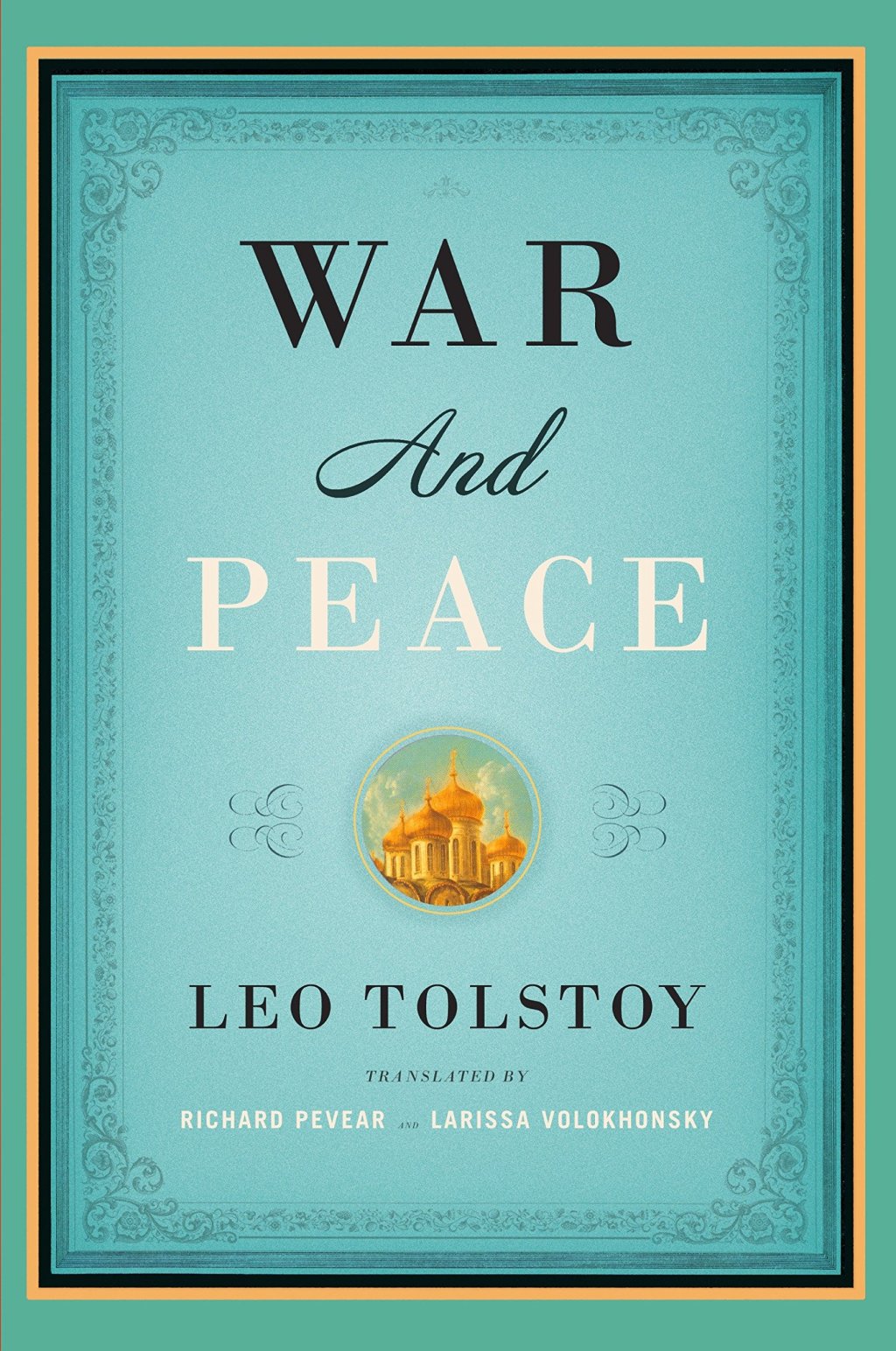
    War and Peace, the masterpiece published in 1869, depicts Russia when it was invaded by Napoleon. In addition to the main protagonists, Natasha, Pierre and Prince Andrew, Tolstoy presents a variety of supporting characters, each of whom is layered and fascinating.  The reader learns about Russian society, which is described in a very realistic manner. 

    It is evident that the novel is an outstanding literary pinnacle – as well as the first modern literary work to realistically depict giving birth. Various works of art portray children’s arrival into the world, but not many of them give insights into the process of giving birth itself. From antiquity to the modern age, artists have chosen not to elucidate the baby’s arrival into the world. Literary fiction portrays various ruthless painful events, which are not very appealing (wounds and illnesses, beheading and other forms of death), but the feminine experience of extracting one body from another tends to get undermined.

    Tolstoy, an author fully attentive to the experience of the individual, depicts the first birth in War and Peace. Although the narrator is not present in the delivery room, he maintains the focus on giving birth. Lisa, also referred to as “the little princess”, is Prince Andrew’s wife. She is portrayed as a young and naïve woman with a juvenile beauty. She wishes no harm, but her frivolous nature stands in contrast to that of Andrew. He leaves his pregnant wife to join the battle against Napoleon. Everyone believes Andrew has died in the battle of Austerlitz. His father and sister decide to conceal his death from his wife who is nine months pregnant – but he returns home unexpectedly right before the delivery.

    Even before Lisa’s husband appears, the princess is portrayed as follows: “And besides the pallor and the physical suffering on the little princess’ face, an expression of childish fear of the inevitable pain showed itself.” And then “the little princess began to cry capriciously like a suffering child and to wring her little hands with some affection.”

    This description palpably evokes mixed feelings. On the one hand, Tolstoy has unequivocally affirmed that Lisa isn’t crying because of an immediate pain but because she presciently knows that she is about to experience profound suffering. The fear of giving birth is therefore acknowledged as a common feminine phenomenon, which is self-evident in my opinion. On the other hand, fear is still portrayed as capricious and childish.

    As the midwife arrives Andrew’s sister tells her, “with eyes wide-open with alarm,” that the birth had begun, to which the midwife replies “You young ladies should not know anything about it.” Here again, Tolstoy acknowledges young women’s fear of giving birth, which is not typical of a single character. Furthermore, the author suggests there is a systematic attempt to conceal the pain and anguish associated with the process of giving birth from young women, perhaps because they might avoid it altogether. In 1959, Simone de Beauvoir argued in her book The Second Sex that women are subjected to myriad psychological manipulations to have children, in order to serve the larger purpose of maintaining masculine superiority. Eighty years earlier, Tolstoy portrays how young women, who had never had children, are intentionally kept away from a woman giving birth.

    Andrew returns home unexpectedly and rushes to his wife’s room. The excruciating pain and excitement make her oblivious to his sudden appearance. From this point onward, she is portrayed in a rather extraordinary manner. “’I love you and had done no harm to anyone; why must I suffer so? Help me!’ her look seemed to say.” Her husband tries to assuage her but then again, her expression conveys it all: “I expected help from you and I get none, none from you either! Said her eyes.” In my view, there is nothing more authentic than a sense of helplessness being confronted with severe pain. Pangs can turn an adult to a child begging for help. The woman who is in the process of giving birth becomes a sort of baby crying and imploring for help, even from those she knows cannot assist her.

    As was customary at the time, everyone leaves the room with the exception of the doctor and the midwife. Andrew covers his face with his hands and hears “piteous, helpless, animal moans” coming through the door. He paces in the room, tries to open the door to the delivery room, but then silence falls. “The screaming ceased, and a few more seconds went by. Then suddenly a terrible shriek – it could not be hers; she could not scream like that – came from the bedroom. Prince Andrew ran to the door; the scream ceased and he heard a wail of an infant.” The pain of giving birth makes his cute wife yell in a way he never thought would be possible.

    This first literary birth ends tragically. Andrew enters the room, “He went into his wife’s room. She was lying dead, in the same position he had seen her in five minutes before and, despite the fixed eyes and the pallor of the cheeks, the same expression was on her charming childlike face with its upper lip covered with tiny black hair. ‘I love you all, and have done no harm to anyone; and what have you done to me?’—said her charming, pathetic, dead face. In a corner of the room something red and tiny gave a grunt and squealed in Mary Bogdánovna’s trembling white hands.”

    Lisa’s tragic demise while giving birth supports her psychological stand and her justifiable fear of the delivery. It is impossible to argue she is spoiled and childish; after all, the birth had cost Lisa her life. In order to emphasize her pleas for help and amelioration of pain, her eyes reveal that she continues to implore even when she is dead.

    Indeed, Tolstoy remained true to his promise, to tell nothing but the uncompromising truth. Portraying young women anxious due to the painful process of giving birth is both genuine and accurate, and this fear shapes them already at a young age. Facing the pangs of giving birth is a substantial experience, and at times very onerous indeed. However, the crucial point is that giving birth is a fundamental human experience that should have its proper place in fiction in particular and art in general.


  • The Other You – Lisa and Lottie

    The Other You – Lisa and Lottie

    Some children’s books are unforgettable. Perhaps it has to do with them articulating life’s most fundamental questions in a clear and vivid way. The best ones implant an idea in the child’s mind, which then evolves and deepens over the years, long after the book was read. For me, Erich Kästners’ Lisa and Lottie is such a book. I feel that the way it deals with the various aspects of identity sparked my own interest in the ‘self’.

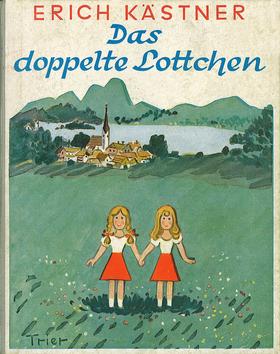
    The German writer Erich Kästner (1899-1974) was a pacifist and an anti-Nazi. He began writing Lottie and Lisa (Das doppelte Lottchen (“The double Lottie”), the film  The Parent Trap was an adaptation of the book), in 1942, concluding it in 1949. He remained in Germany during the war, writing apolitical books under a pseudonym. Das doppelte Lottchen was published in 1949, immediately becoming a best seller.

    The plot is captivating and highly original: two nine-year-old identical twin girls, Lottie and Lisa, were separated at infancy. When the parents divorced, each kept one of the girls. Lisa grows up with the father. She is spoiled, naughty, daring and aggressive. Lottie is brought up by her hard-working mother. She is shy, tidy and responsible, an excellent student, and she practically manages the household. They are both unaware that they have a twin sister, or of what exactly happened to the parent who isn’t raising them.

    By chance they are sent to the same summer camp. Of course each one is shocked to see another girl looking exactly like her. At first they dislike each other but soon an intimacy is created, and they find they are indeed twin sisters. Together they plot to trade places after the summer, so Lottie will get to know her father and Lisa her mother: “they will exchange clothes, hairstyles, trunks, toys, characters, and private lives!”

    When the camp is over Lisa travels to Munich, pretending to be Lottie and Lottie travels to Vienna, pretending she is Lisa. The reader follows them curiously, wondering if they will be able to live each other’s lives. Will the wild Lisa be able to be moderate and responsible, cook and be a model student – and will her shy, inhibited sister be able to be mischievous, bold and assertive? And will the parents notice any change in their characters?

    Well, the girls fail to adopt each other’s natures. Both parents observe the change, but don’t suspect anything. And so do their teachers: “Weeks had gone by since the twins changed places … Lisa had “again” become an expert cook. The teachers in Munich got more or less used to the fact that the little Horn girl had come back from her vacation less industrious, less tidy and attentive but, on the other hand, more lively and quick on the uptake. And the teachers in Vienna were quite pleased to find that Conductor Falfy’s daughter worked harder in class and was much better in arithmetic.”

    Naturally the book has a happy ending: the parents find out that the girls changed places, and this eventually leads to their reuniting and remarriage. But the heart of the book is the implicit discussion about selfhood: is it possible to take the place of another person without anyone knowing it; what people expect of a person vs that person’s character; and the validity of stereotypes. It could even be argued that the book implicitly deals with the question of genes versus environemnt. It is implied that since the girls are identitcal twins, their different character is a result of their upbringing. The girl who grew up with a male parent in an affluent environment develops is a completely different way than  the one growing up with a female parent, in a home with economic hardship.

    As a child, I used to wonder what would happen if I were to be placed in new, unfamiliar circumstances – would it be a fresh new start: would I be an entirely different person, the one I wanted so badly to be, or would the same ‘me’ pop up? We expect children’s books to stimulate a change, to make the young readers believe it is possible. Surprisingly, unlike most children’s writers, here Kästner lacks a pedagogic message: already at the age of nine a person’s character is well-defined and she is unable to change. Though each girl tries to adopt the character of her sister, they both fail.

     The readers are driven to contemplate his or her own situation. If they suddenly behaved differently, how would their family, friends, and teachers react? Would they see it as a positive on negative change? As one would expect, ‘Lisa’’s friends and teachers are happy with her changing into a more serious and attentive girl. We all know society encourages children to excel in school and be well-mannered, even at the cost of their freedom of spirit. But what happens when a well-behaved girl turns undisciplined and wild? This is far more interesting!

    ‘Lottie’’s teachers complain, her friends like her vividness but resent her aggressiveness, yet her mother has interesting insights. First, she blames herself. Later, talking to the teacher, she argues: “I want Lottie to be a child and not a stunted little grownup! I would rather have her a happy, genuine little girl than forced at all costs to be your best student.” Thus, she explicitly juxtaposes excelling in school and happiness.

    I love Lottie and Lisa because it both portrays the harsh realities of life and criticizes them. Society pushes us to act in a certain way; yet in doing so, we abandon some of our inner freedom. Conformism is very useful, but it has an element of self-destruction.

    I would like my children to be equipped with this understanding.

  • Stalin and the Devil – The Master and Margarita

    Stalin and the Devil – The Master and Margarita

    Much has been written about Joseph Stalin – his ruthlessness, his inability to trust anyone, his brutality, and, of course, the millions of people he imprisoned, exiled and executed. A huge body of research is devoted to his personality and his implementation of socialist ideas. Yet one particular literary work, insightful and original, provides a unique historical observation of his regime, one that is lacking in most history books.

    Michail Bulgakov wrote The Master and Margarita between 1928 and 1940. These were hard years. Stalin’s regime became more oppressive, citizens of the Soviet Union were gradually being deprived of their personal rights; any expression of criticism implied immediate exile, if not a death sentence.

    Bulgakov, born in 1891 in Kiev, was a medical doctor and a surgeon who later became a writer. Having grown up in a family that encouraged humanistic education, he had always been fascinated by literature, music, the theater. While serving as a doctor in the Ukraine People’s Army he was infected by typhus. Following this experience he abandoned the medical profession and decided to devote all his time to writing. His best-known work is the imaginative and fantastic novel The Master and Margarita.

    This masterpiece depicts a most unusual event: during Stalin’s regime, the devil comes to visit Moscow. He is called ‘Professor Woland’; he is a polyglot and a translator, a mysterious character who insists that God exists and that the crucifixion of Christ did take place. Yet even regardless of his theological arguments he is a fascinating character: colorful, charming, enigmatic. This does not mean he isn’t the embodiment of ultimate evil – he can be as cruel and brutal as one could imagine. But he is certainly never dull or boring.

    He is accompanied by three male assistants and a female one. There is the ridiculous-looking Koroviev, who can see through a man’s mind. Never violent, he sticks a needle into a man’s heart, a figurative image of his unique ability to observe hidden feelings and thoughts. Behemoth, a huge black cat walking on two legs, can charm anyone to death. Azazelo, the crudest of the three, a monster-like creature with a fang jutting out of his mouth, can perform any task impartially. The fourth member of this group is Hella, a witch-like woman, who is the devil’s junior assistant.

    This diabolical bunch travels around Moscow, ridiculing various aspects of the communist regime: the literary club (what would have happened had Dostoevsky tried to enter the club? He would have been kicked out, since he didn’t have a party membership card); the common values communism is attempting to instill (in a magic show the crowd leaps to grab dollar bills falling from the ceiling); the teaching of atheism, and above all, the lack of personal freedom. The artist, Margarita’s love, is committed to a psychiatric clinic and is prevented from publishing his literary work. Margarita, a character inspired by Bulgakov’s third wife and his true love, accepts the devil’s offer to be the hostess at the ball of the dead, in return for which she asks for the release of her beloved artist.

    The heart of Bulgakov’s criticism of the communist regime is not the specific arguments he makes. It is his juxtaposing of Stalin with the devil, the symbol of ultimate evil, as it evolved throughout the generations. Assuming that evil will always be part of human existence, the question of which is worse – Stalin or the devil – comes up naturally, almost unwittingly. Would we prefer the devil’s doings – arbitrary and painful, but intriguing and diversified, or Stalin’s ambition – a unified, standardized system, aimed at blurring the differences between men, creating a dull and lifeless society? By the end of the novel, the answer is self-evident.

    The Soviet regime prevented the publication of the book. Its criticism of the implementation of communist ideas was clear, though party officials may not have grasped just how profound it was. Yet Stalin himself thought very highly of Bulgakov. He cherished his artistic work and saw to it that he would not suffer physically harm.

    Bulgakov was not permitted to publish the novel, and his constant requests to be allowed to leave the Soviet Union were refused. In his desperation he wrote two personal letters to Stalin. His wife was horrified, saying this was tantamount to attempting suicide; people were sentenced to death for much lesser things. However, he wasn’t harmed in any way as a result of these letters.

    Bulgakov worked almost until his death, dictating the last sentences of the novel to his wife. A couple of hours after his death the telephone rang in his apartment – someone from Stalin’s office wants to know if the great artist Mikhail Bulgakov had passed away. When she said ‘yes’ the line went dead.