Tag: christianity

  • Giving Birth to Jesus

    Giving Birth to Jesus

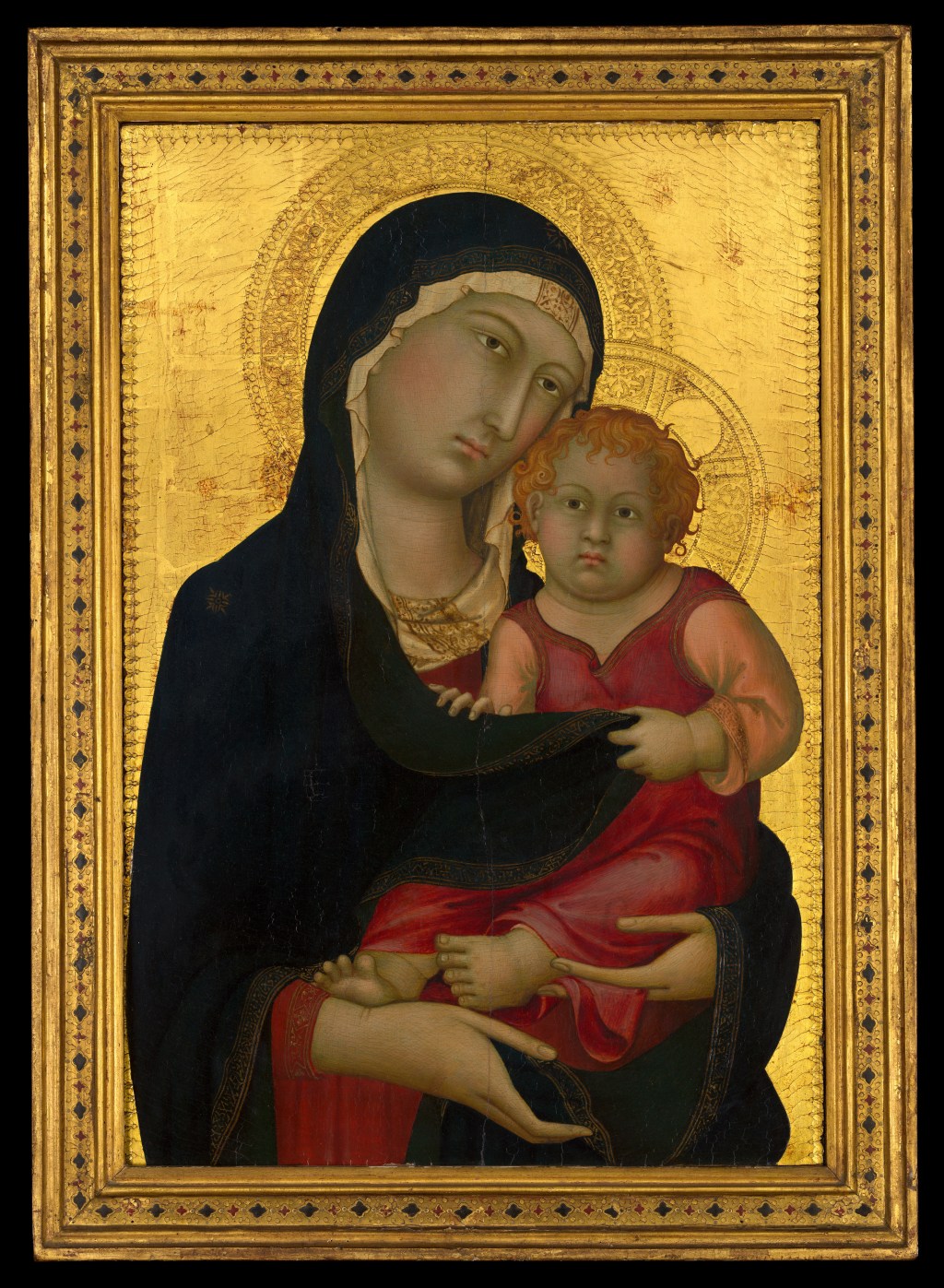
    One cannot overstate the importance of the birth of Christ – the Western world was profoundly affected by Christianity, which ascribes the utmost religious importance to the birth of God’s son. Mary, as we all know, conceived though the power of the Holy Spirit and gave birth to Christ in spite of being a virgin. We could almost mistakenly say that this divine birth appears in various works of the art, but the truth is that the birth itself is never portrayed. We only ever see Mary holding the newborn baby in her lap. I’m wondering, was the birth painful? Long? How did Mary cope with the contractions? In spite of extensive discussions on this divine birth – its religious, philosophical and artistic meaning – we know almost nothing about how Mary herself experienced it. Western culture got used to deliberating on the birth of Christ without paying any attention to the actual birth, to the point that it seems natural to discuss the birth of who many believe is God without asking how his mother felt.

    The experience of giving birth wasn’t always denied. In fact, at the heart of the Judea-Christian tradition lies a description of giving birth, in the story of Adam and Eve. After Eve made Adam eat the fruit of the Tree of Knowledge, God punished them and all humanity: “to the woman he said I will make you pain in childbearing very severe; with painful labor you will give birth to children … to Adam he said … by the sweat of your brown you will eat food until you return to the ground” (Genesis 3:16-19). And so, two related facts were implanted in western consciousness: the suffering of women at childbirth and the need to work to make a living. Some traditions that are the source for the Book of Genesis already existed in the tenth century B.C., and others came later – so for thousands of years, the western world internalized the pain of giving birth and accepted it as a fact to life, just like the need to work. To give birth is to experience a substantial torment; that’s the way of the world.

    So why is there no depiction of Mary’s pains while delivering Christ? By the time Christianity was born, the pains of giving birth were self-evident. The image of the Madonna had dramatically changed the attitude towards the birth. Since she had given life to the Son of God, she herself had a unique nature, essentially different from any other woman. As she was impregnated by God and not by man, Mary was holy, a woman who—unlike any other human being—does not carry the burden of the Original Sin. And thus a belief had been created that her giving birth to Jesus was painless.

    The New Testament provides two version of the holy birth. In Luke, it says “she gave birth to her firstborn, a son. She wrapped him in cloths and placed him in a manger, because there was no guest room available for them” (Luke 2:7). There are no anxieties, no contractions, no changing body – only giving birth, wrapping the baby, and putting him to sleep. Matthew’s version is different. “This is how the birth of Jesus the Messiah came about: His mother Mary was pledged to be married to Joseph, but before they came together, she was found to be pregnant through the Holy Spirit. Because Joseph her husband was faithful to the law, and yet did not want to expose her to public disgrace, he had in mind to divorce her quietly. But after he had considered this, an angel of the Lord appeared to him in a dream and said, “Joseph son of David, do not be afraid to take Mary home as your wife, because what is conceived in her is from the Holy Spirit. She will give birth to a son, and you are to give him the name Jesus, because he will save his people from their sins” (Matthew 1:18-21). Also here, there are no details of the physical process of giving birth.

    But generations of Christian theologians developed the notion that since Christ’s birth was divine, it was painless. Christian thinkers dealt with almost any aspect of the Madonna (Mariology is the theological study of Mary) – but since the Gospels don’t provide any details of the birth, gradually a doctrine of the painless birth came into being. Eventually, the very lack of suffering became the proof of Mary being impregnated through the Holy Spirit.

    There are various examples for this view. One well-known example is the protocols of the Roman Catholic Council of Trent, which took place in the sixteenth century. In this ecumenical council, the Roman Catholic Church rephrased its dogmas in the face of the growing Protestant movement. It promulgated a catechism which states “just as the rays of the sun penetrate without breaking or injuring in the least the solid substance of glass, so after a like but more exalted manner did Jesus Christ come forth from His mother’s womb without injury to her maternal virginity.” The Roman Catholic Church and the Orthodox Church held this view of the sacred birth. Protestants didn’t ascribe such theological important to Mary but have adopted her image as a virgin and a righteous person.

    Thus, two ‘types’ of birth were implanted in the common consciousness: a divine one, which isn’t a result of a sin and isn’t a punishment, and is a painless birth; and a human negative birth, which is both a result of a sin and involves much suffering. There is a sublime birth, adorned, a ‘role birth’ in contemporary terminology, and a birth that is better forgotten because it is an agonizing divine torture.

    Eventually, the Christian world completely repressed the simple feminine experience of giving birth – one that is painful but not because of a sin, it involves profound physical and emotional changes, and usually ends with profound joy. The mixture of accepting the pain of giving birth as a fact of life and ascribing such negative value to this suffering ended in an almost complete neglect of the normal feminine experience.

    Examining modern literature reveals that the number of birth descriptions is almost negligible compared to any other meaningful human experience. If we look at how many books have been written on love, sex, divorce, sickness, or death, we would have to reach the conclusion that birth has been almost fully repressed. But since we are so used to not reading about giving birth, we casually accept this as normal without questioning. How is it possible that such a deep and meaningful experience is missing from all forms of art?

    We might try to do some justice to Mary and imagine her giving birth in more human terms:

    The air in the barn was thick, full of the smell of animals. She needed plenty of blankets, it is cold in Bethlehem at the end of December. The midwife was completely unaware of the special nature of this delivery, she boiled water at the far end of the barn to clean Mary during and after the birth. Like most first births, it was very long. Mary sank into despair and cried bitterly, begging for help. Hours of pain blurred the hopeful expectation; at certain moments she didn’t know what she was doing there. As Jesus’s head finally appeared, she knew the suffering was close to being over. Jesus was pulled out of her body and made a cry that resembled a bleat. The midwife placed him on her naked body, covered with fluids and still attached to the umbilical cord. Mary hugged him, thrilled as she saw his eyes open for a split second and then close again. As the midwife took him away, Mary leaned back, heaving a quiet sigh. Through a hole at the top of the barn, she could see stars in the sky, gleaming in an unusual light.
  • The Pope and the Nazis

    The Pope and the Nazis

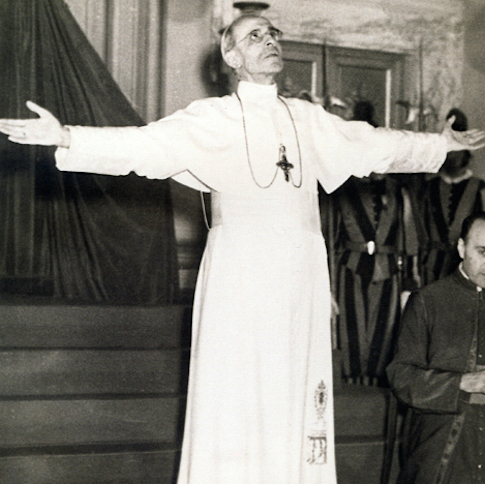
    Pope Francis’s attempts to direct the Catholic Church into a more progressive path brings his influence into question. As a spiritual leader of millions, to what extent can he change both the church and the world? His believers live in different places around the globe, speak many languages, belong to various cultures, yet they all look up to him as the ultimate moral authority. Can a leader without an army, so to speak, be as influential as political leaders? And what happens if national sentiments stand in contrast with religious faith?

    Early in 1963 The Deputy, a play written by the German playwright Rolf Hochhuth, was staged in Berlin. It was the first time concentration camps were presented onstage, which at the time provoked fierce protests. But this wasn’t the only objection to the play; its theme could not be tolerated by many: it blamed Pius XII, the Pope during World War Two, for not taking public action against the unfolding of the Holocaust. According to Catholic dogma, the Pope is the deputy of Christ on earth, and his lack of action is interpreted in this work in religious terms.

    The play is most unusual. It combines two genres we see as conflicting: a historical play and a religious work of art. Hochhuth presents concrete historical arguments within a religious framework. Doctor Mengele is a modern manifestation of the devil, and Auschwitz is his way of provoking God. As Satan tries to annihilate life, the divine creation, the author articulates his historical insights—and his reservations about Pius XII.

    The Nazis intentionally avoided an open rift with the Roman Catholic Church, argues Hochhuth in the historical notes added to the play. In spite of their obvious ideological objection to Judeo-Christian tradition, some Nazi leaders had ambivalent feelings towards Catholicism. Hitler’s mother, we are reminded, was a devout Catholic and attended church regularly with her children. Also, many German soldiers were Catholic. A public attack on the Pope and the Church might generate a sense of alienation, perhaps whilst in battle—a most undesirable result that may weaken Germany. Thus, the Nazi leadership wished to blur its alienation from the Church, at least until the end of the war.

    This made the Pope extremely influential, argues Hochhuth. Had he voiced a clear and unequivocal condemnation of ‘the final solution,’ the Nazis may have reconsidered the plan to exterminate European Jewry. But Pius XII refrained from condemnation. In the play, his reasons are both practical and theoretical. From a practical perspective, the Nazi regime is the only impediment to the spread of the anti-religious ideology: communism. Also, the Church must keep its neutrality since its believers are on both sides. And possibly more Jews could be saved if an open conflict with Nazi leadership is averted.

    The play also ascribes to Pope Pius XII profound theoretical arguments: protecting the Roman Catholic Church is his ultimate mission, worthy of any sacrifice. And there is a theological discussion on predestination and free will. “Was not ever Cain, who killed his brother, the instrument of God?” argues Pius XII. Hitler may be part of an obscure divine plan beyond our understanding.

    But what about the Jews? Hochhuth claims that this was the response of the historical Pius XII: “As the flowers in the countryside wait beneath the winter’s mantle of snow for the warm breeze of spring, so the Jews must wait, praying and trusting that the hour of heavenly salvation will come.”

    Many Catholics were deeply offended by the play. When staged in Europe and the United States, both Jewish and Christian protestors interrupted the show. Yet The Deputy is not at all anti-Christian. There are two saint-like characters that sacrifice their lives in the struggle with Nazism: a Catholic priest and a Protestant officer in the German army. The Catholic saint cannot endure the Pope’s moral stand. He thus shares the destiny of the Jewish victims and joins them in Auschwitz. To break his spirit Mengele makes him remove bodies from the crematorium. This drives him to desert his way of passive resistance to Nazism and try to murder Mengele, who then kills him. The Protestant saint is a man of action. He impedes Nazi plans to speed up the extermination of the Jews. He is a Christian, he says, because he is “a spy of God”—a man engaged in action aimed at saving lives, changing the route of history.

    At this specific point in history, the Pope could have transcended his role as the head of the Catholic world and spoken against universal crimes, but Pius XII chose to defend Catholicism rather than fulfill the moral obligation of being a deputy to God. Unlike some junior priests who saved Jewish lives, he kept quiet, doing nothing to stop the Holocaust.

    Many questioned his motivations.

  • Who Is an Idiot?

    Who Is an Idiot?

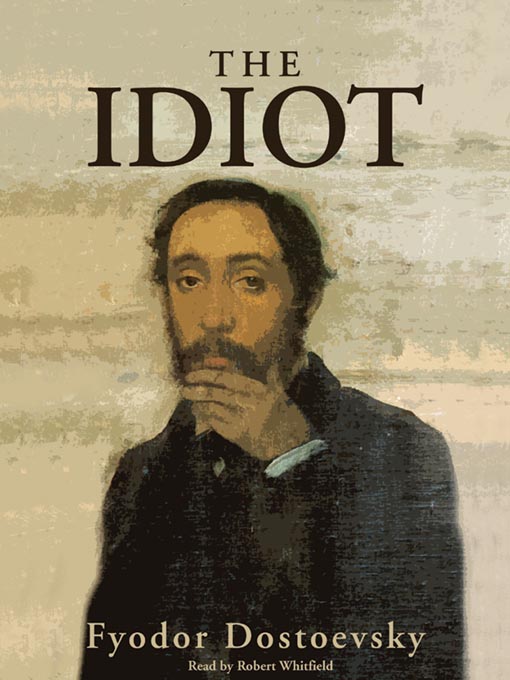
    Most of Dostoevsky’s novels are in fact experiments. He sends his protagonists into the world to test a certain hypothesis on the nature of man or society. As we follow a murderer, a gambler, a monk, a prostitute—or simply ordinary people—we are driven to pose the questions Dostoevsky wants us to ask. And though the novels are extremely exhaustive and complex, they can be reduced to rather simple intelligible questions.

    In 1868 Dostoevsky began publishing his novel The Idiot in a journal titled “The Russian Messenger”. It is a story of a truly good person: innocent, kind-hearted, selfless, forgiving, a man without moral faults. Prince Myshkin—this is his name—is “a positively good and beautiful man”, as the author describes him. The experiment in this novel was a rather odd one: what would happen if ordinary men and women were to encounter a man who is utterly good? The intuitive answer, I think, is that it would somehow ameliorate their lives. But the great author demonstrates his belief that the result would be altogether different.

    The novel begins as Prince Myshkin arrives in St. Petersburg after spending years in Switzerland for treatment of epilepsy. He comes to meet a distant relative of his and encounters the various characters. Rogozhin, a passionate and violent man, is infatuated by a societal beauty; he inherits a fortune and wants to marry her. She, Nastasya Philippovna, was made a concubine at the age of sixteen by her legal guardian, appointed after the death of her parents. She threatens to expose him; he promises her 75,000 rubles if she marries his assistant, Ganya, an ambitious young man. Myshkin himself falls in love with the beautiful Aglaya, the daughter of his family relative; she is infatuated with him, almost against her will, though ridiculing his good nature and naiveté.

    Myshkin, as has been pointed out, is an extremely good person. He sees the positive side of everyone, always offering help, calming any dispute—and taking the blame for the sins of others. This makes the various characters think he is, well, an idiot… They see self-sufficiency, egotism and selfishness as evidence of intelligence; their absence implies stupidity. Yet this protagonist, clearly somewhat of a Christ-like figure, ignores common beliefs and adheres to his strictly good ways.

    The plot takes several dramatic turns. Rogozhin confesses that his deep desire for Nastasya Philippovna is so overpowering that it makes him think of cutting her throat. She is so traumatized by her sexual exploitation at a young age that she is overtaken by self-destruction. Ganya wants to marry her to upscale his social status. And poor Myshkin, shaken up by her sufferings, offers to marry her to prevent a catastrophe, and thus disappoints the lovely Aglaya. At the end, after many vicissitudes, Nastasya Philippovna runs off with Roghozin, who then murders her. Aglaya, broken-hearted, marries a ‘wealthy exiled Polish count’ who is revealed to be neither wealthy nor a count, and turns her against her family. Myshkin finds Rogozhin with the body of Nastasya Philippovna, and they both lament her. Rogozhin is sentenced to fifteen years of hard labor in Siberia. Myshkin goes mad and returns to the sanatorium in Switzerland.

    Clearly Dostoevsky is portraying tragic consequences of the encounter with this perfectly good man. Yet the roots of these misfortunes are not unequivocal. Myshkin is something of a Christ figure. Is it possible that the encounter with Christ leads to nothing but misery? Though profoundly religious, Dostoevsky often points out the paradoxical nature of religious belief; it is the most profound yearning for something beyond our reach.

    Possibly Myshkin’s habit of taking the blame for others is the cause of all this misery, as some scholars have pointed out, since it seems to drive his sinful friends to more desperate misdeeds. It is a fundamental criticism of Catholicism and the Eastern Orthodox Church: forgiving the sinners only drives them to commit worse crimes.

    But Dostoevsky’s work cannot be reduced to a religious statement. This novel seems to convey a very strong message: taking the blame for others is harmful, aspiring for eternal good is destructive, and forgiving anything is detrimental. Oddly, in spite of his being a profoundly religious man, this comes rather close to contemporary secular values: personal responsibility for one’s achievements and failures; the aspiration to relative advantages rather than absolute ones; the treatment of mental defects by science, not devotion. George Panichas, a noted scholar of Dostoevsky, said that “Through Myshkin, Dostoevsky gives his prophetic vision of a modern world in which a life ordered by Revelation and the ability to experience the world in a religious way are lost.”

    So is Myshkin an idiot? Not in a simple way, of course. His choice of self-sacrifice is conscious and not the result of stupidity. But in a more profound way, Dostoevsky is suggesting that perhaps he is.

  • Is Religion Reversible?

    Is Religion Reversible?

    Mircea Eliade (1907-1986) is the most prominent twentieth-century scholar of comparative religion. Human existence, he argues, has two separate realms: the sacred and the profane. Each has its unique nature and characteristics, and also a different understanding of time. Profane time is a chronological development from past to present, and then to the future. Religious time is something else: when taking part in a religious ceremony, it is possible to experience divinity with the same emotional intensity as when that religion was created. Thus, the boundaries of ordinary time are exceeded, and men connect with God as they did in Illud tempus, ‘times of origins’, when religions were created. For example, a Christian participating in the mass may feel the presence of Christ just as his followers in the first century did. He may believe his miracles can be extended to him personally. If he is sick, Christ can heal him. Thus, within the religious experience, it is possible, even if only to some extent, to go back in time.

    In spite of Eliade’s unique contribution to religious studies, he was not the first to contemplate on this aspect of religion. Fyodor Dostoevsky published his masterpiece The Brothers Karamazov in 1880. One chapter, The Grand Inquisitor, can be read separately from the novel. It is a short tale – some call it a parable – describing a most unusual event: Christ comes back to earth for a short visit, at the time of the Spanish Inquisition. Appearing in Seville, he performs several miracles – healing the sick, reviving a dead young girl. People immediately recognize him; they are completely taken by his goodness. But as they follow and adore him, in comes the much-feared Grand Inquisitor, after executing some heretics. He arrests Jesus and sentences him to be burnt the next day. His fault, says the Inquisitor, is that his short visit to earth only interferes with the Church’s mission; he is no longer needed here.

    This brilliant and complex short story can be interpreted is many ways; one reading focuses on the question of religion and time. If the events that formed the birth of Christianity were repeated centuries later, would they carry the same religious significance? Or, to put it more generally, are monotheistic religions a changing spiritual phenomenon, created and then gradually transformed over time, or do they maintain a fundamental unchanged belief? Dostoevsky, as always, provides a complex and intriguing answer.

    When it comes to a personal encounter with the divine, this short masterpiece suggests that people today would be drawn to believe in Christ and follow him exactly as they did in the first century: “”He comes silently and unannounced; yet all—how strange—yea, all recognize Him, at once! The population rushes towards Him as if propelled by some irresistible force; it surrounds, throngs, and presses around, it follows Him…. He extends His hands over their heads, blesses them, and from mere contact with Him, aye, even with His garments, a healing power goes forth.” Christ would probably evoke the same spiritual enthusiasm as he did two thousand years ago.

    However monotheistic religions are also institutions; congregations, leaders who often have extensive political power, common practices, taxes and wealth, and perhaps more than anything, the transformation of primal religious events into a comprehensive way of life. Here, argues the Inquisitor, time cannot be turned back. Religion as a way of life evolved over time, creating different set of customs and rules, sometimes utterly remote from those prevailing in the ‘times of origin’.

    In fact, the Inquisitor’s argument is even more radical: Jesus liberated man by inspiring the hope of happiness generated by free will, of preferring good to evil. Yet true human happiness is the very opposite, a result of lack of choice: “We will prove to them their own weakness and make them humble again, whilst with Thee they have learnt but pride, for Thou hast made more of them than they ever were worth. We will give them that quiet, humble happiness which alone benefits such weak, foolish creatures as they are, and having once had proved to them their weakness, they will become timid and obedient, and gather around us as chickens around their hen.” Clearly, with this skeptical view, the Inquisitor sees Christ as an intruder; he set in motion a historical process that the Church attempts to correct. He created expectations that could never be met, leading to nothing but disappointment.

    So how does the story end? Is Christ executed again? Of course not, that would be a revival of ‘time of origin’; the Inquisitor wouldn’t want that. Christ remains silent all through the story. “The old man longs to hear His voice, to hear Him reply; better words of bitterness and scorn than His silence. Suddenly He rises; slowly and silently approaching the Inquisitor, He bends towards him and softly kisses the bloodless, four-score and-ten-year-old lips. That is all the answer. The Grand Inquisitor shudders. There is a convulsive twitch at the corner of his mouth. He goes to the door, opens it, and addressing Him, ‘Go,’ he says, ‘go, and return no more… do not come again… never, never!’ and—lets Him out into the dark night. The prisoner vanishes.”

    ‘And the old man?’

    ‘The kiss burns his heart, but the old man remains firm in his own ideas and unbelief.’”

  • A feminine Christ – A.B. Yehoshua

    A feminine Christ – A.B. Yehoshua

    In the decades since the formation of the State of Israel, a slow and gradual change has been taking place in the attitude of Israelis towards Christianity. When the country was founded, the memory of being a persecuted minority in a Christian world was vivid in the minds of many; large numbers of new immigrants bore the trauma of the Holocaust. Thus, Christianity was seen mainly as an anti-Semitic phenomenon, and teaching it never became part of high school curriculum. Today the Christian world evokes some antagonism perhaps – but mainly increased curiosity.

    A.B. Yehoshua (1936-2022 ), a well-known Israeli author, exemplifies this change. Born in Jerusalem to a Sephardic Jewish family that has lived in the city for five generations, he served as a paratrooper in the IDF, studied philosophy at the Hebrew University, and later became a literature professor at Haifa University.

    In 2004 he published a novel titled A Woman in Jerusalem. During the second Intifada a terrorist explodes himself in the central Jerusalem food market. An anonymous woman is brought unconscious to the hospital on Mt. Scopus and dies after a couple of days. Her body lies nameless in the hospital morgue. Strangely the body is intact, except for wounds in her palms and feet and a scratch on her forehead. A local reporter learns that she used to work at a big bakery in Jerusalem. The owner, publicly criticized for not taking care of a wounded employee, is unable to find any record of her employment. He orders the human resources manager to find out who she was, and when the bakery had employed her.

    The reader becomes part of the human resources manager’s efforts to reveal her life circumstances. Yulia Ragayev, a woman about forty years old, came from the Former Soviet Union to live in Jerusalem. Her partner and a son left Israel as the threat of terror grew, yet she was determined to stay.

    Yulia was an illuminated person, charismatic in an introverted manner. Not exactly beautiful, not very sociable, yet there was something about her that made everyone love her. The night-shift manager at the bakery was touched by this foreign worker; thinking that a delicate woman like her shouldn’t be working at cleaning, he sent her off to find another job, without letting anyone know. She lived in a shack in an ultra-religious part of Jerusalem, and was loved by the people there “even though she wasn’t Jewish”. The doctors at the hospital were attached to her, in spite of her being unconscious. And the human resources manager became captivated by her image after her death, feeling she might emerge any minute now, alive and well. Her unique nature is emphasized by the fact that she is the only character who has a name.

    The owner of the bakery, feeling guilty for not visiting her at the hospital, decides to have her buried at home, in her village in Eastern Europe. So begins a long, hard journey. The human resources manager, the reporter, her son, her ex-partner, and other people, all join in accompanying Yulia on her way to her burial.

    After overcoming endless obstacles, they finally reach the remote village in the high mountains. Her mother returns from a short stay at a convent, wearing a nun’s robe. Learning that her daughter was brought to be buried there, “the old woman reacted like a wounded animal […] she threw herself at the human resource manager’s feet, pleading that her daughter be returned to the city that had taken her life. That way, she, too, the victim’s mother, would have a right to it”. The human resources manager, now fully absorbed by the character of Yulia, accepts the mother’s wish to take the body back to Jerusalem.

    A.B. Yehoshua’s way of familiarizing the reader with the Gospels is by dismantling the passion of Christ, and then embedding various elements in present-day Israel. The illuminated character, here a woman rather than a man; the wounds, which resemble those of the crucifixion; the days the body lies not in a cave but in the morgue; the journey of the disciples; a via dolorosa; Yulia’s preferring her religious belief over being with her family; the route to Jerusalem; the sensitivity to society’s weaker members  – all reflect Jesus’s life and death, yet A. B. Yehoshua has planted them in a new, modern story. In doing so, by no means is he voiding them of their spiritual meaning; on the contrary, they become more tangible, easily appreciated by the Israeli reader. The story of Yulia Ragayev’s life and death is about piety, grace, and generosity; it has nothing which provokes antagonism.

    And there is Jerusalem. In the midst of the bloody Arab-Israeli conflict and the struggle between Jews and Muslims over the city, A. B. Yehoshua reminds us that millions of Christians see it as their own – not in a political sense, but in a fundamental spiritual way. Whoever rules the city, should always keep this in mind.

  • Jesus in Israeli Society

    Jesus in Israeli Society

    Teaching Israeli students about Jesus Christ is a fascinating experience. I am not talking about Christian theology, but about his depiction in the Gospels, as a literary character.

    Generations of Jews saw Christ as an adversary and a foe, the cause of their endless sufferings. Most didn’t even pronounce his name, referring to him as ‘that man’. In the modern age, Zionism has focused completely on the future of the Jewish people. The Christian world, a variety of perspectives and worldviews, was perceived only through Zionist spectacles: as a realm exterior to Jewish life, distorting it by its ruthlessness. Eventually, this shaped the Israeli education system. Even today, most high schools do not teach the foundations of Christianity, which are, of course, imperative for understanding Western civilization.

    But art, as is often the case, heralded a change. From the early twentieth century, several Israeli writers attempted to examine Jesus from a fresh perspective – not as victims of Christianity, but as independent thinkers who are influenced by it. Since the foundation of the State of Israel, the common sentiment of a persecuted minority has been transformed into a notion of potency and stamina; this, in turn, created a new, open-minded attitude to the image of Christ.

    Pinhas Sadeh (1929-1994), an Israeli novelist and poet, was one of the forbearers of this change. Born in Poland, he immigrated to Israel with his family at a young age. A colorful character, some would say even controversial, a poetic soul surrounded by young admirers. At the age of 27 he published Life as a Parable. The book is a collection of personal experiences, each one illustrating a certain theme. Several years after its publication, it became a cult book among young people.

    Though all the events depicted in the book unfold in Israel, it is hardly apparent. They could have taken place anywhere. Sadeh neither accepts Zionism nor rejects it. He exists in a universal human sphere; an artist unchained by any ideology.

    Life as a Parable is profoundly influenced by the image of Jesus and the New Testament: an acknowledgement of human suffering, forgiveness, spiritual love, and the enlightenment of religious life. The author examines his surroundings from a fundamentally Christian perspective.

    In his portrayal of Christ, Sadeh completely ignores the complex historical questions regarding his life. Jesus is the emblem of universal good, the healer of the sick and the maker of miracles.  Yet he is also tormented and lonely, betrayed by his disciples. Chapter twelve is a direct depiction of the passion of Christ. It begins with the author’s description of his own loneliness. On a cold, rainy night in Jerusalem, freezing in an attic, he is looking through the window and the world looks like a “single thick cloud – opaque, black, eternal”. In his desperation he turns to the Gospels, “I have read the story of his life (perhaps twenty times, perhaps fifty)”.

    His point of departure for connecting with Christ is the notion of solitude; fundamental human loneliness, existential isolation. In his desperation he finds comfort in this ideal man, all generosity and kindness, who also experienced loneliness: “…lonely in the world, since his mother and brothers, it is told, felt he was dull-witted, and his disciples abandoned him in the hour of decision — so he lived the true and naked meaning of human life. He spoke of another life, another country, another time, of other rooms, faces, seasons and bodies, of another love…”.

    He then portrays the miracles Christ performed out of mercy for the poor, the sick and the miserable, his love of the sinners, his aching heart witnessing human pain. Sadeh also refers to the poetical aspect of the New Testament. Describing the Sermon on the Mount he says, “…then (the scripture says) he left the desert and came to the Galilee. And there he went up the mountain and said the most beautiful words ever uttered by a poet. He spoke of the comfort that is contained, like a fruit in the seed, in mourning, of the fulfillment that is contained in thirst, of the Kingdom of Heaven that shrines with a dim but never-fading glory from out of the rags and tatters of human existence… “. The greatness of Christ is illustrated in both his acts and his words.

    The students listen attentively; some look bewildered, encountering this perspective of Christianity for the first time. Here are some of their thoughts and questions:

    –       If Jesus was such an enlightened man, how come the Church was so cruel and ruthless, especially to us, the Jews?

    –       Why didn’t Sadeh convert to Christianity? Is it possible to believe in Christianity without being Christian?

    –       I am sure Sadeh read the Old Testament. How can he say that Christ’s words are ‘the most beautiful’?

    –       I never knew Jesus used so many parables. I feel it leaves more place for a personal religious experience than strict Jewish rules.

    –       Looking at Sadeh’s depiction of him, in what way is Jesus Christian, and not Jewish?

  • Hannibal Lecter – a Psychopath or the Devil?

    Hannibal Lecter – a Psychopath or the Devil?

    There is always something entertaining about watching a good thriller. Not in the simple sense of the word, the suspense can be nerve-wracking, the terror almost unbearable, the violence scary, the spectator is waiting breathlessly to see if a heinous crime can be prevented. But it is entertaining in the sense that it isn’t meant to provoke deep thoughts or contemplation, but to create satisfaction that the mystery is solved, the criminal arrested, that the increasing tension is brought to a catharsis. The vast majority of spectators would never suspect religious ideas to be concealed within popular thrillers.

    But a closer look at some of them may be surprising. Take, for example, The Silence of the Lambs, a thriller based on Thomas Harris’ novel, released in 1991. It is an extremely popular film, one of the few to get five Oscars at the Academy Awards, a huge box office success. Millions of spectators around the globe are horrified by the cruel and ruthless Hannibal Lecter. So what is it about this character that catches the imagination of so many? What makes him unique among a multitude of criminal characters appearing so often on our screens?

    Perhaps it has to do with him fitting perfectly into a well-defined cultural pattern of evil set in our mind: that of the devil of the Judeo-Christian tradition. Our image of Satan has some very distinct characteristics: he is a stranger, wandering upon the earth. He is vain and deceitful, an embodiment of the sin of hubris. He can assume various appearances, some extremely attractive, standing in sharp contrast with his evil nature. He has a unique insight into the human soul. He is often physically deformed. And, of course, above all, he is the embodiment of ultimate evil, which will always prevail. He cannot be understood through psychological means; he is an eternal opponent of God, his evil provoking not only fear but also awe.

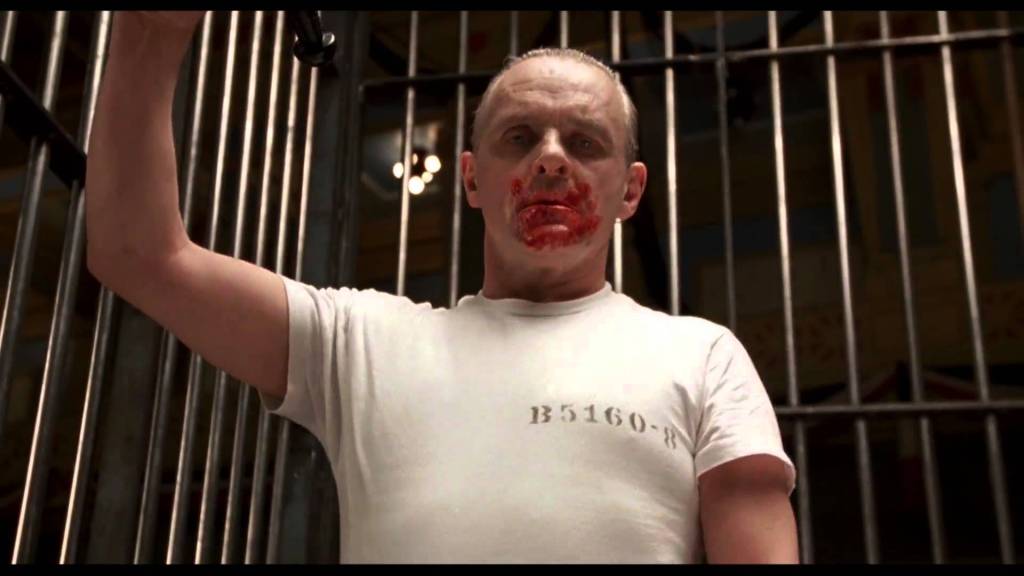
    Now, take a look at Dr. Hannibal Lecter. In The Silence of the Lambs we don’t know where he came from, he has no family or friends. (Later, in Hannibal and in Hannibal’s Rising, Thomas Harris added more information about his life; many see them as reduced forms of Hannibal, and certainly not as popular.) Regardless of his imprisonment in humiliating conditions, he manifests contempt towards others. A refined character also in prison garb, as he escapes he skins one guard and covers himself with his face, and at the end of the film he looks like an attractive tourist, wearing a hat and sunglasses. In the novel he is depicted as having a six-fingered hand. His cannibalism is a relatively rare quality of the Christian devil, though Giotto depicts Satan eating human beings. It could be his way of desecrating the Eucharist, transforming the spiritual union with God into a savage eating of human flesh.

    And why exactly does the police ask for his advice? Surely there are other psychiatrists to consult. It is generally believed that he has an inner knowledge of the human soul and thus would be the only one who could understand the twisted logic of a psycho killer the police it trying to find. Clarice says “he damn sure sees through me,” and he observes she has a new band aid, without being able to see it. And above all, he says about himself: “Nothing happened to me, Officer Starling. I happened. You can’t reduce me to a set of influences. You’ve given up good and evil for behaviorism, Officer Starling. You’ve got everybody in moral dignity pants—nothing is ever anybody’s fault. Look at me, Officer Starling. Can you stand to say I’m evil? Am I evil, Officer Starling?” The spectators’ awe springs from their acknowledgment that no matter how hard people try to imprison him, he will escape

    And there is a pact with the devil that Clarice makes. Traditionally, the devil wants the soul in the afterlife in return for granting a wish in this world. Here, perhaps a modern devil, Hannibal asks Clarice to reveal her childhood memories and traumas—her soul—and in return he will help her find the murderer.

    Hannibal has been called a psychopath, sociopath, monster, Dracula—but interpreting him as a devil is fundamentally different. It is not merely descriptive, it sets the entire plot within the realm of “good” and “evil,” on moral grounds. As he says, no one judges anything in terms of right and wrong anymore, it is all about psychological analysis now.

    Perhaps this is the heart of the outstanding success of The Silence of the Lambs: the spectators identify, even if unconsciously, a well-known cultural pattern, a character that feels so familiar, they simply know Hannibal is different from all other villains appearing on the screen. When they see his vanity, his power albeit his imprisonment in a small, dark, secluded cell, they know he will manage to escape; absolute evil, as we all know, can never truly be eliminated.