Tag: Dostoevsky

  • Who Is an Idiot?

    Who Is an Idiot?

    Most of Dostoevsky’s novels are in fact experiments. He sends his protagonists into the world to test a certain hypothesis on the nature of man or society. As we follow a murderer, a gambler, a monk, a prostitute—or simply ordinary people—we are driven to pose the questions Dostoevsky wants us to ask. And though the novels are extremely exhaustive and complex, they can be reduced to rather simple intelligible questions.

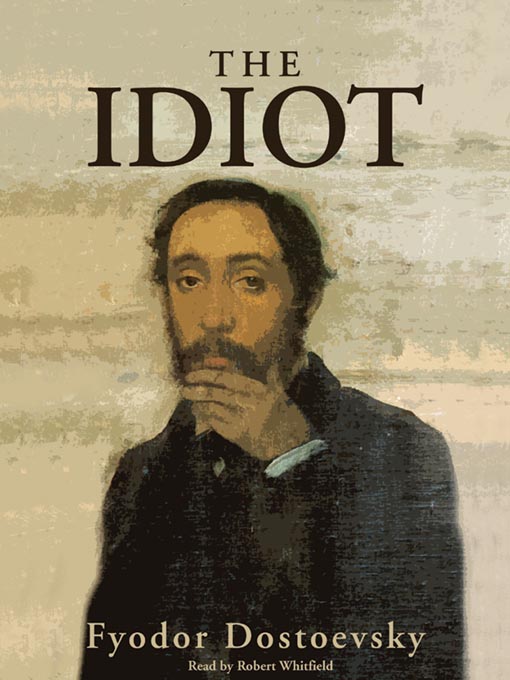
    In 1868 Dostoevsky began publishing his novel The Idiot in a journal titled “The Russian Messenger”. It is a story of a truly good person: innocent, kind-hearted, selfless, forgiving, a man without moral faults. Prince Myshkin—this is his name—is “a positively good and beautiful man”, as the author describes him. The experiment in this novel was a rather odd one: what would happen if ordinary men and women were to encounter a man who is utterly good? The intuitive answer, I think, is that it would somehow ameliorate their lives. But the great author demonstrates his belief that the result would be altogether different.

    The novel begins as Prince Myshkin arrives in St. Petersburg after spending years in Switzerland for treatment of epilepsy. He comes to meet a distant relative of his and encounters the various characters. Rogozhin, a passionate and violent man, is infatuated by a societal beauty; he inherits a fortune and wants to marry her. She, Nastasya Philippovna, was made a concubine at the age of sixteen by her legal guardian, appointed after the death of her parents. She threatens to expose him; he promises her 75,000 rubles if she marries his assistant, Ganya, an ambitious young man. Myshkin himself falls in love with the beautiful Aglaya, the daughter of his family relative; she is infatuated with him, almost against her will, though ridiculing his good nature and naiveté.

    Myshkin, as has been pointed out, is an extremely good person. He sees the positive side of everyone, always offering help, calming any dispute—and taking the blame for the sins of others. This makes the various characters think he is, well, an idiot… They see self-sufficiency, egotism and selfishness as evidence of intelligence; their absence implies stupidity. Yet this protagonist, clearly somewhat of a Christ-like figure, ignores common beliefs and adheres to his strictly good ways.

    The plot takes several dramatic turns. Rogozhin confesses that his deep desire for Nastasya Philippovna is so overpowering that it makes him think of cutting her throat. She is so traumatized by her sexual exploitation at a young age that she is overtaken by self-destruction. Ganya wants to marry her to upscale his social status. And poor Myshkin, shaken up by her sufferings, offers to marry her to prevent a catastrophe, and thus disappoints the lovely Aglaya. At the end, after many vicissitudes, Nastasya Philippovna runs off with Roghozin, who then murders her. Aglaya, broken-hearted, marries a ‘wealthy exiled Polish count’ who is revealed to be neither wealthy nor a count, and turns her against her family. Myshkin finds Rogozhin with the body of Nastasya Philippovna, and they both lament her. Rogozhin is sentenced to fifteen years of hard labor in Siberia. Myshkin goes mad and returns to the sanatorium in Switzerland.

    Clearly Dostoevsky is portraying tragic consequences of the encounter with this perfectly good man. Yet the roots of these misfortunes are not unequivocal. Myshkin is something of a Christ figure. Is it possible that the encounter with Christ leads to nothing but misery? Though profoundly religious, Dostoevsky often points out the paradoxical nature of religious belief; it is the most profound yearning for something beyond our reach.

    Possibly Myshkin’s habit of taking the blame for others is the cause of all this misery, as some scholars have pointed out, since it seems to drive his sinful friends to more desperate misdeeds. It is a fundamental criticism of Catholicism and the Eastern Orthodox Church: forgiving the sinners only drives them to commit worse crimes.

    But Dostoevsky’s work cannot be reduced to a religious statement. This novel seems to convey a very strong message: taking the blame for others is harmful, aspiring for eternal good is destructive, and forgiving anything is detrimental. Oddly, in spite of his being a profoundly religious man, this comes rather close to contemporary secular values: personal responsibility for one’s achievements and failures; the aspiration to relative advantages rather than absolute ones; the treatment of mental defects by science, not devotion. George Panichas, a noted scholar of Dostoevsky, said that “Through Myshkin, Dostoevsky gives his prophetic vision of a modern world in which a life ordered by Revelation and the ability to experience the world in a religious way are lost.”

    So is Myshkin an idiot? Not in a simple way, of course. His choice of self-sacrifice is conscious and not the result of stupidity. But in a more profound way, Dostoevsky is suggesting that perhaps he is.

  • Is Religion Reversible?

    Is Religion Reversible?

    Mircea Eliade (1907-1986) is the most prominent twentieth-century scholar of comparative religion. Human existence, he argues, has two separate realms: the sacred and the profane. Each has its unique nature and characteristics, and also a different understanding of time. Profane time is a chronological development from past to present, and then to the future. Religious time is something else: when taking part in a religious ceremony, it is possible to experience divinity with the same emotional intensity as when that religion was created. Thus, the boundaries of ordinary time are exceeded, and men connect with God as they did in Illud tempus, ‘times of origins’, when religions were created. For example, a Christian participating in the mass may feel the presence of Christ just as his followers in the first century did. He may believe his miracles can be extended to him personally. If he is sick, Christ can heal him. Thus, within the religious experience, it is possible, even if only to some extent, to go back in time.

    In spite of Eliade’s unique contribution to religious studies, he was not the first to contemplate on this aspect of religion. Fyodor Dostoevsky published his masterpiece The Brothers Karamazov in 1880. One chapter, The Grand Inquisitor, can be read separately from the novel. It is a short tale – some call it a parable – describing a most unusual event: Christ comes back to earth for a short visit, at the time of the Spanish Inquisition. Appearing in Seville, he performs several miracles – healing the sick, reviving a dead young girl. People immediately recognize him; they are completely taken by his goodness. But as they follow and adore him, in comes the much-feared Grand Inquisitor, after executing some heretics. He arrests Jesus and sentences him to be burnt the next day. His fault, says the Inquisitor, is that his short visit to earth only interferes with the Church’s mission; he is no longer needed here.

    This brilliant and complex short story can be interpreted is many ways; one reading focuses on the question of religion and time. If the events that formed the birth of Christianity were repeated centuries later, would they carry the same religious significance? Or, to put it more generally, are monotheistic religions a changing spiritual phenomenon, created and then gradually transformed over time, or do they maintain a fundamental unchanged belief? Dostoevsky, as always, provides a complex and intriguing answer.

    When it comes to a personal encounter with the divine, this short masterpiece suggests that people today would be drawn to believe in Christ and follow him exactly as they did in the first century: “”He comes silently and unannounced; yet all—how strange—yea, all recognize Him, at once! The population rushes towards Him as if propelled by some irresistible force; it surrounds, throngs, and presses around, it follows Him…. He extends His hands over their heads, blesses them, and from mere contact with Him, aye, even with His garments, a healing power goes forth.” Christ would probably evoke the same spiritual enthusiasm as he did two thousand years ago.

    However monotheistic religions are also institutions; congregations, leaders who often have extensive political power, common practices, taxes and wealth, and perhaps more than anything, the transformation of primal religious events into a comprehensive way of life. Here, argues the Inquisitor, time cannot be turned back. Religion as a way of life evolved over time, creating different set of customs and rules, sometimes utterly remote from those prevailing in the ‘times of origin’.

    In fact, the Inquisitor’s argument is even more radical: Jesus liberated man by inspiring the hope of happiness generated by free will, of preferring good to evil. Yet true human happiness is the very opposite, a result of lack of choice: “We will prove to them their own weakness and make them humble again, whilst with Thee they have learnt but pride, for Thou hast made more of them than they ever were worth. We will give them that quiet, humble happiness which alone benefits such weak, foolish creatures as they are, and having once had proved to them their weakness, they will become timid and obedient, and gather around us as chickens around their hen.” Clearly, with this skeptical view, the Inquisitor sees Christ as an intruder; he set in motion a historical process that the Church attempts to correct. He created expectations that could never be met, leading to nothing but disappointment.

    So how does the story end? Is Christ executed again? Of course not, that would be a revival of ‘time of origin’; the Inquisitor wouldn’t want that. Christ remains silent all through the story. “The old man longs to hear His voice, to hear Him reply; better words of bitterness and scorn than His silence. Suddenly He rises; slowly and silently approaching the Inquisitor, He bends towards him and softly kisses the bloodless, four-score and-ten-year-old lips. That is all the answer. The Grand Inquisitor shudders. There is a convulsive twitch at the corner of his mouth. He goes to the door, opens it, and addressing Him, ‘Go,’ he says, ‘go, and return no more… do not come again… never, never!’ and—lets Him out into the dark night. The prisoner vanishes.”

    ‘And the old man?’

    ‘The kiss burns his heart, but the old man remains firm in his own ideas and unbelief.’”