Tag: germany

  • Falling into Nazism

    Falling into Nazism

    There is something enigmatic about the way the Nazi regime came into being. I am not referring to its profound historical sources, but to the gradual transformation of Germany from what seemed like a normally functioning society into one that endorsed a state of ecstatic devotion to a ruler, a nation, a race, an ideology. The shift of values and habits is intriguing, especially when we compare the early manifestations of Nazism with the end result – WWII and the Holocaust. In retrospect, Germany underwent a comprehensive change. But was it possible to grasp the enormity of the transformation as it was taking place?

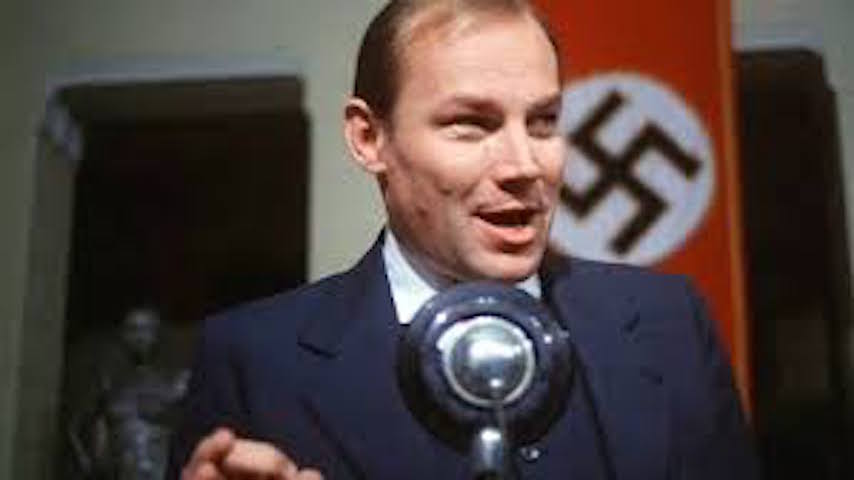
    Klaus Mann (1906-1949), a German writer and publicist, began writing his well-known novel Mephisto in 1933 and concluded it in 1936. A fierce opponent of National Socialism, the son of Thomas Mann and brother of Erica, he fled Germany in 1933 to reside in Amsterdam and in the United States. His public criticism of the Nazi ideology made Nazi Germany strip him of his German citizenship. Mephiso, later adapted as a film, focuses on the psychological mechanism of adjusting to a new spiritual atmosphere, a new regime.

    The protagonist, Hendrik Hoefgen, is an ambitious young man. At the beginning of the novel he is a young actor with a revolutionary spirit, supporting Communist groups; at the end he is the head of the German National Theater in the Nazi era. So how does a man who publicly opposed Nazi ideals become part of the Nazi establishment?

    Mann’s answer is subtle gradation: a very slow and gradual process of moral decadence, in which every step appears almost plausible. There is no one moment of moral collapse, of adoption of racial or anti-Semitic ideas, only a very slow process of adjusting to a new regime, gradually adhering to its standards.

    When Nazi ideas begin to spread, the young Hendrik gets a role in a major theater in Berlin. He openly denounces racism, calling Herman Goering’s girlfriend, herself an actress, ‘a stupid cow’. As the Nazis are gaining power, he is shooting a film in Spain. The director cancels the making of the film. His friends and wife decide to leave Germany – but not him. His burning ambition to become a famous artist, well-known and wealthy, makes him persuade himself that free art will always survive, regardless of political developments.

    Strangely, Goering’s girlfriend, oblivious to his past remark, asks him to appear on stage with her in Berlin. Hoefgen hesitates, but the professional temptation overshadows everything. He returns to Nazi Germany to play with her, also becoming acquainted with Herman Goering. The latter grants him the role of Mephisto in Goethe’s Faust. He even attends the opening gala; in the intermission he invites Hoefgen to his stall, shaking his hand as the audience watches. At that very moment Hoefgen becomes a famous actor. “How easily everything went! Hendrik feels he must have been born under a lucky star! … Should I have refused so much splendor? No one else would have done so given the same opportunities; and if someone was to claim otherwise, I should denounce him as a liar and a hypocrite.”

    The next step is using Goering’s affection to save an old friend who was engaged in anti-Nazi activity. He takes pride in saving his friend, but not only in that: “I have rescued a man, he thought proudly … But might there not be a day of upheaval and great wrath? In case that happens it would be wise – and indeed necessary – to take insurance. The good deed constituted a particularly valuable insurance policy. Hendrik congratulated himself on that.” He is cold and calculating. Should the Nazi regime collapse, it would be wise to be able to justify his collaboration with it.

    When Goering is about to eliminate Hendrik’s black mistress, he manages to have her deported to Paris. He meets her in her dark prison cell, before deportation, warning her: “There is one condition attached to this great favor … you must keep quiet! If you can’t keep quiet then it’s finished for you.” He now explicitly threatens a woman he cherishes dearly.

    His appointment as head of the National Theater is a moment of personal triumph; he remarries and lives in extravagant wealth, yet members of the underground threaten him: “we will know who to hang first.” His shaken sense of security leads to his emotional collapse, and, in tears, he cries: “what do they want from me? … All I am is a perfectly ordinary actor.”

    This last sentence encapsulates Klaus Mann’s historical observation: many Germans who were not ardent Nazis yet fully cooperated with the Nazi regime did not accept the moral responsibility for their deeds. The gradual development of the adherence to Nazism made the avoidance of a full reckoning possible. Hendrik may have even argued that he was a victim; but Nazism couldn’t have thrived without people like him.

  • Germany and the Germans

    Germany and the Germans

    On May 29th 1945, three weeks after the surrender of Nazi Germany but before the nuclear bombs were dropped on Hiroshima and Nagasaki, the world-famous German author Thomas Mann (1875-1955), Nobel Prize laureate in Literature, gave a lecture at the Library of Congress, titled “Germany and the Germans”. Many looked forward to this address with anticipation; Thomas Mann was considered a supreme interpreter of German culture throughout the world, and a fierce opponent of Nazism. The emigration of the Mann family from Germany in 1933 had echoed in the international press, contributing to the universal opposition to Nazism.

    Addressing the question of German national character, he began by announcing that “I am to speak to you today on Germany and the Germans—a risky undertaking, not because the topic is so complex, so inexhaustible, but also because of the violent emotions that it encompass today”. Yet, notwithstanding the turmoil created by WWII and the Holocaust, he presents a fascinating and solid explanation for the rise of Nazism in Germany.

    Before delving into a historical analysis, Mann asserts that he sees himself as part of German culture. In spite of being a brave opponent of the Nazis, he argues that there are no ‘good Germans’ or ‘bad Germans’: “Any attempt to arouse sympathy to defend and to excuse Germany, would certainly be an inappropriate undertaking for one of German birth today. To play the part of the judge, to curse and damn his own people in compliant agreement with the incalculable hatred that they have kindled, to commend himself smugly as ‘the good Germany’ in contrast with the wicked, guilty Germany over there with which he has nothing at all in common, — that too would hardly befit one of German origin. For anyone who was born a German does have something in common with German destiny and Germany guilt”.

    He then turns to the historical arguments. Already in the sixteenth century Martin Luther, the founder of the Protestant Reformation, instilled an ambivalent attitude towards freedom: “And no one can deny that Luther was a tremendously great man, great in the most German manner, great and German even in his duality as the liberating and the once reactionary force, a conservative revolutionary. He not only reconstituted the Church; he actually saved Christianity”. From the individual’s perspective, Luther was a great liberator: he encouraged a direct encounter between man and God, freeing him from the power of the priesthood. He translated the Bible so every believer could read it himself. Yet from the perspective of society as a whole, he supported the darkest forces oppressing the evolvement of a free society. He was a liberator of the inner experience, but fiercely rejected the idea of political liberty. Germans were encouraged to nurture their feelings, artistic drives, religious beliefs – yet political freedom was denounced.

    This dualism, argues Mann, was further expanded by Goethe, the great German poet, in the eighteenth and nineteenth centuries. In his play Faust, a masterpiece, the protagonist, Faust, makes a pact with the devil in order to achieve full self- gratification. Though the explicit point of view of the author is a condemnation of this pact, the play leaves plenty of room for moral ambivalence. The reader can infer that in order to fulfill one’s desires it would be imperative to have a pact with the devil. And Mephisto, who satisfies Faust’s wishes, is far from being repulsive. He is smart cunning and strong: “And the devil, Luther’s devil, Faust’s devil, strikes me as a very German figure, and the pact with him, the Satanic covenant, to win the treasures and power on earth for a time at the cost of the soul’s salvation, strikes me as something exceedingly typical of German Nature. A lonely thinker and searcher, a theologian and philosopher in his cell who, in this desire for world enjoyment and world domination, barters his soul to the Devil, — isn’t this the right moment to see Germany in this picture, the moment in which Germany is literally being carried off by the Devil?” Indeed, during WWI, Goethe’s Faust was distributed to the German soldiers before they were sent off to battle.

    If Luther’s theology created a sense of a boundless self, utter liberation of instincts, emotions, thoughts — yet without any political progress towards democracy – Goethe implanted the notion of moral ambivalence, suggesting that in order to achieve one’s goals one would have to succumb to the enchantment of the devil.

    These two influences led to the evolvement of Nazism. The State of Germany was not the result of a yearning for democracy: “Fundamentally Bismarck’s empire had nothing in common with “nation” in the democratic sense of the word. It was purely a power structure aiming toward the hegemony of Europe, and notwithstanding its modernity”. Boundless individual self-fulfilment was encouraged; the widespread moral stand was ambivalent, suggesting that cruel brutality is a necessary evil – and the result was Nazism; a full realization of a historical process that commenced in the sixteenth century.

    Well worth reading; a brilliant historical analysis.