Tag: history

  • A Horse Walks into a Bar – The Second Generation

    A Horse Walks into a Bar – The Second Generation

    The term “second generation,” for children of Holocaust survivors, has become inherent to Jewish identity, referring to those who did not themselves experience the Holocaust but whose lives have been shaped by the unbearable traumas suffered by their parents, generating common fears and integrating the Holocaust into their worldview. The term refers not only to son and daughters of concentration camps survivors, but also individuals whose parents experienced various aspects of Nazism, and extends even to students of the very small and intolerable details of the atrocities. All are a part of the generation living in the shadow of the Holocaust, though born after it was over.

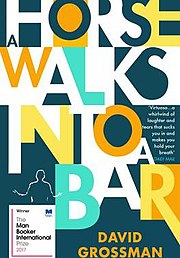
    The brilliant book by David Grossman, A Horse Walks into a Bar, which earned him the International Man Booker prize, deals with this phenomenon. It is a rich, multi-dimensional novel with universal implications; a substantial part of it depicts a childhood and adolescence shaped by the Holocaust. The protagonist, Dovale Gee, is a stand-up comedian performing in a basement in Netanya, revealing details of his life to the audience. He invites a childhood friend, a retired judge, whom he hasn’t seen for forty years, to “judge” his performance, which unearths his life story. At first, the spectators—and with them, the reader—are led to believe it is an ordinary stand-up show, though unusually vulgar. Gradually, though, we learn about the early trauma experienced by the comedian. Most spectators leave, though some stay, eager to take part in and understand Dovale’s most difficult and meaningful moments.

    Dovale is the only son of a Holocaust survivor. His mother hid for months within a train car. “She spent six months of the war in a small train car, I told you that. They hid her there for half a year, three Polish train engineers in a little compartment on the train that ran back and forth on the same tracks. They took turns guarding her; she told me that once, and her face wore this little crooked laugh I’d never seen before.” After six months, they threw her “straight onto the gatehouse ramp,” where she fell into the hands of Doctor Mengele. His father escaped from Europe right before the war broke, but his entire family was exterminated.

    Dovale’s childhood experiences often refer to the Holocaust. For example, when he is sent to a Gadna (youth training) camp at the age of fourteen, he is terrified. It feels like going abroad, but “going abroad wasn’t done then, definitely not by our sort. Overseas, for us, was strictly for extermination purposes.” But it is the end of the story that illustrates the profound influence the Holocaust had on the “second generation”: when in a Gadna camp, Dovale is told that he has lost a parent, but no one tells whether his mother or father has passed away. On his way back to Jerusalem, he delves into a miserable calculation: who would he prefer to have died? Mom or Dad?

    How is that connected with the Holocaust?

    The desire to rank the atrocities of the Holocaust in order of importance or significance is, of course, wrong. One cannot weigh and measure the innumerable sufferings the Nazi mechanism generated. It is impossible to determine what was more or less terrifying. An analysis of various tortures turns into what is often called “a pornography of death,” dealing with details but missing the main point. But in spite of that, I feel that the worst torment some survivors had to go through was a command to choose between family members, as with Sophie in William Styron’s famous book, to choose who would live and who would die. Sometimes parents were given the opportunity to save one child, and they had to choose who would be sent to the gas chambers and who would be saved.

    David Grossman shows how this monstrous aspect of the Holocaust gradually becomes part of his protagonist’s life. Nazis forced Jews to make an impossible decision: who would be better dead, and who would be better to save. The first-born son? The youngest? Mother?  Husband? The possibility of such an unthinkable, atrocious contemplation had become part of our world. Acknowledging that someone forced our parents, remote family members, or even Jews we didn’t know, to decide which member of the family would live and who would die implied that this option existed and cannot be ignored anymore. It becomes an element of our self-perception, our common consciousness, even as we recognize it as detestable. The climax of the novel relates when, at the age of fourteen, Dovale is trying to “decide” who he would rather find out had died, father or mother, is nothing but a natural extension of the “second generation” experience, applying the tragic ordeals of the parents to the lives of the children long after the Holocaust was over.

    A word on the link between the comic and the tragic: Prof. David Flusser, my instructor at Hebrew University, grew up in Prague and knew some of Franz Kafka’s childhood friends (Kafka is mentioned in the novel). He told me that one of them described to him the details of the very first time Kafka read his work to his friends and they all burst into wild laughter and couldn’t stop. What eventually became the ultimate literary expression of the indifference to the fate of man and of impersonal cruelty was, at first, funny. So is David Grossman’s novel. But, unlike Kafka, he tempts the reader with jokes and gradually transforms his world into a dark and cruel place. The joke is the last resort, a means to escape the understanding that someone had to decide who of his family members would live and who would die. And Dovale, exactly like Kafka’s Joseph K., is awaiting the verdict for a crime he did not commit.
  • The Paradox of Liberalism

    The Paradox of Liberalism

    As an undergraduate, I studied comparative literature and philosophy. Literature was a natural choice for me, philosophy a compromise. I decided it’s a good option for what would be second to literature. Three years later, when I concluded my Bachelor’s Degree, I was relieved that I was done with philosophy. Although I felt it encourages systematic and coherent thinking, it was detached from life. I like literature – and arts in general – because they are always a mixture of the abstract and the concrete, of general truths and facts and details of everyday life. Philosophy was too abstract for me.

    But recent events made me think I was all wrong. Liberalism, the philosophy that shaped the West, has become the source of major social and political events. Newspapers and TV programs discuss the immigration to Europe using terms like freedom of choice, religious tolerance, natural right to liberty—all philosophical terms coined by the founding fathers of liberalism.

    Liberalism is, of course, a rich and complex philosophy. Created in the seventeenth century, the British philosopher John Locke is considered its founder. From its birth until today, it has shaped almost every aspect of the western world: the political systems, the nature of society, the place of education, the right to private property, and more. Liberal ideas affect both liberals and conservatives.

    The very general idea of liberalism is that man should be free. He should not be enslaved, jailed for no reason, or forced to accept things he cannot agree with. But the founders of liberalism were well aware of the paradox that lies at the heart of their philosophy: full freedom of one man or woman is the slavery of another; a comprehensive self-fulfillment of one person will prevent achievements by another. The need to have some kind of government stands in contrast to the complete freedom of each individual.

    Modern liberal philosophers created a huge body of work discussing this topic. They focused mainly on the relations between the individual and the regime and how to maintain freedom in a society that has some form of government. John Locke, Thomas Hobbes, Jean-Jacques Rousseau, Immanuel Kant, John Stuart Mill, Isaiah Berlin and other great thinkers elaborated on the paradox of liberalism.

    In their eyes, the threat to human freedom came from within society: it was the regime that endangered the liberty of the individual. Monarchies didn’t give people the rights they deserved, and certain forms of government prevented people from acting according to their own will. Some regimes didn’t give equal rights to all its members and instead kept some people free and others enslaved. The mental image most philosophers had was that society’s own ruling system was the threat to liberty.

    In the nineteenth century, when Europeans were well aware of the non-western world, John Stuart Mill referred to the encounter between liberal and non-liberal societies: juxtaposed with western societies were the “barbarians,” societies that didn’t share western values. He contemplated whether the West should interfere with their way of life: “Barbarians have no rights as a nation, except a right to such treatment as may, at the earliest possible period, fit them for becoming one. The only moral laws for the relation between a civilized and a barbarous government, are the universal rules of morality between man and man.” Though he did call all foreigners “barbarians,” it should be taken in perspective. This is an early example of a political philosopher referring to the world outside Europe as part of his own. While he didn’t think the “barbarians” endangered his society, he did contemplate forcing liberal ideas upon them.

    Thus, philosophy almost never addressed the question of this kind of external threat to a liberal society: not facing enemies but joined by people who lack liberal values. Let me be clear that I am not referring to humanitarian aid to refugees escaping genocide. They are entitled to get help from Europe, the United States, and Israel!

    It seems to me that the paradox of liberalism is resurfacing in a new form since the threat to liberal society is changing. No longer is it the government. Now it is people with non-liberal values, who join western society and  change its nature. Nowadays many see Islamic believers as a peril, but it could be any other group. Since our world is so virtual, the threat can be illustrated in the context of social networks. Suppose you were part of a Facebook group dedicated to human rights. If many people who object the very idea of human rights wanted to join the group and express their views, would it be right to block them?

    The philosophical contemplation of the past should have a fresh, contemporary dimension. The new reality calls for a theoretical expansion of liberalism, perhaps by adding another aspect to the old ideas. Recent events generated new unanswered philosophical questions, like how does liberalism treat non-liberal members of society? Should we enforce liberal ideas? Should we accept whoever want to join our society, regardless if he or she holds anti-liberal values?

    I am now glad I studied philosophy, yet it makes me further appreciate the lack of a much-needed theoretical development in the philosophy of liberalism.

  • The Pope and the Nazis

    The Pope and the Nazis

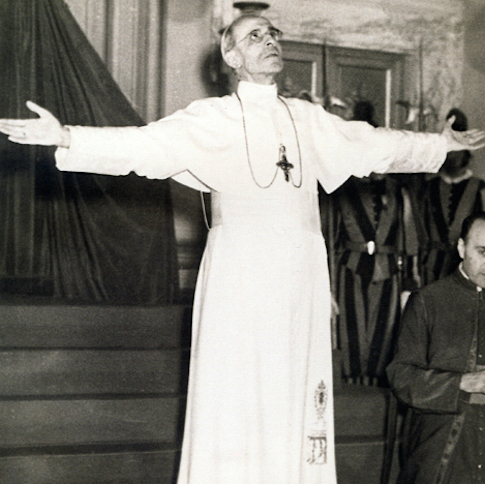
    Pope Francis’s attempts to direct the Catholic Church into a more progressive path brings his influence into question. As a spiritual leader of millions, to what extent can he change both the church and the world? His believers live in different places around the globe, speak many languages, belong to various cultures, yet they all look up to him as the ultimate moral authority. Can a leader without an army, so to speak, be as influential as political leaders? And what happens if national sentiments stand in contrast with religious faith?

    Early in 1963 The Deputy, a play written by the German playwright Rolf Hochhuth, was staged in Berlin. It was the first time concentration camps were presented onstage, which at the time provoked fierce protests. But this wasn’t the only objection to the play; its theme could not be tolerated by many: it blamed Pius XII, the Pope during World War Two, for not taking public action against the unfolding of the Holocaust. According to Catholic dogma, the Pope is the deputy of Christ on earth, and his lack of action is interpreted in this work in religious terms.

    The play is most unusual. It combines two genres we see as conflicting: a historical play and a religious work of art. Hochhuth presents concrete historical arguments within a religious framework. Doctor Mengele is a modern manifestation of the devil, and Auschwitz is his way of provoking God. As Satan tries to annihilate life, the divine creation, the author articulates his historical insights—and his reservations about Pius XII.

    The Nazis intentionally avoided an open rift with the Roman Catholic Church, argues Hochhuth in the historical notes added to the play. In spite of their obvious ideological objection to Judeo-Christian tradition, some Nazi leaders had ambivalent feelings towards Catholicism. Hitler’s mother, we are reminded, was a devout Catholic and attended church regularly with her children. Also, many German soldiers were Catholic. A public attack on the Pope and the Church might generate a sense of alienation, perhaps whilst in battle—a most undesirable result that may weaken Germany. Thus, the Nazi leadership wished to blur its alienation from the Church, at least until the end of the war.

    This made the Pope extremely influential, argues Hochhuth. Had he voiced a clear and unequivocal condemnation of ‘the final solution,’ the Nazis may have reconsidered the plan to exterminate European Jewry. But Pius XII refrained from condemnation. In the play, his reasons are both practical and theoretical. From a practical perspective, the Nazi regime is the only impediment to the spread of the anti-religious ideology: communism. Also, the Church must keep its neutrality since its believers are on both sides. And possibly more Jews could be saved if an open conflict with Nazi leadership is averted.

    The play also ascribes to Pope Pius XII profound theoretical arguments: protecting the Roman Catholic Church is his ultimate mission, worthy of any sacrifice. And there is a theological discussion on predestination and free will. “Was not ever Cain, who killed his brother, the instrument of God?” argues Pius XII. Hitler may be part of an obscure divine plan beyond our understanding.

    But what about the Jews? Hochhuth claims that this was the response of the historical Pius XII: “As the flowers in the countryside wait beneath the winter’s mantle of snow for the warm breeze of spring, so the Jews must wait, praying and trusting that the hour of heavenly salvation will come.”

    Many Catholics were deeply offended by the play. When staged in Europe and the United States, both Jewish and Christian protestors interrupted the show. Yet The Deputy is not at all anti-Christian. There are two saint-like characters that sacrifice their lives in the struggle with Nazism: a Catholic priest and a Protestant officer in the German army. The Catholic saint cannot endure the Pope’s moral stand. He thus shares the destiny of the Jewish victims and joins them in Auschwitz. To break his spirit Mengele makes him remove bodies from the crematorium. This drives him to desert his way of passive resistance to Nazism and try to murder Mengele, who then kills him. The Protestant saint is a man of action. He impedes Nazi plans to speed up the extermination of the Jews. He is a Christian, he says, because he is “a spy of God”—a man engaged in action aimed at saving lives, changing the route of history.

    At this specific point in history, the Pope could have transcended his role as the head of the Catholic world and spoken against universal crimes, but Pius XII chose to defend Catholicism rather than fulfill the moral obligation of being a deputy to God. Unlike some junior priests who saved Jewish lives, he kept quiet, doing nothing to stop the Holocaust.

    Many questioned his motivations.

  • Falling into Nazism

    Falling into Nazism

    There is something enigmatic about the way the Nazi regime came into being. I am not referring to its profound historical sources, but to the gradual transformation of Germany from what seemed like a normally functioning society into one that endorsed a state of ecstatic devotion to a ruler, a nation, a race, an ideology. The shift of values and habits is intriguing, especially when we compare the early manifestations of Nazism with the end result – WWII and the Holocaust. In retrospect, Germany underwent a comprehensive change. But was it possible to grasp the enormity of the transformation as it was taking place?

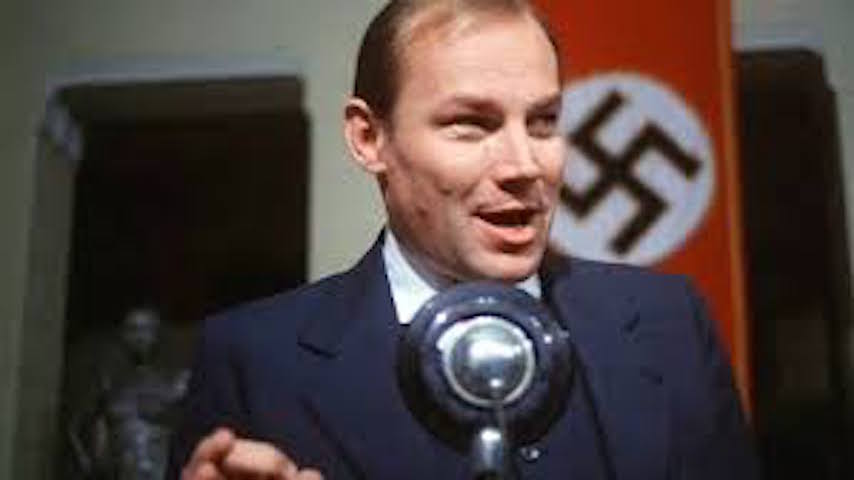
    Klaus Mann (1906-1949), a German writer and publicist, began writing his well-known novel Mephisto in 1933 and concluded it in 1936. A fierce opponent of National Socialism, the son of Thomas Mann and brother of Erica, he fled Germany in 1933 to reside in Amsterdam and in the United States. His public criticism of the Nazi ideology made Nazi Germany strip him of his German citizenship. Mephiso, later adapted as a film, focuses on the psychological mechanism of adjusting to a new spiritual atmosphere, a new regime.

    The protagonist, Hendrik Hoefgen, is an ambitious young man. At the beginning of the novel he is a young actor with a revolutionary spirit, supporting Communist groups; at the end he is the head of the German National Theater in the Nazi era. So how does a man who publicly opposed Nazi ideals become part of the Nazi establishment?

    Mann’s answer is subtle gradation: a very slow and gradual process of moral decadence, in which every step appears almost plausible. There is no one moment of moral collapse, of adoption of racial or anti-Semitic ideas, only a very slow process of adjusting to a new regime, gradually adhering to its standards.

    When Nazi ideas begin to spread, the young Hendrik gets a role in a major theater in Berlin. He openly denounces racism, calling Herman Goering’s girlfriend, herself an actress, ‘a stupid cow’. As the Nazis are gaining power, he is shooting a film in Spain. The director cancels the making of the film. His friends and wife decide to leave Germany – but not him. His burning ambition to become a famous artist, well-known and wealthy, makes him persuade himself that free art will always survive, regardless of political developments.

    Strangely, Goering’s girlfriend, oblivious to his past remark, asks him to appear on stage with her in Berlin. Hoefgen hesitates, but the professional temptation overshadows everything. He returns to Nazi Germany to play with her, also becoming acquainted with Herman Goering. The latter grants him the role of Mephisto in Goethe’s Faust. He even attends the opening gala; in the intermission he invites Hoefgen to his stall, shaking his hand as the audience watches. At that very moment Hoefgen becomes a famous actor. “How easily everything went! Hendrik feels he must have been born under a lucky star! … Should I have refused so much splendor? No one else would have done so given the same opportunities; and if someone was to claim otherwise, I should denounce him as a liar and a hypocrite.”

    The next step is using Goering’s affection to save an old friend who was engaged in anti-Nazi activity. He takes pride in saving his friend, but not only in that: “I have rescued a man, he thought proudly … But might there not be a day of upheaval and great wrath? In case that happens it would be wise – and indeed necessary – to take insurance. The good deed constituted a particularly valuable insurance policy. Hendrik congratulated himself on that.” He is cold and calculating. Should the Nazi regime collapse, it would be wise to be able to justify his collaboration with it.

    When Goering is about to eliminate Hendrik’s black mistress, he manages to have her deported to Paris. He meets her in her dark prison cell, before deportation, warning her: “There is one condition attached to this great favor … you must keep quiet! If you can’t keep quiet then it’s finished for you.” He now explicitly threatens a woman he cherishes dearly.

    His appointment as head of the National Theater is a moment of personal triumph; he remarries and lives in extravagant wealth, yet members of the underground threaten him: “we will know who to hang first.” His shaken sense of security leads to his emotional collapse, and, in tears, he cries: “what do they want from me? … All I am is a perfectly ordinary actor.”

    This last sentence encapsulates Klaus Mann’s historical observation: many Germans who were not ardent Nazis yet fully cooperated with the Nazi regime did not accept the moral responsibility for their deeds. The gradual development of the adherence to Nazism made the avoidance of a full reckoning possible. Hendrik may have even argued that he was a victim; but Nazism couldn’t have thrived without people like him.

  • A Crazy Pioneer

    A Crazy Pioneer

    The history of Zionism was written by men, no doubt. Its ethos is abundant with daring masculine pioneers and brave soldiers sacrificing their lives for the Jewish state. Also, the prevailing notion of a strong, self-defending ‘new Jew’ was closer to the popular perception of masculinity, making the aggrandizement of heroic men almost natural. But some women played a substantial role in the development of Jewish life in Palestine, later Israel. Unfortunately, they were deprived of their proper place in history books, in the past and also today.

    One cannot overestimate the importance of the Kibbutz, the collective settlement traditionally based on agriculture, in the history of Zionism – an idea initiated and exercised for the first time by Manya Shochat (1880-1961). Born in Grodno, part of the Russian Empire, she was the eighth daughter of ten children. Her grandfather was one of Napoleon’s soldiers who remained in Russia, converted to Judaism and married a Jewish woman. They were secular middle-class Jews, but their son, Manya’s beloved father, became an orthodox Jew, creating an open rift with his parents. Like other family members he was prone to depression and suicide. His parents tried to prevent his turn to religion, but gave up after he tried to take his life.

    Manya’s character could be described as a blend of depression and suicidal inclination with a tendency to act in imaginative, unconventional ways. Already as a child her uncontrolled moods made attending school impossible. As a teenager she escaped home and, wearing men’s clothes, found a position as a porter. She later became a carpenter in her brother’s factory, a profession from which women were completely excluded in those times. Manya was deeply touched by the suffering and poverty of the workers around her and fully adopted socialist ideals. She joined the Bund, a Jewish revolutionist socialist movement, and later founded a Jewish Labor Party, which collapsed in 1903. Broken-hearted and depressed, she accepted her brother’s invitation to visit Palestine.

    Like other pioneers before her, Manya fell in love with the land. She joined her brother in a tour looking for water and minerals, riding a horse from the Galilee to Jerusalem, to the Judea desert, and then to the south. The journey of the brother and sister, with two friends, lasted weeks. Manya cut her hair short; the two women dressed like men. She later said it was difficult to ride a horse with a long dress, but no doubt her appearance betrayed resentment against feminine embellishment. It illustrates well the nature of socialist feminism – focused on the social and economic oppression of women, and not on feminine identity and self-perception. Manya wished to work like a man and wear men’s clothes. Only once, as a child, did she want a velvet dress, but she was too embarrassed to ask for it.

    The journey in Palestine pulled her out of her depression and she decided to stay, giving up her hope to be part of the socialist revolution in Russia. She wished to implant socialist ideas in the future Israel. Yet some Zionist pioneers already living in Palestine saw her as an imbalanced – not to say deranged – woman, with bizarre ideas of equality between people. But she didn’t give up her well-defined plans. In 1908 she was the one to initiate the first experimental collective farm in Sejera, in the Galilee, on land purchased by Edmond de Rothschild. This collective community was, in fact, the first Kibbutz – a unique way of life that made a substantial contribution to Israeli society.

    Manya married Israel Shochat, a handsome man and one of the founders of the first Jewish military organization. Together they ran Sejera. Within a couple of months the collective community had eighteen members, six of whom were women, wearing pants and working in the fields with a pistol tied to their belt. There was something of a fraternity about this group of young people: the common jokes, a spirit of non-conformism, physical and mental strength, a profound knowledge of agriculture. Together Manya and Israel set the major principles of Israeli society in its first decades: military self-defense and socialist communities.

    Manya was not oblivious to the Arab-Jewish conflict; her attitude towards the Arab communities was ambivalent. As a socialist, she was eager to advance social unions among the Arab population. As a Zionist she couldn’t help but admit the conflict of interest between the Jewish pioneers and Arab villagers and Bedouins. Yet she often demonstrated her fascination for the local Arabs – conducting long conversations whenever possible, paying them visits, and even attempting to adopt their daily habits.

    With the foundation of the State of Israel, other leaders replaced Manya and Israel. She joined another kibbutz; he moved to Tel Aviv, leaving her with two children. Her son, a pilot in the RAF and one of the founders of the Israeli Air Force, committed suicide in 1967. Her daughter lived in Australia. But Manya, in spite of her suffering, remained unchanged: struggling with depression, finding solace in decisive action, and always looking for innovative ways to create a better society.

  • A Jewish State of Mind

    A Jewish State of Mind

    Sometimes reading a book creates a feeling of ‘recollection’. Something about the atmosphere, the use of certain words, the depiction of daily life, seems so familiar, almost as if we have actually been there, in a different time and place. When I read Israel Zangwill’s Children of the Ghetto: a Study of a Peculiar People, I felt this way. In a way, the spirit of my parents, who immigrated to Israel from Eastern Europe, was similar to the state of mind depicted in the novel. Alongside their intellectual engagement, they also had these inclinations to be down-to-earth, to cling to common sense, to cope with hardship through humor. I find Zangwill’s portrayal of the Jewish mentality prevalent in East London in the late nineteenth and early twentieth centuries astonishingly familiar.

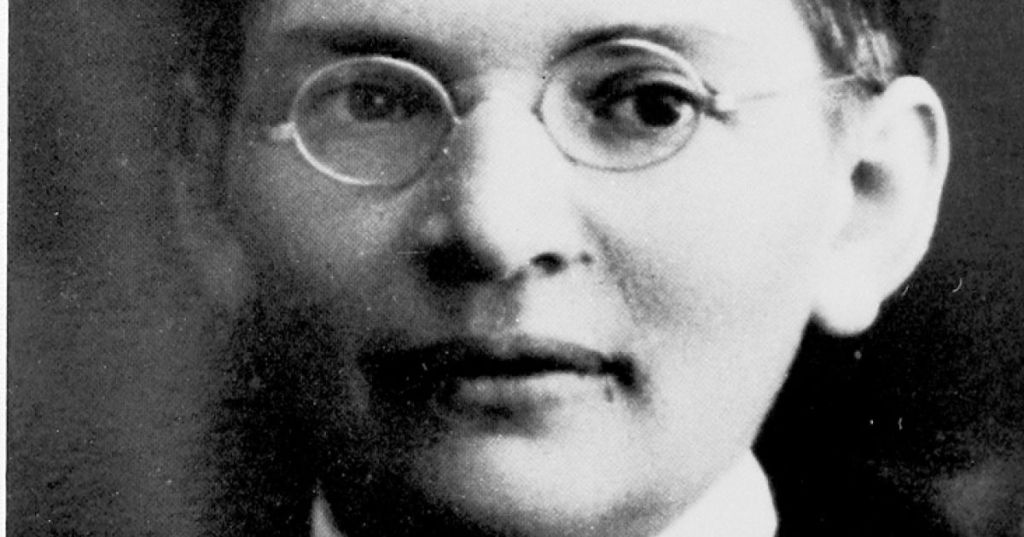
    Israel Zangwill (1864-1926), the “Dickens of the Ghetto” as he is sometimes called, a British writer and humorist, was born in London to Jewish immigrants from eastern Europe. He went to school in East London, where education was free, and later became a teacher, journalist, author and political activist. He married Edith Ayrton, a non-Jewish author and feminist, and openly encouraged the feminist struggle. Zangwill was also involved in the Zionism movement, supporting the foundation of a Jewish state, though not necessarily where Israel is today.

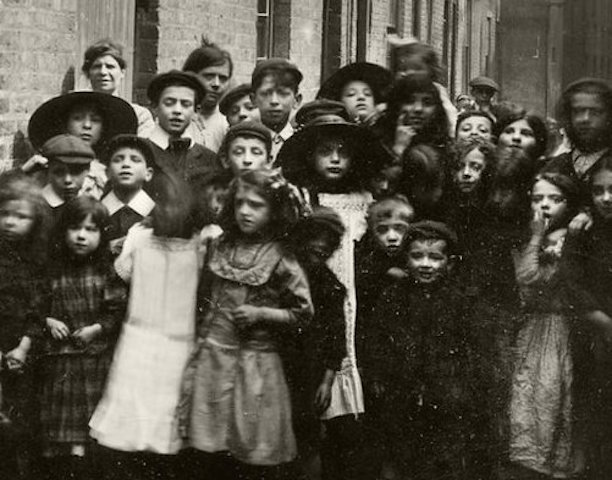
    In his literary work he describes the life of Jewish immigrants, both in London and in the United States. Children of the Ghetto: a Study of a Peculiar People is a wonderful, rich, deep and humoristic description of the Jewish immigrant community in East London. The colors and spices of the ‘exile’, the Diaspora, are all there: the Yiddish language, the abstemiousness born of poverty, the inbuilt skepticism, shabby appearance, and above all, humor, which alleviates any suffering. But Zangwill also adds some observations on the nature of the Jewish people, a ‘peculiar people’, as he puts it.

    “People who have been living in a Ghetto for a couple of centuries are not able to step outside merely because the gates are thrown down, nor to efface the brands on their souls by putting off the yellow badges. The isolation imposed from without will have come to seem the law of their being.” Centuries of forced isolation from the non-Jewish environment created an inner seclusion. Of course, in London Jews could live wherever they wanted. But they had already internalized a sense of being essentially different from others, though not in a negative manner: “For the Jew has rarely been embittered by persecution. He knows that he is in Goluth, in exile, and that the days of the Messiah are not yet, and he looks upon the persecutor merely as the stupid instrument of an all-wise Providence.”

    Life in the Ghetto was anything but pomp. The synagogue provoked no sense of intimidating awe: “Decorum was not a feature of synagogue worship in those days, nor was the Almighty yet conceived as the holder of formal receptions once a week. Worshippers did not pray with bated breath, as if afraid that the deity would overhear them. They were at ease in Zion.” Yet this lack of distance from the divine – people often talked business in the back seats of the synagogue – went hand in hand with an affinity with ‘the Almighty’, a sense that Providence is concrete and tangible.

    Perhaps the most palpable feature of Jewish life Zangwill depicts is the granting of immense importance to satisfying life’s simplest needs. Not that emotional and spiritual inclinations did not matter; they did, but always after food and shelter were ensured. When describing the signing of an engagement contract, Zangwill writes “As a nation, Israel is practical and free from cant. Romance and moonshine are beautiful things, but behind the glittering veil are always the stern realities of things and the weaknesses of human nature. The bridegroom, Pesach, … was a boot-maker, who could expound the Talmud and play the fiddle, but was unable to earn a living. He was marrying Fanny Belcovitch because his parents-in-law would give him free board and lodging for a year, and because he liked her. Fanny was a plump, pulpy girl, not in the prime of youth…. and had pain in her chest before she fell in love with Pesach Weingott.” Fanny’s father, in his Sabbath clothes (which, “like the Sabbath they honored, were of immemorial antiquity”), made sure that the engagement contract would be fair to his daughter.

    The collective self-perception is a central part of the novel. Characters often see their conduct and choices as deriving from their being Jewish. The Rabbi tells his daughter “Be a good girl, dear, and bear your trouble like a true Jewish maiden. Have faith in God, my child. He doeth all things for the best.” It is the deepest framework of looking at the world; not only a natural outcome of being part of ‘a peculiar people’, but a conscious appreciation of the almost encompassing place of Judaism in one’s life.

    My father used to quote an old Jewish proverb: a Jew must never ever be stupid; but if he wants to, it’s fine.

  • A Song of Misery and Hope

    A Song of Misery and Hope

    The dramatic historical events of World War II are extremely difficult to contain. The plenitude of films, documentaries, photos, and books on the subject often obstructs the desired transformation from pure academic knowledge to empathy with the victims of the atrocities experienced by so many. Yet sometimes a very simple sight or sound can capture the events of the past better than anything. Whenever I think of the Nazis, a childhood memory immediately surfaces: I hear the monotonous sound of Nazi soldiers marching in Le Chant des Partisans, sung by Yves Montand.

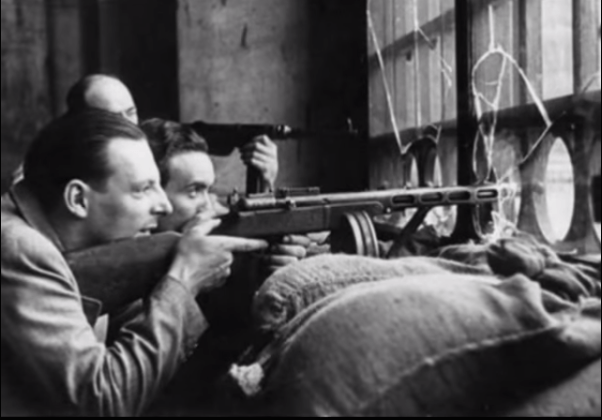
    Le Chant des Partisans was the song of the French Résistance during the Nazi occupation of France, a symbol of the underground forces fighting the German army. Anna Marly, a young dancer and singer who fled from Russia with her mother at a very young age, composed it. A talented and colorful young woman, she was a ballet dancer in Monte Carlo, studied with Prokofiev, and worked in Parisian cabarets. In 1940, after the fall of France, she escaped with her husband from Paris and ended up in London. Her inspiration for the tune of Le Chant des Partisans was an old Russian song she had heard. Anna wrote the lyrics together with Joseph Kessel and Maurice Druon, but later complained that the only suggestion of hers that was accepted was the use of ‘crows’ as a metaphor for Nazi planes. The lyrics and melody were completed in 1943. She sang it beautifully.

    It was first aired on Radio-Londres, the BBC daily broadcast in French to occupied France. Immediately, it became extremely popular. Anna was also a very good whistler, and André Gillois, a radio broadcaster at the BBC, used her whistled version as Radio Londre’s theme tune. French Resistance members appeared on this show, encouraging their fellow countrymen to actively resist the Nazi occupation. These broadcasts were also used to convey coded messages to Résistance groups in France. The Nazis prohibited listening to it and attempted to jam the transmission. Yet many Frenchmen waited every day for Anna’s clear whistling of Le Chant des Resistance.

    The song became a hymn in anti-Nazi France. Singing it was an act of rebellion. Since their national anthem, The Marseillaise, was banned by the Nazis, Frenchmen used Le Chant des Partisans as a substitute. In fact, it became customary to sing it every time a Résistance fighter was killed. Many years after the war, whenever Anna performed it in France, people would come to her with tragic and heroic tales, remembering what it had represented for them. Once, a former fighter revealed a horrible story: he and four others had been captured by the Germans and ordered to dig their own graves. As they dug, “to give us spirit we were whispering your song”. They were shot, and he was the only one to survive.

    Even after the war the song did not lose its significance. It was even proposed as a new national anthem for France. Anna had written other songs about the partisans. One of them, written with the Résistance leader Emmanuel d’Astier de la Vigerie, was called “La Complainte du Partisan”. It was translated into English and performed by many artists, among them Leonard Cohen and Joan Baez.

    I came across this recording of this song as a child, in Jerusalem. My parents, like most people whose lives had been shattered by World War II, refrained as much as possible from describing the arocities of the war. It was my cousin, the late Claude Gandelman, who brought us the record. Claude was born in France and was a child during the war. He was hidden in the centre of France, where his father, a physician, was active in the Résistance. He later immigrated to Israel and was a professor of French Literature in Haifa University. He gave us a box full of old records, and thus I was introduced to the best performers of French music.

    But this song was different. I listened to it over and over again, though I didn’t speak any French. The sound of the Nazi soldiers marching was chilling; the Nazi screams were horrifying. But then I realized that some whistles could be heard alongside the clicks of the soldiers’ boots. When I asked Claude, he explained that preceding a Résistance action, its members would communicate with each other via very low, almost inaudible whistles. I listened to the song many times but since he told me this, I began to hear a different tune – more bearable, less threatening.

    The partisans’ song – English Translation

    Mate, do you hear the dark flight of the crows over our plains?
    Mate, do you hear the muffled clamour of enchained countries?
    Hey, partisans, workers and peasants this is the signal
    tonight the enemy will know the price of blood and tears…

    Join the sabotage, get off the hills, comrades!
    Take the rifles, the machine gun, the grenades out of the straws.
    Hey, killers, with a bullet or by knife, kill swiftly!
    Hey, saboteur, take care of your charge: dynamite…

    It’s us smashing the prison bars for our brothers,
    The hatred on our backs and the hunger that drives us, the misery.
    There are countries where people are dreaming deep in their beds,
    here, we, you see, we’re marching on and we’re getting killed, we’re getting whacked…
    Yes, we’re getting whacked…

    Here everyone knows what he wants, what he does when it takes place,
    Mate, if you go down, a mate out of the shadows takes your place.
    Tomorrow black blood will be drying under the sun on the roads,
    sing, colleagues, freedom is listening to us in the night…

    Sing…
    Come on, sing…
    Sing, colleagues!

  • Stalin and the Devil – The Master and Margarita

    Stalin and the Devil – The Master and Margarita

    Much has been written about Joseph Stalin – his ruthlessness, his inability to trust anyone, his brutality, and, of course, the millions of people he imprisoned, exiled and executed. A huge body of research is devoted to his personality and his implementation of socialist ideas. Yet one particular literary work, insightful and original, provides a unique historical observation of his regime, one that is lacking in most history books.

    Michail Bulgakov wrote The Master and Margarita between 1928 and 1940. These were hard years. Stalin’s regime became more oppressive, citizens of the Soviet Union were gradually being deprived of their personal rights; any expression of criticism implied immediate exile, if not a death sentence.

    Bulgakov, born in 1891 in Kiev, was a medical doctor and a surgeon who later became a writer. Having grown up in a family that encouraged humanistic education, he had always been fascinated by literature, music, the theater. While serving as a doctor in the Ukraine People’s Army he was infected by typhus. Following this experience he abandoned the medical profession and decided to devote all his time to writing. His best-known work is the imaginative and fantastic novel The Master and Margarita.

    This masterpiece depicts a most unusual event: during Stalin’s regime, the devil comes to visit Moscow. He is called ‘Professor Woland’; he is a polyglot and a translator, a mysterious character who insists that God exists and that the crucifixion of Christ did take place. Yet even regardless of his theological arguments he is a fascinating character: colorful, charming, enigmatic. This does not mean he isn’t the embodiment of ultimate evil – he can be as cruel and brutal as one could imagine. But he is certainly never dull or boring.

    He is accompanied by three male assistants and a female one. There is the ridiculous-looking Koroviev, who can see through a man’s mind. Never violent, he sticks a needle into a man’s heart, a figurative image of his unique ability to observe hidden feelings and thoughts. Behemoth, a huge black cat walking on two legs, can charm anyone to death. Azazelo, the crudest of the three, a monster-like creature with a fang jutting out of his mouth, can perform any task impartially. The fourth member of this group is Hella, a witch-like woman, who is the devil’s junior assistant.

    This diabolical bunch travels around Moscow, ridiculing various aspects of the communist regime: the literary club (what would have happened had Dostoevsky tried to enter the club? He would have been kicked out, since he didn’t have a party membership card); the common values communism is attempting to instill (in a magic show the crowd leaps to grab dollar bills falling from the ceiling); the teaching of atheism, and above all, the lack of personal freedom. The artist, Margarita’s love, is committed to a psychiatric clinic and is prevented from publishing his literary work. Margarita, a character inspired by Bulgakov’s third wife and his true love, accepts the devil’s offer to be the hostess at the ball of the dead, in return for which she asks for the release of her beloved artist.

    The heart of Bulgakov’s criticism of the communist regime is not the specific arguments he makes. It is his juxtaposing of Stalin with the devil, the symbol of ultimate evil, as it evolved throughout the generations. Assuming that evil will always be part of human existence, the question of which is worse – Stalin or the devil – comes up naturally, almost unwittingly. Would we prefer the devil’s doings – arbitrary and painful, but intriguing and diversified, or Stalin’s ambition – a unified, standardized system, aimed at blurring the differences between men, creating a dull and lifeless society? By the end of the novel, the answer is self-evident.

    The Soviet regime prevented the publication of the book. Its criticism of the implementation of communist ideas was clear, though party officials may not have grasped just how profound it was. Yet Stalin himself thought very highly of Bulgakov. He cherished his artistic work and saw to it that he would not suffer physically harm.

    Bulgakov was not permitted to publish the novel, and his constant requests to be allowed to leave the Soviet Union were refused. In his desperation he wrote two personal letters to Stalin. His wife was horrified, saying this was tantamount to attempting suicide; people were sentenced to death for much lesser things. However, he wasn’t harmed in any way as a result of these letters.

    Bulgakov worked almost until his death, dictating the last sentences of the novel to his wife. A couple of hours after his death the telephone rang in his apartment – someone from Stalin’s office wants to know if the great artist Mikhail Bulgakov had passed away. When she said ‘yes’ the line went dead.

  • Germany and the Germans

    Germany and the Germans

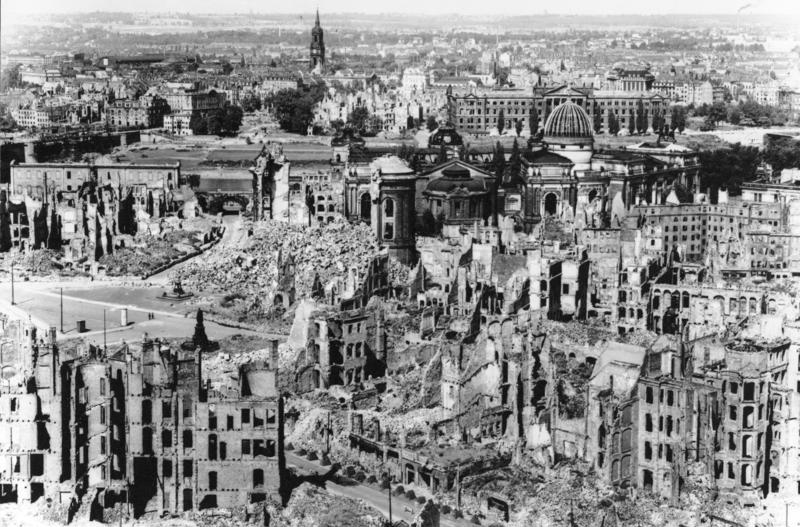
    On May 29th 1945, three weeks after the surrender of Nazi Germany but before the nuclear bombs were dropped on Hiroshima and Nagasaki, the world-famous German author Thomas Mann (1875-1955), Nobel Prize laureate in Literature, gave a lecture at the Library of Congress, titled “Germany and the Germans”. Many looked forward to this address with anticipation; Thomas Mann was considered a supreme interpreter of German culture throughout the world, and a fierce opponent of Nazism. The emigration of the Mann family from Germany in 1933 had echoed in the international press, contributing to the universal opposition to Nazism.

    Addressing the question of German national character, he began by announcing that “I am to speak to you today on Germany and the Germans—a risky undertaking, not because the topic is so complex, so inexhaustible, but also because of the violent emotions that it encompass today”. Yet, notwithstanding the turmoil created by WWII and the Holocaust, he presents a fascinating and solid explanation for the rise of Nazism in Germany.

    Before delving into a historical analysis, Mann asserts that he sees himself as part of German culture. In spite of being a brave opponent of the Nazis, he argues that there are no ‘good Germans’ or ‘bad Germans’: “Any attempt to arouse sympathy to defend and to excuse Germany, would certainly be an inappropriate undertaking for one of German birth today. To play the part of the judge, to curse and damn his own people in compliant agreement with the incalculable hatred that they have kindled, to commend himself smugly as ‘the good Germany’ in contrast with the wicked, guilty Germany over there with which he has nothing at all in common, — that too would hardly befit one of German origin. For anyone who was born a German does have something in common with German destiny and Germany guilt”.

    He then turns to the historical arguments. Already in the sixteenth century Martin Luther, the founder of the Protestant Reformation, instilled an ambivalent attitude towards freedom: “And no one can deny that Luther was a tremendously great man, great in the most German manner, great and German even in his duality as the liberating and the once reactionary force, a conservative revolutionary. He not only reconstituted the Church; he actually saved Christianity”. From the individual’s perspective, Luther was a great liberator: he encouraged a direct encounter between man and God, freeing him from the power of the priesthood. He translated the Bible so every believer could read it himself. Yet from the perspective of society as a whole, he supported the darkest forces oppressing the evolvement of a free society. He was a liberator of the inner experience, but fiercely rejected the idea of political liberty. Germans were encouraged to nurture their feelings, artistic drives, religious beliefs – yet political freedom was denounced.

    This dualism, argues Mann, was further expanded by Goethe, the great German poet, in the eighteenth and nineteenth centuries. In his play Faust, a masterpiece, the protagonist, Faust, makes a pact with the devil in order to achieve full self- gratification. Though the explicit point of view of the author is a condemnation of this pact, the play leaves plenty of room for moral ambivalence. The reader can infer that in order to fulfill one’s desires it would be imperative to have a pact with the devil. And Mephisto, who satisfies Faust’s wishes, is far from being repulsive. He is smart cunning and strong: “And the devil, Luther’s devil, Faust’s devil, strikes me as a very German figure, and the pact with him, the Satanic covenant, to win the treasures and power on earth for a time at the cost of the soul’s salvation, strikes me as something exceedingly typical of German Nature. A lonely thinker and searcher, a theologian and philosopher in his cell who, in this desire for world enjoyment and world domination, barters his soul to the Devil, — isn’t this the right moment to see Germany in this picture, the moment in which Germany is literally being carried off by the Devil?” Indeed, during WWI, Goethe’s Faust was distributed to the German soldiers before they were sent off to battle.

    If Luther’s theology created a sense of a boundless self, utter liberation of instincts, emotions, thoughts — yet without any political progress towards democracy – Goethe implanted the notion of moral ambivalence, suggesting that in order to achieve one’s goals one would have to succumb to the enchantment of the devil.

    These two influences led to the evolvement of Nazism. The State of Germany was not the result of a yearning for democracy: “Fundamentally Bismarck’s empire had nothing in common with “nation” in the democratic sense of the word. It was purely a power structure aiming toward the hegemony of Europe, and notwithstanding its modernity”. Boundless individual self-fulfilment was encouraged; the widespread moral stand was ambivalent, suggesting that cruel brutality is a necessary evil – and the result was Nazism; a full realization of a historical process that commenced in the sixteenth century.

    Well worth reading; a brilliant historical analysis.

  • On Zionism and Gender – The Young Women’s Farm

    On Zionism and Gender – The Young Women’s Farm

    Women today find it hard to unite for the sake of a common cause. I mean, really unite – not simply share views on social networks, go to empowering women’s meetings, or vote for candidates who vow to promote feminist issues. Most of us, I believe, feel that in the daily struggle with discrimination we stand alone. We may gripe about it, take some action once in a while, but nothing more. However, profound social change probably requires an altogether different sense of commitment.

    A relatively unknown part of Zionist history is the role of women – their aspiration to be equal partners in this revolutionary movement. ‘Revolutionary’, because Zionism aimed not only to create a homeland for the Jewish people but also to change the Jewish character, to form a ‘new Jew’ (the ‘Sabra’). Those early Zionists saw the Jews living in the Diaspora as weak and unproductive. The ‘New Jew’ would be strong, able to defend himself, and productive. And in the eyes of Herzl and his contemporaries, productivity meant one thing: engaging in agriculture.

    In the late nineteenth century some Jews from Eastern Europe settled in Israel, then Palestine, with the hope of fulfilling the Zionist vision. First came some families, and then groups of socialist single men – with a very few young women – eager to make the barren land bloom. The Arab-Israeli conflict was still in its infancy. The real threats were death from starvation or malaria.

    The women – the very few who dared to travel to this god-forsaken place – were expected to work in the kitchen, wash the men’s clothes, and perhaps engage in some limited home-based farming. To be historically fair, this was before voting rights were granted to women both in the UK (1928) and in the USA (1920). But some of these girls were determined to take full part in the Zionist endeavor.

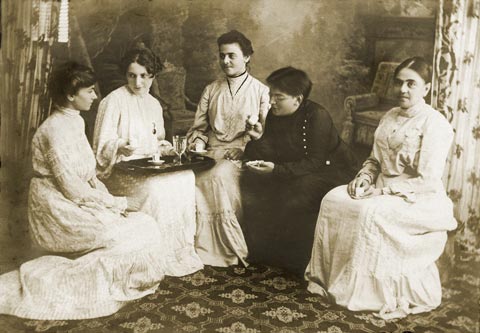
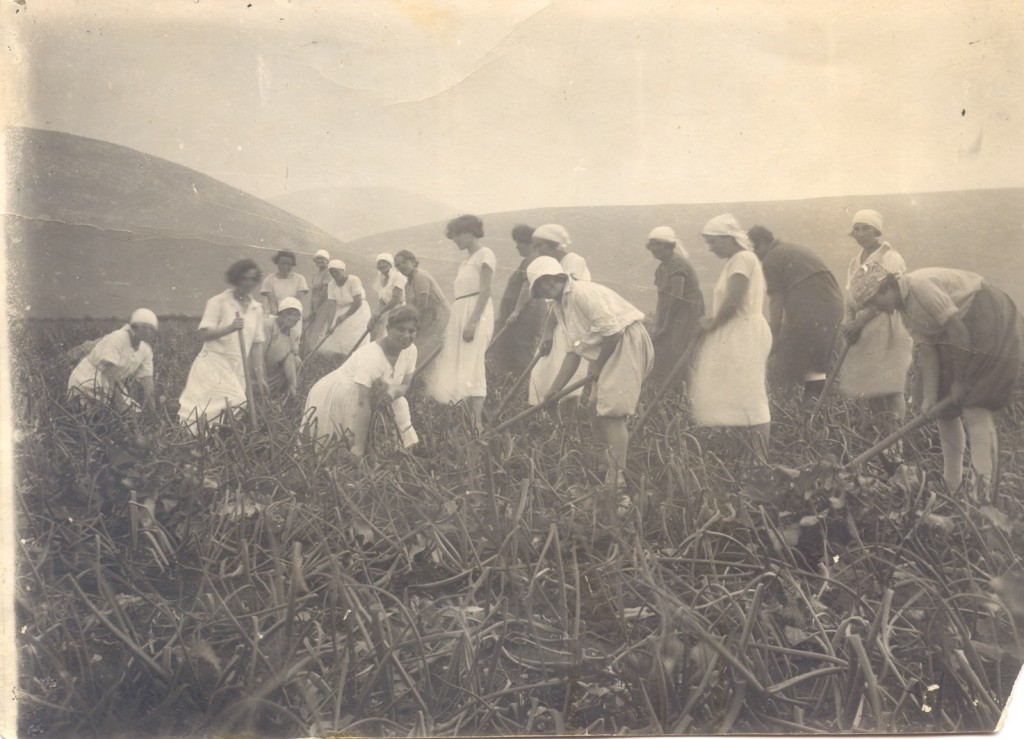
    In 1911 Hannah Meisel, a Russian immigrant with a PhD in agronomy, decided to establish a women’s farm, an agricultural training institution for young, unmarried women. She called it ‘The Young Women’s Farm’ (Havat ha’almot). Leasing a room from a Jewish settlement next to the Sea of Galilee, she came with two students; four others joined her later. The girls, sixteen or seventeen years old, were eager to master every theoretical and practical aspect of agronomy. 

    You would think the young men already settled there would have welcomed them. They did, but only as long as they were willing to take care of the cooking and laundry. At first the girls and the teacher lived in one room, with neither floor nor windows, but eventually the school had its own house. And other girls quickly followed the first students. The rumor of this revolutionary school for young women spread in Zionist circles, to the point that Hannah had to reject some of the applicants since there was room for only twenty girls at a time. One famous student was Rachel the Poetess.

    The girls worked in the fields for eight hours a day and their evenings were devoted to general education. They specialized in growing unique kinds of orchards and vegetables. They established a nursery that provided hundreds of olive, lemon, almond, and eucalyptus seedlings for other farms. They began the experimental planting of bananas, today a common crop in this part of Israel. Their eucalyptus trees were used to dry the swamps that inflicted malaria and other diseases. They had a productive dairy barn, and the decorative flower garden was another of their innovations.

    Hannah, in spite of her revolutionary spirit, was an extremely practical person. She thought that after two years of schooling the girls would marry and settle down with a husband and children, and therefore insisted they should also learn ‘household management’: cooking, sewing, cleaning. Her aim was to create a farmer’s wife with some agricultural skills.  But the girls, now an integrated group of determined young women, who had endured hardships and maladies, developed an altogether different image of their role in society. They wanted to engage in agriculture as their main vocation, not just for the sake of supporting a husband.

    The protests against ‘household management’ evolved into an open rift with Hannah, whom the girls now called ‘our older sister’. “What sort of subject is that?” they wondered. Some cleaned the kitchen out of respect for her, others openly refused, and some pretended to clean it but left the oven and pots dirty. The spirit of feminism that developed within the group could not be shaken even by the fierce stand of the respected teacher.

    It is most likely that if Hannah had had only one or two students, they would have adopted her worldview. But the united group she created formed new perceptions of gender role, more radical than her own; they wanted a new life style. Their mutual support made the different, innovative feminine identity possible. In many ways they were ahead of their time, a true ‘avant-garde’.

    The women’s farm lasted for six and a half years. The outbreak of WWI created new, insurmountable obstacles. Yet the determination and collective spirit of these young women had a profound and long-lasting affect on women’s role in Israeli society. If you had asked Hannah, she might have said their influence was somewhat too extreme.