Tag: israeliculture

  • The Six-Day War – East and West

    The Six-Day War – East and West

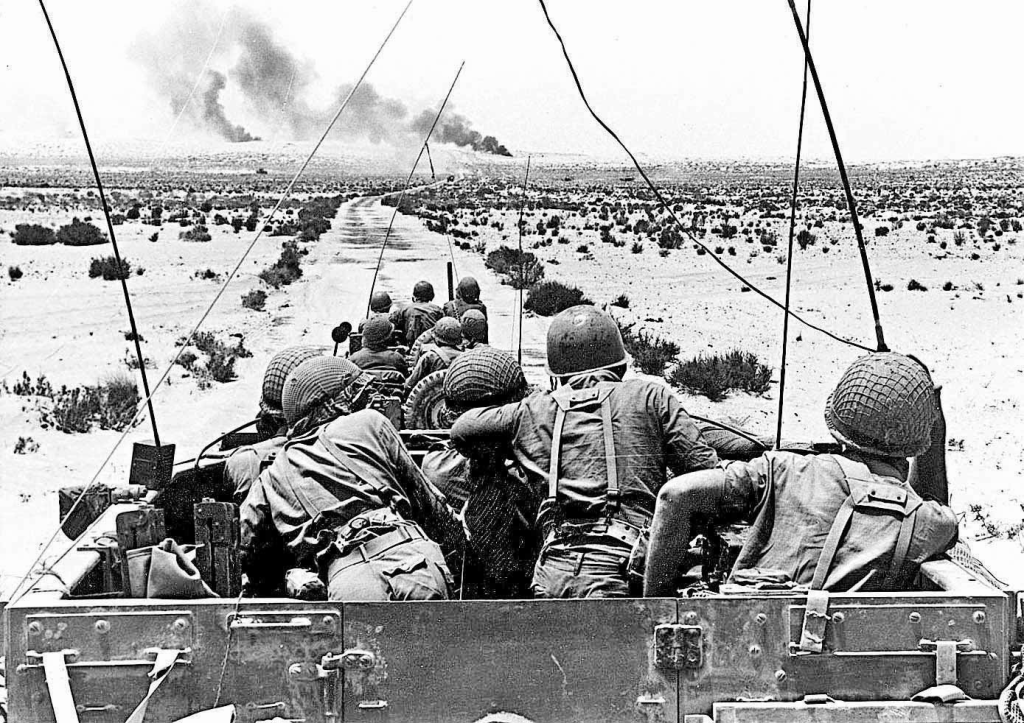
    One cannot over-estimate the implications of the Six-Day War, which swept the Middle East in 1967. It completely changed the political shape of the area, creating new circumstances and new difficulties in the Arab-Israeli conflict. A less-known aspect of the war is its effect on Israeli society. As is often the case with wars, it brought to the surface frustration and anger that otherwise perhaps would have remained dormant: the feeling of Sephardi Israelis (people whose families came from Middle Eastern countries) that they were discriminated against by the Ashkenazi elite (the Ashkenazi Jews being those who were descendants of European Jewry).

    Eli Amir (1937– ) is an insightful Iraqi-born Israeli writer. At the age of thirteen he emigrated with his family from Bagdad to Israel. He experienced the difficulties of Sephardic Jews coming to Israel in the fifties: due to lack of accommodation and funds, the huge influx of immigrants were placed in refugee absorption camps; he went to school in a kibbutz, where he encountered a condescending Ashkenazi elite; he then moved to Jerusalem, slowly advancing as a civil servant, struggling with prejudice against immigrants from the Middle Eastern countries. In 1983 he published his first novel, which was followed by several others.

    Yasmine, published in 2005, is a love story between a young Israeli man and a beautiful Palestinian woman. Nuri, the protagonist, a character with a strong autobiographical quality, is a soldier fighting in the Six-Day War on the Egyptian front. Like the author, he emigrated from Iraq as a child, went to school in a kibbutz, left for Jerusalem, and is part of the Israeli forces in the war. Being a fluent speaker of Arabic and well-educated, in the wake of the war he is appointed to a government post in East Jerusalem, where he meets Yasmine. She left her parents to study in the Sorbonne, but concern for them prompted her to visit them. The passionate love story between the two eventually ends in her returning to Paris, feeling that marriage between a Palestinian and Israeli is practically impossible.

    The entire novel revolves around Nuri’s self-perception in terms of East and West. The turmoil generated by belonging to two different cultures drives him to constant contemplation of the nature of each one, and how he is part of it: “I am a Jew born in Arabia, who holds dear the treasures of the West. In the morning I listen to classical music, in the evening to Arab music. A bird traveling between two worlds”.

    But Nuri is not simply wavering between two worlds; he feels the contempt many Ashkenazi Israelis have for Middle Eastern culture. This deepens his solidarity not only with Sephardic immigrants but also with Middle Eastern culture in general: “I am at odds with myself, and with those who are believed to be my brothers. Sometime very close to them, sometimes horrified by them. I miss the Tigris River, the palm trees, my home in Bagdad, but I will never return there”.

    So, strangely, this young man who fought against the Egyptian army in the Six-Day War finds himself feeling more at ease with Arab culture than with the values and lifestyle of many Israelis. He even defends the Egyptian soldiers, ridiculed by Israelis for fleeing without fighting.This inevitably brings to the surface the Sephardi-Ashkenazi conflict, in a way that leaves no room for any ambiguity or avoidance.

    Amir further elaborates on the role of the Six-Day War in the worsening of ethnic tensions in Israel. In the frame of his post in the Israeli government, Nuri meets several cabinet ministers, and also Levi Eshkol, the prime minister at the time. To his utmost surprise they converse in Yiddish (the language of Ashkenazi Jews); affectionately they call him yunger-man, young man. But not only that: he then realizes that the Ashkenazi elite perceives the victory of Israel in the war in terms of West vs. East. The prime minister, his cabinet, and in fact most Ashkenazi Israelis, believe that Israel won because it is a western country; to put it more precisely, they think that the Arab nations lost due to their backward Middle Eastern mentality. This leads Nuri to an almost impossible emotional dilemma, not knowing where he belongs.

    All this does not lead Amir to a simplistic preference for the Middle Eastern mentality – in fact, is it the other way around. Nuri says: “I love the east, the role of the family, the manners, the warmth, the colors, the odors, the crowd, the sweat, but I also detest it for its stench, hypocrisy, treachery, its blind and cruel fanaticism, and I prefer the open-mindedness of the West, its airy alienation and distance”.

    The novel follows the emotional dilemma that led to the outbreak of protests by Sephardic Israelis. In 1971 the ‘Black Panthers’ violently challenged the Israeli establishment for its discrimination against Sephardic people. And though the intensity of these feeling has diminished greatly today, the issue of Ashkenazi-Sephardi relations is still very relevant; it is certainly part of party agendas in the coming elections.
  • A feminine Christ – A.B. Yehoshua

    A feminine Christ – A.B. Yehoshua

    In the decades since the formation of the State of Israel, a slow and gradual change has been taking place in the attitude of Israelis towards Christianity. When the country was founded, the memory of being a persecuted minority in a Christian world was vivid in the minds of many; large numbers of new immigrants bore the trauma of the Holocaust. Thus, Christianity was seen mainly as an anti-Semitic phenomenon, and teaching it never became part of high school curriculum. Today the Christian world evokes some antagonism perhaps – but mainly increased curiosity.

    A.B. Yehoshua (1936-2022 ), a well-known Israeli author, exemplifies this change. Born in Jerusalem to a Sephardic Jewish family that has lived in the city for five generations, he served as a paratrooper in the IDF, studied philosophy at the Hebrew University, and later became a literature professor at Haifa University.

    In 2004 he published a novel titled A Woman in Jerusalem. During the second Intifada a terrorist explodes himself in the central Jerusalem food market. An anonymous woman is brought unconscious to the hospital on Mt. Scopus and dies after a couple of days. Her body lies nameless in the hospital morgue. Strangely the body is intact, except for wounds in her palms and feet and a scratch on her forehead. A local reporter learns that she used to work at a big bakery in Jerusalem. The owner, publicly criticized for not taking care of a wounded employee, is unable to find any record of her employment. He orders the human resources manager to find out who she was, and when the bakery had employed her.

    The reader becomes part of the human resources manager’s efforts to reveal her life circumstances. Yulia Ragayev, a woman about forty years old, came from the Former Soviet Union to live in Jerusalem. Her partner and a son left Israel as the threat of terror grew, yet she was determined to stay.

    Yulia was an illuminated person, charismatic in an introverted manner. Not exactly beautiful, not very sociable, yet there was something about her that made everyone love her. The night-shift manager at the bakery was touched by this foreign worker; thinking that a delicate woman like her shouldn’t be working at cleaning, he sent her off to find another job, without letting anyone know. She lived in a shack in an ultra-religious part of Jerusalem, and was loved by the people there “even though she wasn’t Jewish”. The doctors at the hospital were attached to her, in spite of her being unconscious. And the human resources manager became captivated by her image after her death, feeling she might emerge any minute now, alive and well. Her unique nature is emphasized by the fact that she is the only character who has a name.

    The owner of the bakery, feeling guilty for not visiting her at the hospital, decides to have her buried at home, in her village in Eastern Europe. So begins a long, hard journey. The human resources manager, the reporter, her son, her ex-partner, and other people, all join in accompanying Yulia on her way to her burial.

    After overcoming endless obstacles, they finally reach the remote village in the high mountains. Her mother returns from a short stay at a convent, wearing a nun’s robe. Learning that her daughter was brought to be buried there, “the old woman reacted like a wounded animal […] she threw herself at the human resource manager’s feet, pleading that her daughter be returned to the city that had taken her life. That way, she, too, the victim’s mother, would have a right to it”. The human resources manager, now fully absorbed by the character of Yulia, accepts the mother’s wish to take the body back to Jerusalem.

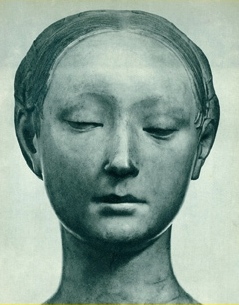
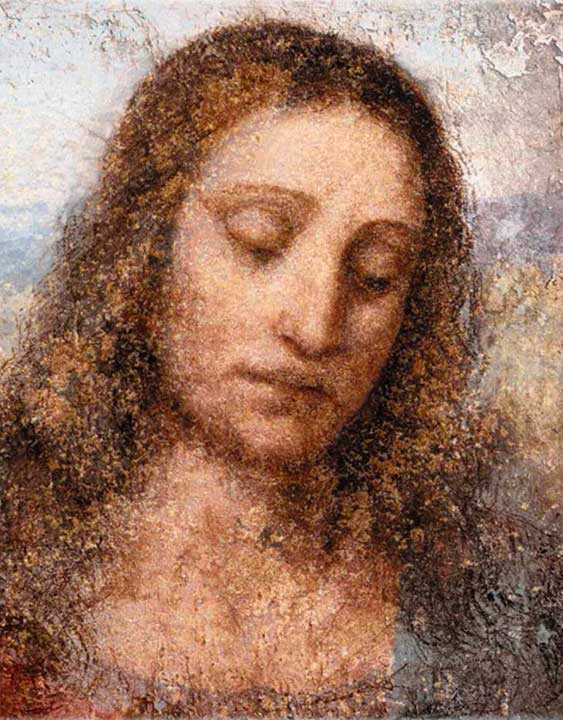
    A.B. Yehoshua’s way of familiarizing the reader with the Gospels is by dismantling the passion of Christ, and then embedding various elements in present-day Israel. The illuminated character, here a woman rather than a man; the wounds, which resemble those of the crucifixion; the days the body lies not in a cave but in the morgue; the journey of the disciples; a via dolorosa; Yulia’s preferring her religious belief over being with her family; the route to Jerusalem; the sensitivity to society’s weaker members  – all reflect Jesus’s life and death, yet A. B. Yehoshua has planted them in a new, modern story. In doing so, by no means is he voiding them of their spiritual meaning; on the contrary, they become more tangible, easily appreciated by the Israeli reader. The story of Yulia Ragayev’s life and death is about piety, grace, and generosity; it has nothing which provokes antagonism.

    And there is Jerusalem. In the midst of the bloody Arab-Israeli conflict and the struggle between Jews and Muslims over the city, A. B. Yehoshua reminds us that millions of Christians see it as their own – not in a political sense, but in a fundamental spiritual way. Whoever rules the city, should always keep this in mind.

  • Jesus in Israeli Society

    Jesus in Israeli Society

    Teaching Israeli students about Jesus Christ is a fascinating experience. I am not talking about Christian theology, but about his depiction in the Gospels, as a literary character.

    Generations of Jews saw Christ as an adversary and a foe, the cause of their endless sufferings. Most didn’t even pronounce his name, referring to him as ‘that man’. In the modern age, Zionism has focused completely on the future of the Jewish people. The Christian world, a variety of perspectives and worldviews, was perceived only through Zionist spectacles: as a realm exterior to Jewish life, distorting it by its ruthlessness. Eventually, this shaped the Israeli education system. Even today, most high schools do not teach the foundations of Christianity, which are, of course, imperative for understanding Western civilization.

    But art, as is often the case, heralded a change. From the early twentieth century, several Israeli writers attempted to examine Jesus from a fresh perspective – not as victims of Christianity, but as independent thinkers who are influenced by it. Since the foundation of the State of Israel, the common sentiment of a persecuted minority has been transformed into a notion of potency and stamina; this, in turn, created a new, open-minded attitude to the image of Christ.

    Pinhas Sadeh (1929-1994), an Israeli novelist and poet, was one of the forbearers of this change. Born in Poland, he immigrated to Israel with his family at a young age. A colorful character, some would say even controversial, a poetic soul surrounded by young admirers. At the age of 27 he published Life as a Parable. The book is a collection of personal experiences, each one illustrating a certain theme. Several years after its publication, it became a cult book among young people.

    Though all the events depicted in the book unfold in Israel, it is hardly apparent. They could have taken place anywhere. Sadeh neither accepts Zionism nor rejects it. He exists in a universal human sphere; an artist unchained by any ideology.

    Life as a Parable is profoundly influenced by the image of Jesus and the New Testament: an acknowledgement of human suffering, forgiveness, spiritual love, and the enlightenment of religious life. The author examines his surroundings from a fundamentally Christian perspective.

    In his portrayal of Christ, Sadeh completely ignores the complex historical questions regarding his life. Jesus is the emblem of universal good, the healer of the sick and the maker of miracles.  Yet he is also tormented and lonely, betrayed by his disciples. Chapter twelve is a direct depiction of the passion of Christ. It begins with the author’s description of his own loneliness. On a cold, rainy night in Jerusalem, freezing in an attic, he is looking through the window and the world looks like a “single thick cloud – opaque, black, eternal”. In his desperation he turns to the Gospels, “I have read the story of his life (perhaps twenty times, perhaps fifty)”.

    His point of departure for connecting with Christ is the notion of solitude; fundamental human loneliness, existential isolation. In his desperation he finds comfort in this ideal man, all generosity and kindness, who also experienced loneliness: “…lonely in the world, since his mother and brothers, it is told, felt he was dull-witted, and his disciples abandoned him in the hour of decision — so he lived the true and naked meaning of human life. He spoke of another life, another country, another time, of other rooms, faces, seasons and bodies, of another love…”.

    He then portrays the miracles Christ performed out of mercy for the poor, the sick and the miserable, his love of the sinners, his aching heart witnessing human pain. Sadeh also refers to the poetical aspect of the New Testament. Describing the Sermon on the Mount he says, “…then (the scripture says) he left the desert and came to the Galilee. And there he went up the mountain and said the most beautiful words ever uttered by a poet. He spoke of the comfort that is contained, like a fruit in the seed, in mourning, of the fulfillment that is contained in thirst, of the Kingdom of Heaven that shrines with a dim but never-fading glory from out of the rags and tatters of human existence… “. The greatness of Christ is illustrated in both his acts and his words.

    The students listen attentively; some look bewildered, encountering this perspective of Christianity for the first time. Here are some of their thoughts and questions:

    –       If Jesus was such an enlightened man, how come the Church was so cruel and ruthless, especially to us, the Jews?

    –       Why didn’t Sadeh convert to Christianity? Is it possible to believe in Christianity without being Christian?

    –       I am sure Sadeh read the Old Testament. How can he say that Christ’s words are ‘the most beautiful’?

    –       I never knew Jesus used so many parables. I feel it leaves more place for a personal religious experience than strict Jewish rules.

    –       Looking at Sadeh’s depiction of him, in what way is Jesus Christian, and not Jewish?