Tag: jerusalem

  • The Colors of Jerusalem

    The Colors of Jerusalem

    There is something elusive about the Middle Eastern landscape: a blazing sun creates vivid colors, yet the dusty air blurs the contours; desert sand makes the lively hues of rocks, bare hills, olive trees dull and faded. Many European artists have tried to capture the unique light and the peculiar landscape, often perceiving it as a sort of primordial scenery. So different from the European landscape, at times it seemed almost mystical, with its ravines, meandering hills, and arid vegetation.

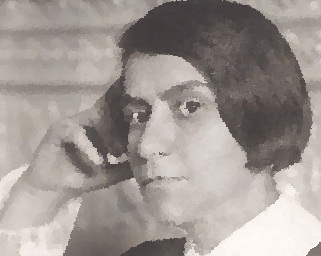
    Anna Ticho (1894-1980) was an Israeli painter who devoted her life to depicting Jerusalem and the Judean Mountains. Born in Brno, then part of the Austro-Hungarian empire, her family moved to Vienna to enjoy its flourishing culture. Anna often visited the Albertina Museum, admiring the works of Durer and Bruegel. She took art classes and began to draw at the age of fourteen.

    When she was eighteen years old, the Jewish organization “For Zion” sent her cousin Dr. Abraham Ticho, an ophthalmologist, to Palestine to open an eye clinic in Jerusalem. Anna decided to join him on his journey. The cousins fell in love and married.

    When they arrived in 1912 Anna was in a state of shock. The views, the colors, the buildings, the people – everything was so different from anything she had ever seen. She was so overwhelmed by the new surroundings that she could not even express her feelings through art. For four years Anna made not a single painting.

    As WWI broke, Dr. Ticho, a reserve officer in the Austrian army, was sent to Damascus, where he served as a surgeon. He couldn’t find a suitable nurse, so Anna volunteered to be his assistant, an occupation she continued until his death. As the war ended they returned to Jerusalem and purchased a beautiful house in the center of Jerusalem. The lower floor was an eye clinic where Dr. Ticho treated all sorts of patients – rich and poor, high officers of the British Mandate and Jewish immigrants, mainly from Germany – with his wife as his nurse.

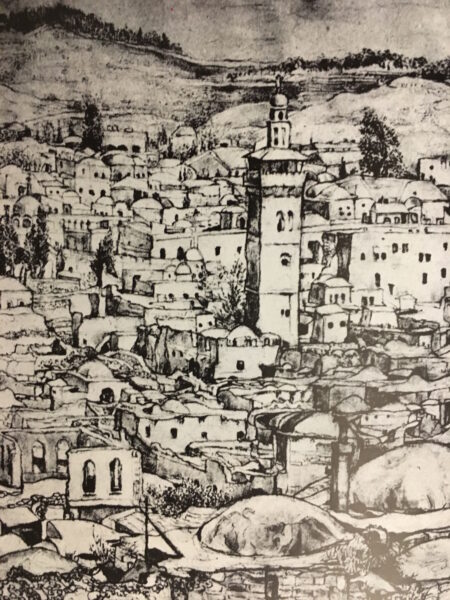
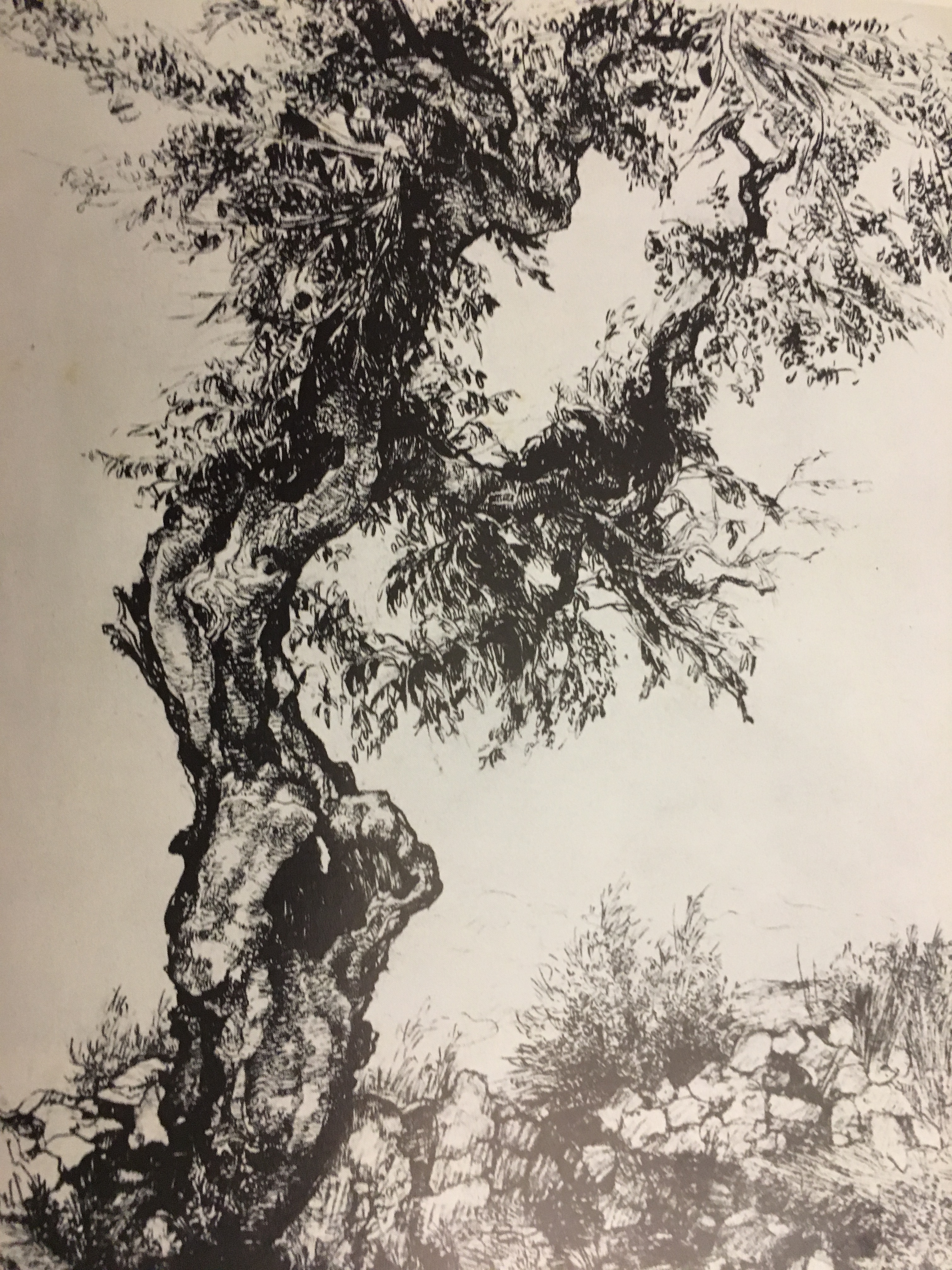
    Now, after years in the Middle East, Anna had already grown accustomed to the strange country. She was completely fascinated by the landscape surrounding the city. On the edge of the desert, with buildings covered by Jerusalem stone, Anna walked for hours around the city, trying to capture the unique landscape in her drawings, mostly using nothing but a black pencil. Walking alone in uninhibited areas wasn’t safe, but she wouldn’t give it up. She fell in love with the surroundings. She dedicated her time to both assisting her husband and creating wonderful drawings. The influence of Durer is clearly reflected in her work from that time: delicate pencil drawings, detailed description of the landscape, very expressive. The hills of Jerusalem, people of very different origins, the exceptional light are all found in her drawings.

    Unlike many Israeli artists of this time, Anna did not make any attempt to embellish the landscape or the city. Her art was utterly detached from any Zionist notions. She depicted stony ground, huge thorns, leafless trees, poor people, making no effort to adorn the bare land or soften its bleakness. At times her art seems almost religious – the views seem so primordial that they appear like some kind of pre-human land, almost divine. There is no reference to Jewish or Israeli themes, only a direct unmediated observation of nature.

    In 1960 Dr. Ticho passed away, and Anna decided to leave their home and move to Motza, a neighborhood on the outskirts of Jerusalem, located on one of the hilltops of the Judean Mountains. The view was breathtaking, magnificent. But Anna, following her inner artistic drive, began to paint in her studio. No longer did she feel the need to see the landscape as she portrayed it – now she allowed her recollections to shape her art.

    In the balance between a realistic depiction of concrete objects and a portrayal of an inner experience, the latter had the upper hand now. Anna began to use colors and to experiment with pastels to try and express her impression of the landscape. This withdrawal into the studio, reliance on past impressions, perhaps now more processed, generated wonderful paintings of the views around Jerusalem. Her art now lacked the almost mystic character of the past. It became softer, with greenery and flowers, perhaps revealing more affinity to the land.

    Many immigrants coming to Israel have been overwhelmed by the landscape, so different from their natural environment; not taken aback by ideological barriers or the social obstacles, but simply unnerved by the foreign landscape. Anna, gifted artist that she was, depicted the very slow and sometimes painful process of adjusting to this new geographic region. First came shock and inertia, then an attempt to grasp the strange land through detailed observations, and finally, after containing it, an inner freedom to express both reservation and affection.
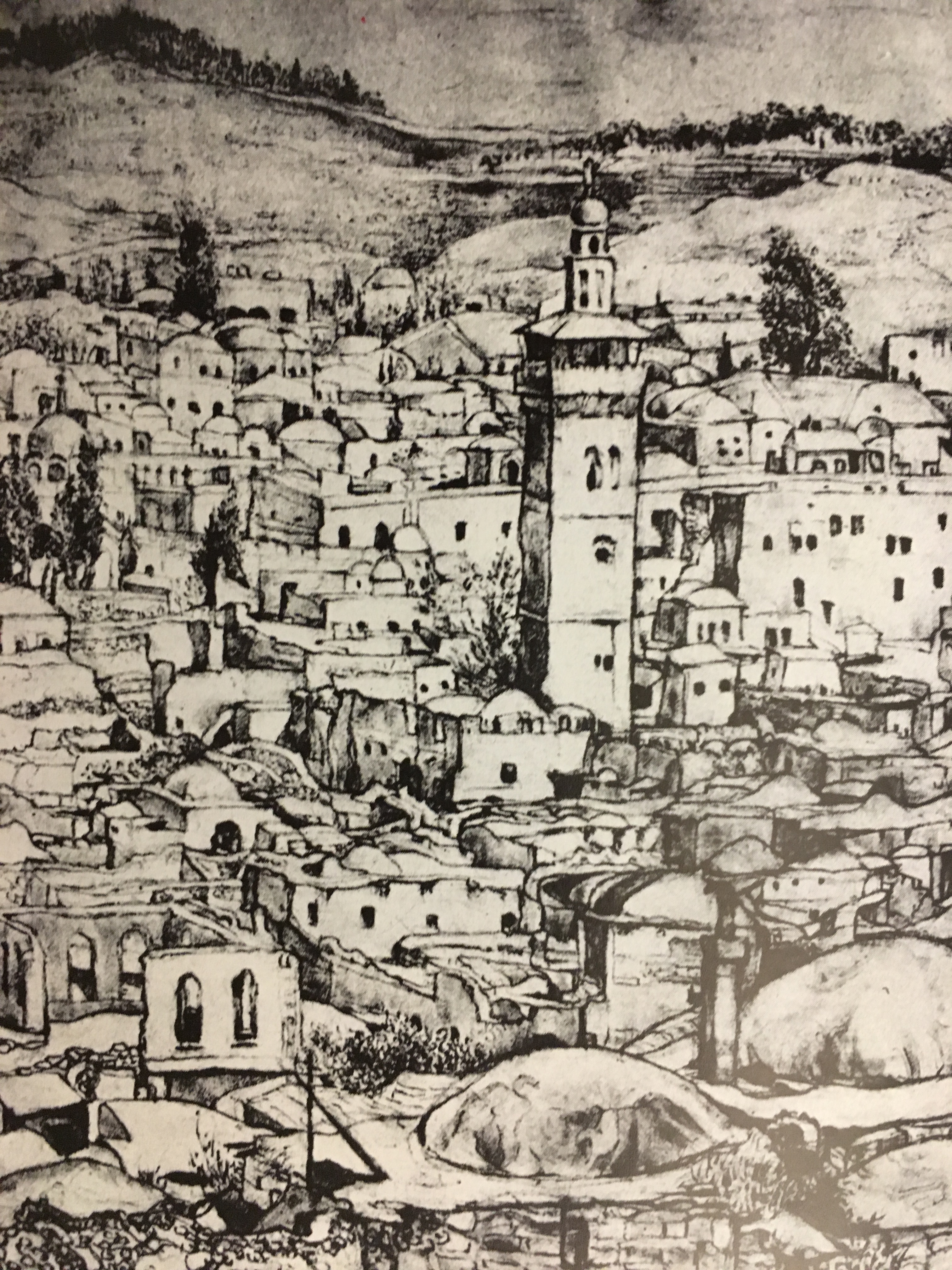
    The Old City, Jerusalem 1928
    Ancient Olive Tree, 1943
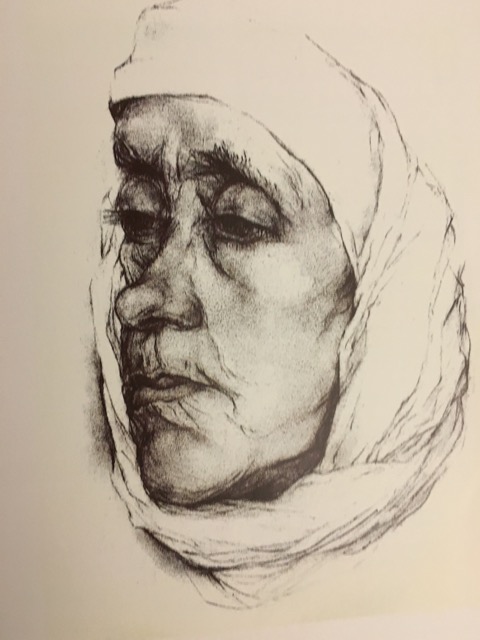
    Old Woman, 1940
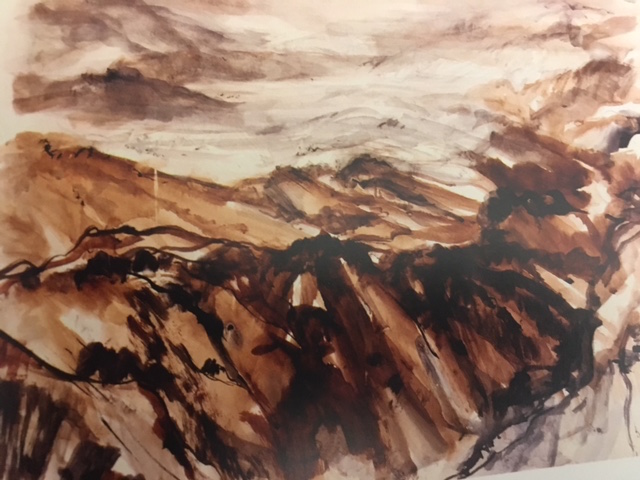
    Landscape, 1960
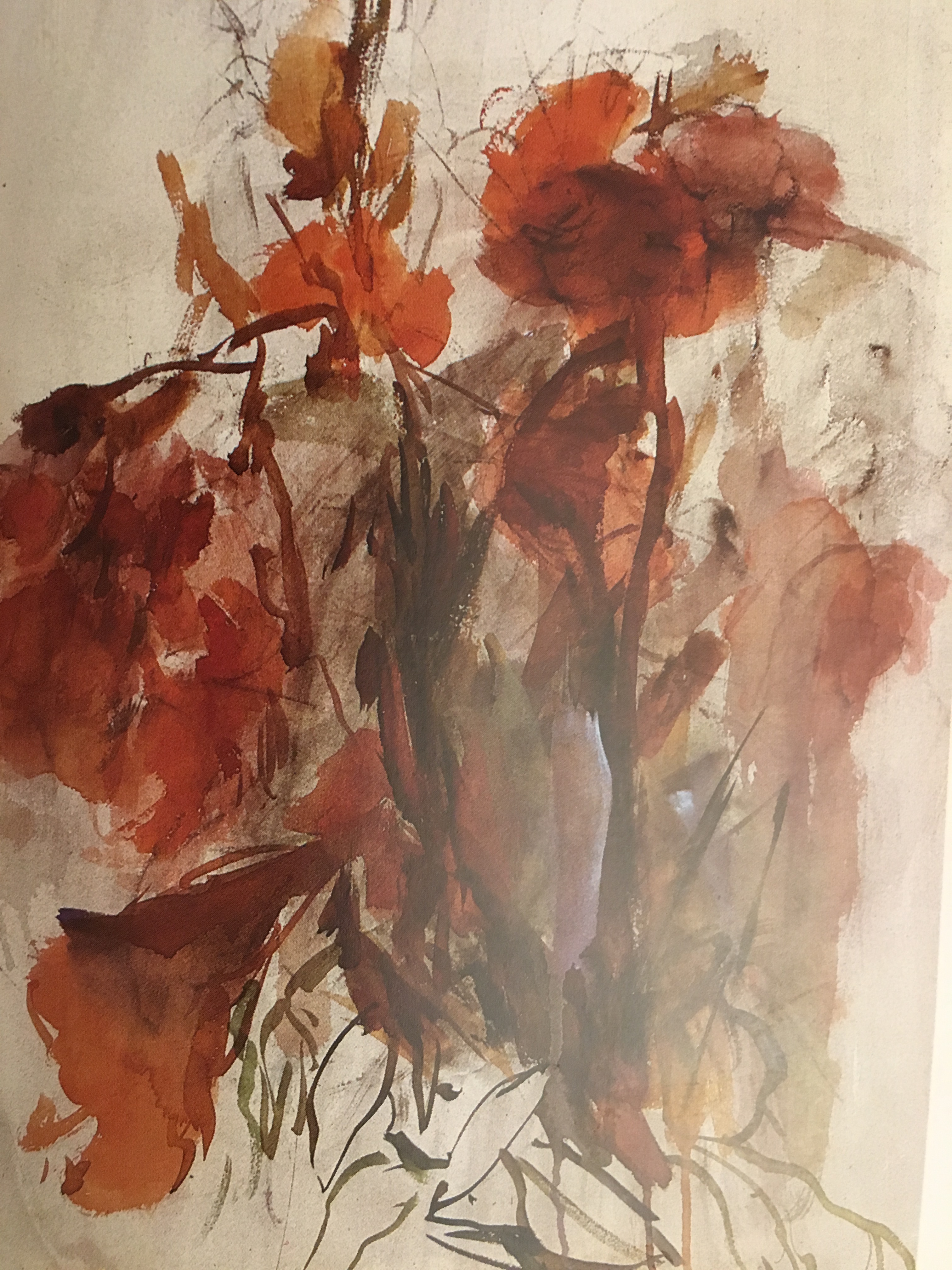
    Withering flowers, 1975
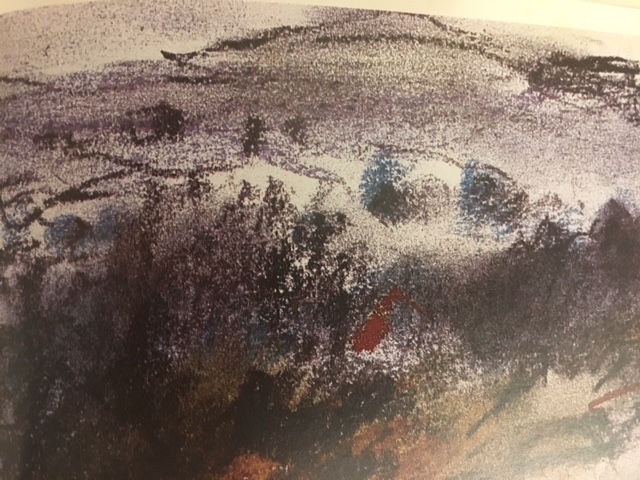
    Landscape, 1979

  • A feminine Christ – A.B. Yehoshua

    A feminine Christ – A.B. Yehoshua

    In the decades since the formation of the State of Israel, a slow and gradual change has been taking place in the attitude of Israelis towards Christianity. When the country was founded, the memory of being a persecuted minority in a Christian world was vivid in the minds of many; large numbers of new immigrants bore the trauma of the Holocaust. Thus, Christianity was seen mainly as an anti-Semitic phenomenon, and teaching it never became part of high school curriculum. Today the Christian world evokes some antagonism perhaps – but mainly increased curiosity.

    A.B. Yehoshua (1936-2022 ), a well-known Israeli author, exemplifies this change. Born in Jerusalem to a Sephardic Jewish family that has lived in the city for five generations, he served as a paratrooper in the IDF, studied philosophy at the Hebrew University, and later became a literature professor at Haifa University.

    In 2004 he published a novel titled A Woman in Jerusalem. During the second Intifada a terrorist explodes himself in the central Jerusalem food market. An anonymous woman is brought unconscious to the hospital on Mt. Scopus and dies after a couple of days. Her body lies nameless in the hospital morgue. Strangely the body is intact, except for wounds in her palms and feet and a scratch on her forehead. A local reporter learns that she used to work at a big bakery in Jerusalem. The owner, publicly criticized for not taking care of a wounded employee, is unable to find any record of her employment. He orders the human resources manager to find out who she was, and when the bakery had employed her.

    The reader becomes part of the human resources manager’s efforts to reveal her life circumstances. Yulia Ragayev, a woman about forty years old, came from the Former Soviet Union to live in Jerusalem. Her partner and a son left Israel as the threat of terror grew, yet she was determined to stay.

    Yulia was an illuminated person, charismatic in an introverted manner. Not exactly beautiful, not very sociable, yet there was something about her that made everyone love her. The night-shift manager at the bakery was touched by this foreign worker; thinking that a delicate woman like her shouldn’t be working at cleaning, he sent her off to find another job, without letting anyone know. She lived in a shack in an ultra-religious part of Jerusalem, and was loved by the people there “even though she wasn’t Jewish”. The doctors at the hospital were attached to her, in spite of her being unconscious. And the human resources manager became captivated by her image after her death, feeling she might emerge any minute now, alive and well. Her unique nature is emphasized by the fact that she is the only character who has a name.

    The owner of the bakery, feeling guilty for not visiting her at the hospital, decides to have her buried at home, in her village in Eastern Europe. So begins a long, hard journey. The human resources manager, the reporter, her son, her ex-partner, and other people, all join in accompanying Yulia on her way to her burial.

    After overcoming endless obstacles, they finally reach the remote village in the high mountains. Her mother returns from a short stay at a convent, wearing a nun’s robe. Learning that her daughter was brought to be buried there, “the old woman reacted like a wounded animal […] she threw herself at the human resource manager’s feet, pleading that her daughter be returned to the city that had taken her life. That way, she, too, the victim’s mother, would have a right to it”. The human resources manager, now fully absorbed by the character of Yulia, accepts the mother’s wish to take the body back to Jerusalem.

    A.B. Yehoshua’s way of familiarizing the reader with the Gospels is by dismantling the passion of Christ, and then embedding various elements in present-day Israel. The illuminated character, here a woman rather than a man; the wounds, which resemble those of the crucifixion; the days the body lies not in a cave but in the morgue; the journey of the disciples; a via dolorosa; Yulia’s preferring her religious belief over being with her family; the route to Jerusalem; the sensitivity to society’s weaker members  – all reflect Jesus’s life and death, yet A. B. Yehoshua has planted them in a new, modern story. In doing so, by no means is he voiding them of their spiritual meaning; on the contrary, they become more tangible, easily appreciated by the Israeli reader. The story of Yulia Ragayev’s life and death is about piety, grace, and generosity; it has nothing which provokes antagonism.

    And there is Jerusalem. In the midst of the bloody Arab-Israeli conflict and the struggle between Jews and Muslims over the city, A. B. Yehoshua reminds us that millions of Christians see it as their own – not in a political sense, but in a fundamental spiritual way. Whoever rules the city, should always keep this in mind.

  • Else Lasker-Schüler – an Alienated Poet

    Else Lasker-Schüler – an Alienated Poet

    The life story of Else Lasker-Schüler is the story of German Jewry from the late nineteenth century until World War II: Jews who were neither part of the traditional Jewish way of living, prevailing in Eastern Europe, nor fully assimilated into the non-Jewish German society. But it is also the fascinating and tragic biography of a uniquely original and talented poet, highly praised in Germany both during her lifetime and after her death.

    Else was born in 1869 in Elberfeld, Germany to an assimilated Jewish family. As a child she knew she was Jewish, but was unaware of Jewish tradition. On Yom Kippur her parents would invite friends and have a huge meal, and young Else would wonder what it was that they were celebrating. Due to an illness she left school at the age of eleven, and acquired her education from her mother, herself a poet. At the age of thirteen her beloved brother died; eight years later her mother passed away. Else was a very unusual young woman – soemwhat depressive, creative, imaginative, eccentric.

    She married and divorced twice, and had a son whose father was unknown, an extremely uncommon occurrence at the time. In the first two decades of the twentieth century she was a key figure in Berlin’s bohemian circles; her poems were highly appreciated. Extravagantly dressed, ignoring social conventions, she wandered around Berlin’s coffee shops with her son, adored by artists and intellectuals, a leading female character in German expressionism. In 1932 she won the prestigious Kleist Prize. Yet the poems she wrote at this time reveal a sense of alienation; a feeling of never being part of a social circle, always alone, immersed in an inner spiritual world. She didn’t feel part of German society, yet she was utterly detached from Jewish life.

    Growing anti-Semitism made Else delve into Judaism. Since she lacked any knowledge of beliefs and customs, she began reading the Bible. The biblical figures became vivid in her mind as though they were her contemporaries, and the depictions of the ‘Heavenly Jerusalem’ were as real to her as a place which one could actually visit. Her poems and drawings portray the stories of the Bible in a penetrating and imaginative way. A well-known collection, Hebrew Poems, describes the characters of David, Saul, and Deborah the prophetess.

    In 1927 her son Paul died of tuberculosis. Broken-hearted, her poems from that period were consumed with agony and death. In 1933, at the age of sixty-four, she was beaten in the street by a group of Nazi thugs. As she returned home she decided, in her impulsive way, to leave Germany immediately. She didn’t tell any of her friends that she was leaving and as a result she was declared a ‘missing person’ until she was found safe in Switzerland.

    Else made three journeys to Palestine. The first two left a deep impression and inspired some wonderful poems and drawings. In 1939, at the age of seventy, she traveled for the third time to Jerusalem, but with the outbreak of World War II, the Swiss authorities prohibited her return to Switzerland.

    She spent the last six years of her life in Jerusalem, suffering poverty, illness, and above all, solitude. She was often seen feeding street cats and birds while talking to them; a bizarre – not to say deranged – woman, ignoring everything besides the animals and a few German friends. Yehuda Amichai, an Israeli poet, remembers the children of Jerusalem mocking her. And Leah Goldberg, also a poet and a scholar, recalls watching her: “The café was almost empty. She sat in her usual place, gray as a bat, small, poor, withdrawn … this dreadful poverty, the terrible loneliness of the great poet.”

    The encounter between the real Jerusalem and the imaginary one was very painful for Else, though not all destructive. At the time the city combined a universal spirit with the state of mind of a small town. The tensions between Arabs and Jews, the poverty of some quarters, the pilgrims of all religions, the many religious and cultural symbols so many cherish – they all were details in her spiritual path. She was devastated by the news coming from Germany, worried about her friends, but fully aware that there was nowhere for her to return to after the Holocaust. She drew many pictures of Jerusalem, and completed her last collection of poems, My Blue Piano.

    In 1945 Else died at home, alone. She was buried in the cemetery on Mt. Olives. Very few people attended her funeral.

    My Blue Piano/ Else Lasker-Schüler, 1943

    At home I have a blue piano.

    But I can’t play a note.

    It’s been in the shadow of the cellar door

    Ever since the world went rotten.

    Four starry hands play harmonies.

    The Woman in the Moon sang in her boat.

    Now only rats dance to the clanks.

    The keyboard is in bits.

    I weep for what is blue. Is dead.

    Sweet angels, I have eaten

    Such bitter bread. Push open

    The door of heaven. For me, for now —

    Although I am still alive —

    Although it is not allowed.