Tag: movies

  • Moonlight – an Old Fashion Love Story

    Moonlight – an Old Fashion Love Story

    Moonlight, the winner of the Academy Award for Best Motion Picture of 2016,  depicts the lives of Black people in Florida: economic hardship, violence, drugs, a life of misery with almost no escape. The film presents three stages in the life of Chiron, its main character: as a child, an adolescent, and an adult. We witness him mature from a frightened boy into a threatening drug dealer.

    Chiron is raised by a drug-addicted single mother who sometimes turns to prostitution for survival.  Children bully him, and he comes under the protection of Juan, a drug dealer. Juan takes him to his home, where he lives with his girlfriend, and there Chiron finds the shelter and warmth that he lacks at home. But after he finds Juan sell drugs to his mother he leaves, returning to this home only after Juan’s death.

    In the second part Chiron is a teenager, still being bullied by his classmates and living with his drug-addict mother. Only one boy, Kevin, become his friend. In a moment of emotional intimacy a certain sexual encounter develops.  But later, his classmates forces Kevin to hit Chiron, who is left bleeding and crying on the floor. This part ends with Chiron returning to his classroom — his face revealing that can’t take the misery any more — grabbing a chair and breaking it on the back of one of his abusers.

    In the third part of the movie, Chiron is a muscular young man, a scary drug dealer in Atlanta. His mother has gone into rehab. To his utter surprise Kevin, who he hasn’t seen for years, calls him. Chiron decided to drive to Florida to meet him. The encounter between them is the climax of the film. We find that Chiron had been in love with Kevin for years, and since their sexual encounter he had not been with anyone else. In Kevin’s house by the sea, Chiron gently rests his head on his lover’s shoulder.

    The film was highly praised for a complex presentation of life of poverty and the development of homosexual identity. Slums are imbued with violence – but also with grace and generosity. And the discovery of a homosexual identity is a complicated process of self-acknowledgement.

    But if we examine the story from a universal perspective, we find an old-fashioned love story – one that is rarely seen in fiction and in cinema today. For the sake of argument, let’s try to describe the story as a relationship between a man and a woman: the male protagonist falls in love with a woman in his youth and has a limited sexual encounter with her. She leaves, but the memory of the happy moment a prevents him from engaging with other women for years. As they meet again he gently confesses his love and rests his head on her shoulder. Would the spectators believe such a story?

    The absolute link between feelings and sexual attraction, time that stops after an encounter with the loved one, years of yearning for him, the tender sexual relations – the great love stories of the nineteenth and twentieth century were made of such materials. Moonlight is a story about profound love, lacking any skepticism, almost anachronistic. A story more typical of our days would present Chiron having sex without love, perceiving the connection with Kevin in a different light as time goes by, and developing meaningful emotional relations with another man.

    But Moonlight is a monumental love story – like Anna Karenina or Casablanca, and perhaps mostly like Thomas Mann’s Death in Venice. But unlike these love stories, it takes place in the lowest social layer, among people whose lives are almost entirely determined by their being born into poverty; very few – like Kevin – manage to break out of violence and drugs.

    The poor social circumstances emphasize Chiron’s unique character, making his love even more astonishing. But isn’t this a distorted perception of poverty? A romanticization of deprivation and violence? A similar argument had been put forwards against Dostoevsky’s writing. It has been suggested that his portrayal of love and generosity emerging especially in hardship justifies poverty, makes it valuable, and undermines any efforts to eradicate it.

    Kevin, unlike Chiron, leaves the criminal life. He works as a cook, and he fathers a child. He states that though his life is not perfect, he is happy. Here, again, the film agrees with the spirit of monumental love stories: they drive the protagonist to outstanding pinnacles and disheartening falls – but not to a happy life.
  • Toy Story – an American Ambivalence

    Toy Story – an American Ambivalence

    Most children’s stories are educational. The characters, the plot, the happy ending serve as vehicles to convey a message: encourage moral behavior, promote consideration, develop sensitivity—the lessons are usually rather straightforward and simple, so children can easily follow them. This also goes for children’s films and animations. Some of the most well-known cartoon figures are both funny and instructional. A couple of weeks ago, tired and bored on a long flight, I decided I would watch Toy Story. The more I saw, the more puzzled I became. What, exactly, was the moral of the story?

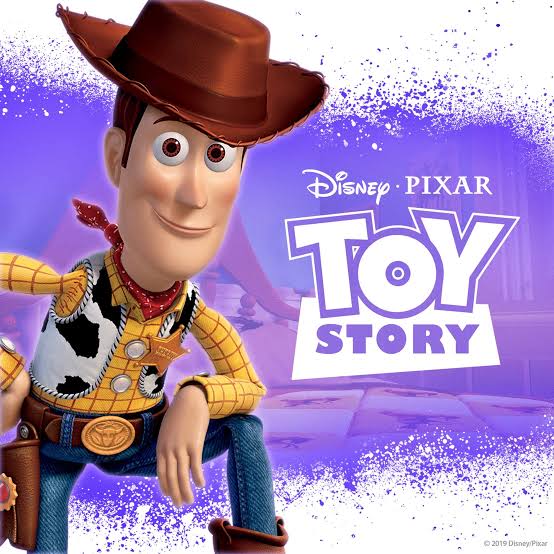
    Released in 1995, Toy Story was the first feature-length, computer-animated film. It revived an old idea prevalent in folk stories: when hidden from human eyes, toys come to life. At night, these inanimate objects move, talk, think and feel. Perhaps this was derived from the urge to further develop the toys as an imitation of their human counterparts, as means of preparing the child viewer for real life. In the film, a cowboy doll named Woody is Andy’s favorite toy. Woody becomes anxious as Andy receives Buzz Lightyear, a modern space ranger, for his birthday. The old toys are all excited as new birthday toys join them, both expecting new friends and fearing rivals that may take their place. The story revolves around the relations between Woody and Buzz; the first wants to keep his place as the favorite toy and the latter can’t accept the fact that he is a toy. On top of this, Andy’s family is moving, and the toys go through all sorts of adventures. Together they are lost and then find their way to Andy’s new home.

    Andy is a “good boy”, well-behaved and nice. He loves his toys and takes care of them. He is sad when Woody and Buzz disappear and thrilled when they return. Unlike Andy, his next door neighbor, Sid Phillips, is the “bad boy”, a disturbed and aggressive child who makes scary experiments with toys. Playing doctor, he cuts them, mutilates them, and then puts together parts of different toys, creating revolting, monster-like creatures: a baby’s head with a spider’s body, a frog with wheels for legs, a woman’s legs attached to a fishing rod, a fly’s head stuck on a Combat Carl’s body—the victims are just as horrified at what they have become as we are upon seeing them emerge from the shadows of Sid’s room.

    Naturally, the young spectators are led to like Andy and dislike Sid. The explicit message of the story is clear: children are encouraged to respect others, human or toy, and accept them for who they are. The film conveys a purely progressive message. But certain aspects of the film do not agree with this message. For example, the “bad boy” is physically unattractive, with a most repellent set of braces. The correlation between morality and appearance stands in sharp contrast to the progressive spirit of the work. Are ugly people bad? The mutilated toys are good-hearted, but this isn’t always true for ugly humans. Also, though Sid lives next door to Andy, his environment seems different, not at all cozy and loving. Andy’s mom is always in the background, and Phil’s parents are never seen; Andy sleeps in a nice, clean bed, covered with a pleasant duvet, while Phil’s bed is messy and lacks a homely appearance; Andy’s mom drives him to the Pizza place, as Phil returns alone on his skateboard. And despite of his disturbed way of playing, there are no parents in sight to help him. Is the film suggesting that children from good, loving families are simply better from those coming from neglectful homes?

    The mutilation of the toys is another ambivalent aspect of the film. Of course it is shocking to see a bird’s head attached to a girl’s body, or a baby’s head to a spider’s body. But it should be pointed out that Andy’s toys, the nice, clean ones purchased at a toy store, are not exact replicas of natural forms, either. Mr. Potato Head’s facial features keep falling off and are sometimes placed “wrongly”, eyes where the nose and mouth should be. The dog has a Slinky for a body. The piggy bank has a cork in his belly.

    So, what’s actually wrong with Sid’s mutilation of his toys? Seen from an alternate perspective, one could present an entirely new interpretation to Toy Story: the only difference between good and evil is that good is prettier, more refined, and not as extreme as evil. But there is no fundamental difference between the two. Evil actions are fine as long as you don’t do them yourself. And the problem with brutality is that it’s not graceful and appealing, not that it causes pain.

    Strangely, the two conflicting interpretations are possible. Two mutually exclusive sets of values—one exemplifying morality and compassion, the other only aesthetic values—lie at the heart of the story. One wonders if this isn’t what we see in the United States these days, so deeply embedded in American culture: two sets of values coexisting, and we are constantly wondering if people are judged by their morality and compassion or only by their appearance.

  • Million Dollar Baby – a Greek Tragedy

    Million Dollar Baby – a Greek Tragedy

    When Clint Eastwood, an actor, producer and director of Million Dollar Baby (released in 2004) was asked what the film was about, his answer was: “the American Dream”.

    Maggie Fitzgerald, a 31-year-old woman from a poor and backward part of America, is determined to train as a boxer. She manages to convince Frankie, a talented trainer, to coach her. He teaches her various techniques, constantly stressing that the first rule is always, absolutely always, to protect yourself.  After she wins many fights he arranges for a million-dollar match. She almost wins, but as the round ends she carelessly turns her back to her rival, who then punches her from behind. She falls on her stool, breaking her neck, and is left a quadriplegic. Frankie, now deeply attached to Maggie, is devastated. He stays by her side, trying to rehabilitate her. But after her foot is amputated she asks him to help her commit suicide. Horrified, he at first refuses, but later accepts her wish and kills her. After her death he disappears.

    In the second part of the film, after Maggie’s unexpected fall, it is useless to struggle with the tears. The spectators are swept up by sorrow as they see the strong, free-spirited female boxer turn into a complete invalid; it is almost impossible to imagine how she feels. Exactly as Aristotle defines tragedy, “arousing pity and fear”, the viewers are overwhelmed with compassion and horror, thinking that this could happen to them too. When the film ends, the effect of the cathartic moment is apparent: “Thank god I am not paralyzed!”

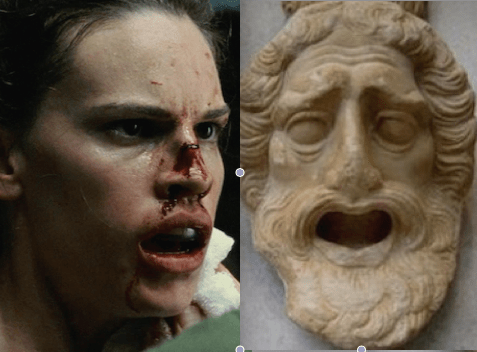
    In the making of this film, Clint Eastwood follows closely most of the principles of ancient Greek tragedy. First, it deals with comprehensive themes – love, pride, loss. The protagonist, a tragic hero, commits either a crime or a mistake, often without acknowledging how foolish and arrogant he has been. The nature of his crime is often related to hubris, to vanity. He then slowly understands his mistake, as his world crumbles around him. And also – the tragic hero is essentially a good man. The downfall of a villain would not produce the desired effect of horror and pity. But witnessing the complete destruction of a good man is heartrending and terrifying.

    In Million Dollar Baby, Maggie, the protagonist, totally wins our hearts. Her determination and courage, together with her honesty and devotion to her family, make her utterly lovable. She convinces Frankie (himself also a tragic hero) to coach her. He makes her repeat over and over again that the first rule of boxing is to always protect yourself! Her ongoing success, the tough opponents she overcomes, the cheering crowd, all make her self-confident, to a point where she becomes careless. In a single moment of hubris, she makes the hamartia, the critical mistake: she turns her back to her opponent, who then strikes her and she falls.

    As in every Greek tragedy, fate plays a crucial part. Maggie could have fallen in the ring; but as she falls, her head bumps into her stool and she breaks her neck. This peripateia – the unexpected turn of events – reroutes the plot to an altogether different direction.  Lying paralyzed in bed, she acknowledges her mistake: I didn’t protect myself, this was my mistake, I didn’t follow Frankie’s orders. The audience reaches a full catharsis in the moving final dialogue between her and Frankie and the last kiss before he takes her life.

    There is, however, one central feature of Greek tragedy that Eastwood completely ignores. The vast majority of Greek tragic protagonists are people of the upper class. Million Dollar Baby is a film about lower-class Americans. The boxing club is a run-down gym in Los Angeles; Maggie lives in a shabby room and works as a waitress in a diner, from which she takes left-over food to eat at home. She has come to Los Angeles from a god-forsaken town. Her overweight mother makes a living from deceiving the social security; her brother is in jail. There is absolutely nothing noble about poverty in this film; it is ugly, vulgar, and callous.

    So for what sin is Maggie punished? From a modern perspective, she is trying to fulfill the American dream: to overcome her poor background, to surmount the pettiness of her family and a sense of purposelessness, to achieve the impossible: to become a successful boxer at the age of 31. In simple, everyday words: she wants to make it.

    But she fails.

    Her depiction in the context of a Greek tragedy illuminates her character in heroic tones, making her comparable to classic protagonists. According to Eastwood, the exhaustive, back-breaking – and yes, valiant — efforts of lower-class Americans to succeed are bound to fail.  They can either accept their poor condition or end in self–destruction.

    The American dream is, indeed, only a dream.

  • Hannibal Lecter – a Psychopath or the Devil?

    Hannibal Lecter – a Psychopath or the Devil?

    There is always something entertaining about watching a good thriller. Not in the simple sense of the word, the suspense can be nerve-wracking, the terror almost unbearable, the violence scary, the spectator is waiting breathlessly to see if a heinous crime can be prevented. But it is entertaining in the sense that it isn’t meant to provoke deep thoughts or contemplation, but to create satisfaction that the mystery is solved, the criminal arrested, that the increasing tension is brought to a catharsis. The vast majority of spectators would never suspect religious ideas to be concealed within popular thrillers.

    But a closer look at some of them may be surprising. Take, for example, The Silence of the Lambs, a thriller based on Thomas Harris’ novel, released in 1991. It is an extremely popular film, one of the few to get five Oscars at the Academy Awards, a huge box office success. Millions of spectators around the globe are horrified by the cruel and ruthless Hannibal Lecter. So what is it about this character that catches the imagination of so many? What makes him unique among a multitude of criminal characters appearing so often on our screens?

    Perhaps it has to do with him fitting perfectly into a well-defined cultural pattern of evil set in our mind: that of the devil of the Judeo-Christian tradition. Our image of Satan has some very distinct characteristics: he is a stranger, wandering upon the earth. He is vain and deceitful, an embodiment of the sin of hubris. He can assume various appearances, some extremely attractive, standing in sharp contrast with his evil nature. He has a unique insight into the human soul. He is often physically deformed. And, of course, above all, he is the embodiment of ultimate evil, which will always prevail. He cannot be understood through psychological means; he is an eternal opponent of God, his evil provoking not only fear but also awe.

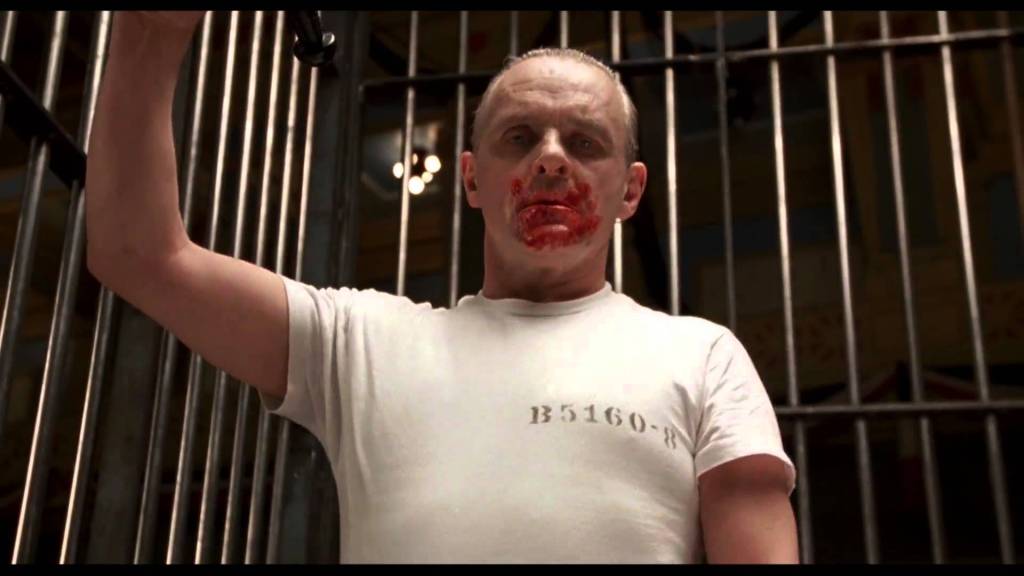
    Now, take a look at Dr. Hannibal Lecter. In The Silence of the Lambs we don’t know where he came from, he has no family or friends. (Later, in Hannibal and in Hannibal’s Rising, Thomas Harris added more information about his life; many see them as reduced forms of Hannibal, and certainly not as popular.) Regardless of his imprisonment in humiliating conditions, he manifests contempt towards others. A refined character also in prison garb, as he escapes he skins one guard and covers himself with his face, and at the end of the film he looks like an attractive tourist, wearing a hat and sunglasses. In the novel he is depicted as having a six-fingered hand. His cannibalism is a relatively rare quality of the Christian devil, though Giotto depicts Satan eating human beings. It could be his way of desecrating the Eucharist, transforming the spiritual union with God into a savage eating of human flesh.

    And why exactly does the police ask for his advice? Surely there are other psychiatrists to consult. It is generally believed that he has an inner knowledge of the human soul and thus would be the only one who could understand the twisted logic of a psycho killer the police it trying to find. Clarice says “he damn sure sees through me,” and he observes she has a new band aid, without being able to see it. And above all, he says about himself: “Nothing happened to me, Officer Starling. I happened. You can’t reduce me to a set of influences. You’ve given up good and evil for behaviorism, Officer Starling. You’ve got everybody in moral dignity pants—nothing is ever anybody’s fault. Look at me, Officer Starling. Can you stand to say I’m evil? Am I evil, Officer Starling?” The spectators’ awe springs from their acknowledgment that no matter how hard people try to imprison him, he will escape

    And there is a pact with the devil that Clarice makes. Traditionally, the devil wants the soul in the afterlife in return for granting a wish in this world. Here, perhaps a modern devil, Hannibal asks Clarice to reveal her childhood memories and traumas—her soul—and in return he will help her find the murderer.

    Hannibal has been called a psychopath, sociopath, monster, Dracula—but interpreting him as a devil is fundamentally different. It is not merely descriptive, it sets the entire plot within the realm of “good” and “evil,” on moral grounds. As he says, no one judges anything in terms of right and wrong anymore, it is all about psychological analysis now.

    Perhaps this is the heart of the outstanding success of The Silence of the Lambs: the spectators identify, even if unconsciously, a well-known cultural pattern, a character that feels so familiar, they simply know Hannibal is different from all other villains appearing on the screen. When they see his vanity, his power albeit his imprisonment in a small, dark, secluded cell, they know he will manage to escape; absolute evil, as we all know, can never truly be eliminated.