Tag: politics

  • The Six-Day War – East and West

    The Six-Day War – East and West

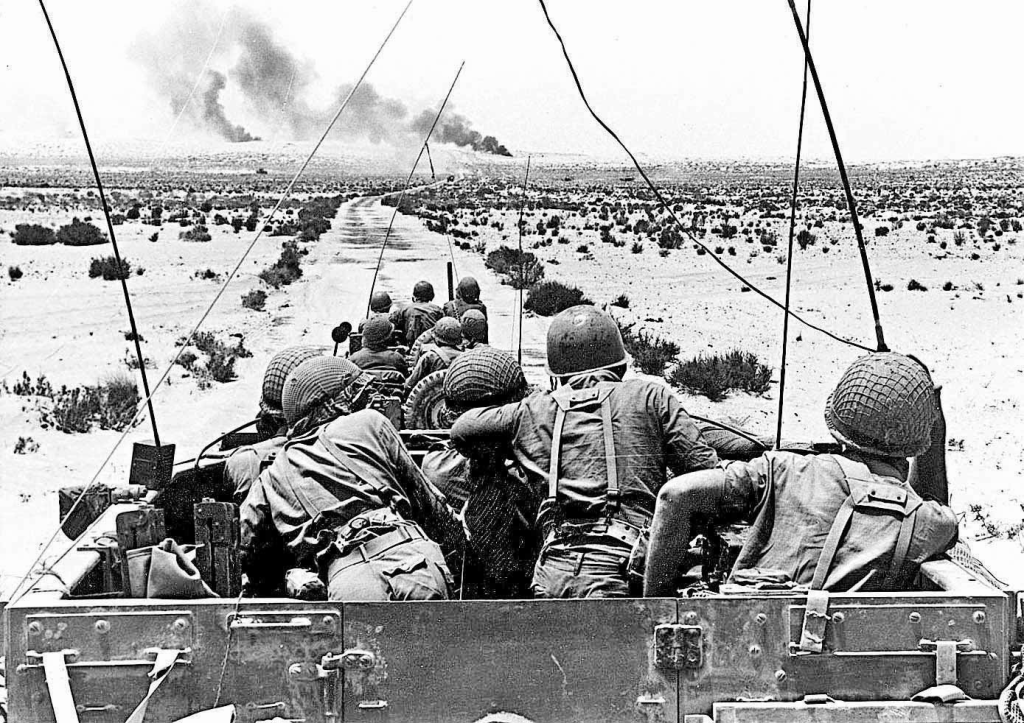
    One cannot over-estimate the implications of the Six-Day War, which swept the Middle East in 1967. It completely changed the political shape of the area, creating new circumstances and new difficulties in the Arab-Israeli conflict. A less-known aspect of the war is its effect on Israeli society. As is often the case with wars, it brought to the surface frustration and anger that otherwise perhaps would have remained dormant: the feeling of Sephardi Israelis (people whose families came from Middle Eastern countries) that they were discriminated against by the Ashkenazi elite (the Ashkenazi Jews being those who were descendants of European Jewry).

    Eli Amir (1937– ) is an insightful Iraqi-born Israeli writer. At the age of thirteen he emigrated with his family from Bagdad to Israel. He experienced the difficulties of Sephardic Jews coming to Israel in the fifties: due to lack of accommodation and funds, the huge influx of immigrants were placed in refugee absorption camps; he went to school in a kibbutz, where he encountered a condescending Ashkenazi elite; he then moved to Jerusalem, slowly advancing as a civil servant, struggling with prejudice against immigrants from the Middle Eastern countries. In 1983 he published his first novel, which was followed by several others.

    Yasmine, published in 2005, is a love story between a young Israeli man and a beautiful Palestinian woman. Nuri, the protagonist, a character with a strong autobiographical quality, is a soldier fighting in the Six-Day War on the Egyptian front. Like the author, he emigrated from Iraq as a child, went to school in a kibbutz, left for Jerusalem, and is part of the Israeli forces in the war. Being a fluent speaker of Arabic and well-educated, in the wake of the war he is appointed to a government post in East Jerusalem, where he meets Yasmine. She left her parents to study in the Sorbonne, but concern for them prompted her to visit them. The passionate love story between the two eventually ends in her returning to Paris, feeling that marriage between a Palestinian and Israeli is practically impossible.

    The entire novel revolves around Nuri’s self-perception in terms of East and West. The turmoil generated by belonging to two different cultures drives him to constant contemplation of the nature of each one, and how he is part of it: “I am a Jew born in Arabia, who holds dear the treasures of the West. In the morning I listen to classical music, in the evening to Arab music. A bird traveling between two worlds”.

    But Nuri is not simply wavering between two worlds; he feels the contempt many Ashkenazi Israelis have for Middle Eastern culture. This deepens his solidarity not only with Sephardic immigrants but also with Middle Eastern culture in general: “I am at odds with myself, and with those who are believed to be my brothers. Sometime very close to them, sometimes horrified by them. I miss the Tigris River, the palm trees, my home in Bagdad, but I will never return there”.

    So, strangely, this young man who fought against the Egyptian army in the Six-Day War finds himself feeling more at ease with Arab culture than with the values and lifestyle of many Israelis. He even defends the Egyptian soldiers, ridiculed by Israelis for fleeing without fighting.This inevitably brings to the surface the Sephardi-Ashkenazi conflict, in a way that leaves no room for any ambiguity or avoidance.

    Amir further elaborates on the role of the Six-Day War in the worsening of ethnic tensions in Israel. In the frame of his post in the Israeli government, Nuri meets several cabinet ministers, and also Levi Eshkol, the prime minister at the time. To his utmost surprise they converse in Yiddish (the language of Ashkenazi Jews); affectionately they call him yunger-man, young man. But not only that: he then realizes that the Ashkenazi elite perceives the victory of Israel in the war in terms of West vs. East. The prime minister, his cabinet, and in fact most Ashkenazi Israelis, believe that Israel won because it is a western country; to put it more precisely, they think that the Arab nations lost due to their backward Middle Eastern mentality. This leads Nuri to an almost impossible emotional dilemma, not knowing where he belongs.

    All this does not lead Amir to a simplistic preference for the Middle Eastern mentality – in fact, is it the other way around. Nuri says: “I love the east, the role of the family, the manners, the warmth, the colors, the odors, the crowd, the sweat, but I also detest it for its stench, hypocrisy, treachery, its blind and cruel fanaticism, and I prefer the open-mindedness of the West, its airy alienation and distance”.

    The novel follows the emotional dilemma that led to the outbreak of protests by Sephardic Israelis. In 1971 the ‘Black Panthers’ violently challenged the Israeli establishment for its discrimination against Sephardic people. And though the intensity of these feeling has diminished greatly today, the issue of Ashkenazi-Sephardi relations is still very relevant; it is certainly part of party agendas in the coming elections.
  • Germany and the Germans

    Germany and the Germans

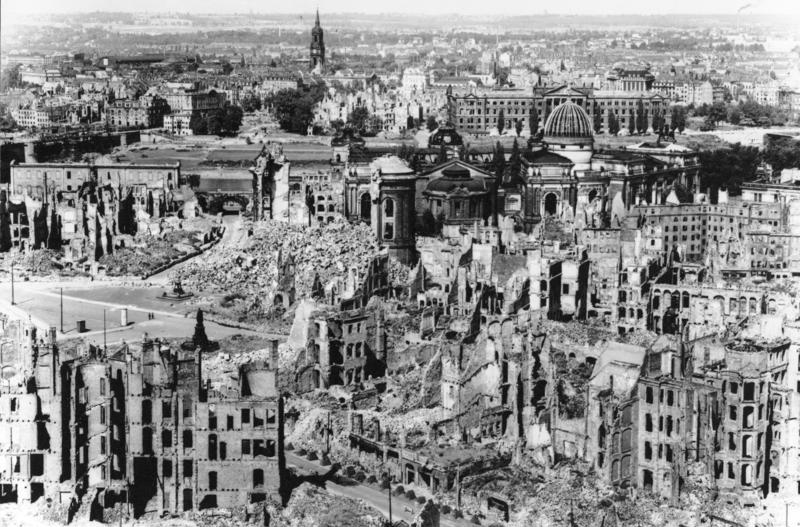
    On May 29th 1945, three weeks after the surrender of Nazi Germany but before the nuclear bombs were dropped on Hiroshima and Nagasaki, the world-famous German author Thomas Mann (1875-1955), Nobel Prize laureate in Literature, gave a lecture at the Library of Congress, titled “Germany and the Germans”. Many looked forward to this address with anticipation; Thomas Mann was considered a supreme interpreter of German culture throughout the world, and a fierce opponent of Nazism. The emigration of the Mann family from Germany in 1933 had echoed in the international press, contributing to the universal opposition to Nazism.

    Addressing the question of German national character, he began by announcing that “I am to speak to you today on Germany and the Germans—a risky undertaking, not because the topic is so complex, so inexhaustible, but also because of the violent emotions that it encompass today”. Yet, notwithstanding the turmoil created by WWII and the Holocaust, he presents a fascinating and solid explanation for the rise of Nazism in Germany.

    Before delving into a historical analysis, Mann asserts that he sees himself as part of German culture. In spite of being a brave opponent of the Nazis, he argues that there are no ‘good Germans’ or ‘bad Germans’: “Any attempt to arouse sympathy to defend and to excuse Germany, would certainly be an inappropriate undertaking for one of German birth today. To play the part of the judge, to curse and damn his own people in compliant agreement with the incalculable hatred that they have kindled, to commend himself smugly as ‘the good Germany’ in contrast with the wicked, guilty Germany over there with which he has nothing at all in common, — that too would hardly befit one of German origin. For anyone who was born a German does have something in common with German destiny and Germany guilt”.

    He then turns to the historical arguments. Already in the sixteenth century Martin Luther, the founder of the Protestant Reformation, instilled an ambivalent attitude towards freedom: “And no one can deny that Luther was a tremendously great man, great in the most German manner, great and German even in his duality as the liberating and the once reactionary force, a conservative revolutionary. He not only reconstituted the Church; he actually saved Christianity”. From the individual’s perspective, Luther was a great liberator: he encouraged a direct encounter between man and God, freeing him from the power of the priesthood. He translated the Bible so every believer could read it himself. Yet from the perspective of society as a whole, he supported the darkest forces oppressing the evolvement of a free society. He was a liberator of the inner experience, but fiercely rejected the idea of political liberty. Germans were encouraged to nurture their feelings, artistic drives, religious beliefs – yet political freedom was denounced.

    This dualism, argues Mann, was further expanded by Goethe, the great German poet, in the eighteenth and nineteenth centuries. In his play Faust, a masterpiece, the protagonist, Faust, makes a pact with the devil in order to achieve full self- gratification. Though the explicit point of view of the author is a condemnation of this pact, the play leaves plenty of room for moral ambivalence. The reader can infer that in order to fulfill one’s desires it would be imperative to have a pact with the devil. And Mephisto, who satisfies Faust’s wishes, is far from being repulsive. He is smart cunning and strong: “And the devil, Luther’s devil, Faust’s devil, strikes me as a very German figure, and the pact with him, the Satanic covenant, to win the treasures and power on earth for a time at the cost of the soul’s salvation, strikes me as something exceedingly typical of German Nature. A lonely thinker and searcher, a theologian and philosopher in his cell who, in this desire for world enjoyment and world domination, barters his soul to the Devil, — isn’t this the right moment to see Germany in this picture, the moment in which Germany is literally being carried off by the Devil?” Indeed, during WWI, Goethe’s Faust was distributed to the German soldiers before they were sent off to battle.

    If Luther’s theology created a sense of a boundless self, utter liberation of instincts, emotions, thoughts — yet without any political progress towards democracy – Goethe implanted the notion of moral ambivalence, suggesting that in order to achieve one’s goals one would have to succumb to the enchantment of the devil.

    These two influences led to the evolvement of Nazism. The State of Germany was not the result of a yearning for democracy: “Fundamentally Bismarck’s empire had nothing in common with “nation” in the democratic sense of the word. It was purely a power structure aiming toward the hegemony of Europe, and notwithstanding its modernity”. Boundless individual self-fulfilment was encouraged; the widespread moral stand was ambivalent, suggesting that cruel brutality is a necessary evil – and the result was Nazism; a full realization of a historical process that commenced in the sixteenth century.

    Well worth reading; a brilliant historical analysis.