Tag: zionism

  • A Crazy Pioneer

    A Crazy Pioneer

    The history of Zionism was written by men, no doubt. Its ethos is abundant with daring masculine pioneers and brave soldiers sacrificing their lives for the Jewish state. Also, the prevailing notion of a strong, self-defending ‘new Jew’ was closer to the popular perception of masculinity, making the aggrandizement of heroic men almost natural. But some women played a substantial role in the development of Jewish life in Palestine, later Israel. Unfortunately, they were deprived of their proper place in history books, in the past and also today.

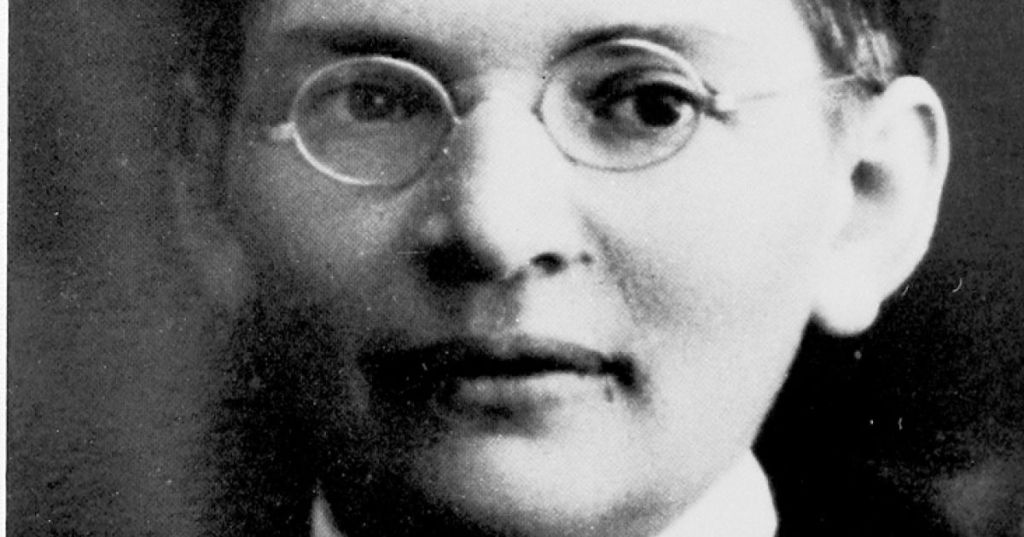
    One cannot overestimate the importance of the Kibbutz, the collective settlement traditionally based on agriculture, in the history of Zionism – an idea initiated and exercised for the first time by Manya Shochat (1880-1961). Born in Grodno, part of the Russian Empire, she was the eighth daughter of ten children. Her grandfather was one of Napoleon’s soldiers who remained in Russia, converted to Judaism and married a Jewish woman. They were secular middle-class Jews, but their son, Manya’s beloved father, became an orthodox Jew, creating an open rift with his parents. Like other family members he was prone to depression and suicide. His parents tried to prevent his turn to religion, but gave up after he tried to take his life.

    Manya’s character could be described as a blend of depression and suicidal inclination with a tendency to act in imaginative, unconventional ways. Already as a child her uncontrolled moods made attending school impossible. As a teenager she escaped home and, wearing men’s clothes, found a position as a porter. She later became a carpenter in her brother’s factory, a profession from which women were completely excluded in those times. Manya was deeply touched by the suffering and poverty of the workers around her and fully adopted socialist ideals. She joined the Bund, a Jewish revolutionist socialist movement, and later founded a Jewish Labor Party, which collapsed in 1903. Broken-hearted and depressed, she accepted her brother’s invitation to visit Palestine.

    Like other pioneers before her, Manya fell in love with the land. She joined her brother in a tour looking for water and minerals, riding a horse from the Galilee to Jerusalem, to the Judea desert, and then to the south. The journey of the brother and sister, with two friends, lasted weeks. Manya cut her hair short; the two women dressed like men. She later said it was difficult to ride a horse with a long dress, but no doubt her appearance betrayed resentment against feminine embellishment. It illustrates well the nature of socialist feminism – focused on the social and economic oppression of women, and not on feminine identity and self-perception. Manya wished to work like a man and wear men’s clothes. Only once, as a child, did she want a velvet dress, but she was too embarrassed to ask for it.

    The journey in Palestine pulled her out of her depression and she decided to stay, giving up her hope to be part of the socialist revolution in Russia. She wished to implant socialist ideas in the future Israel. Yet some Zionist pioneers already living in Palestine saw her as an imbalanced – not to say deranged – woman, with bizarre ideas of equality between people. But she didn’t give up her well-defined plans. In 1908 she was the one to initiate the first experimental collective farm in Sejera, in the Galilee, on land purchased by Edmond de Rothschild. This collective community was, in fact, the first Kibbutz – a unique way of life that made a substantial contribution to Israeli society.

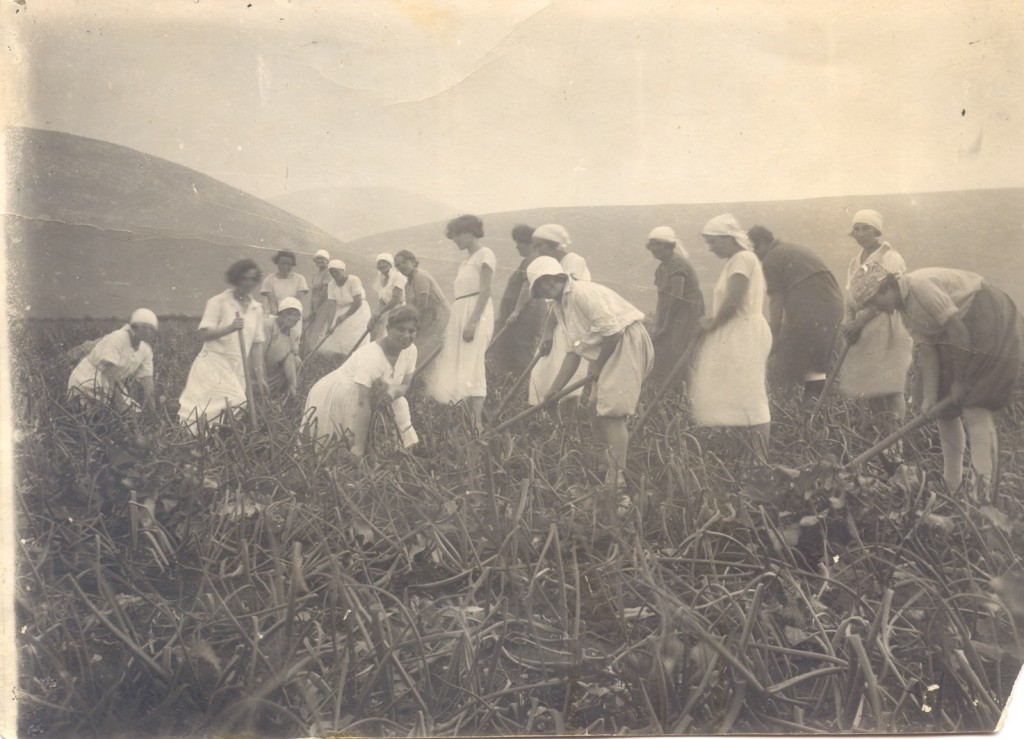
    Manya married Israel Shochat, a handsome man and one of the founders of the first Jewish military organization. Together they ran Sejera. Within a couple of months the collective community had eighteen members, six of whom were women, wearing pants and working in the fields with a pistol tied to their belt. There was something of a fraternity about this group of young people: the common jokes, a spirit of non-conformism, physical and mental strength, a profound knowledge of agriculture. Together Manya and Israel set the major principles of Israeli society in its first decades: military self-defense and socialist communities.

    Manya was not oblivious to the Arab-Jewish conflict; her attitude towards the Arab communities was ambivalent. As a socialist, she was eager to advance social unions among the Arab population. As a Zionist she couldn’t help but admit the conflict of interest between the Jewish pioneers and Arab villagers and Bedouins. Yet she often demonstrated her fascination for the local Arabs – conducting long conversations whenever possible, paying them visits, and even attempting to adopt their daily habits.

    With the foundation of the State of Israel, other leaders replaced Manya and Israel. She joined another kibbutz; he moved to Tel Aviv, leaving her with two children. Her son, a pilot in the RAF and one of the founders of the Israeli Air Force, committed suicide in 1967. Her daughter lived in Australia. But Manya, in spite of her suffering, remained unchanged: struggling with depression, finding solace in decisive action, and always looking for innovative ways to create a better society.
  • The Six-Day War – East and West

    The Six-Day War – East and West

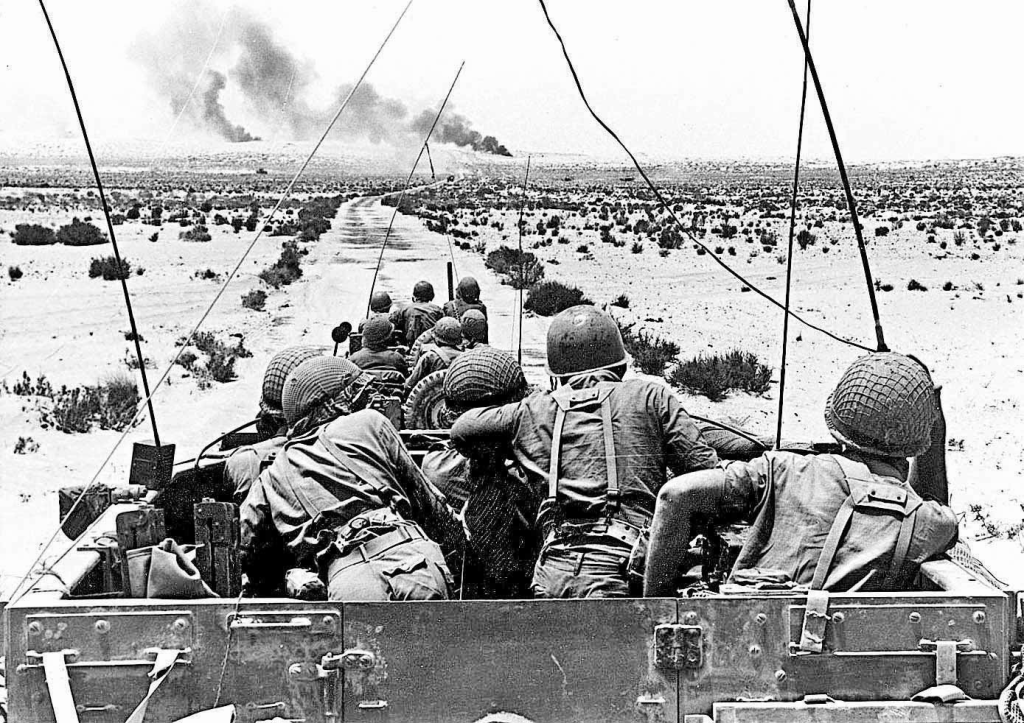
    One cannot over-estimate the implications of the Six-Day War, which swept the Middle East in 1967. It completely changed the political shape of the area, creating new circumstances and new difficulties in the Arab-Israeli conflict. A less-known aspect of the war is its effect on Israeli society. As is often the case with wars, it brought to the surface frustration and anger that otherwise perhaps would have remained dormant: the feeling of Sephardi Israelis (people whose families came from Middle Eastern countries) that they were discriminated against by the Ashkenazi elite (the Ashkenazi Jews being those who were descendants of European Jewry).

    Eli Amir (1937– ) is an insightful Iraqi-born Israeli writer. At the age of thirteen he emigrated with his family from Bagdad to Israel. He experienced the difficulties of Sephardic Jews coming to Israel in the fifties: due to lack of accommodation and funds, the huge influx of immigrants were placed in refugee absorption camps; he went to school in a kibbutz, where he encountered a condescending Ashkenazi elite; he then moved to Jerusalem, slowly advancing as a civil servant, struggling with prejudice against immigrants from the Middle Eastern countries. In 1983 he published his first novel, which was followed by several others.

    Yasmine, published in 2005, is a love story between a young Israeli man and a beautiful Palestinian woman. Nuri, the protagonist, a character with a strong autobiographical quality, is a soldier fighting in the Six-Day War on the Egyptian front. Like the author, he emigrated from Iraq as a child, went to school in a kibbutz, left for Jerusalem, and is part of the Israeli forces in the war. Being a fluent speaker of Arabic and well-educated, in the wake of the war he is appointed to a government post in East Jerusalem, where he meets Yasmine. She left her parents to study in the Sorbonne, but concern for them prompted her to visit them. The passionate love story between the two eventually ends in her returning to Paris, feeling that marriage between a Palestinian and Israeli is practically impossible.

    The entire novel revolves around Nuri’s self-perception in terms of East and West. The turmoil generated by belonging to two different cultures drives him to constant contemplation of the nature of each one, and how he is part of it: “I am a Jew born in Arabia, who holds dear the treasures of the West. In the morning I listen to classical music, in the evening to Arab music. A bird traveling between two worlds”.

    But Nuri is not simply wavering between two worlds; he feels the contempt many Ashkenazi Israelis have for Middle Eastern culture. This deepens his solidarity not only with Sephardic immigrants but also with Middle Eastern culture in general: “I am at odds with myself, and with those who are believed to be my brothers. Sometime very close to them, sometimes horrified by them. I miss the Tigris River, the palm trees, my home in Bagdad, but I will never return there”.

    So, strangely, this young man who fought against the Egyptian army in the Six-Day War finds himself feeling more at ease with Arab culture than with the values and lifestyle of many Israelis. He even defends the Egyptian soldiers, ridiculed by Israelis for fleeing without fighting.This inevitably brings to the surface the Sephardi-Ashkenazi conflict, in a way that leaves no room for any ambiguity or avoidance.

    Amir further elaborates on the role of the Six-Day War in the worsening of ethnic tensions in Israel. In the frame of his post in the Israeli government, Nuri meets several cabinet ministers, and also Levi Eshkol, the prime minister at the time. To his utmost surprise they converse in Yiddish (the language of Ashkenazi Jews); affectionately they call him yunger-man, young man. But not only that: he then realizes that the Ashkenazi elite perceives the victory of Israel in the war in terms of West vs. East. The prime minister, his cabinet, and in fact most Ashkenazi Israelis, believe that Israel won because it is a western country; to put it more precisely, they think that the Arab nations lost due to their backward Middle Eastern mentality. This leads Nuri to an almost impossible emotional dilemma, not knowing where he belongs.

    All this does not lead Amir to a simplistic preference for the Middle Eastern mentality – in fact, is it the other way around. Nuri says: “I love the east, the role of the family, the manners, the warmth, the colors, the odors, the crowd, the sweat, but I also detest it for its stench, hypocrisy, treachery, its blind and cruel fanaticism, and I prefer the open-mindedness of the West, its airy alienation and distance”.

    The novel follows the emotional dilemma that led to the outbreak of protests by Sephardic Israelis. In 1971 the ‘Black Panthers’ violently challenged the Israeli establishment for its discrimination against Sephardic people. And though the intensity of these feeling has diminished greatly today, the issue of Ashkenazi-Sephardi relations is still very relevant; it is certainly part of party agendas in the coming elections.

  • On Zionism and Gender – The Young Women’s Farm

    On Zionism and Gender – The Young Women’s Farm

    Women today find it hard to unite for the sake of a common cause. I mean, really unite – not simply share views on social networks, go to empowering women’s meetings, or vote for candidates who vow to promote feminist issues. Most of us, I believe, feel that in the daily struggle with discrimination we stand alone. We may gripe about it, take some action once in a while, but nothing more. However, profound social change probably requires an altogether different sense of commitment.

    A relatively unknown part of Zionist history is the role of women – their aspiration to be equal partners in this revolutionary movement. ‘Revolutionary’, because Zionism aimed not only to create a homeland for the Jewish people but also to change the Jewish character, to form a ‘new Jew’ (the ‘Sabra’). Those early Zionists saw the Jews living in the Diaspora as weak and unproductive. The ‘New Jew’ would be strong, able to defend himself, and productive. And in the eyes of Herzl and his contemporaries, productivity meant one thing: engaging in agriculture.

    In the late nineteenth century some Jews from Eastern Europe settled in Israel, then Palestine, with the hope of fulfilling the Zionist vision. First came some families, and then groups of socialist single men – with a very few young women – eager to make the barren land bloom. The Arab-Israeli conflict was still in its infancy. The real threats were death from starvation or malaria.

    The women – the very few who dared to travel to this god-forsaken place – were expected to work in the kitchen, wash the men’s clothes, and perhaps engage in some limited home-based farming. To be historically fair, this was before voting rights were granted to women both in the UK (1928) and in the USA (1920). But some of these girls were determined to take full part in the Zionist endeavor.

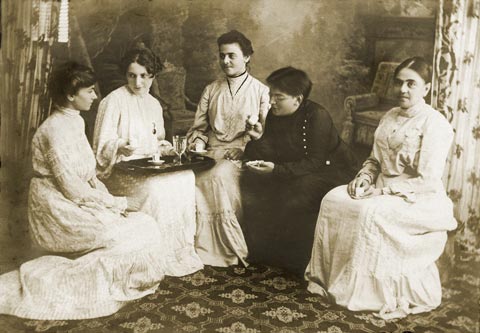
    In 1911 Hannah Meisel, a Russian immigrant with a PhD in agronomy, decided to establish a women’s farm, an agricultural training institution for young, unmarried women. She called it ‘The Young Women’s Farm’ (Havat ha’almot). Leasing a room from a Jewish settlement next to the Sea of Galilee, she came with two students; four others joined her later. The girls, sixteen or seventeen years old, were eager to master every theoretical and practical aspect of agronomy. 

    You would think the young men already settled there would have welcomed them. They did, but only as long as they were willing to take care of the cooking and laundry. At first the girls and the teacher lived in one room, with neither floor nor windows, but eventually the school had its own house. And other girls quickly followed the first students. The rumor of this revolutionary school for young women spread in Zionist circles, to the point that Hannah had to reject some of the applicants since there was room for only twenty girls at a time. One famous student was Rachel the Poetess.

    The girls worked in the fields for eight hours a day and their evenings were devoted to general education. They specialized in growing unique kinds of orchards and vegetables. They established a nursery that provided hundreds of olive, lemon, almond, and eucalyptus seedlings for other farms. They began the experimental planting of bananas, today a common crop in this part of Israel. Their eucalyptus trees were used to dry the swamps that inflicted malaria and other diseases. They had a productive dairy barn, and the decorative flower garden was another of their innovations.

    Hannah, in spite of her revolutionary spirit, was an extremely practical person. She thought that after two years of schooling the girls would marry and settle down with a husband and children, and therefore insisted they should also learn ‘household management’: cooking, sewing, cleaning. Her aim was to create a farmer’s wife with some agricultural skills.  But the girls, now an integrated group of determined young women, who had endured hardships and maladies, developed an altogether different image of their role in society. They wanted to engage in agriculture as their main vocation, not just for the sake of supporting a husband.

    The protests against ‘household management’ evolved into an open rift with Hannah, whom the girls now called ‘our older sister’. “What sort of subject is that?” they wondered. Some cleaned the kitchen out of respect for her, others openly refused, and some pretended to clean it but left the oven and pots dirty. The spirit of feminism that developed within the group could not be shaken even by the fierce stand of the respected teacher.

    It is most likely that if Hannah had had only one or two students, they would have adopted her worldview. But the united group she created formed new perceptions of gender role, more radical than her own; they wanted a new life style. Their mutual support made the different, innovative feminine identity possible. In many ways they were ahead of their time, a true ‘avant-garde’.

    The women’s farm lasted for six and a half years. The outbreak of WWI created new, insurmountable obstacles. Yet the determination and collective spirit of these young women had a profound and long-lasting affect on women’s role in Israeli society. If you had asked Hannah, she might have said their influence was somewhat too extreme.